Oceanic Society is proud to announce the publication of the 21st annual State of the World’s Sea Turtles (SWOT) Report, which is now available online.
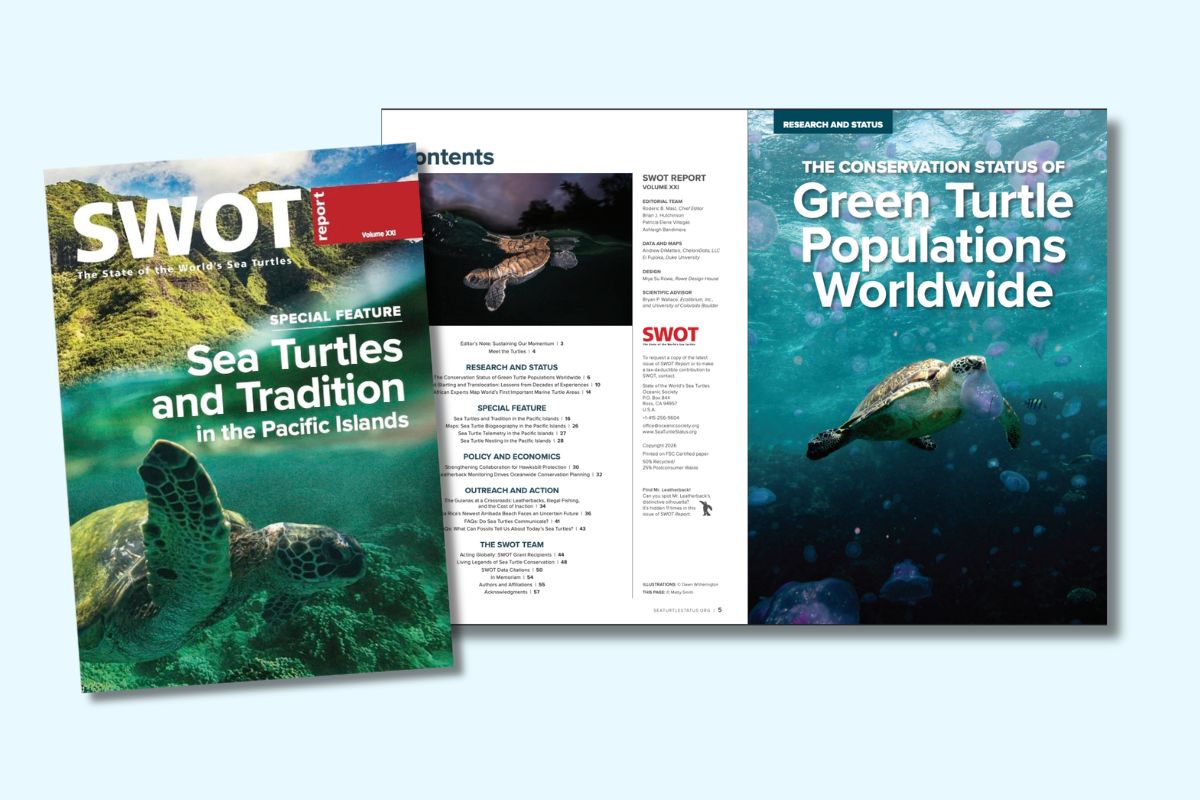
SWOT Report, vol. XXI (2026)
The 21st volume of SWOT Report features new maps and a feature article about sea turtles and traditions in the Pacific Islands. Other articles discuss the green turtle’s improved status, Costa Rica’s newest arribada beach, and more!
With the publication of this issue, SWOT celebrates 21 years of highlighting sea turtle conservation success stories, findings, innovations, and research from around the world. The report is made possible by a collaboration with a network of sea turtle experts who contribute their knowledge and data each year. The magazine is redistributed to the network for free as a communication tool that removes paywalls and jargon that often create barriers to science.
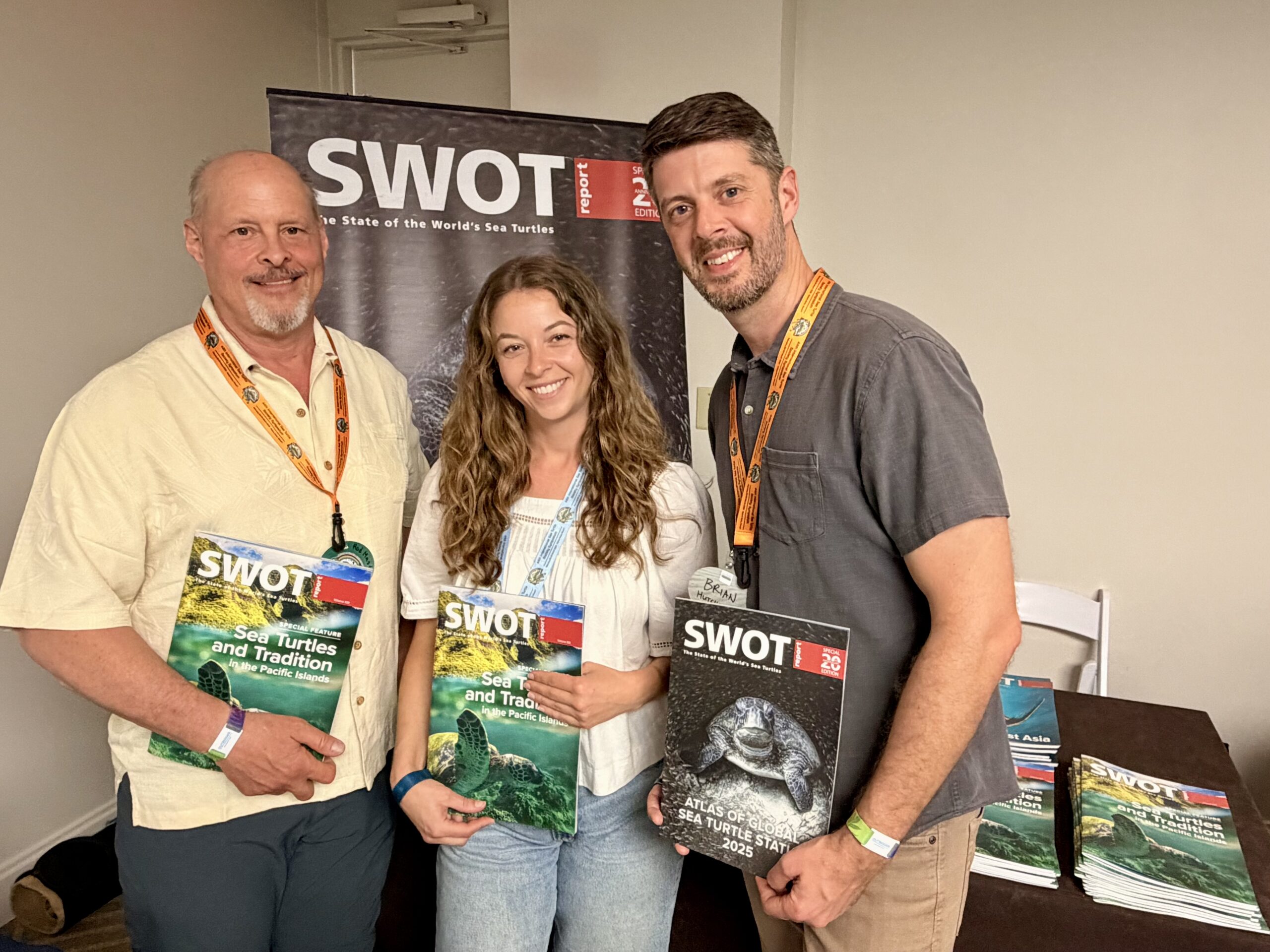
Oceanic Society’s sea turtle team—Roderic Mast (left), Ashleigh Bandimere (center), and Brian Hutchinson (left)—hand out SWOT Reports at the 44th International Sea Turtle Society Symposium in Kona, Hawai’i.
Oceanic Society’s sea turtle program team attended the 44th sea turtle symposium in Kona, Hawai’i, in February 2026, where they distributed more than 1,000 free copies of the report to the hundreds of global sea turtle researchers and conservationists in attendance.
Highlights from SWOT Report Volume 21
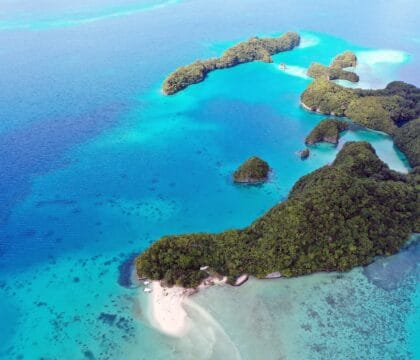
- A special feature article titled Sea Turtles and Traditions in the Pacific Islands, which highlights the deep connections between people and sea turtles throughout the Pacific, as well as the incredible work being done to protect them, and is accompanied by up-to-date maps of sea turtle biogeography for Pacific Island sea turtle populations
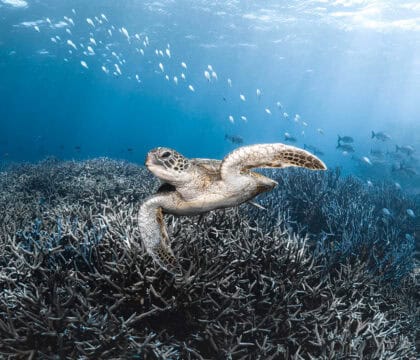
- The Conservation Status of Green Turtle Populations Worldwide
- The Guianas at a Crossroads: Leatherbacks, Illegal Fishing, and the Cost of Inaction
- Head-Starting and Translocation: Lessons from Decades of Experiences
- African Experts Map World’s First Important Marine Turtle Areas
- Strengthening Collaboration for Hawksbill Protection
- Pacific Leatherback Monitoring Drives Oceanwide Conservation Planning
- Costa Rica’s Newest Arribada Beach Faces an Uncertain Future
- Answers to the frequently asked questions: Do Sea Turtles Communicate? And What Can Fossils Tell Us About Today’s Sea Turtles?
- Living Legends in Sea Turtle Conservation
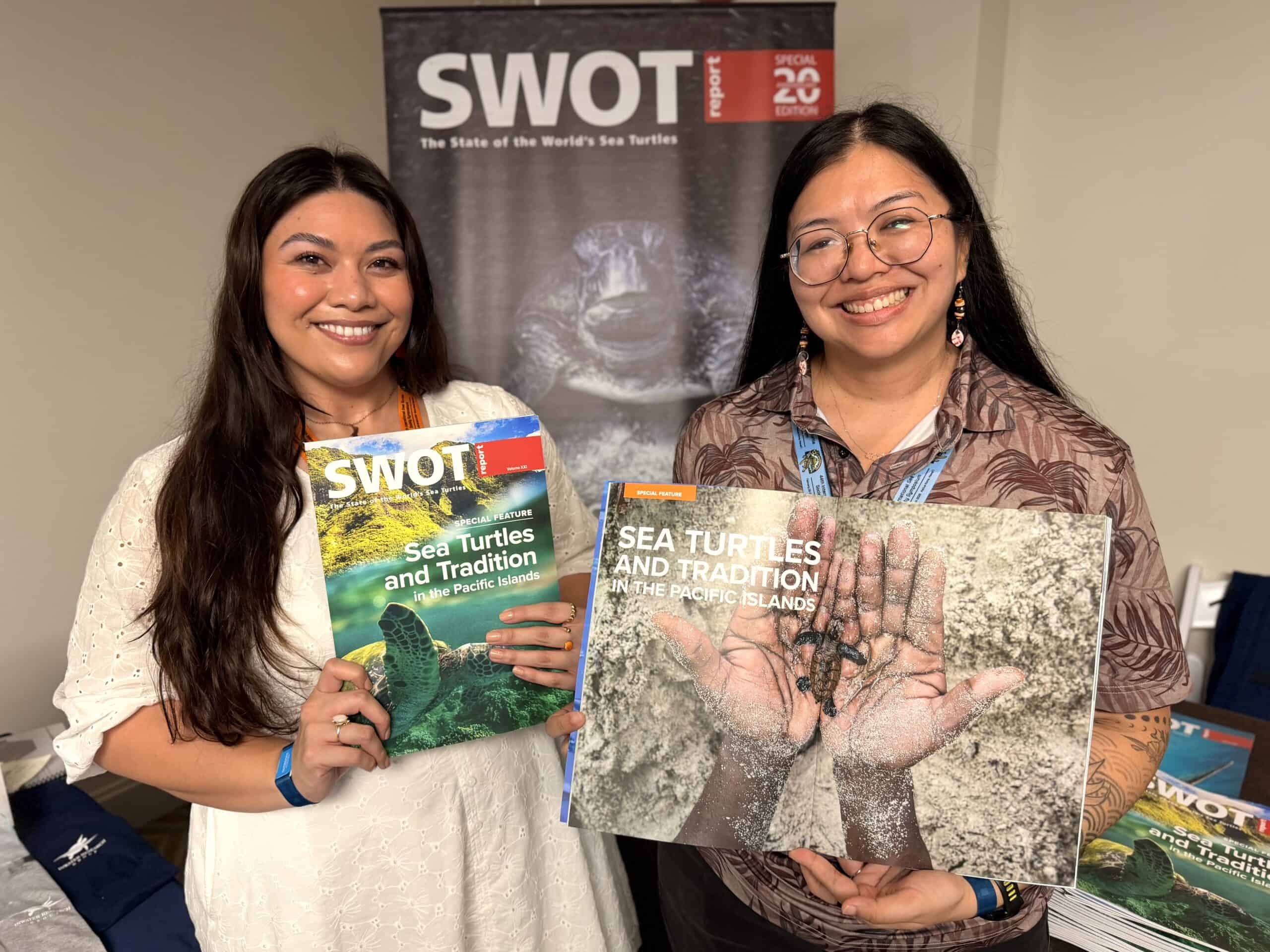
Josefa Muñoz (left) and Cristian “CJ” Cayanan (right) are Pacific Islands sea turtle experts who were lead authors of the report’s feature article alongside more than a dozen other authors from throughout the region.
We are grateful to all of the authors, data providers, photographers who contributed to this year’s SWOT Report, as well as the following donors for their support of the SWOT Program in 2025–2026: Betlach Family Foundation, The Frances and Benjamin Benenson Foundation, Bob and Diana Friedman, Goldring Family Foundation, Marisa I. Hormel Trust, Morna Mellor, Ken and Kris Moore, Steve and Kathleen Moore, Seiko Prospex, Joseph S. and Diane H. Steinberg 1992 Trust, as well as the Association of Zoos & Aquariums’ Sea Turtle SAFE (Saving Animals From Extinction) Program and its partners for their support of the SWOT grants program, including Adventure Aquarium, Aquarium of the Pacific, Audubon Nature Institute, Dallas Zoo, Gladys Porter Zoo, Kansas City Zoo & Aquarium, Mystic Aquarium, National Aquarium, New England Aquarium, North Carolina Aquarium on Roanoke Island, OdySea Aquarium, Pittsburgh Zoo & Aquarium, Point Defiance Zoo & Aquarium, Remote Ecologist, Inc., SEA LIFE Arizona Aquarium, South Carolina Aquarium, Texas State Aquarium, The Florida Aquarium, The Maritime Aquarium at Norwalk, Topeka Zoo & Conservation Center, and Virginia Aquarium & Marine Science Center.
About the State of the World’s Sea Turtles Program
Founded in 2003, the SWOT program is led by Oceanic Society and a global network of people and partners. This collective—known as the SWOT Team—shares data to better understand sea turtles and their status, develops tools to support researchers and conservationists on the ground, and engages the public through science-based communications. Learn more about Oceanic Society’s global sea turtle conservation programs here.