This year, we asked our staff to share the moments from their 2025 travels that left the deepest impressions.
Whether in the field, scouting new destinations, or traveling with family, our experiences across different continents tend to reveal the same thing: how closely nature, people, and conservation are intertwined, and how those encounters shape the way we move through the world.
These moments influence how we show up on our expeditions, guiding the way we share places, stories, and experiences with the people who travel alongside us.
Rod’s Flatback Encounter: A Milestone, With More to Learn
As someone who has worked in sea turtle conservation for his entire career, Rod has spent quality time with nearly all of the world’s sea turtle species, except one.
The flatback sea turtle.
To fulfill this lifelong goal, Rod traveled in early January to northern Australia during peak flatback nesting season, the only place on Earth where this limited-range species is found, and a destination that requires serious planning and logistics. He was joined by his wife, Angela, and an old friend and wildlife photographer, Tui DeRoy, with whom he is collaborating on a book about the sea turtles of the world.
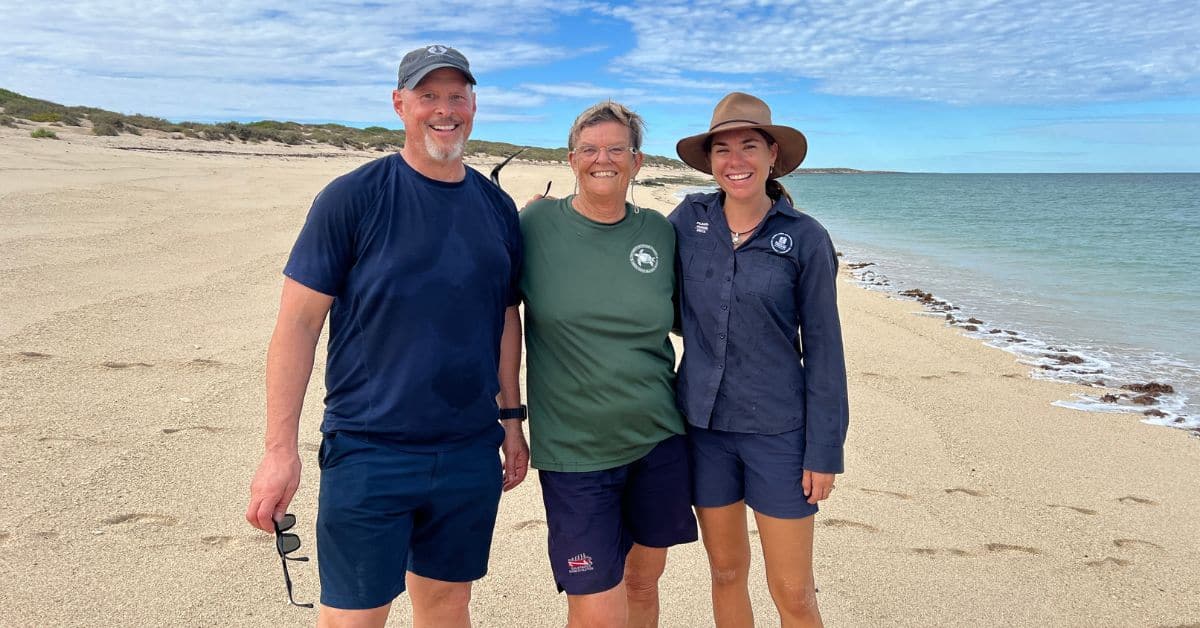
Rod, Tui, and a local wildlife official together on Rosemary Island in search of nesting flatback sea turtles.
Rod came up empty at his first two destinations in the Northern Territory, but at Point Samson, they found the first signs of flatback nesting. Abandoned nests were being excavated by wildlife researchers for data on egg counts and hatch success. Two weakened hatchlings were discovered still in the nest, marking Rod’s first semi-wild encounter with the species. It was meaningful, but not enough.
Determined to see nesting adults, they continued south and ultimately connected with wildlife staff who transported him by boat to Rosemary Island, in the Dampier Archipelago off Western Australia’s coast. Camping overnight on Anna Beach, they walked the shoreline at dusk beneath a stunning sunset. As night fell, the moment finally arrived: three to four flatback females hauling themselves ashore to nest.
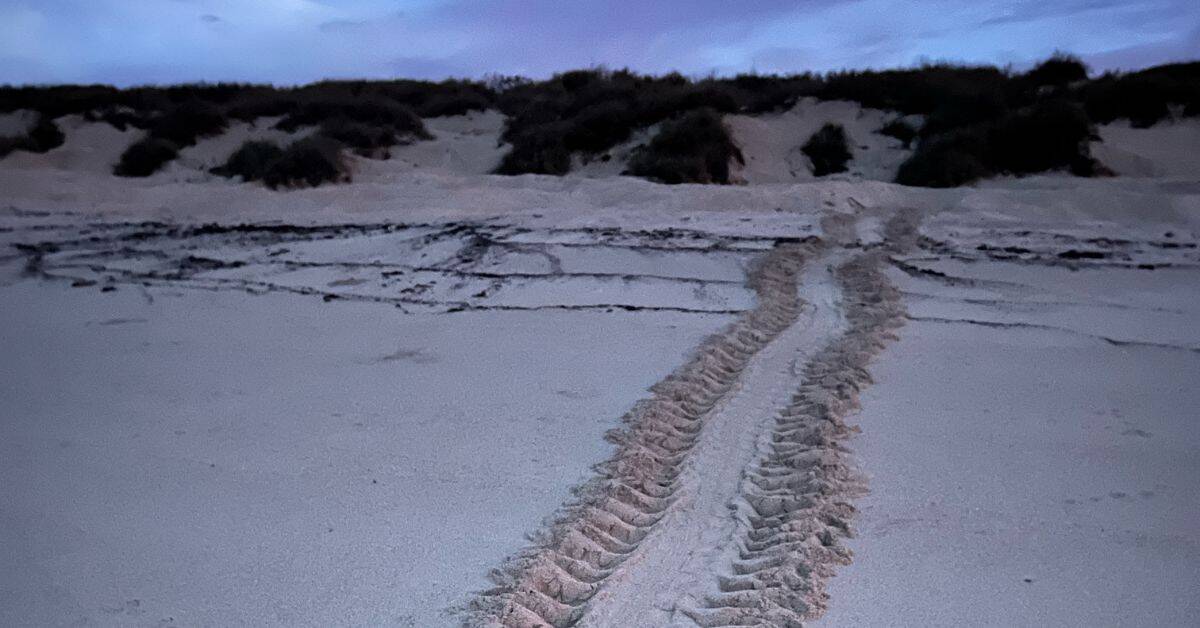
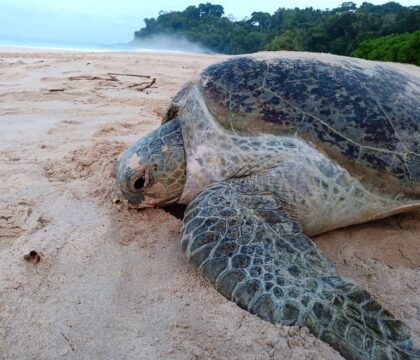
Flatback sea turtle tracks lead from the water up Anna Beach, marking the moment Rod finally witnessed nesting females come ashore.
“This was the last species I hadn’t seen in the wild,” Rod said. “It was a deeply personal goal achieved, but it doesn’t feel finished. Flatbacks are still one of the least understood species, and there’s so much more to learn. I’ll absolutely be back to spend more time here.”
For Rod, the goal may be technically complete, but true fulfillment, as a lifelong conservationist, lies in returning, learning more, and deepening his understanding of this unique species.
Lindsay’s First Blue Whale Sighting in Alor
Some moments in the field leave you speechless, and Lindsay, leading the 2025 expedition to Alor, Indonesia, experienced more than a few of them. On “whale patrol” off Savu South, a blue whale surfaced just beside the boat, and then suddenly another appeared just on the other side! The two flanking the boat hovered calmly for twenty minutes. It was Lindsay’s first time seeing a blue whale, and having the largest animal on Earth surface so close was a profound experience. “It gave me goosebumps,” she recalled, struck by the scale, presence, and quiet power of the encounter.
The second moment unfolded during a snorkel over Alor’s vibrant reefs. As Lindsay’s group of travelers explored the water’s edge, a class of local schoolchildren gathered along the shoreline to watch. One of the children began playing guitar, and soon the group started singing together. Lindsay found herself snorkeling over the spectacular reef, surrounded by marine life, while the sound of children singing drifted across the water. “The combination of place, culture, and nature made the moment feel surreal and deeply special,” she noted.
Together, these moments stood out not only for their rarity but for the way they captured the essence of fieldwork: unexpected encounters with wildlife and meaningful connections with local communities that linger long after the expedition ends.
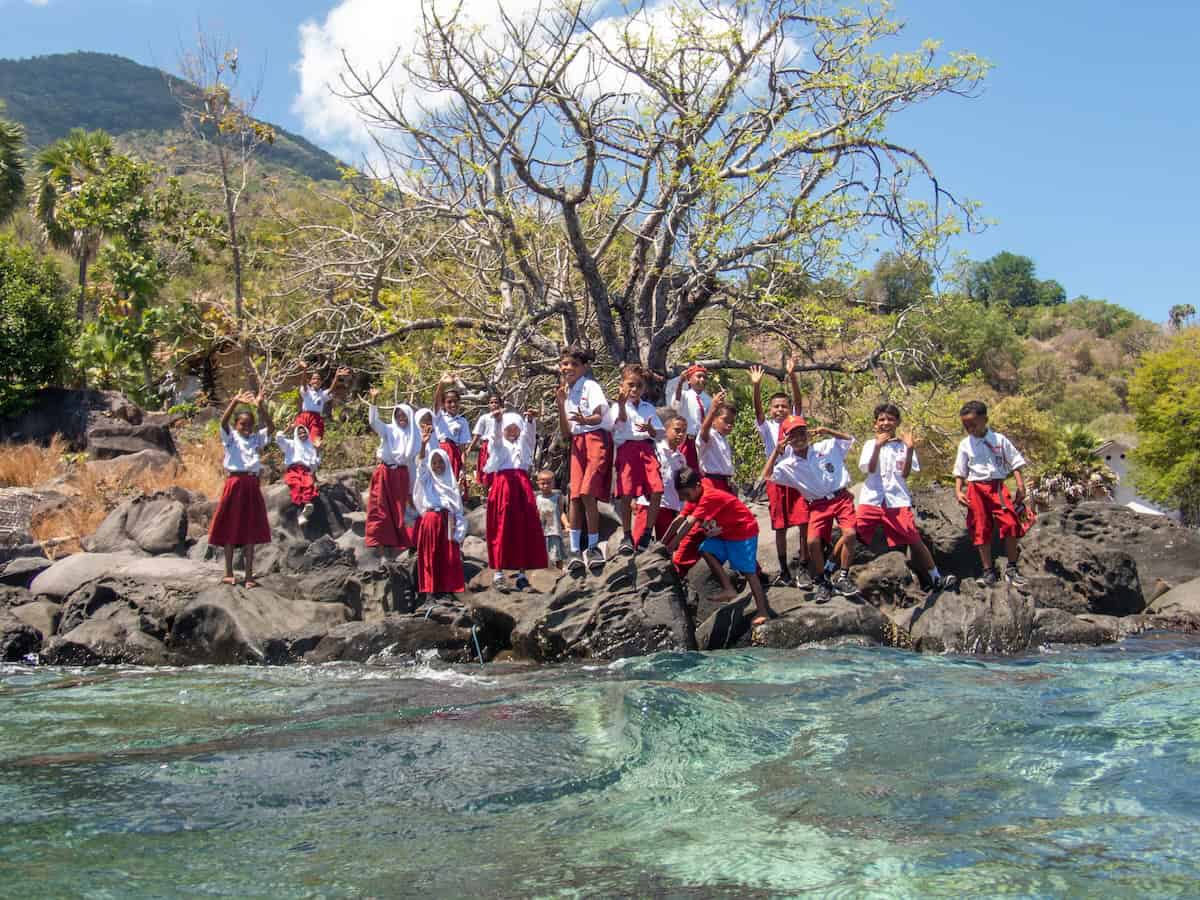
Schoolchildren wave to Oceanic Society travelers from the shore as they snorkel over reefs in Alor. ©Lindsay Mosher
Family Adventure on Portugal’s Atlantic Coast
The Atlantic stretched endlessly as Brian, Oceanic Society’s co-CEO, set out on a boat with his wife, 7-year-old son, and a group of friends, bound for the Berlengas Archipelago, a UNESCO World Heritage Site six miles off Portugal’s coast. The ride was short but adventurous, with sizable swells tossing the boat and leaving everyone wide-eyed, sea-sprayed, and thrilled.
The islands emerged like a hidden paradise: crystal-clear waters lapping at pink sand beaches, pink granite rock formations rising dramatically from the sea, and cliffs offering sweeping views over the Atlantic. The group became so absorbed in a swim in the frigid water that they nearly missed their ferry home.
“Seeing and experiencing the islands—and the journey there—through the eyes of my son was a definite highlight that will stay with me for a long time,” Brian reflected. The combination of natural beauty, adventure, and shared discovery made the day unforgettable.
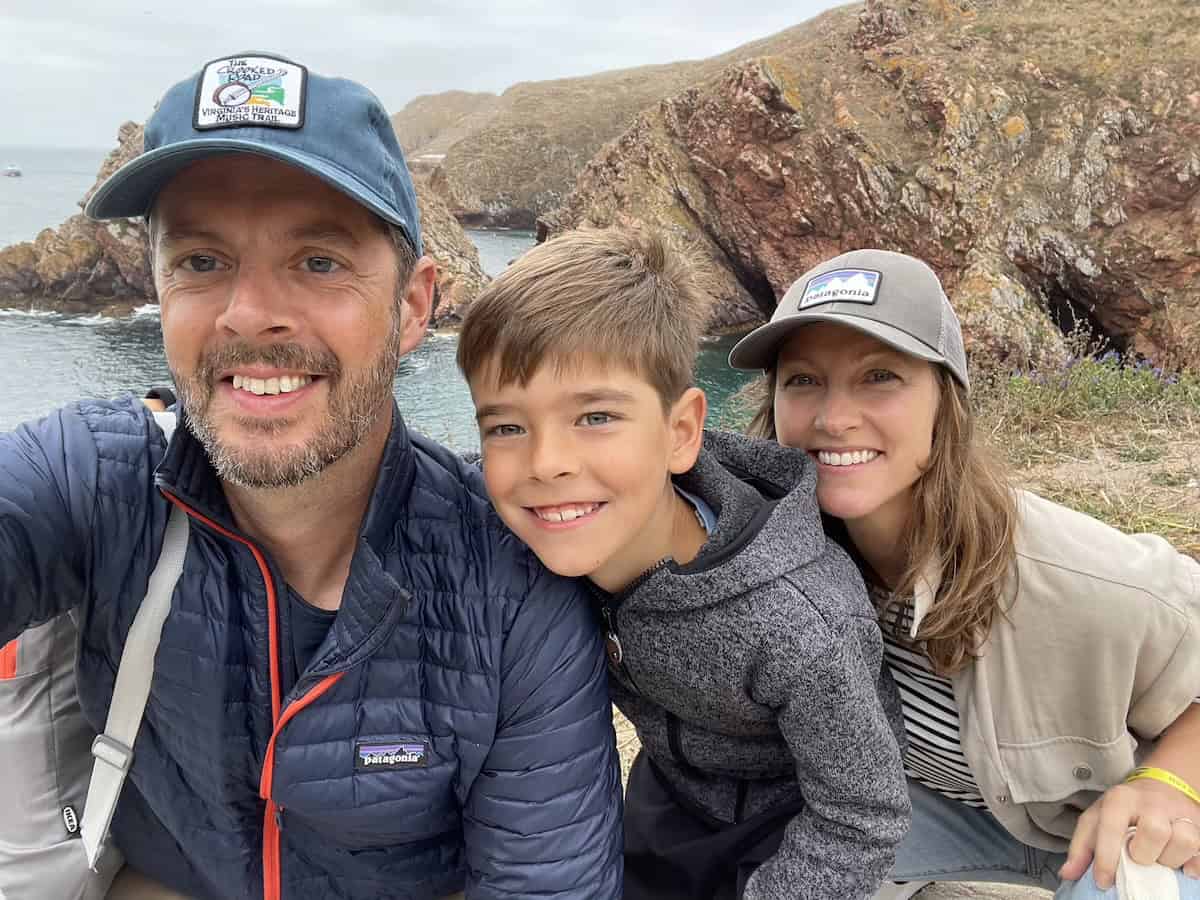
“The islands themselves were beautiful—with crystal-clear water, pink sand beaches, pink granite rock formations, and dramatic cliffs with sweeping views over the Atlantic.” – Brian Hutchinson
Tracking Jaguars and Macaws in the Pantanal
The sun rose over the Pantanal, casting golden light across a vast, untamed landscape where jaguars prowled along quiet riverbanks and macaws and toucans filled the sky with a riot of color. Expedition Manager Pei, exploring this remote region of Brazil with the Adventure Travel Trade Association, found herself drifting past caimans on river safaris, each day unfolding like a new chapter in a wildlife documentary.
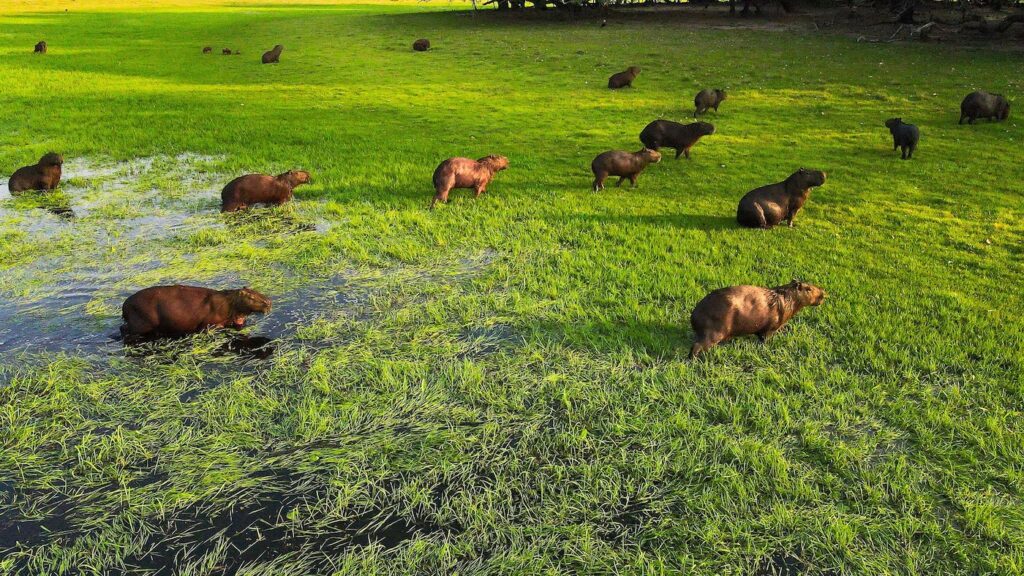
One unforgettable morning, she crossed the wetlands on horseback, moving silently through open fields as capybaras grazed nearby, their presence a quiet reminder of the ecosystem’s delicate balance. Nights brought their own drama, with river cruises revealing caiman eyes glowing red in the spotlight. And in the crystalline waters of Bonito, snorkeling felt like floating through a living aquarium, surrounded by schools of brilliantly colored fish.
The Pantanal’s immense diversity, sweeping scale, and raw wildness left an indelible mark.
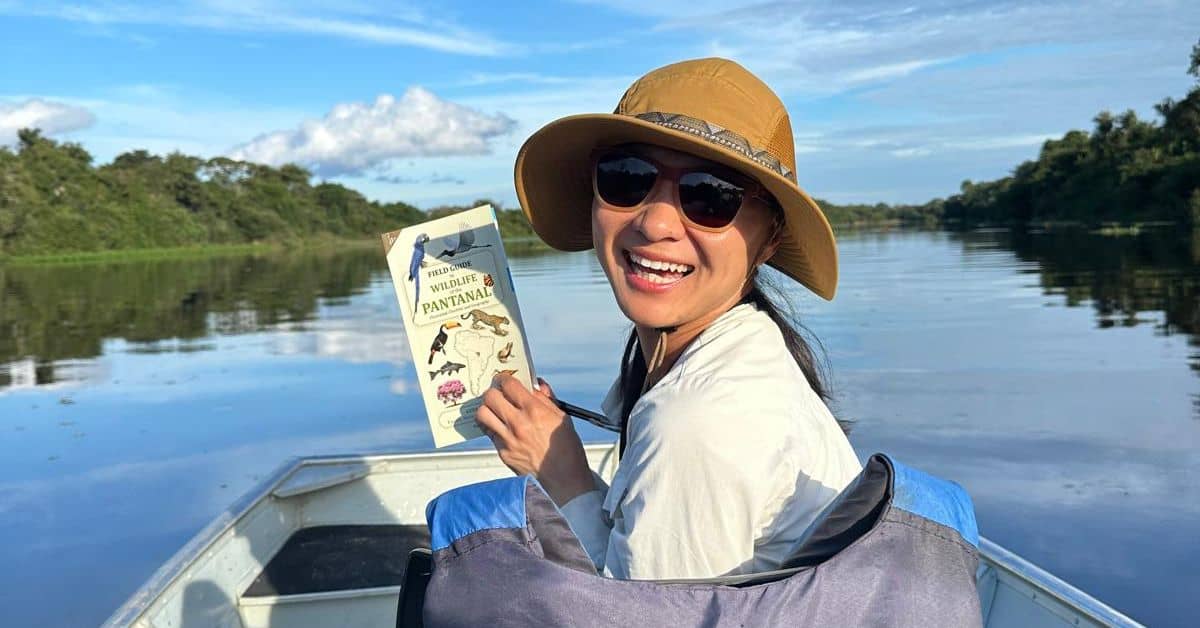
“I’ve never experienced such an incredible range of wildlife in one place. The Pantanal’s diversity, scale, and pure wildness made the entire experience one I’ll never forget.” – Pei Lee
An Arm’s-Length Encounter with a Playful Humpback Calf
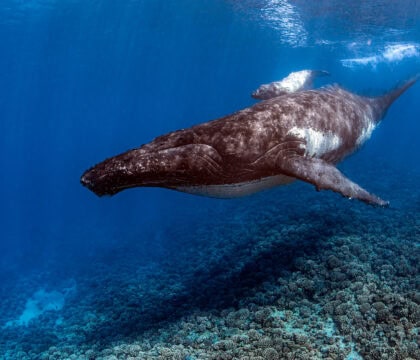
The water was calm, but anticipation ran high as expedition leader Rosie and four travelers on an expedition to swim with humpbacks in Tonga followed their whale guide, tasked with one simple job: stay close. Simple, in theory, but the curious humpback calf had other plans. Playful, mischievous, and fearless, it turned the encounter into an unforgettable adventure.
“At one point, the calf dropped below us and then, seemingly on purpose, popped up right in the middle of our group, splitting us into three in front and two in back, explains Rosie, who found herself behind the calf’s tail with another expedition traveler. As the young whale spun to dive, they scrambled frantically to avoid it. “If this is how I go out,” Rosie thought, “I’m okay with it.”
A massive WHOOSH followed, and a wave propelled Rosie and John backward. When they surfaced, laughing, startled, and completely awed, Rosie reflected on the encounter: “It felt like the calf knew exactly what it was doing, and it gave us the thrill of a lifetime.”
The playful, unpredictable energy of the young humpback turned a simple swim into an experience that none of them would ever forget.

Conservation Taking Root in the Solomon Islands
For Wayne, returning to the Solomon Islands in 2025 carried special meaning. It marked Oceanic Society’s third visit to the region over the past nine years, following earlier expeditions in 2016 and 2023.
Revisiting villages that the team had previously worked with highlighted the long-term relationships that expedition-based conservation can foster. In one village, residents shared the impact of a large water tank made possible by funds donated by Oceanic Society travelers following the 2023 expedition, a tangible reminder that conservation travel can support real, community-identified needs.
In another location, the team returned to Tetepare, where local rangers had been awarded a 2024 SWOT grant in recognition of their sea turtle conservation efforts. Wayne and the travelers were able to witness those efforts firsthand, building on observations made during visits in both 2023 and 2025.
For Wayne, the experience reinforced that meaningful conservation impact often unfolds over years, not weeks, and that returning to the same places can be just as powerful as exploring somewhere new.
Lessons from the Field: What We Learned in 2025
We asked our team one question: What’s one thing you learned this year about the ocean, wildlife, conservation, or yourself? Their reflections highlight the lessons, hope, and inspiration that come from a year spent in the field:
- Rod: “I made new conservation friends this year in Togo, Benin, Ghana, Australia, and beyond. There are people everywhere who care about wildlife and the oceans, and are working every day at all scales, sometimes at great sacrifice, to make things better. All we need to do is to convene and support the existing global community of passionate change-makers, and we can make planet-scale improvements together.
- Lindsay: “Conservation works best when it’s woven into the fabric of a community. When people can make a real living from a healthy ocean, protecting wildlife and coral reefs stops being an abstract ideal; it becomes protecting their livelihoods and future.”
- Brian: “It takes time to pay off, but sea turtle conservation is working. This year, the green sea turtle’s global status was updated from Endangered to Least Concern, a result of decades of global effort. Seeing these results after being personally involved for 22 years is amazing and encouraging.”
- Pei: “I witnessed how interconnected ecosystems truly are; what happens in rivers and wetlands eventually affects the ocean. Conservation doesn’t only happen far away; it can start where we are, and through the actions we take in our daily lives.”
- Wayne: “There are still magical places out there, ones that can truly inspire you to be a better steward, and stay committed to being mindful of all the ways your day-to-day life might impact them.”
Together, these reflections remind us that conservation is both a global effort and a personal journey, and that each year brings new lessons, small victories, and inspiration to carry forward.