Skip to content
Oceanic Society
  • About
    • Our Team
    • Oceanic Society Magazine
    • Our History
    • Contact
  • Our Work
    • Sea Turtle Conservation
    • Access to Nature
    • Behavior Change
    • Global Ocean Cleanup
    • Learn & Take Action
  • Take A Trip
    • Browse Trips
    • Snorkeling Trips
    • Wildlife Trips
    • Family Trips
    • Volunteer Trips
    • Custom & Private Trips
    • About Our Trips
  • Whale Watching
    • Farallon Islands Whale Watching
    • Private Charters
  • Adopt
    • Adopt a Dolphin
    • Adopt a Whale
    • Adopt a Sea Turtle
    • Adopt an Albatross
  • Donate
    • Double Your Donation
    • Ways to Give
    • Become a Member of Oceanic Society
    • Donate Crypto
    • Shop
  • About
  • Magazine
  • Contact
Oceanic Society
  • About
    • Our Team
    • Oceanic Society Magazine
    • Our History
    • Contact
  • Our Work
    • Sea Turtle Conservation
    • Access to Nature
    • Behavior Change
    • Global Ocean Cleanup
    • Learn & Take Action
  • Take A Trip
    • Browse Trips
    • Snorkeling Trips
    • Wildlife Trips
    • Family Trips
    • Volunteer Trips
    • Custom & Private Trips
    • About Our Trips
  • Whale Watching
    • Farallon Islands Whale Watching
    • Private Charters
  • Adopt
    • Adopt a Dolphin
    • Adopt a Whale
    • Adopt a Sea Turtle
    • Adopt an Albatross
  • Donate
    • Double Your Donation
    • Ways to Give
    • Become a Member of Oceanic Society
    • Donate Crypto
    • Shop

Killer Whale Sightings Near Farallon Islands Support Research

Home / Blog / Killer Whale Sightings Near Farallon Islands Support Research
© Allison Payne

October 6, 2021 • Trip Reports

Share This

One of the most exciting aspects of making the trip to the Farallon Islands is that we never know just what we might encounter. And on Sunday, September 5 we were fortunate to encounter a pod of three killer whales!

Killer whales, also called orcas, are the largest member of the dolphin family and can be found in all of the world’s oceans. There are at least ten recognized types (also called forms or ecotypes) of killer whales, and each ecotype differs from each other in appearance, habitat, diet, and social structure. In the North Pacific, there are three recognized ecotypes — resident, transient (also called Bigg’s), and offshore.
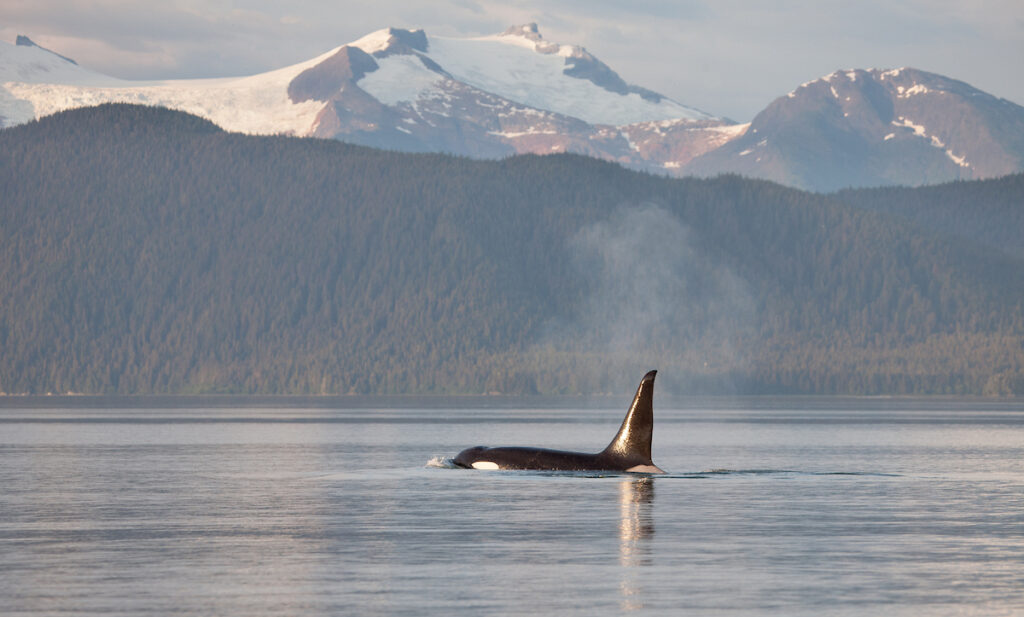
killer whale, orca, near the Faralllon islands

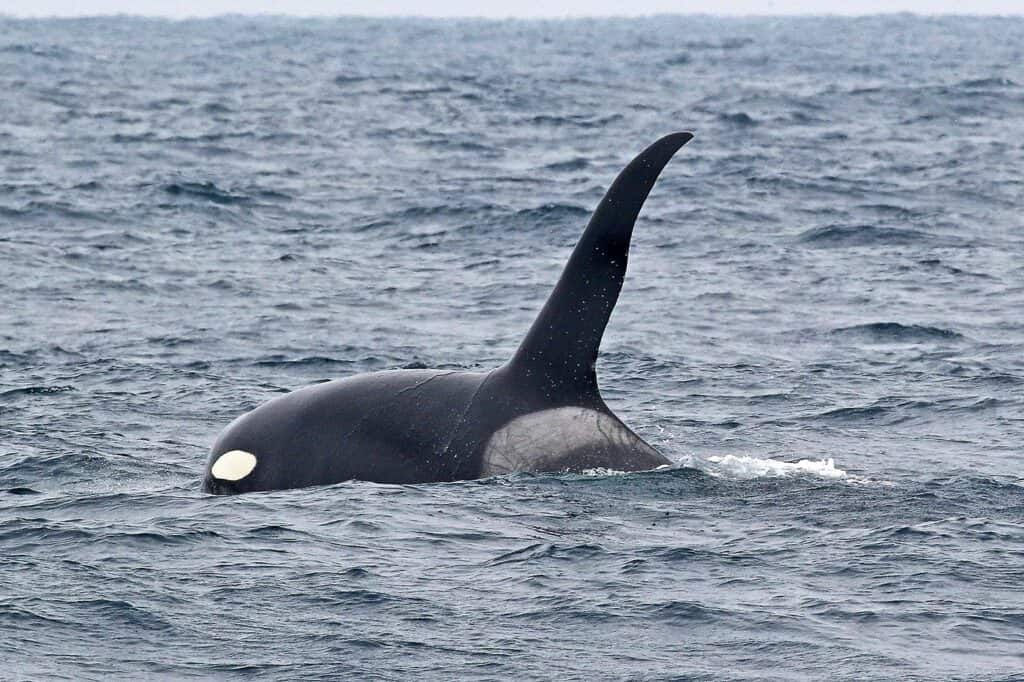
One of three killer whales spotted the first weekend of September aboard our Farallon Islands whale watching trip. Our photographs helped researchers to identify these whales. © Allison Payne

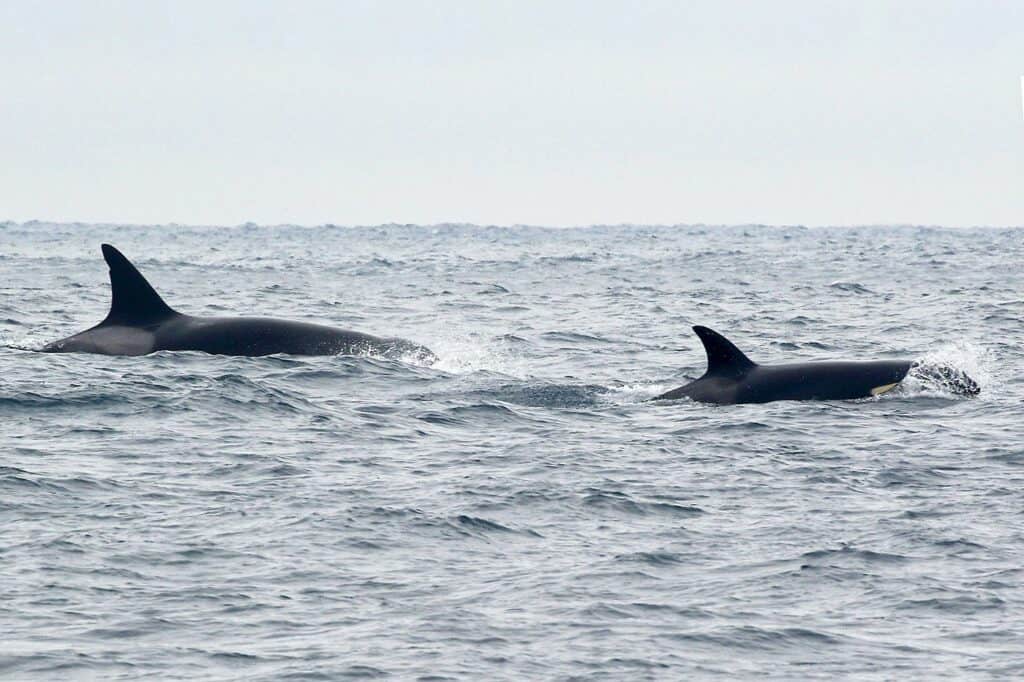
Thanks to images captured by our volunteer cetacean monitors during the trip, the killer whales were identified by researcher Josh McInnes at the University of British Columbia’s Marine Mammal Research Unit. According to Josh, the whales are part of the outer coast transient killer whale assemblage that he and colleagues are studying (you can access their complete photo ID catalog here). The female with the large notch is known as OCT041 and she has two offspring, an adult male OCT041A and OCT041B. Transients are the most common ecotype seen along the California central coast, which is where these individual whales are typically sighted. Transients tend to travel in small pods, often consisting of a mother with her calves and adult male offspring, which is the case with the trio we spotted!
killer whales (orcas) near Farallon Islands

Two of the three killer whales we saw on September 5. At left, a female known as OCT041, and her calf OCT401B, at right. © Allison Payne

Killer whales are not observed in California as frequently as other cetaceans, which means that it’s especially important to share sightings and photographs  with researchers like Josh who are working to identify individuals, estimate population sizes, and learn more about their lives. All of our trips to the Farallon Islands have wildlife biologists and a professional photographer onboard, which allows us to collect and share sighting and photographic data on marine mammals with a network of researchers. You can see all of our whale sightings on Happywhale.

Beyond these killer whales, we’ve had outstanding whale and wildlife sightings on our Farallon Islands whale watching trips this year, including more than 400 humpback whales since our season began in April. Trips run on Saturdays and Sundays into November – don’t miss your chance to join!
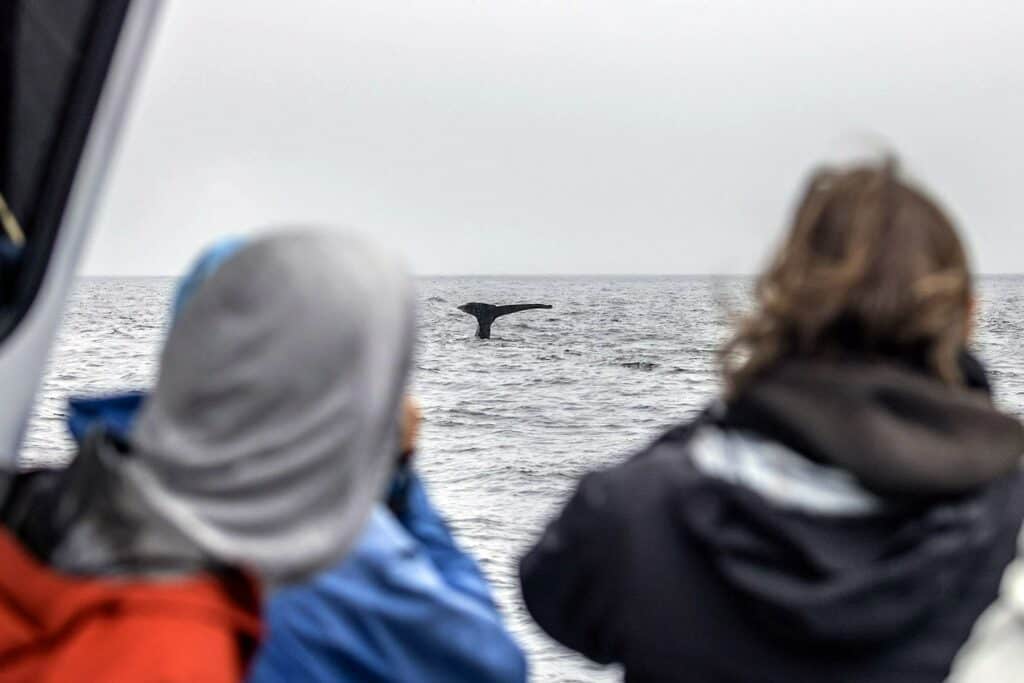
whale watching near Farallon Islands

We’ve seen more than 400 humpback whales on our Farallon Islands whale watching trips since April. © Chris Biertuempfel
Amanda Townsel

Amanda Townsel is a communications strategist and creative with Oceanic Society, based in California. She earned a Master’s in Marine Biodiversity and Conservation from Scripps Institution of Oceanography, with a focus on ecotourism. Amanda is an avid traveler, experienced scuba diver, and is working to improve her underwater photography skills.

Join our community.

Latest Posts

Reflections from the Field: 2025 Through Our Eyes

Read More

A Rare Encounter with Solo Killer Whale CA212A Near the Farallon Islands

Read More
A shirtless Indonesian man with swim goggles on his head, wearing blue swim shorts, paddles a traditional bamboo outrigger canoe across calm turquoise ocean waters under a clear blue sky. Distant green volcanic mountains rise on the horizon, with scattered white clouds above.

Expedition Impact Program Spotlight: Indonesia

Read More

A Traveler’s View: Snorkeling with Humpbacks in Tonga

Read More

Check Out Our Amazing Trips

See All Trips

Raja Ampat to Halmahera: Remote Reefs Adventure

See Trip →
Two whale sharks swimming together in the waters near the Galápagos Islands, a rare sight typically seen on specialized scuba trips to Darwin and Wolf Islands.

Triton Bay & Raja Ampat: Whale Sharks & Coral Wonders

See Trip →

Alor to Komodo: Reefs, Rays & Dragons

See Trip →

Seychelles & Madagascar Luxury Island Cruise

See Trip →
Aerial view of Raja Ampat Indonesia

Raja Ampat Archipelago by Liveaboard

See Trip →

Join our community.

Adventure awaits.

Request a Catalog
Become a Member

© François Baelen / Coral Reef Image Bank

Contact

Oceanic Society
P.O. Box 844
Ross, CA 94957

Whale Watching
1-415-256-9604

Expeditions & General Inquiries
1-800-326-7491

Office Hours

CA Office

Mon-Fri: 8AM–3PM
(PDT/PST)

DC Office

Mon-Fri: 9AM–5PM
(EDT/EST)

Navigate

  • Our Work
  • Take A Trip
  • Whale Watching
  • Adopt
  • Donate
  • Shop
  • About
  • Oceanic Society Magazine
  • Contact

Legal

  • Terms of Use
  • Privacy Policy
  • Accessibility Statement
  • Sitemap
footer-logo

© 2026 Oceanic Society. The Oceanic Society is a registered organization. Our Federal Tax ID is 94-3105570.

Website by Yoko Co

Scroll To Top
By continuing to browse the site you are agreeing to our use of cookies and similar tracking technologies described in our privacy policy.