Skip to content
Oceanic Society
  • About
    • Our Team
    • Oceanic Society Magazine
    • Our History
    • Contact
  • Our Work
    • Sea Turtle Conservation
    • Access to Nature
    • Expedition Impact
    • Global Ocean Cleanup
    • Behavior Change
    • Learn & Take Action
  • Take A Trip
    • Browse Trips
    • Snorkeling Trips
    • Wildlife Trips
    • Family Trips
    • Volunteer Trips
    • Custom & Private Trips
    • About Our Trips
  • Whale Watching
    • Farallon Islands Whale Watching
    • Private Charters
  • Adopt
    • Adopt a Dolphin
    • Adopt a Whale
    • Adopt a Sea Turtle
    • Adopt an Albatross
  • Donate
    • Ways to Give
    • Become a Member of Oceanic Society
    • Donate Crypto
    • Shop
  • About
  • Magazine
  • Contact
Oceanic Society
  • About
    • Our Team
    • Oceanic Society Magazine
    • Our History
    • Contact
  • Our Work
    • Sea Turtle Conservation
    • Access to Nature
    • Expedition Impact
    • Global Ocean Cleanup
    • Behavior Change
    • Learn & Take Action
  • Take A Trip
    • Browse Trips
    • Snorkeling Trips
    • Wildlife Trips
    • Family Trips
    • Volunteer Trips
    • Custom & Private Trips
    • About Our Trips
  • Whale Watching
    • Farallon Islands Whale Watching
    • Private Charters
  • Adopt
    • Adopt a Dolphin
    • Adopt a Whale
    • Adopt a Sea Turtle
    • Adopt an Albatross
  • Donate
    • Ways to Give
    • Become a Member of Oceanic Society
    • Donate Crypto
    • Shop

​Half Moon Bay Gray Whale Watching Update: March 2018

Home / Blog / ​Half Moon Bay Gray Whale Watching Update: March 2018

March 22, 2018 • Trip Reports

Share This

In the course of the gray whale migration off the coast of California, there are 2 distinct legs of the journey. Whales begin by heading south, typically from Alaska down to Baja California, and then they make the reverse trip back north. Usually there is some overlap with the earliest gray whales heading north while the late comers have just begun traveling south. This year (2018) we’ve witnessed far less overlap among north- and southbound whales than in years past. Here is a quick update of what we’ve seen so far in Half Moon Bay (as of March 21, 2018).
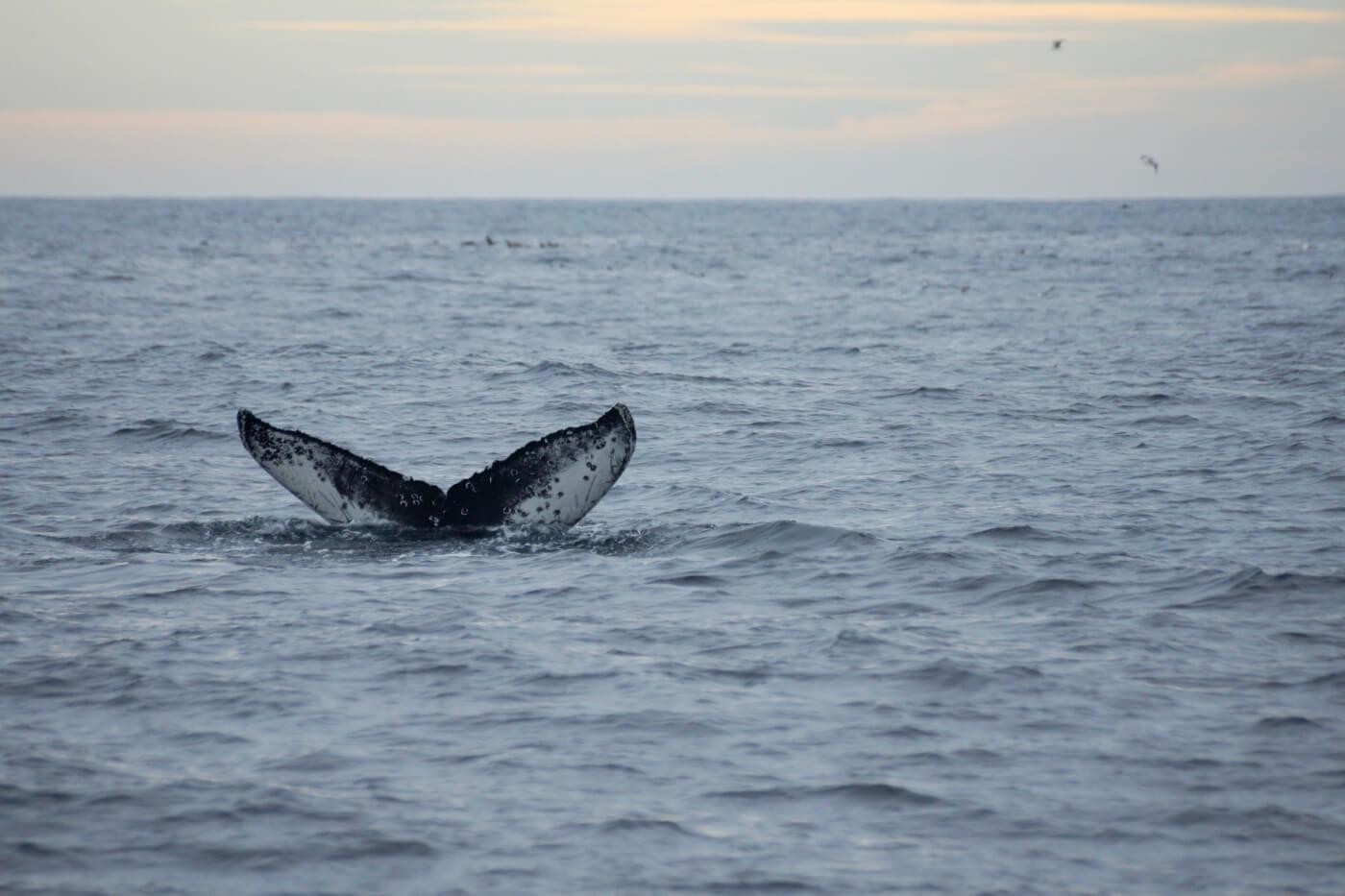
Southbound gray whale flukes 9 miles offshore. © Chris Biertuempfel

Southbound:

In January and February, Oceanic Society whale watchers saw 25 gray whales, all traveling south along the California coast. The furthest sighting took place nearly 10 miles offshore, while the closest was within a few hundred yards of shore. The last southbound gray whale we spotted was on February 11th. Since then we have seen only grays traveling north on their way back from Mexico to Alaska.
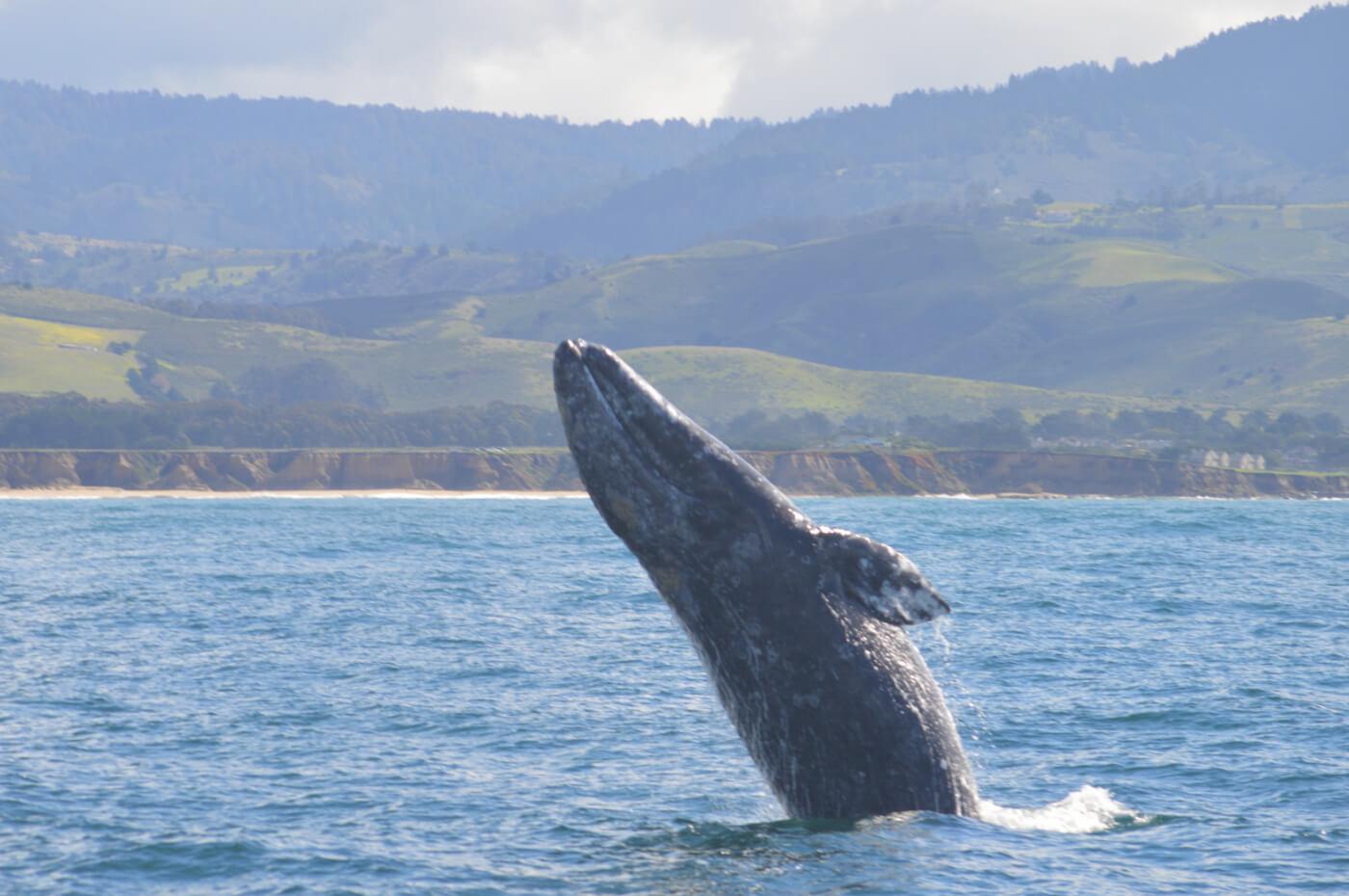
Acrobatic breaching gray whale. Photo taken on March 17th. © Peter Winch

Northbound:

In the past few weeks, we have seen a dramatic uptick in sightings with more than 30 northbound gray whales spotted in just our last 6 trips. In addition to spotting more whales, we’ve seen an increase in charismatic behavior as well. Breaching, fluking and even what our naturalists describe as “amorous behavior” are becoming more common as the season goes along. Soon, we anticipate cow-calf pairs to begin passing through Half Moon Bay.
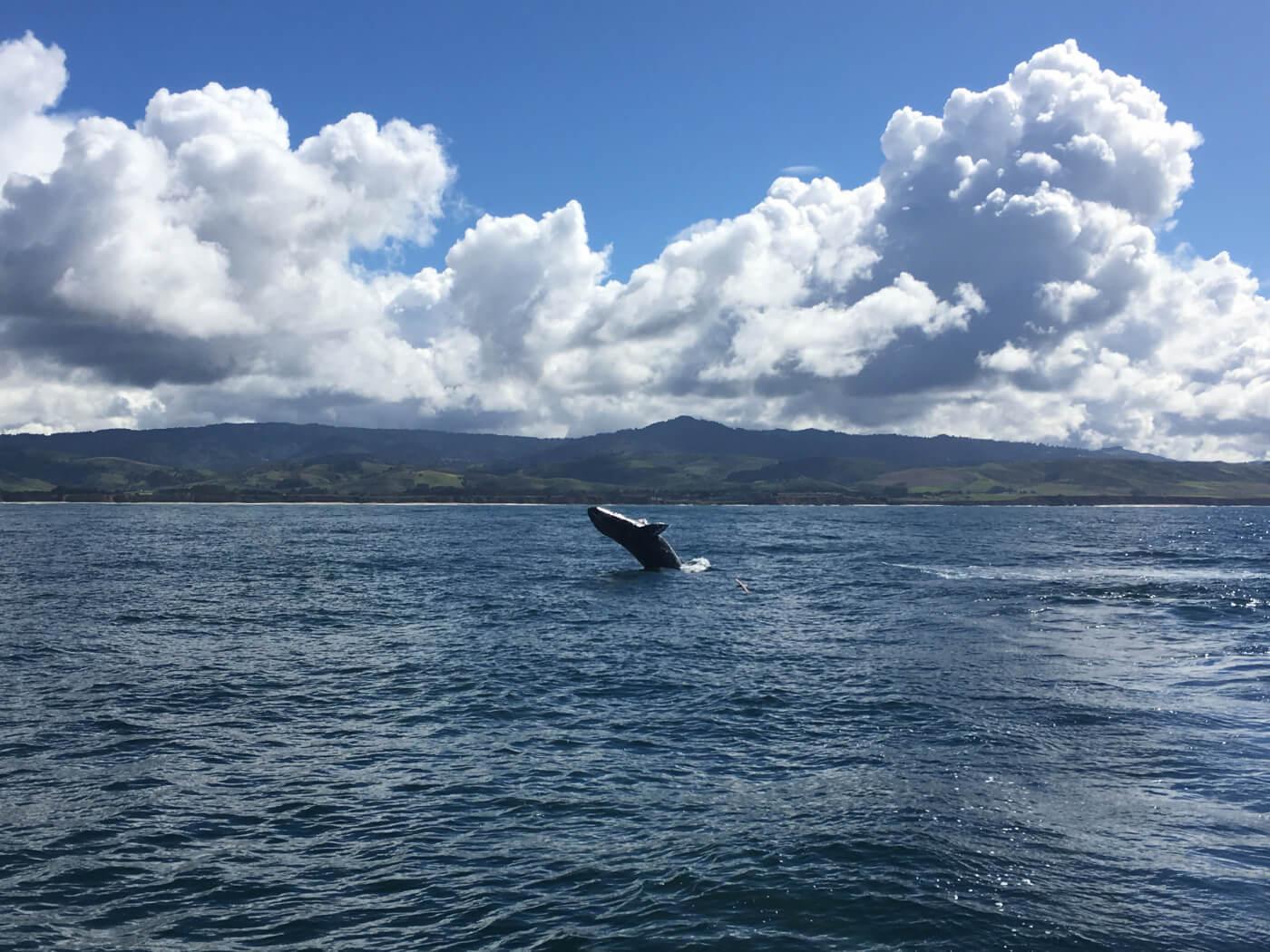
Gray whale descending from a mighty breach. © Austin Newton

Come join us on a 3-hour long whale watching cruise to view the gray whale migration as the weather and the whale sightings start to heat up. Our trips depart at 9:00am on Saturdays and Sundays. You can sign up here.

Chris Biertuempfel

Chris Biertuempfel manages Oceanic Society’s California-based operations, including Farallon Islands whale watching trips and the Conservation Scholars Program, which provides educational field trips for students from underserved communities. Chris also works extensively as a naturalist on trips to San Francisco's Farallon Islands and multi-day wildlife expeditions to Mexico and Indonesia.

Join our community.

Latest Posts

The Long Road of Green Sea Turtle Recovery

Read More
A wide panoramic landscape of the African savanna showing a massive herd of thousands of wildebeest spread across dry golden grasslands under a clear blue sky, with a single prominent acacia tree standing alone amid the animals extending to the distant horizon.

From the Field: Guiding Safaris and Protecting Kenya’s Wildlife and Coasts

Read More

How Conservation Travel Is Helping Protect Fiji’s Coral Reefs

Read More

12 Days Exploring Raja Ampat: An Onboard Naturalist’s Log

Read More

Check Out Our Amazing Trips

See All Trips

Wakatobi & Komodo Liveaboard: Snorkeling Indonesia’s National Parks

See Trip →

Baja: Sea of Cortez Snorkeling Liveaboard

See Trip →

Snorkel the Coral Triangle: Sulawesi, Halmahera & Raja Ampat

See Trip →
Aerial view of Rainbow Reef clear waters and mountains in Fiji

Fiji’s Rainbow Reef: Snorkeling & Conservation Expedition

See Trip →

Antarctica Expedition Cruise: The Spirit of Antarctica

See Trip →

Join our community.

Adventure awaits.

Request a Catalog
Become a Member

© François Baelen / Coral Reef Image Bank

Contact

Oceanic Society
P.O. Box 844
Ross, CA 94957

Whale Watching
1-415-256-9604

Expeditions & General Inquiries
1-800-326-7491

Office Hours

CA Office

Mon-Fri: 8AM–3PM
(PDT/PST)

DC Office

Mon-Fri: 9AM–5PM
(EDT/EST)

Navigate

  • Our Work
  • Take A Trip
  • Whale Watching
  • Adopt
  • Donate
  • Shop
  • About
  • Oceanic Society Magazine
  • Contact

Legal

  • Terms of Use
  • Privacy Policy
  • Accessibility Statement
  • Sitemap
footer-logo

© 2026 Oceanic Society. The Oceanic Society is a registered organization. Our Federal Tax ID is 94-3105570.

Website by Yoko Co

Scroll To Top
By continuing to browse the site you are agreeing to our use of cookies and similar tracking technologies described in our privacy policy.