On Saturday, November 02, 2024, our Farallon Islands whale watching expedition began like any other. A little bit of wind and swell made for an active ride out to the islands, and we spotted a few humpback whales as we traveled west from the Golden Gate Bridge toward the Farallon Islands.
As we pulled up to Southeast Farallon Island, another boat filled with supplies (fresh produce, dairy, and other essentials) for the researchers living on the island was unloading its contents onto a smaller boat that would then be lifted out of the water by crane and placed on the island to be unloaded. Around the same time, a helicopter landed near the powerhouse, collecting equipment from a recently completed construction project. With all of the logistical hustle and bustle, it was easy to become distracted from the fact that we were on a wildlife expedition.
We were quickly reminded of this fact when one of the researchers from the island contacted me by radio to let me know that there had been two great white shark attacks on pinnipeds earlier that morning. This was welcome news to some of our passengers, who were hoping to catch a glimpse of one of these apex predators. We spent the next thirty minutes or so exploring different areas around the islands, first going into Mirounga Bay to see the northern fur seal colony on the West End, and the hundreds of California sea lions, Western Gulls, and Brandt’s Cormorants on the Marine Terrace.

We then went back to East Landing to get a look at the northern elephant seals in Garbage Gulch when I spotted two sea lion carcasses floating in the water near the rocks. One of them was far enough off the rocks that we could approach it. The captain and I decided we would take a few minutes to sit next to it in hopes that a shark might come in to scavenge on the remains. But after about 10-15 minutes of no activity, we decided to move on.
We went next into Fisherman’s Bay, where there were many Steller’s sea lions resting on the rocks amongst the California sea lions. They were easy to hear, with their belchy roars standing out above the barking California sea lions. I spotted a Brown Booby on Sugar Loaf, and as we began to move the boat into position for a better look at it, a call came over the radio: “A white shark is feeding on that Zalophus carcass” (Zalophus californianus being the scientific name for the California sea lion).
The captain put the boat in gear, and we quickly made our way back to that side of the island, hoping to get there in time. As we pulled around the corner, one could almost feel the anticipation and excitement from the passengers. A few minutes after we arrived, I noticed a large dark shadow in the water near the carcass, a flash of white, and I was able to confirm a white shark was investigating its potential lunch.
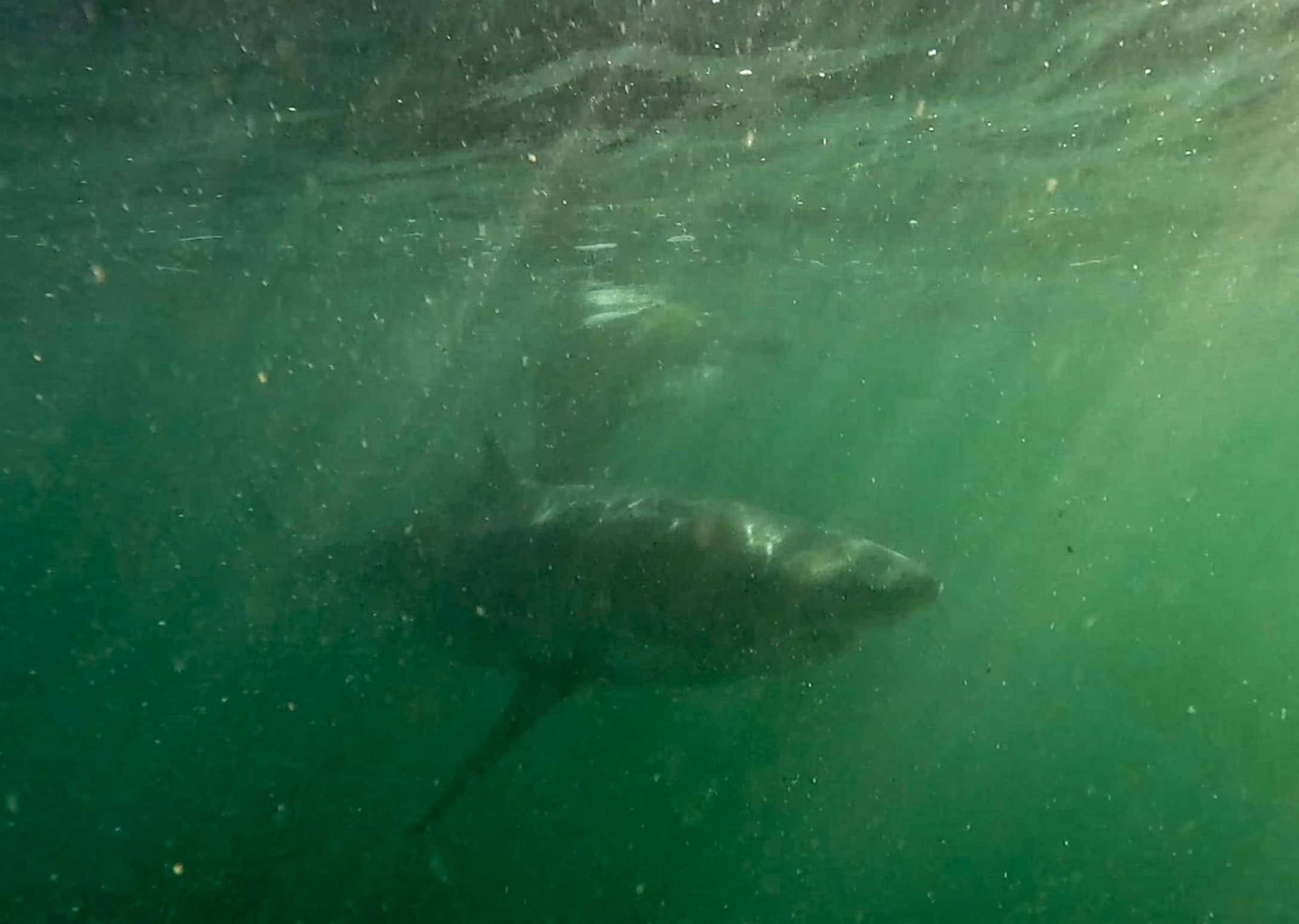
One of two great white sharks encountered on November 2, 2024. © Michael Pierson
On previous trips, I had observed researchers from the California White Shark Project recording sightings of individual sharks using a GoPro camera on a pole, inspiring me to bring along my own … and I’m sure glad I did. A large female great white shark with an acoustic tag under her dorsal fin on the right side made several passes before disappearing into the depths. We decided to move the boat to the other carcass, and this is where we encountered our second shark, a smaller male great white with a dorsal fin that bent over to the left near the top. This male gave us the best looks of the day, swimming right next to the boat along the length of the starboard side. We could feel the boat list as all the passengers leaned over the rail to get a closer look.
While encounters like this only happen a few times a year on our trips, it’s important that we document them when they do. We shared the photos and video captured with the researchers at California White Shark Project, Point Blue Conservation Science and the USFWS. Reports like ours add valuable data and contribute to a greater understanding of the movements and behaviors of this threatened species. With this knowledge we are able to better protect important habitats like the Farallon Islands to ensure that these incredible creatures continue to enthrall passengers for generations to come.
Join a Farallon Islands Wildlife Expedition
Oceanic Society has been leading wildlife focused tours to the Farallon Islands from San Francisco for more than 50 years! Our top-notch naturalists and experienced captain will take you on a guided, educational adventure in search of whales, pinnipeds, seabirds, great white sharks, and so much more. Trips run every weekend from April into December—click here for trip details and bookings.
Learn More About the Farallon Islands
Learn all about the wildlife and ecology of the incredible Farallon Islands in our Ultimate Guide to the Farallon Islands. In this comprehensive and richly illustrated resource, we dive into everything you need to know about the Farallon Islands and their surrounding waters from geography and geology to fauna and flora, human history, conservation efforts, answers to frequently asked questions, and more. Dive in and explore the Farallon Islands.