Skip to content
Oceanic Society
  • About
    • Our Team
    • Oceanic Society Magazine
    • Our History
    • Contact
  • Our Work
    • Sea Turtle Conservation
    • Access to Nature
    • Behavior Change
    • Global Ocean Cleanup
    • Learn & Take Action
  • Take A Trip
    • Browse Trips
    • Snorkeling Trips
    • Wildlife Trips
    • Family Trips
    • Volunteer Trips
    • Custom & Private Trips
    • About Our Trips
  • Whale Watching
    • Farallon Islands Whale Watching
    • Private Charters
  • Adopt
    • Adopt a Dolphin
    • Adopt a Whale
    • Adopt a Sea Turtle
    • Adopt an Albatross
  • Donate
    • Double Your Donation
    • Ways to Give
    • Become a Member of Oceanic Society
    • Donate Crypto
    • Shop
  • About
  • Magazine
  • Contact
Oceanic Society
  • About
    • Our Team
    • Oceanic Society Magazine
    • Our History
    • Contact
  • Our Work
    • Sea Turtle Conservation
    • Access to Nature
    • Behavior Change
    • Global Ocean Cleanup
    • Learn & Take Action
  • Take A Trip
    • Browse Trips
    • Snorkeling Trips
    • Wildlife Trips
    • Family Trips
    • Volunteer Trips
    • Custom & Private Trips
    • About Our Trips
  • Whale Watching
    • Farallon Islands Whale Watching
    • Private Charters
  • Adopt
    • Adopt a Dolphin
    • Adopt a Whale
    • Adopt a Sea Turtle
    • Adopt an Albatross
  • Donate
    • Double Your Donation
    • Ways to Give
    • Become a Member of Oceanic Society
    • Donate Crypto
    • Shop

A New Look at Plastic Pollution in Belize

Home / Blog / A New Look at Plastic Pollution in Belize

August 3, 2015 • News Announcements, Program Updates

Share This

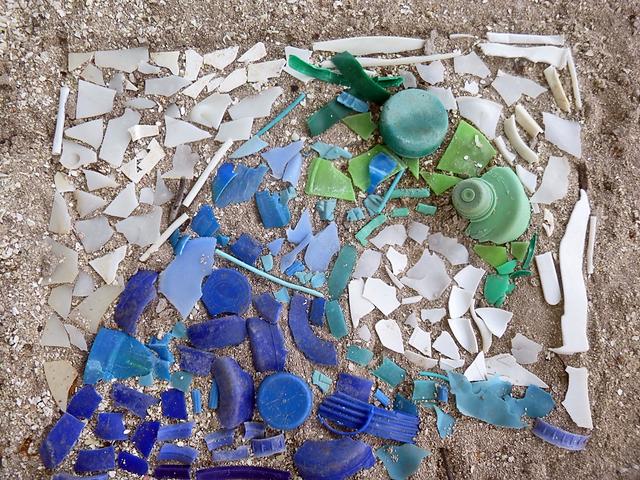
This wave was one of the many art pieces created with plastic collected on the beach.

Over the 15 years that we have owned and operated our Blackbird Caye Field Station in Turneffe Atoll, Belize we have seen the volume of plastic pollution along our beachfront grow dramatically. Given that we are in a fairly remote location (30 miles offshore) it is particularly disturbing to see just how much trash is floating around in our oceans no matter how far “away” we think we are.


Support our work in Belize on Indiegogo.


Last week I visited the field station as part of a group effort to study the extent of plastic pollution in Turneffe Atoll and to create artwork that will draw public attention to the problem and promote solutions. Along with our Belize program staff, I was joined by Oceanic Society artist-in-residence and plastic interpreter, Pam Longobardi, and Emory University graduate student and Belizean American, Paulita Bennett-Martin. Together, Pam and Paulita have started a program called Plastic Free Belize that is modeled in part on a Plastic Free Island campaign that Pam has worked on for the last 5 years in Greece. We were also joined in the field by a group of 16 high school students with National Geographic Student Travel.
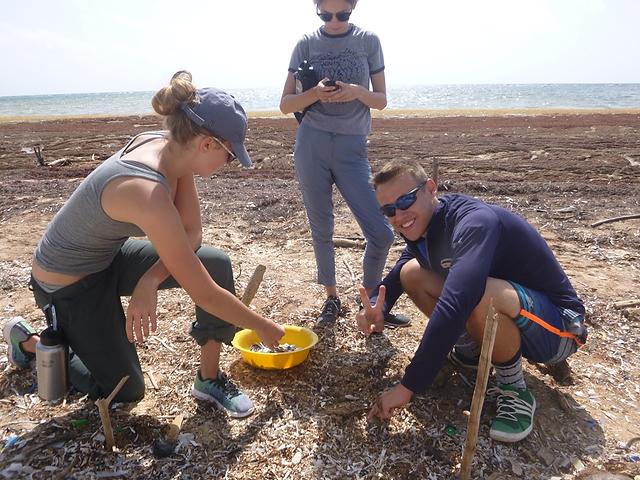
Students collect micro-plastic from within a transect to count.

Together we carried out transect surveys of plastic pieces found on the beach at the field station (for Paulita’s graduate research) and created art pieces (with Pam’s guidance) from the plastic that we encountered. This culminated in the creation of a large-scale art installation that was, sadly, so big it had to be photographed by a drone. The work will be used to create public awareness in Belize and the U.S. about the problem of plastics in our oceans and hopefully to lead towards the behavior changes that are needed to start addressing this problem.

These efforts complement a broader initiative at Oceanic Society—the Blue Habits program—that aims to go beyond simply ‘raising awareness’ about ocean issues, to directly motivate and sustain changes in human behavior that lead to healthier oceans.

If you would like to support these programs, please visit our campaign on Indiegogo and help spread the word. We’re aiming to raise $10,000 to support our summer research and education programs in Turneffe Atoll.
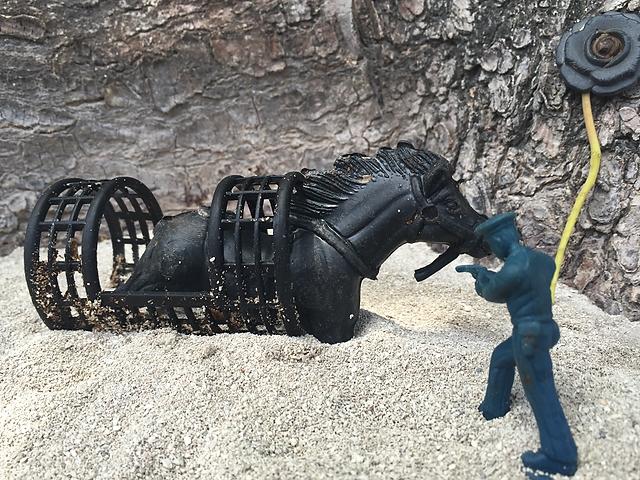
"Caged and cornered by plastic," artwork created using plastic debris collected on the beach.

Wayne Sentman

Wayne Sentman is Oceanic Society's Director of Conservation Travel programs and an expedition naturalist since 1998. He is an experienced guide with a diverse background in marine mammal, seabird, and marine debris research. Wayne also co-teaches undergraduate field programs in Kenya on human-wildlife conflict and on the use of social media and art to raise public participation in conservation. He recently received a Master's in Environmental Management from Harvard University.

Join our community.

Latest Posts

A Rare Encounter with Solo Killer Whale CA212A Near the Farallon Islands

Read More
A shirtless Indonesian man with swim goggles on his head, wearing blue swim shorts, paddles a traditional bamboo outrigger canoe across calm turquoise ocean waters under a clear blue sky. Distant green volcanic mountains rise on the horizon, with scattered white clouds above.

Expedition Impact Program Spotlight: Indonesia

Read More

A Traveler’s View: Snorkeling with Humpbacks in Tonga

Read More
leatherback sea turtle on beach

A Banner Year for Sea Turtle Conservation at Oceanic Society

Read More

Check Out Our Amazing Trips

See All Trips

Raja Ampat to Halmahera: Remote Reefs Adventure

See Trip →
Two whale sharks swimming together in the waters near the Galápagos Islands, a rare sight typically seen on specialized scuba trips to Darwin and Wolf Islands.

Triton Bay & Raja Ampat: Whale Sharks & Coral Wonders

See Trip →

Alor to Komodo: Reefs, Rays & Dragons

See Trip →

Seychelles & Madagascar Luxury Island Cruise

See Trip →
Aerial view of Raja Ampat Indonesia

Raja Ampat Archipelago by Liveaboard

See Trip →

Join our community.

Adventure awaits.

Request a Catalog
Become a Member

© François Baelen / Coral Reef Image Bank

Contact

Oceanic Society
P.O. Box 844
Ross, CA 94957

Whale Watching
1-415-256-9604

Expeditions & General Inquiries
1-800-326-7491

Office Hours

CA Office

Mon-Fri: 8AM–3PM
(PDT/PST)

DC Office

Mon-Fri: 9AM–5PM
(EDT/EST)

Navigate

  • Our Work
  • Take A Trip
  • Whale Watching
  • Adopt
  • Donate
  • Shop
  • About
  • Oceanic Society Magazine
  • Contact

Legal

  • Terms of Use
  • Privacy Policy
  • Accessibility Statement
  • Sitemap
footer-logo

© 2025 Oceanic Society. The Oceanic Society is a registered organization. Our Federal Tax ID is 94-3105570.

Website by Yoko Co

Scroll To Top
By continuing to browse the site you are agreeing to our use of cookies and similar tracking technologies described in our privacy policy.