On a late night in February 2024, Udi Bornovski sat at a table at the Barracuda, a popular restaurant at the wharf in Koror, eagerly awaiting a meeting with National Geographic’s film team.
They had just arrived in Palau, a remote island nation on the eastern edge of Micronesia, with one ambitious goal: to capture footage of dugongs with Udi as their guide.
Few people know Palau’s reefs, seagrass meadows, and hidden corners as intimately as Udi. After a lifetime exploring the archipelago, he has developed a rare understanding of where dugongs still gather. With only an estimated 100,000 individuals remaining worldwide, these elusive marine mammals have become increasingly difficult to encounter, shaped in part by a long history of hunting and habitat loss.
“In the past, dugongs were hunted almost to extinction here until they were protected in the 2000s,” Udi explains, “But I’ve known of a couple of areas where they like to congregate.”
There had been reports of dugongs in the area the previous morning, so Udi told the National Geographic team they needed to be on the water at first light for their best chance of finding one of the ocean’s most elusive marine mammals.
As dawn broke, they loaded cameras and drones onto the boat and departed the wharf. Only a gentle wind brushed across the ocean; the surface was so still it looked like a mirror reflecting the orange and pink sky painted by the rising sun.
When they reached a secluded seagrass meadow nestled between uninhabited islands, the first drone footage revealed two dugongs grazing peacefully below. Then more drifted into view. Within minutes, the pair had grown into a gathering of more than 20 dugongs. Males and females courted while calves glided through the meadow alongside them. Dugongs rarely assemble in large social groups, and when they do, the encounters are often fleeting. Within twenty minutes, the entire herd had disappeared.
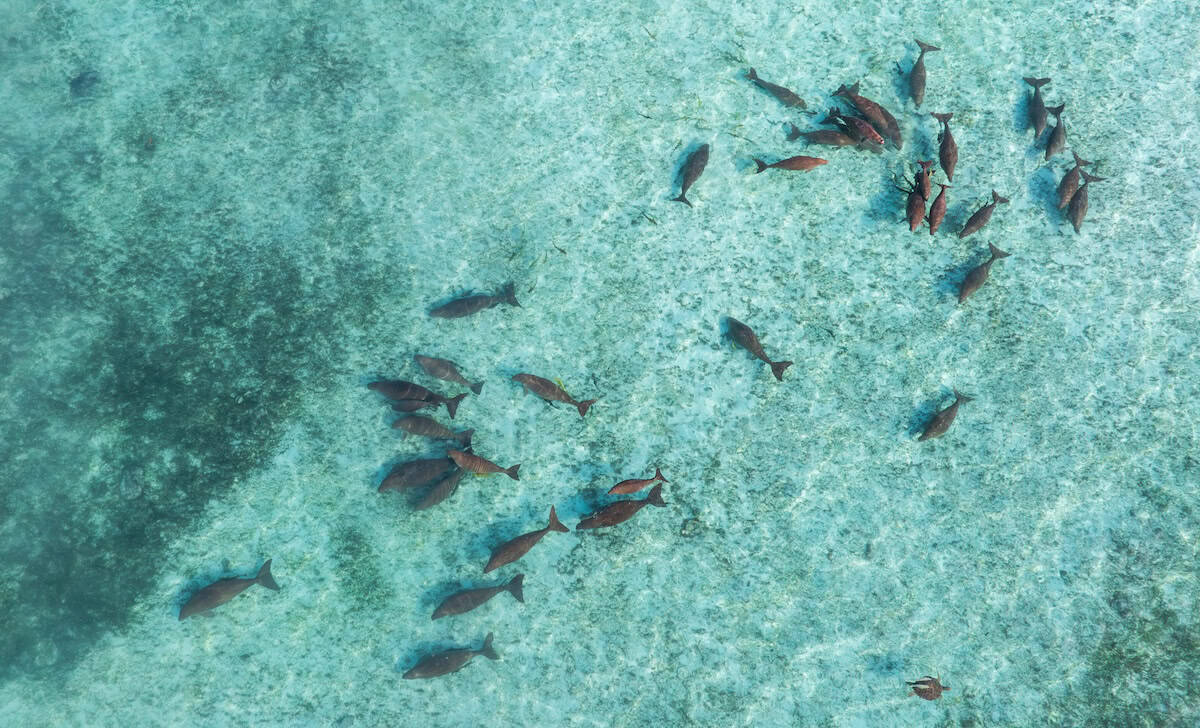
More than 20 dugongs gather in a secluded seagrass meadow, a remarkable sight made possible by decades of conservation. Photo by Udi Bornovski.
The film crew was ecstatic, but Udi had a feeling the dugongs would return. The next morning, they returned to the same spot and were rewarded with an even more extraordinary sight. This time, nearly 30 dugongs gathered beneath the boat, offering the crew breathtaking aerial footage of a spectacle few people have ever witnessed. Realizing they were experiencing a once-in-a-lifetime moment, Udi grabbed his camera, slipped on his fins, and quietly entered the water.
“Lo and behold, a mother and calf came and started circling me,” he recalled. The curious pair showed little fear, slowly inspecting him before disappearing into the blue.
For Udi, the encounter was more than a once-in-a-lifetime photography opportunity. Seeing so many dugongs gathered together, seemingly unafraid of humans, felt like tangible proof that decades of conservation in Palau were working.
“All I can say is that I felt that the conservation worked, because they have a safe habitat where nobody’s going to bother them.”
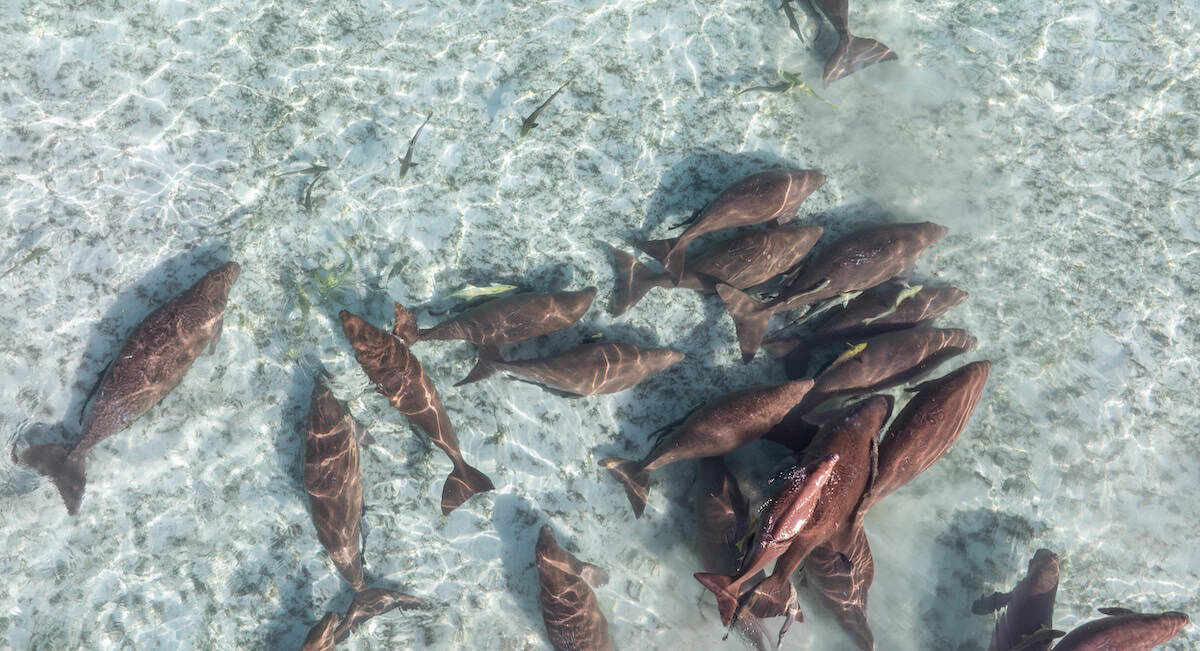
A rare glimpse of Palau’s dugongs that captured global attention, highlighting the importance of protecting the habitats where these marine mammals thrive. Photo by Udi Bornovski.
That sense of protection extends far beyond a single seagrass meadow. In 2015, Palau established the Palau National Marine Sanctuary, protecting nearly 80 percent of the nation’s territorial waters and creating one of the world’s largest marine protected areas. The sanctuary provides critical protection for vulnerable marine ecosystems and has become a global model for ocean conservation.
The footage captured by Udi and the National Geographic team quickly drew international attention. Images of the extraordinary dugong gathering were shared around the world, including by Leonardo DiCaprio and Palau’s president, offering compelling evidence of what strong marine protection can achieve.
But Udi sees these modern conservation measures not as a new approach, but as a continuation of a much older tradition. After moving to Palau with his family in the early 1990s, he grew up immersed in the islands’ culture and has witnessed firsthand how deeply stewardship of the ocean is woven into Palauan identity.
An Epic Journey to Palau
Forty years ago, Udi’s parents had completed their mandatory military service in Israel and were traveling the world when a friend offered them an opportunity that would change their lives forever: to work on a liveaboard in Palau, a place they knew little about beyond images of spectacular coral reefs.
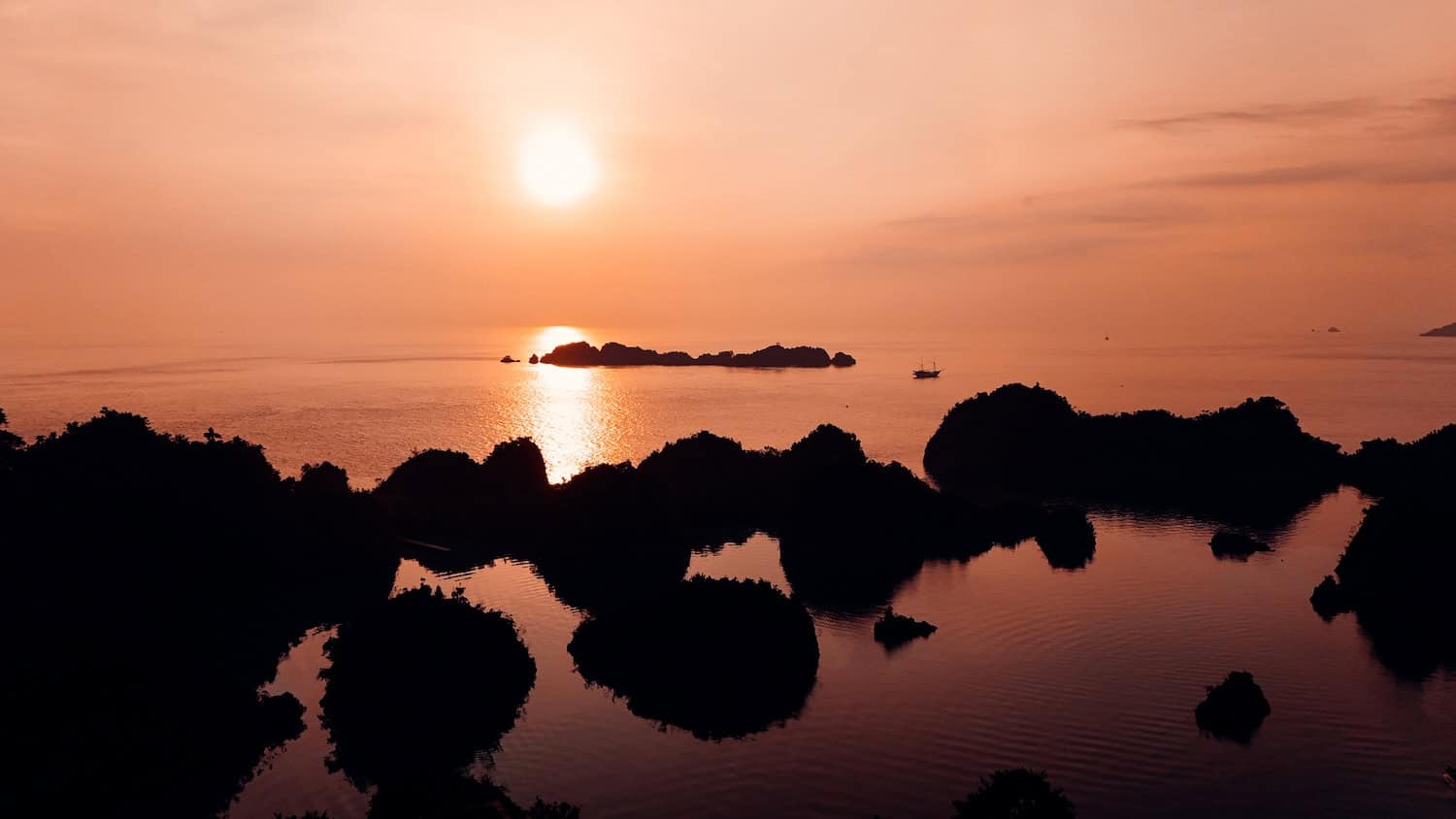
A liveaboard silhouette rests on the horizon as the sun sets over Palau’s tropical waters. Photo by Udi Bornovski.
The young and adventurous couple took a chance and packed their bags. When they arrived, they were immediately struck by the warmth of the people and the natural beauty of the islands.
“For them, it was love at first sight,” says Udi. They spent their days exploring Palau’s legendary Rock Islands, snorkeling thriving reefs, and making lifelong friends. Before long, they realized they didn’t just want to visit Palau. They wanted to build a life there.
“They worked for a year, and in their minds a light bulb clicked,” says Udi.
After returning to Israel and welcoming Udi and his older sister, they began planning their return. A few years later, they sold nearly everything they owned, traveled to Florida, bought a 1959 Dutch steel motorsailer, and set sail for Palau.
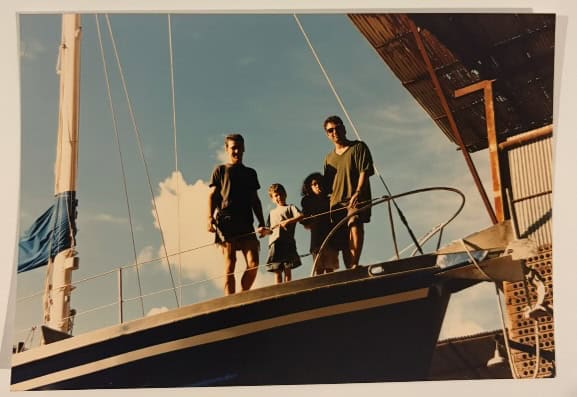
A young Udi and his family stand at the bow of the 1959 Dutch motorsailor that would take them to their new home in Palau. Photo courtesy of Udi Bornovski.
Udi was just three years old when they embarked on the nine-month journey across the Pacific, but many memories remain vivid. He remembers befriending a mahi-mahi that followed their boat and watching a pod of orcas surf the bow wave. He also remembers the quiet days adrift on a glassy ocean, waiting for the wind to return.
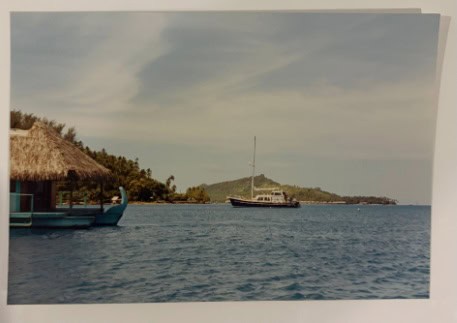
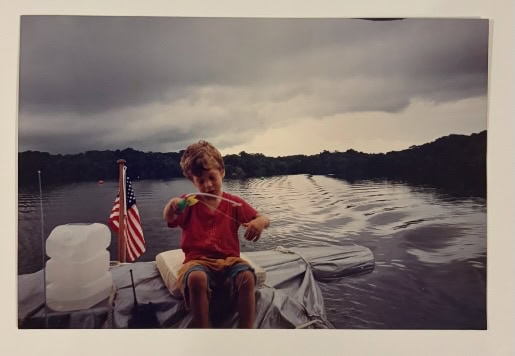
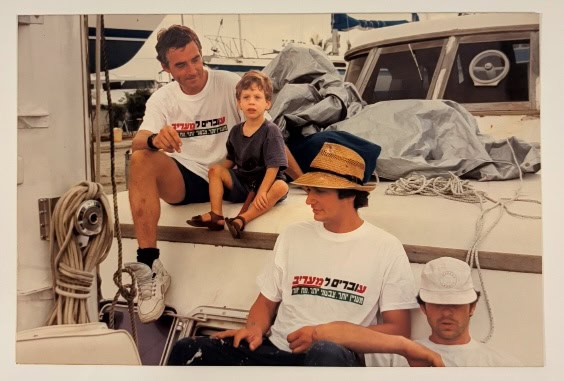
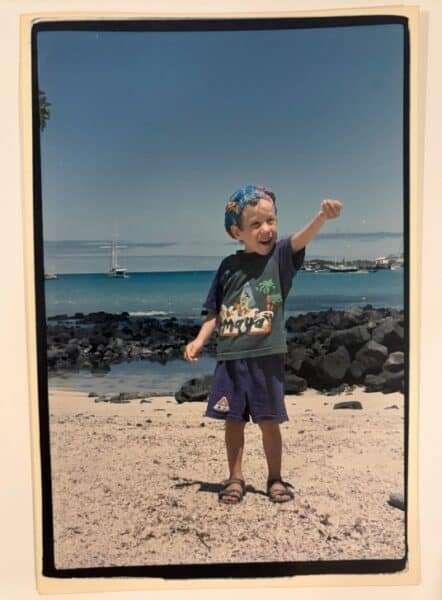
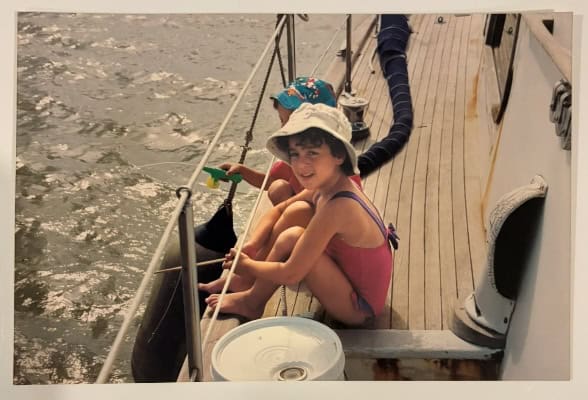
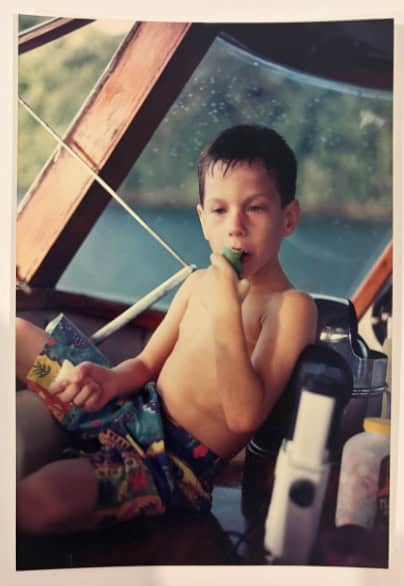
But perhaps most vivid are the memories of the people of the various islands across the Pacific as they stopped along to refuel and gather supplies.
“Pretty much every place we went to, the islanders just didn’t want us to leave. They adopted us,” Udi recalls. People would insist on them staying for weeks or even months when they only planned to stop for a few days. These experiences gave Udi an early taste for the culture of Palau, where the people are famously welcoming.
Nine months after embarking from Fort Lauderdale, Palau’s evergreen islands appeared on the horizon. Stepping onto the dock marked the beginning of a new chapter, one that immersed Udi in Palauan culture and its deep respect for the ocean.
Finding Home in Palau
In the mid-1990s, the Bornovskis were among a handful of immigrant families living in Palau. But Udi found his footing quickly. But Udi found his footing quickly. “If you get along, you’re accepted, regardless of your skin color, your ethnicity, your religion. Nothing matters for kids if you’re having fun together.”

He describes afternoons trekking through the mangrove coastline in the rain with his four closest friends, building tree forts, catching crabs and fish in the shallow waters, never far from the sound of the tide.

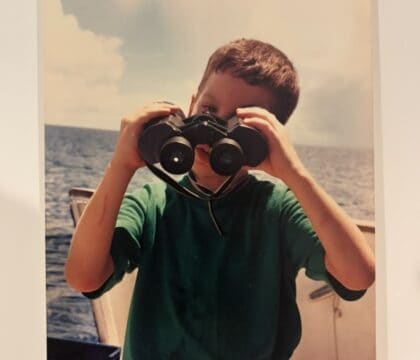
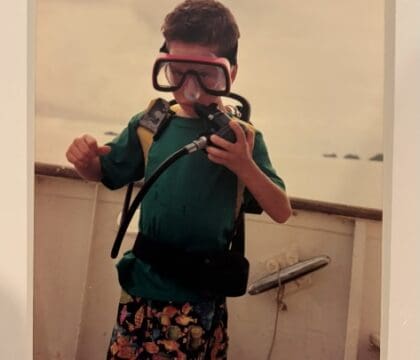
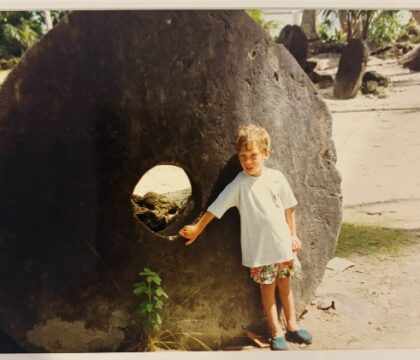
Meanwhile, his parents lived out their dream: they purchased a liveaboard, the Ocean Hunter, and began leading diving and snorkeling expeditions throughout the archipelago. Udi’s dad was the captain; his mom was the chef. Udi and his siblings took turns joining expeditions, learning to dive and snorkel, fish and prepare meals, and repair the boat, while meeting travelers from every corner of the world.
“You’re in that imaginative state at that age,” he says of those years underwater. “You feel like you’re living a real-life adventure.” That feeling never left. “Now if I’m out of the water for a couple of days, I start to get very irritable, very agitated—it just means I need to go for a swim.”
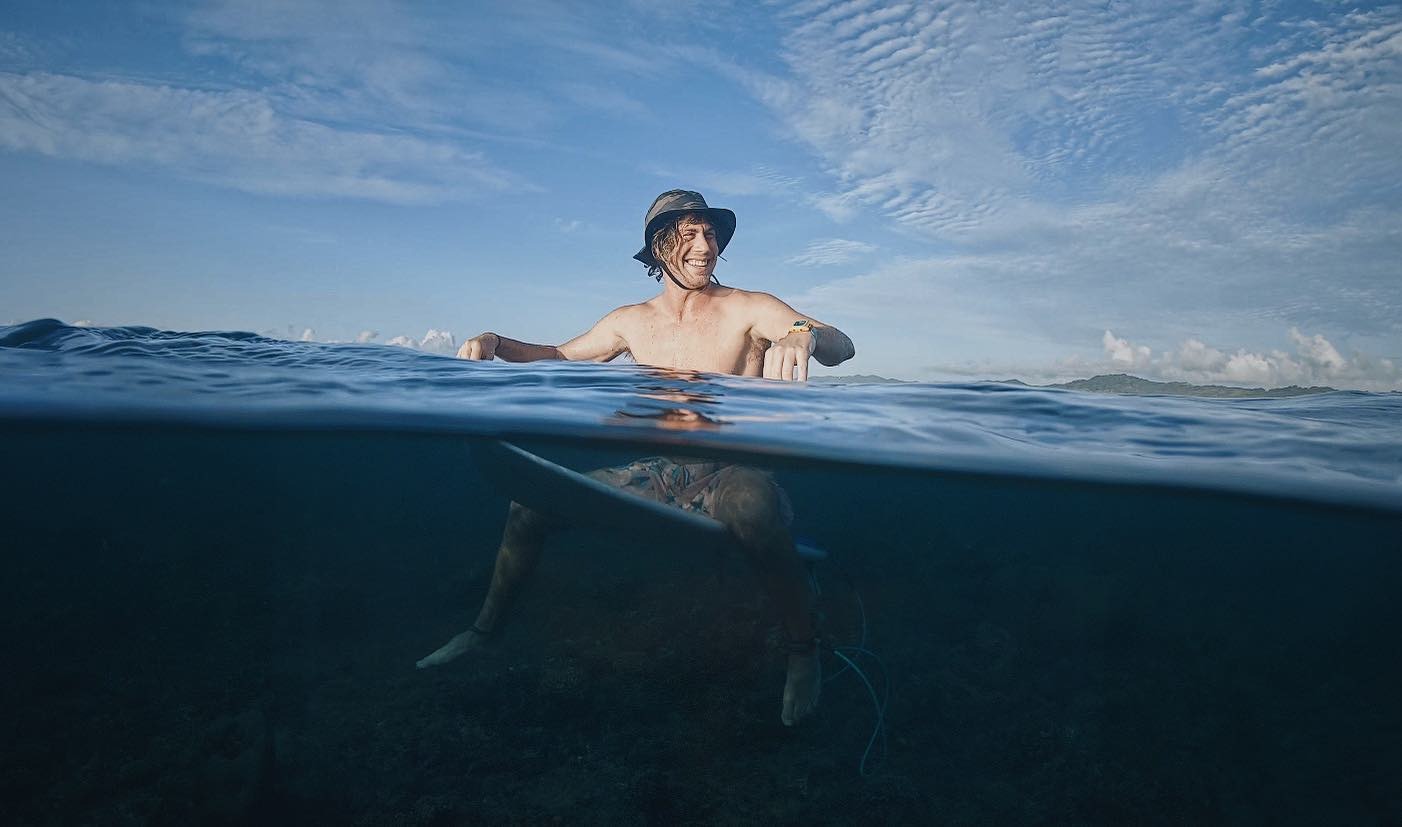
From surfing to diving, Udi has always been drawn back to the water with a sense of ease and familiarity. Photo by Udi Bornovski
Connecting Travelers to Palau’s Ocean Through Tourism
Over three decades, the family’s snorkel and dive operation, now known as Fish ‘n Fins, grew into Palau’s premier ecotourism company. Since 1997, Oceanic Society has partnered with Fish ‘n Fins to lead conservation-focused expeditions, giving travelers the opportunity to experience Palau’s marine ecosystems alongside knowledgeable local naturalists like Udi.
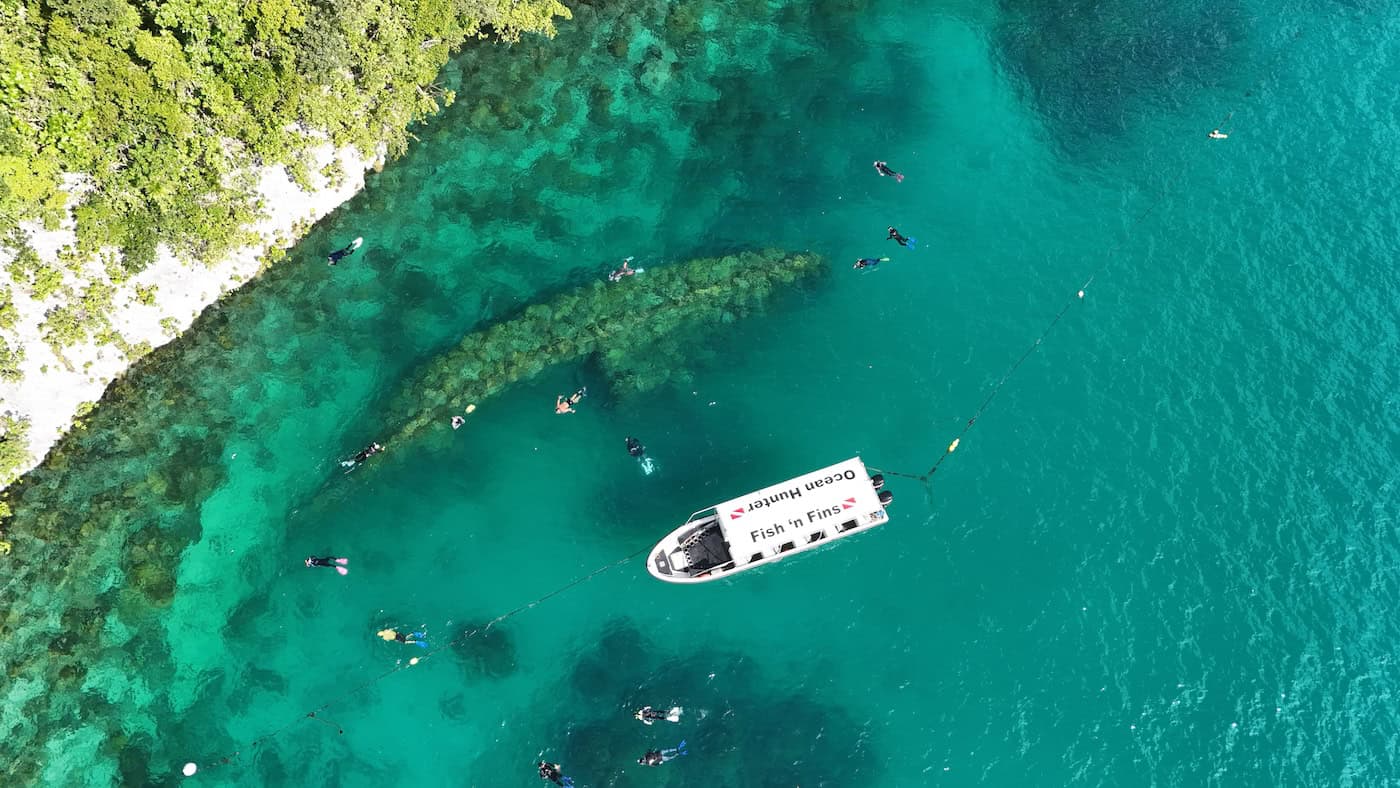
A day on the water with Fish ‘n Fins, connecting travelers to Palau’s extraordinary reefs. Photo by Udi Bornovski.
For Udi, guiding and photography have always gone hand in hand. Decades spent exploring Palau have given him an intimate understanding of the islands’ marine life, while his camera has become a powerful tool for conservation. Through photography, he not only shares the beauty of Palau with the world but also records the changes taking place beneath the surface.
His images of dugongs helped demonstrate the effectiveness of marine protected areas, while other projects have highlighted the impacts of warming waters on fragile reef ecosystems. By documenting both extraordinary wildlife encounters and the challenges facing the ocean, Udi’s work helps inspire others to protect the places he has called home for most of his life.
One of the most striking examples can be seen in Palau’s jellyfish lakes. In some years, these waters are filled with millions of golden jellyfish that drift toward the sunlit surface in synchronized movement. In 2020, however, Udi arrived to find something very different.
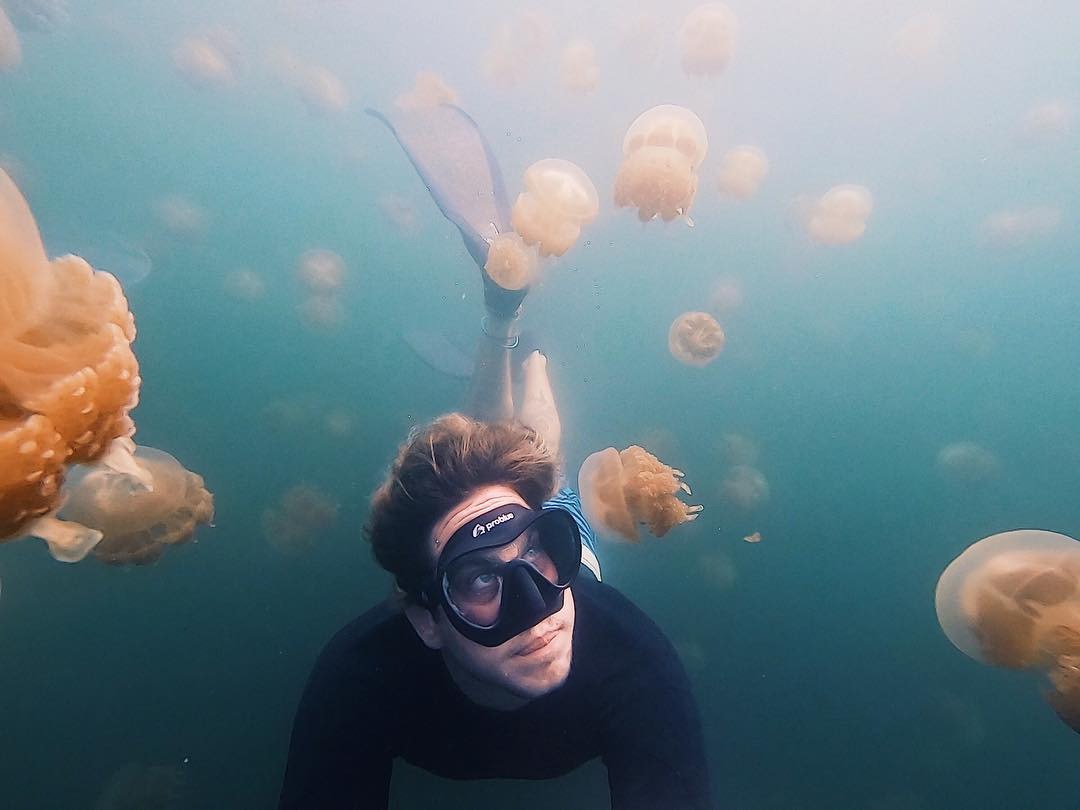
The number of golden jellyfish in Palau’s Jellyfish Lake changes with ocean temperatures. Heatwaves can trigger sharp declines, while cooler years allow the population to recover. Photo by Udi Bornovski
“There had been an exponential decline,” he recalls, describing how a marine heatwave had decimated the population. His photographs captured a stark shift in the lake’s ecology, one that he returned to document year after year as conditions changed.
“You need to have hard‑hitting facts to get donors to want to make a difference,” Udi says. For him, photography is both evidence and advocacy, a way to make visible what is often invisible.
As waters cooled in 2025, the jellyfish rebounded, underscoring how quickly marine systems can respond when conditions improve.
While jellyfish populations fluctuate, much of Palau’s broader marine environment has remained remarkably resilient. Relatively few travelers make their way to this remote part of Micronesia, and its reefs continue to reflect conditions more akin to decades past than many heavily impacted parts of the ocean.
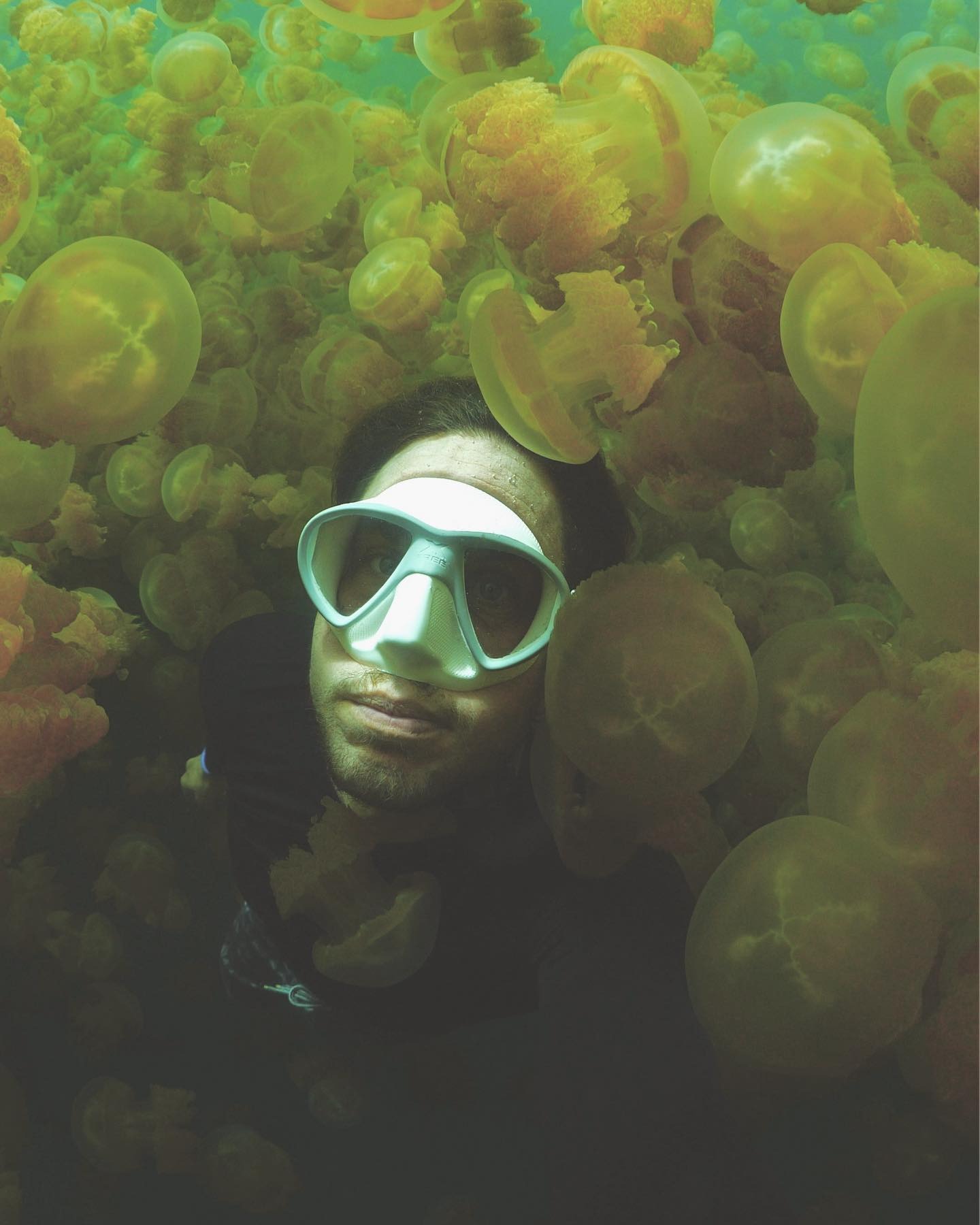
In Jellyfish Lake, Udi swims through a system in recovery, where golden jellyfish have returned in greater numbers after periods of steep decline. Photo by Udi Bornovski
For Udi, this resilience is deeply familiar. Before becoming a naturalist and conservation photographer, he dreamed of studying marine biology and spent his early years visiting Marine Protected Areas with his school. He remembers being struck by the abundance of life: turtles, seahorses, dense schools of fish, and even the occasional dugong.
Those experiences were shaped by something larger than chance. They were the result of a long conservation legacy rooted in cultural foundations that have defined Palau for generations.
A Deep History of Conservation
When the first Micronesian sailors arrived in Palau 3,000 years ago, they found beautiful jungle-clad islands with rich volcanic soil ripe for cultivation, and coastal marine ecosystems flourishing with abundant fish.
However, they eventually discovered that land-use practices were damaging coastal ecosystems. Many scientists now believe that the subsequent migration from inland communities to coastal settlements represented one of humanity’s earliest conservation interventions.
Over centuries, this relationship with the ocean became embedded in cultural identity. Stories and myths reinforced the consequences of ecological imbalance, while guiding principles emphasized long-term stewardship. Today, a common saying in Palau represents these values: “We do not inherit the earth from our parents; we borrow it from our children.”
One of the most enduring practices to emerge from this ethos is bul, a traditional moratorium placed on harvesting specific species. A bul is typically enacted when a species is in decline and may last for years or even decades, allowing populations to recover before harvest resumes.
For as long as Udi has lived in Palau, a bul has remained in place on bumphead parrotfish, a large and beautiful species of reef fish that is threatened with extinction globally. Because of long-term protection, Palau is now home to the world’s largest known mass spawning aggregation of bumphead parrotfish, a striking example of conservation at scale.
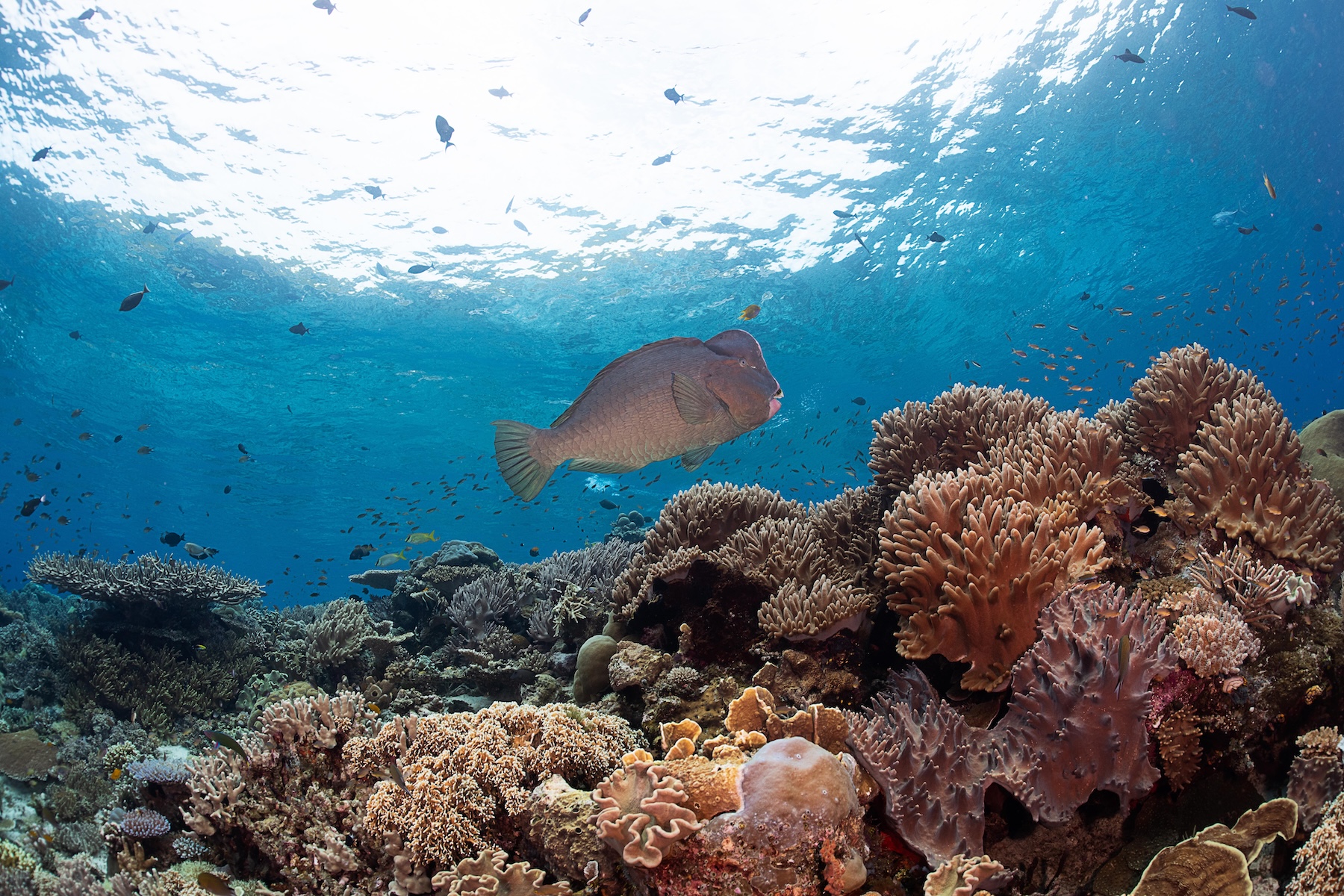
A bumphead parrotfish swims along a healthy coral reef. Photo by Tracey Jennings / Ocean Image Bank
On a new moon, bumpheads gather in quiet coastal channels surrounding the islands. After they congregate, they will begin spawning: the fish, which grow up to 5 feet long and can weigh more than 100 pounds, rush up to the surface in flashes of green and yellow arcs and release sperm and eggs in clouds of white.
“It’s like underwater fireworks,” Udi describes how he has seen some spawning events in Palau where around 2,000 bumphead parrotfish have gathered. The event often attracts an array of predators, like reef sharks and hammerheads, that prey on the fish.
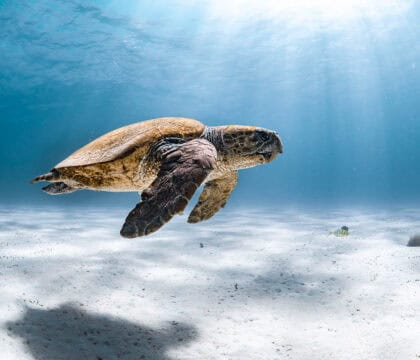
These traditions now exist alongside some of the most advanced marine protections in the world. Palau began establishing Marine Protected Areas in its regional waters as early as the 1950s. Over time, these safeguards expanded, culminating in the Palau National Marine Sanctuary, which helps protect endangered species such as dugongs, hawksbill sea turtles, and sharks.
Another major milestone came in 2009, when Palau established the world’s first shark sanctuary with support from the Micronesian Shark Foundation, a nonprofit founded by the Bornovskis to advocate for shark protection and research and to combat the shark fin trade. Since then, Oceanic Society has supported the foundation’s work through grants and volunteer programs, helping document coral reef and fish diversity in critical shark habitats.
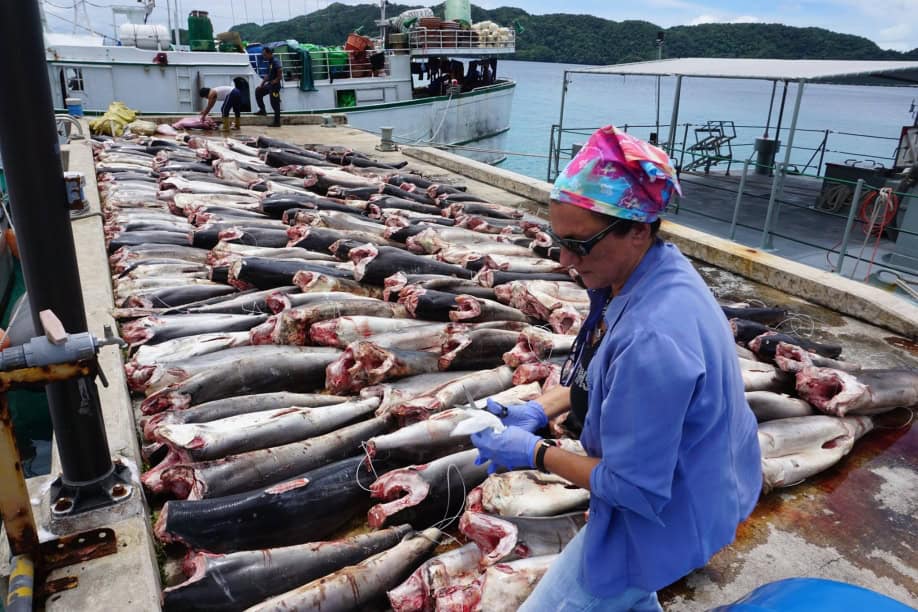
Tova Harel Bornovski collects DNA samples from sharks that were seized from an illegal fishing vessel by the Palauan government. Photo by Micronesian Shark Foundation.
Today, Palau is regarded as being home to some of the healthiest and most abundant shark populations in the world. As apex predators, sharks play a crucial role in maintaining balanced reef ecosystems, regulating species below them in the food web and supporting overall reef resilience.
What makes Palau distinctive is not only the scale of its protections, but how deeply conservation is tied to identity. These values have shaped not just environmental policy but economic direction as well.
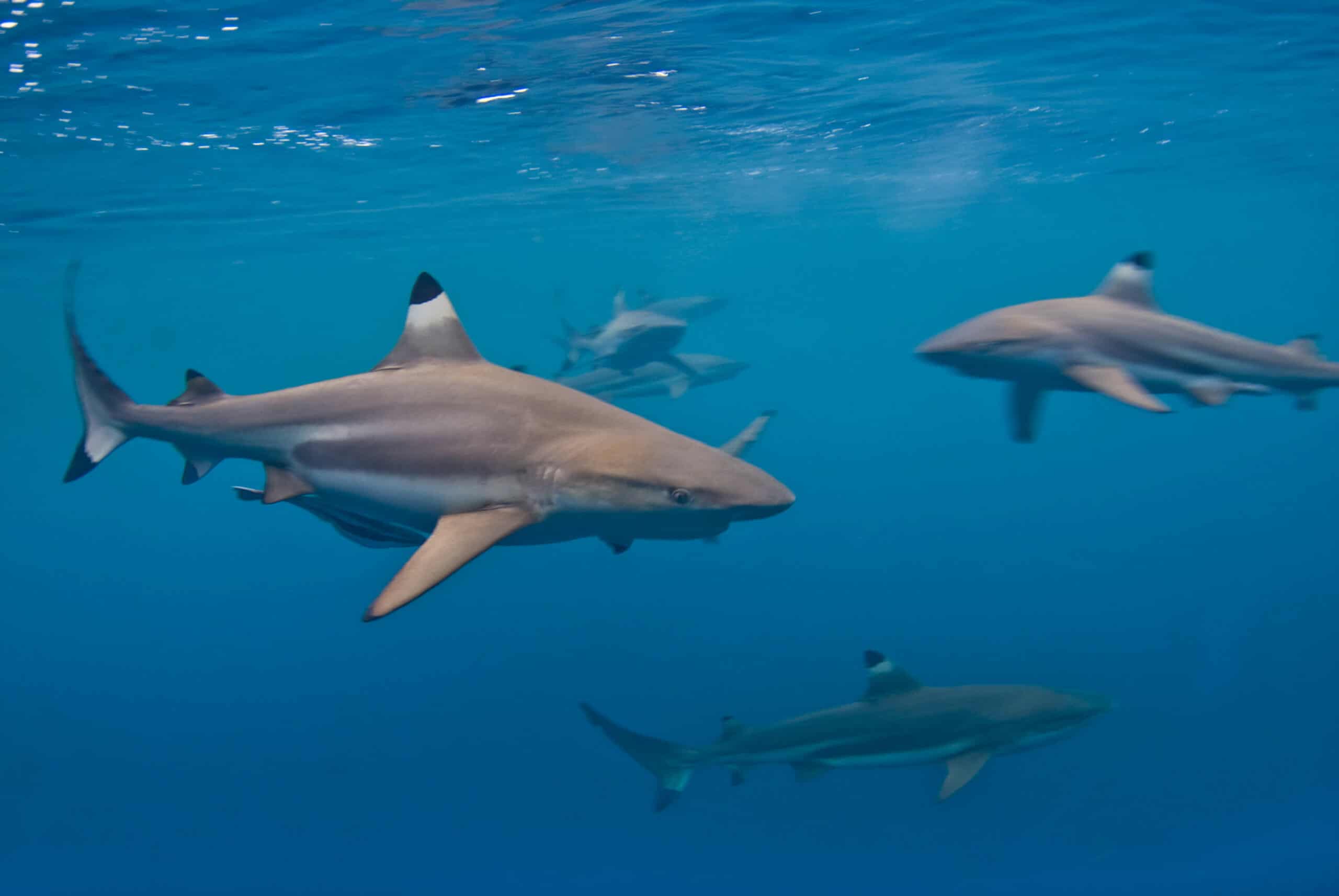
A school of blacktip reef sharks patrols Palau’s protected reefs. ©Fish n Fins
Footprints that Wash Away
Tourism has become one of the most important forces shaping modern Palau, but its development has been guided by a deliberate choice: to grow an economy built around protection rather than extraction.
This shift was reinforced with the establishment of the world’s first shark sanctuary. At the time, Palau’s president cited research showing that a living shark contributes an estimated $1.9 million annually to the ecotourism economy, compared to just $108 on the black market. The stark contrast captured a broader national transition toward conservation-based tourism.
Today, tourism accounts for roughly 40 percent of Palau’s economy. But what sets the country apart is not just the scale of tourism, but the way it is managed. With most of its waters under strict protection, only licensed operators are permitted to guide visitors, and all must undergo training in local customs and responsible wildlife interaction.
Rules prohibit practices such as chasing or feeding animals, damaging coral, or operating outside designated zones, with additional controls on boat traffic in sensitive areas. Enforcement is strict. Operators who violate regulations face fines or loss of their licenses. Marine park fees also generate critical revenue for the government, helping fund rangers who patrol protected areas and deter illegal fishing.
At the same time, tour operators themselves have become part of the enforcement system. Spending long hours on the water and working closely with the environment, many actively report illegal activity when they encounter it.
“We are citizen policemen,” Udi says, “If we see something we don’t like, we report it to the government.”
Ecotourism, however, is not without complexity. During the COVID-19 shutdowns, when visitor numbers dropped sharply, reefs around Palau saw noticeable ecological changes. Udi remembers being shocked by the sheer abundance of fish that returned to reefs. It underscored a difficult truth.
“It is a double-edged sword,” he describes.
Without tourism, Palau would struggle to fund the protections that safeguard its marine ecosystems, potentially increasing pressure toward more extractive industries. At the same time, too much activity can place stress on the very environments it seeks to celebrate.
Palau is intimately aware of this precarious balance and, as a result, requires travelers to sign the Palau Pledge upon entry. It’s a commitment to act responsibly while visiting, ending with the promise that “The only footprints I shall leave are those that will wash away.”
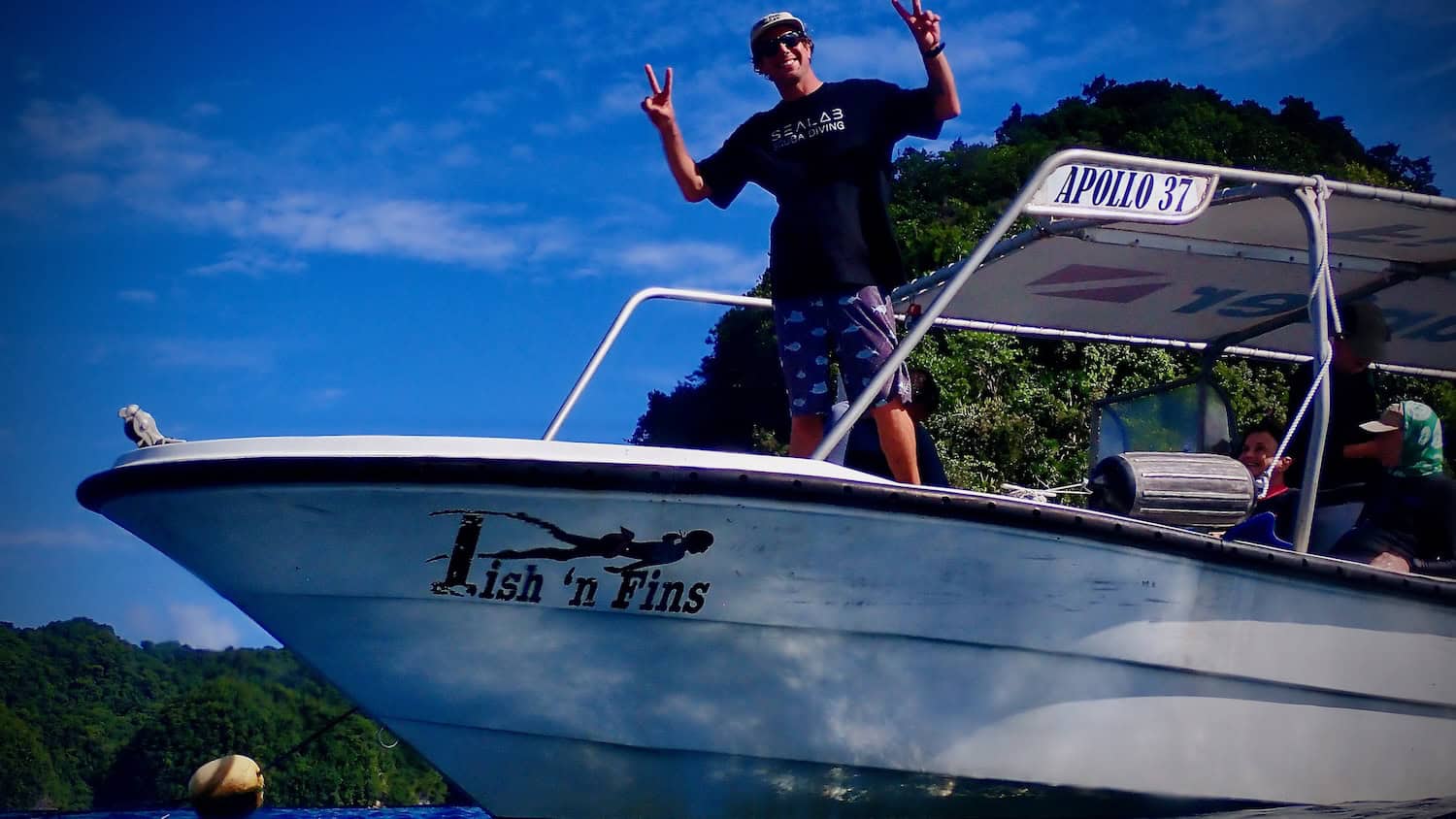
Udi on the Fish ‘n Fins vessel, leading an Oceanic Society expedition through Palau. Photo by Andy Wheatcroft.
Beyond regulation and policy, Udi sees something more profound taking shape through ecotourism.
As he guides Oceanic Society travelers, many experiencing intact coral reefs and abundant marine life for the first time, he witnesses moments of genuine transformation.
“You look into their eyes, and you can almost see tears,” he describes as he introduces travelers to his home country. “Money can’t buy that. Not every experience will give you that, but when you see that, it also gives me that tear in my eye.”
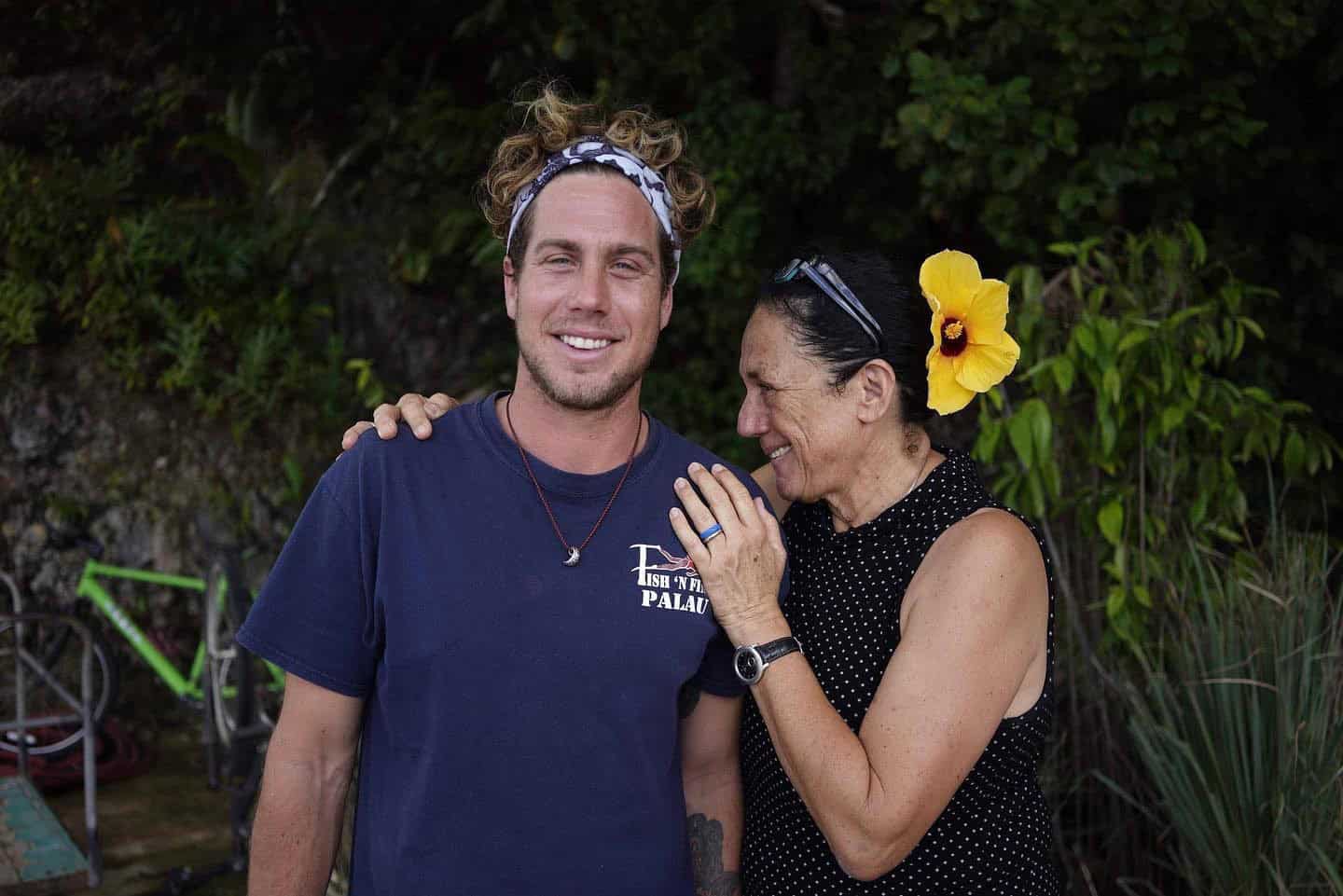
Udi and his mother, Tova, share a deep connection to Palau’s ocean. Photo by Udi Bornovski
That, he says, is the true power of ecotourism. Not just sustaining ecosystems and livelihoods, but shifting how people relate to the natural world. Oceanic Society travelers take with them a renewed sense of connection, appreciation, and responsibility, shaped by a culture that has long understood the importance of living in balance with nature. “They leave with a desire to make things better,” Udi says.
In some cases, that connection becomes even more lasting. For travelers like Udi’s parents, who came to Palau over 40 years ago, that experience of immersion becomes life-changing, even shaping where they ultimately call home.
“My goal is to make travelers feel connected to the places,” Udi describes. “You might feel like you come as a client, but you leave as family, and that is the Palauan way.”