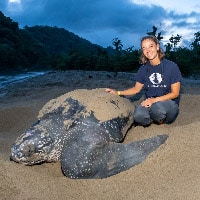
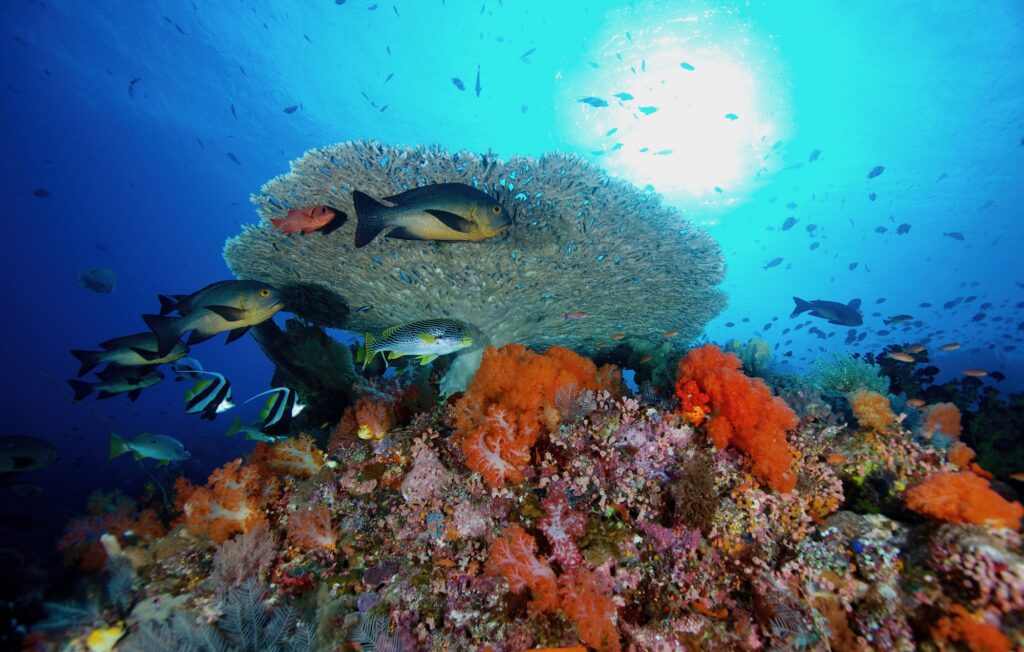
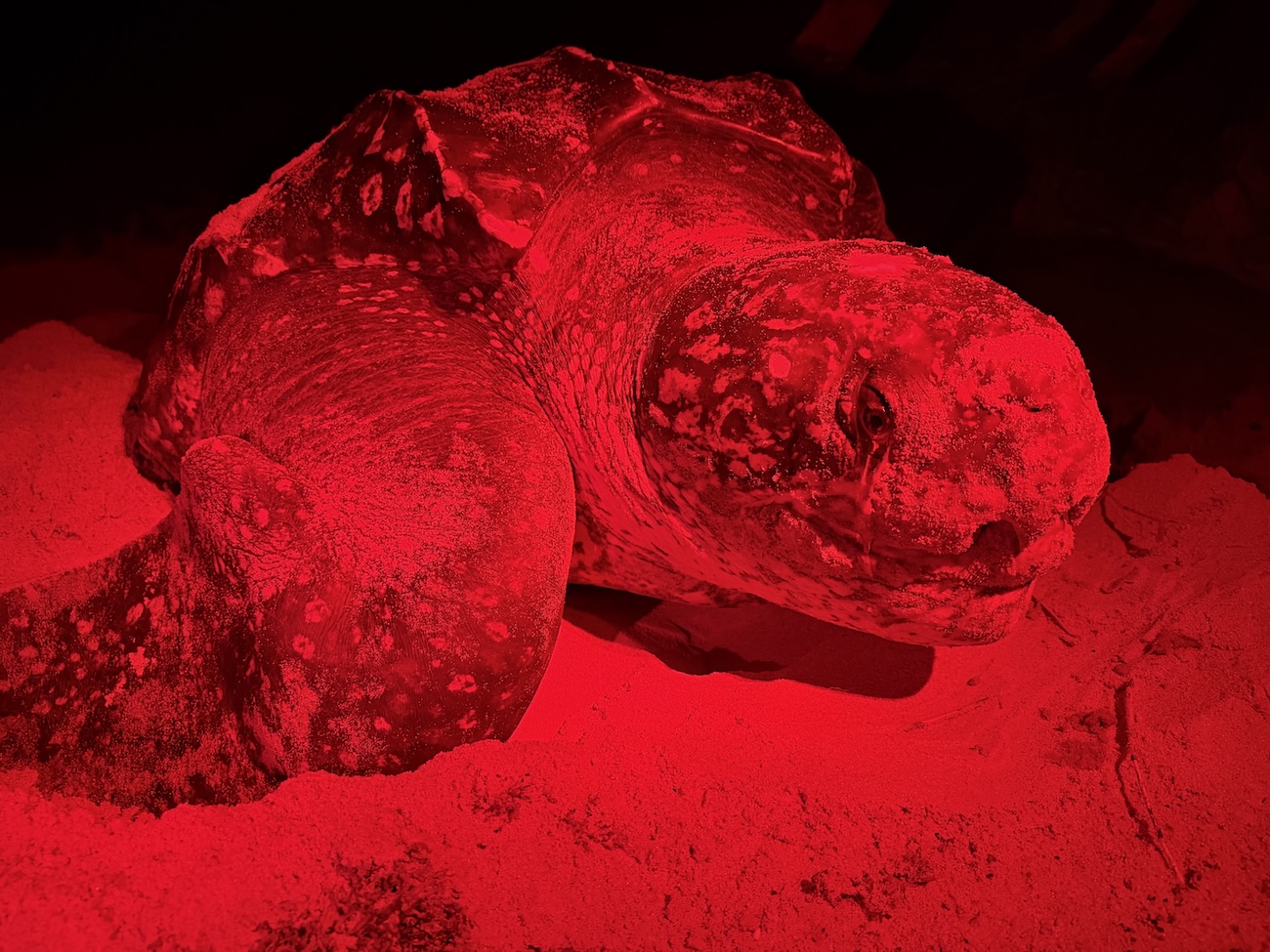
Over eight days in May 2026, our group traveled to Trinidad’s northeast coast for one of the most immersive conservation experiences Oceanic Society offers. We stayed at Suzan’s Guest House on the Nature Seekers property in Matura, and over six nights of beach patrols, we encountered more than 70 nesting leatherback sea turtles (the largest reptiles on Earth).
Between patrols, our days were filled with hummingbirds, river kayaking, jungle swimming holes, and one of the most spectacular wildlife displays I’ve ever witnessed: Scarlet Ibis flooding into the mangroves at Caroni Swamp as the sun went down.
Trip Highlights
✔️ 70+ nesting leatherback sea turtles encountered across six nights of beach patrol
✔️ 15 hummingbird species recorded in a single afternoon at Bajnath’s Hummingbird Estate, including Tufted Coquette and Ruby Topaz
✔️ Witnessed hundreds of Scarlet Ibises returning to roost at dusk at Caroni Bird Sanctuary
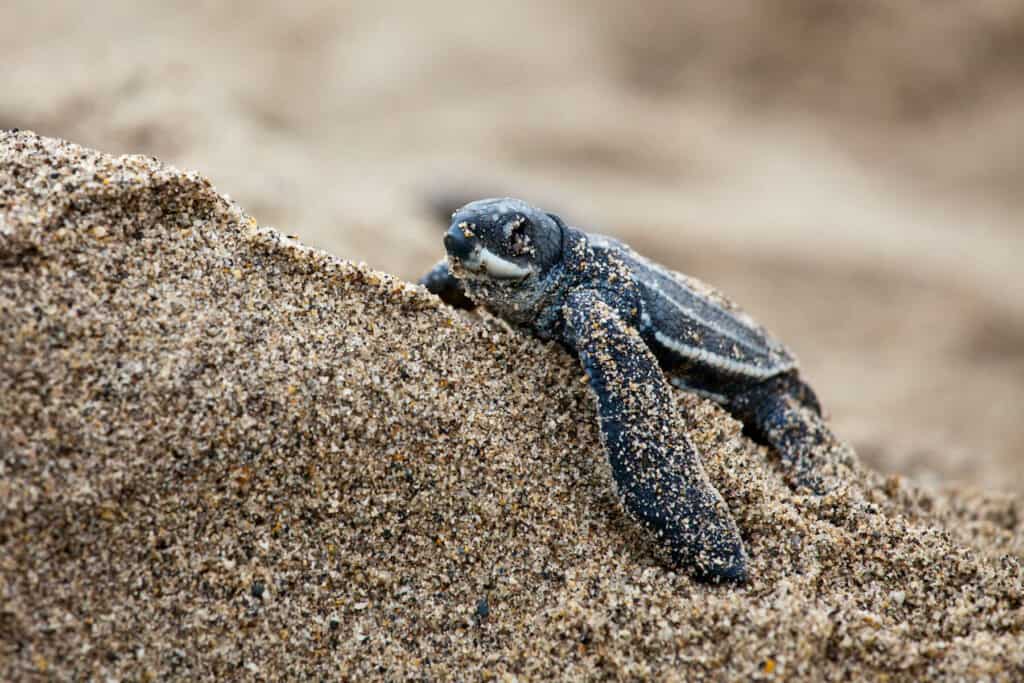
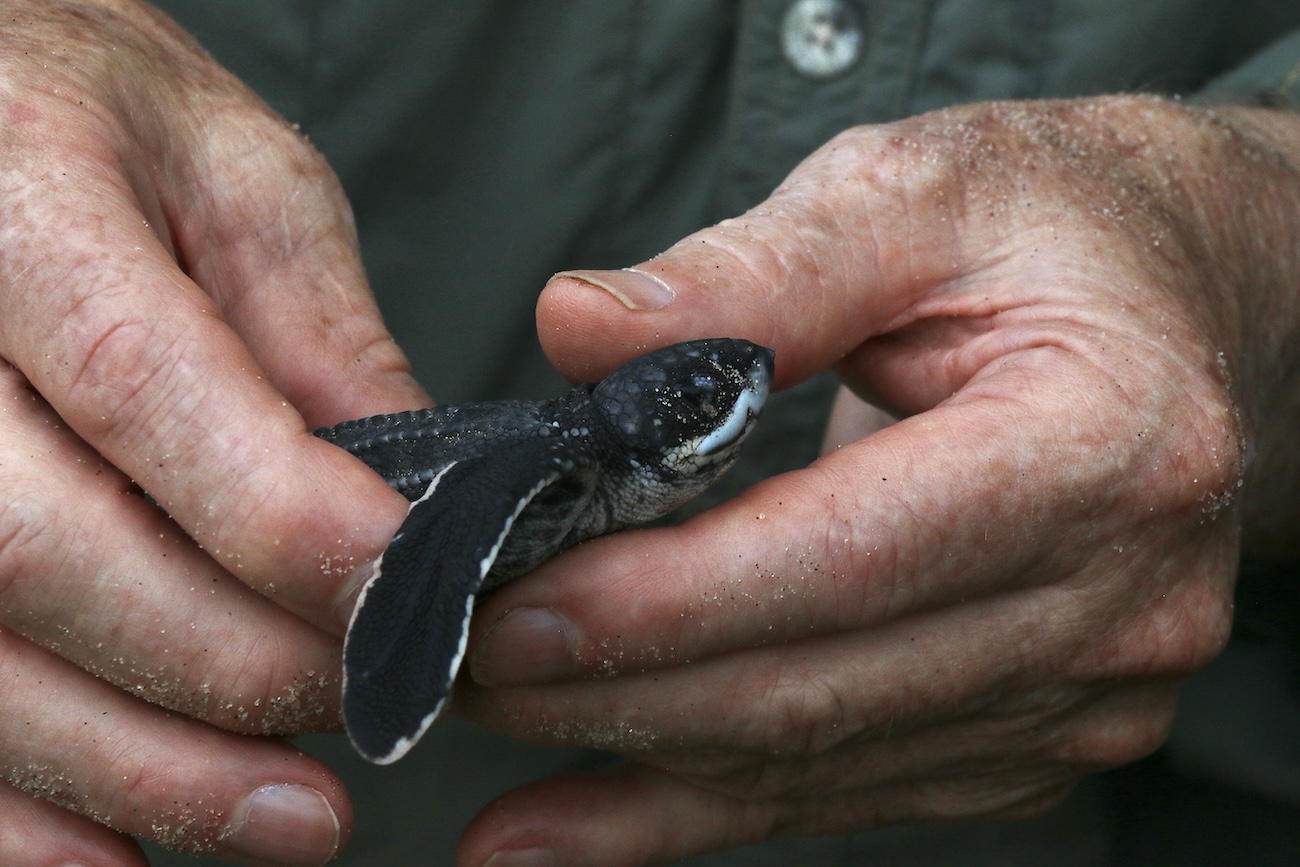
✔️ Released a leatherback hatchling into the sea in Grande Riviere, a trip highlight for many participants
✔️ Kayaked the Salybia River, hiked to Mermaid Pool, and swam in rainforest river pools
✔️ Experienced a farm-to-bar chocolate tour, from cacao harvest to handmade hot chocolate
By the end of the week, we had contributed real data to a multi-decade research program, built new skills, made friends, and come home changed. Here’s a glimpse into our trip:
Day 1 — Settling into Matura
Pickup from the Piarco International Airport went smoothly, with everyone arriving on time. We made our way across the island to the northeast coast, arriving at Suzan’s Guest House at the Nature Seekers property in Matura for dinner. After settling in, we headed to the beach for an introductory walk with a Nature Seekers guide. That night produced our first leatherback sea turtle of the trip.

Day 2 — Nature Seekers History, Training & First Turtle Patrol
Our morning began with a presentation by Kyle Mitchell, Scientific Chair of Nature Seekers, who told the remarkable story of how the organization was founded. Over 35 years ago, Suzan Baptiste began the project with a singular mission: to halt the open slaughter of nesting leatherback turtles on the Matura beach. What started as a community act of resistance has grown into one of the most successful marine conservation programs in the Caribbean — now an integrated part of the local economy and one of the region’s largest employers. The project draws thousands of visitors annually, turtle killing has been halted entirely, and Nature Seekers produces significant scientific research each season.
After Kyle’s talk, Rishta led us through our data collection protocol, with plenty of hands-on practice on “Myrtle”, Nature Seekers’ beloved stuffed leatherback training model. We learned how to apply flipper tags and PIT tags, measure carapace length and width, and accurately record all data on field sheets.
Guide Dillon led us on an afternoon walk through the surrounding forest trails — a chance to stretch our legs and get acquainted with the landscape before the main event.
© Izabel Lam
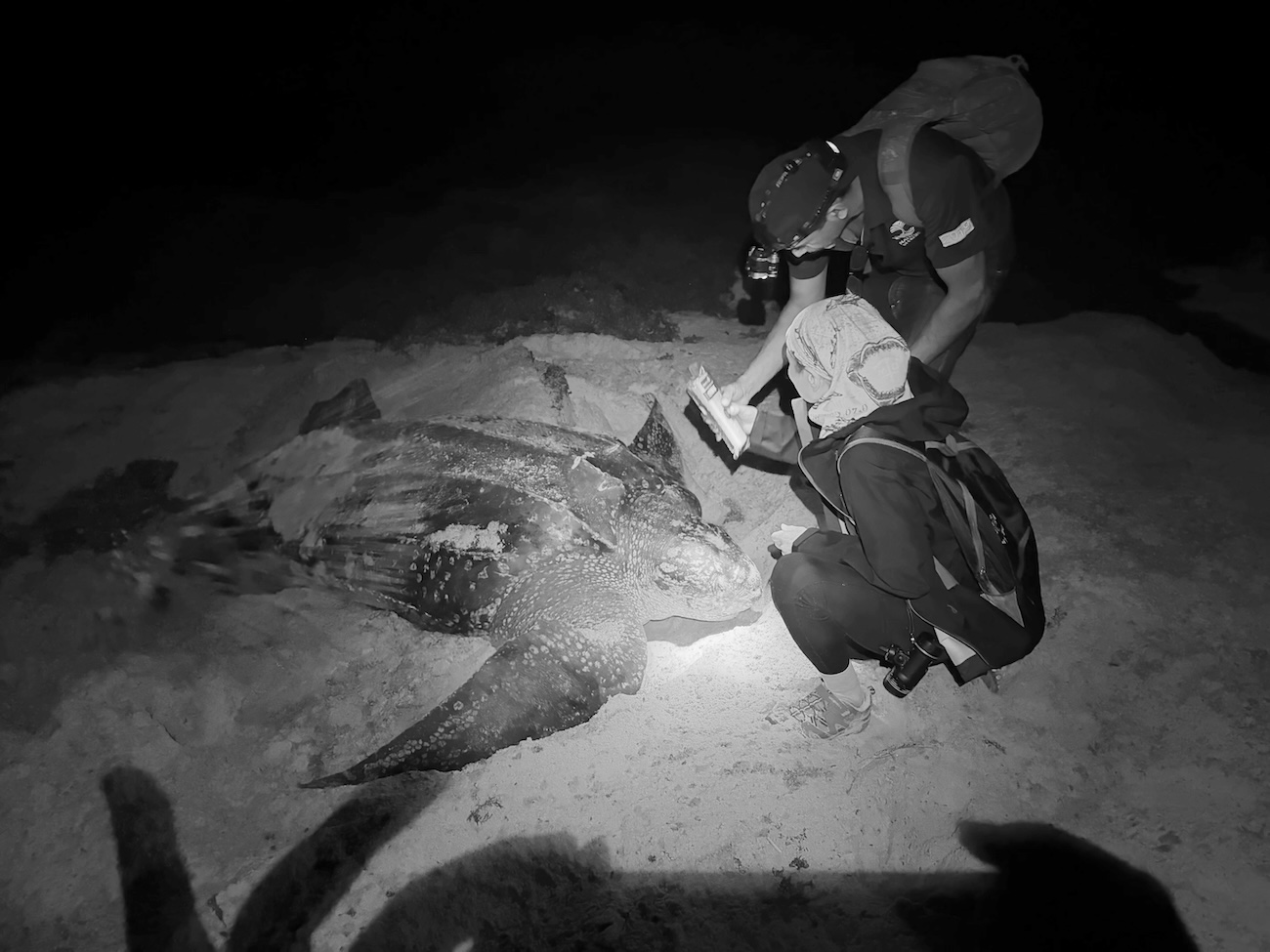
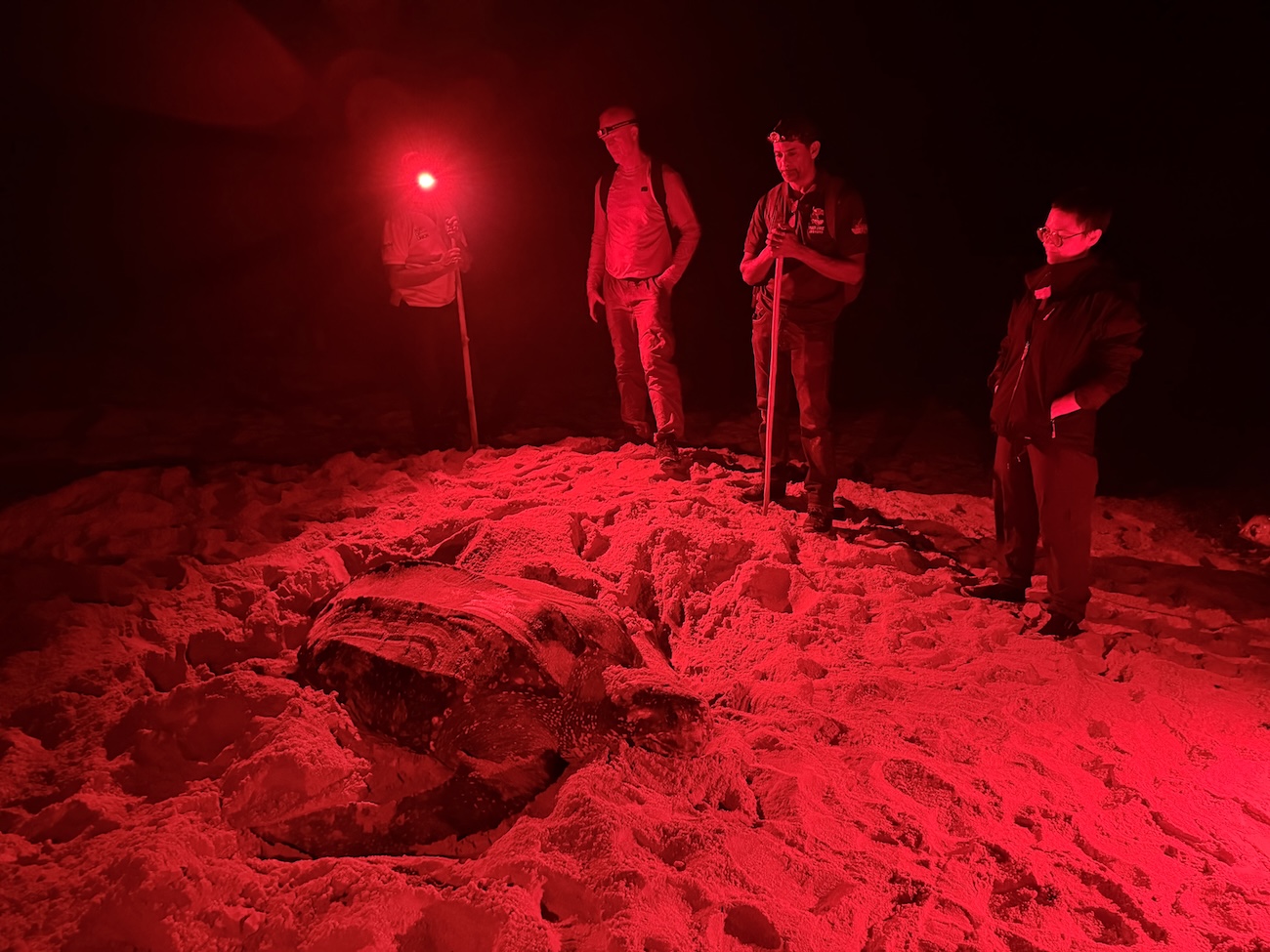
Our first official turtle patrol delivered immediately. We worked approximately five leatherbacks over the course of the evening, with Rishta guiding us through the data collection protocol in real time. The first PIT tag and first flipper tags of the trip were placed that night. We were blessed with a clear, moonless sky with an incredible show of stars, a reminder of just how remote, undeveloped, and unspoiled this stretch of coastline remains.
Day 3 — Mermaid Pool & Turtle Watch
© Ashleigh Bandimere
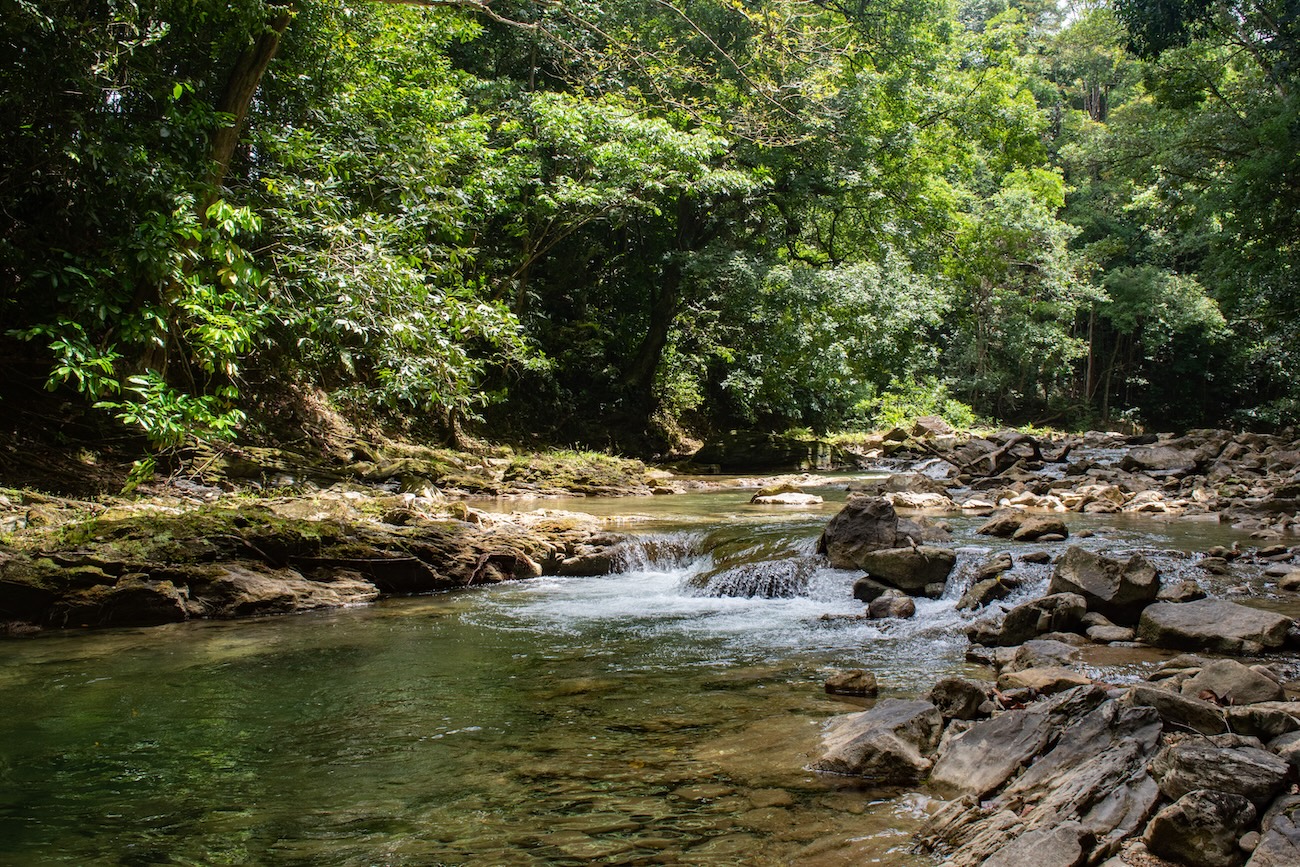
Guide Al led us on a 20-minute hike through dense tropical forest, descending steadily downhill the entire way. Along the trail, he pointed out multiple species of heliconia in bloom, an incense tree, and an array of other forest plants. At the bottom, the forest opened up to reveal the Mermaid Pool, a wide, deep swimming hole on a slow-moving river, shaded by overhanging trees. We swam, relaxed, and soaked in the surroundings. A well-earned afternoon.
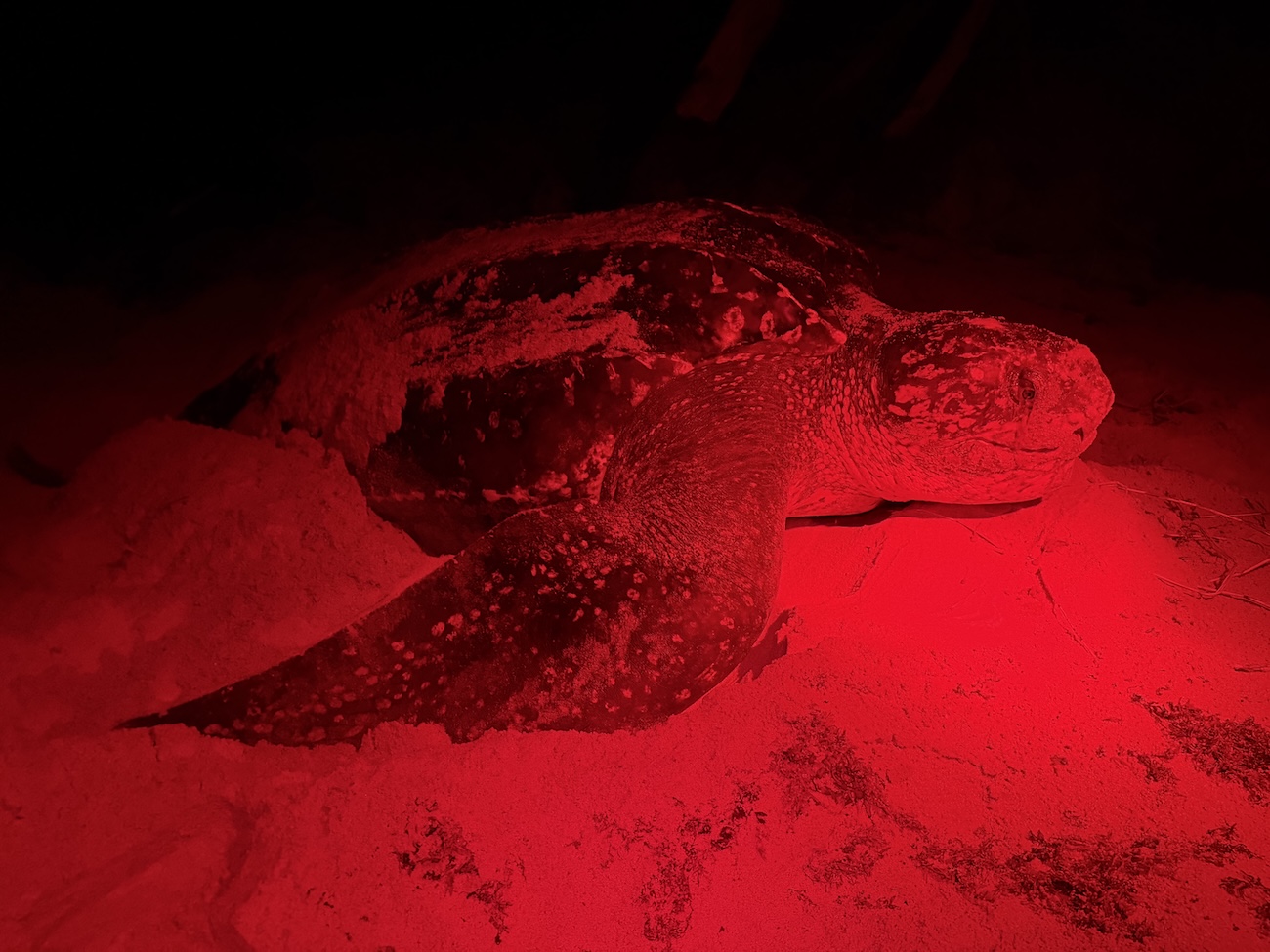
Night three produced nine leatherbacks. The group’s confidence with data collection was increasing.
© Ashleigh Bandimere
Day 4 — Wednesday, May 13th: Kayaking the Salybia River
The afternoon took us to the water for a kayaking excursion on the Salybia River. We launched from the river mouth at the sea and paddled upstream, flanked on both sides by dense jungle walls. The river was alive with birds: a Ringed Kingfisher watched from a branch overhead, and a Common Black Hawk drifted above the canopy. When rocks blocked further progress by kayak, we beached our boats and waded upstream on foot to a swimming hole. David chose to swim the entire way back to the launch point rather than return by kayak and made it look easy.
After the paddle, we stopped at Gale’s for homemade ice cream — a perfect reward for an active afternoon. Another evening patrol, another set of turtles tagged and measured. The rhythm of the beach was becoming familiar, and our data collection had grown noticeably more fluid.
Day 5 — Bajnath’s Hummingbird Sanctuary
Our visit to Bajnath’s Estate turned out to be one of the surprise highlights of the entire trip. We were welcomed by Josh Bajnath, whose family owns the property. He explained the estate’s origin story: his mother put out a hummingbird feeder one day, was amazed by the response, and kept adding more. The property is now a full hummingbird sanctuary, attracting hundreds of individuals across more than a dozen species.

Among the species we saw, the fantastic male Tufted Coquette and the incredible Ruby Topaz were standout highlights — along with Copper-Rumped Hummingbird, Blue-Chinned Sapphire, White-Chested Emerald, White-Necked Jacobin, Long-Billed Starthroat, Rufous-Breasted Hermit, Little Hermit, Black-Throated Mango, Green Hermit, and Purple Honeycreeper.
Josh then walked us down the road for a short nature trail, where the birding continued: Golden-headed Manakin, Golden-fronted Greenlet, Rufous-tailed Jacamar, and Little Hermit were all recorded in the forest.
Another night on the beach, another set of turtles tagged and contributing to Nature Seekers’ growing long-term dataset.
© Ashleigh Bandimere
Day 6 — Northeast Coast Drive to Grande Riviere, Chocolate Tour
We loaded up and headed northeast along the coast, taking in sweeping ocean views along the way. We saw the meeting point of the Caribbean Sea and the Atlantic Ocean, a surprisingly clear boundary visible in the distance. We also stopped for homemade ice cream at a local spot along the coast road.
On arrival in Grande Riviere, we were treated to a tour of a small, historically rooted chocolate production operation that is still running today. We watched the full process — from cacao bean to finished dark chocolate bar — and sampled a range of chocolates with different flavor profiles, finishing with a cup of hot chocolate made from scratch.
A picnic dinner followed as the sun went down, and then researcher Teal led us along the Grande Riviere beach after dark. The contrast with Matura was immediately apparent: leatherbacks were emerging from the surf in remarkable numbers, multiple turtles visible simultaneously along the beach. The density of nesting activity here is among the highest recorded anywhere in the world.
The moment we had been waiting for happened unexpectedly when a guide handed us a leatherback hatchling and each of us had the chance to hold it briefly before it was released.
© Ashleigh Bandimere
The visit also offered a moment of reflection: seeing how Nature Seekers operates in Matura gave us a real appreciation for the professionalism and rigor of the organization.
Day 7 — Morning Count, Craft Tour, & Final Turtle Patrol
We rose early and reached the beach at sunrise — for most of us, the first time seeing Matura’s coastline in daylight. We didn’t encounter any live turtles during the count, though the hope of spotting a late-nesting female in the light of day kept us walking further than we had at night. The beach itself revealed how significant erosion is affecting the nesting habitat, and large quantities of sargassum seaweed have been washing ashore — both ongoing concerns for the project. Turkey vultures and black vultures patrolled and accompanied us the whole time.
A local artisan demonstrated how discarded glass bottles are transformed into handmade glass beads, and each of us assembled our own piece of jewelry from the beads.
By our final turtle patrol at Matura, we had grown genuinely comfortable with the protocol and the rhythms of the beach at night. It was great to see how easily everyone accomplished all of the data collecting tasks.
© Ashleigh Bandimere
Day 8 — Caroni Swamp & Farewell
After a final breakfast and lunch on the guesthouse balcony — where the resident birds had become familiar companions over the week — we said goodbye to Nature Seekers and headed west toward Caroni. We were sent off at lunch by a much-desired visit from a channel-billed toucan!
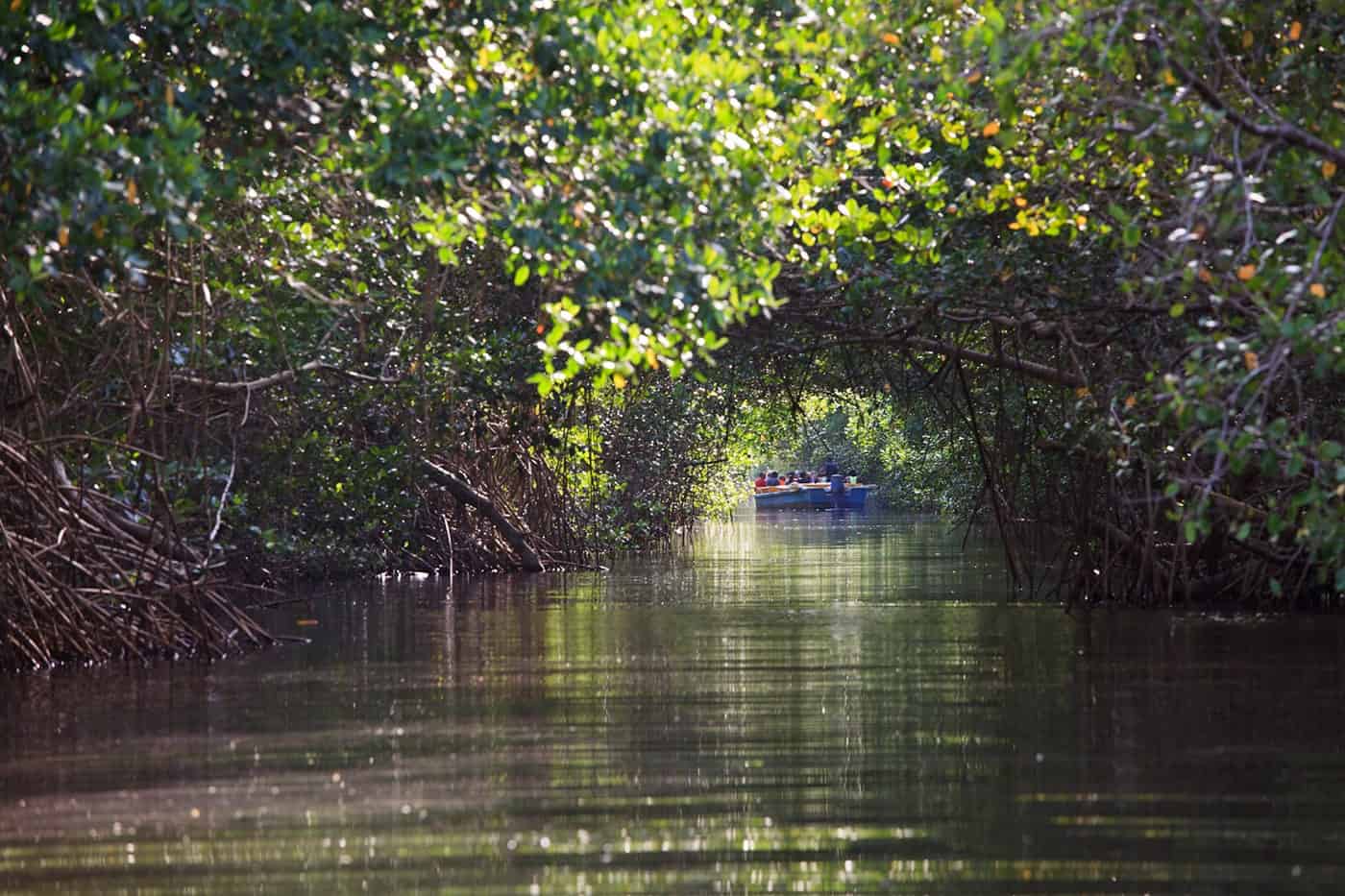
The Caroni Bird Sanctuary is one of Trinidad’s great natural treasures, and the afternoon boat tour through its mangrove channels did not disappoint. We boarded a small boat and meandered through a maze of red, black, and white mangroves.
© Brian Hutchinson
Wildlife highlights came quickly: a Tree Boa was spotted coiled in the canopy above the water, the Green-throated Mango — absent from Bajnath’s — made a welcome appearance, a Red-rumped Woodpecker worked the mangrove trunks, and a Large-billed Tern flew overhead. Flamingos gathered in impressive numbers across the wetland flats.
Then, as dusk approached, the pièce de résistance: Scarlet Ibis, among the most brilliantly colored birds in the world, began arriving in droves to roost on a mangrove island directly in front of our boat. Wave after wave of crimson against the fading sky.

We concluded with dinner at a local brewery where we reminisced about our short but impactful stay with Nature Seekers.
Conservation Reflections
What set this trip apart from conventional wildlife tourism was the depth of our participation. We did not simply observe. We collected scientific data, placed tags, and contributed directly to a multi-decade research program. Nature Seekers is doing genuinely remarkable work: they have halted the killing of turtles on a beach where slaughter was once open and unchecked, built an economically vital community institution, and generated serious conservation science — all originating from one woman’s decision to protect her local beach more than 35 years ago.
We witnessed real, concerning challenges. Coastal erosion is visibly altering the nesting beach, and the buildup of sargassum seaweed poses an increasing threat to hatchling emergence. These are issues the Nature Seekers team is actively monitoring and documenting, and issues that deserve the attention of anyone who cares about the future of this extraordinary species.