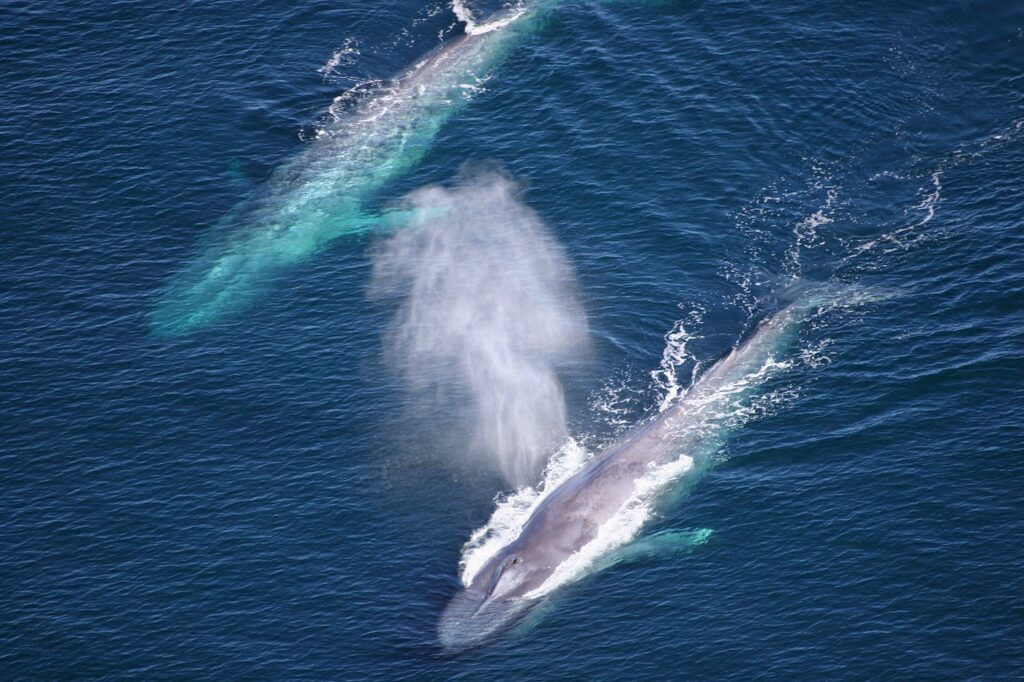
Each winter, something remarkable happens along the Pacific coast of Baja California Sur, Mexico. After one of the longest migrations of any mammal, gray whales arrive in protected lagoons to breed, give birth, and nurse their calves.
And in a few specific places, most notably San Ignacio Lagoon, these whales do something almost unheard of in the wild: they approach humans.
This has led to one of the most commonly asked questions we receive about our expeditions to this area: Is it actually ethical to interact with, and even touch, gray whales?
It’s a fair question. In most wildlife settings, the rule is clear: keep your distance, minimize your presence, and let animals be. It’s our opinion that Baja’s gray whale lagoons are one of the rare exceptions. Not because the standard has been lowered, but because the conditions here are uniquely, carefully managed, and because the animals themselves set the terms.
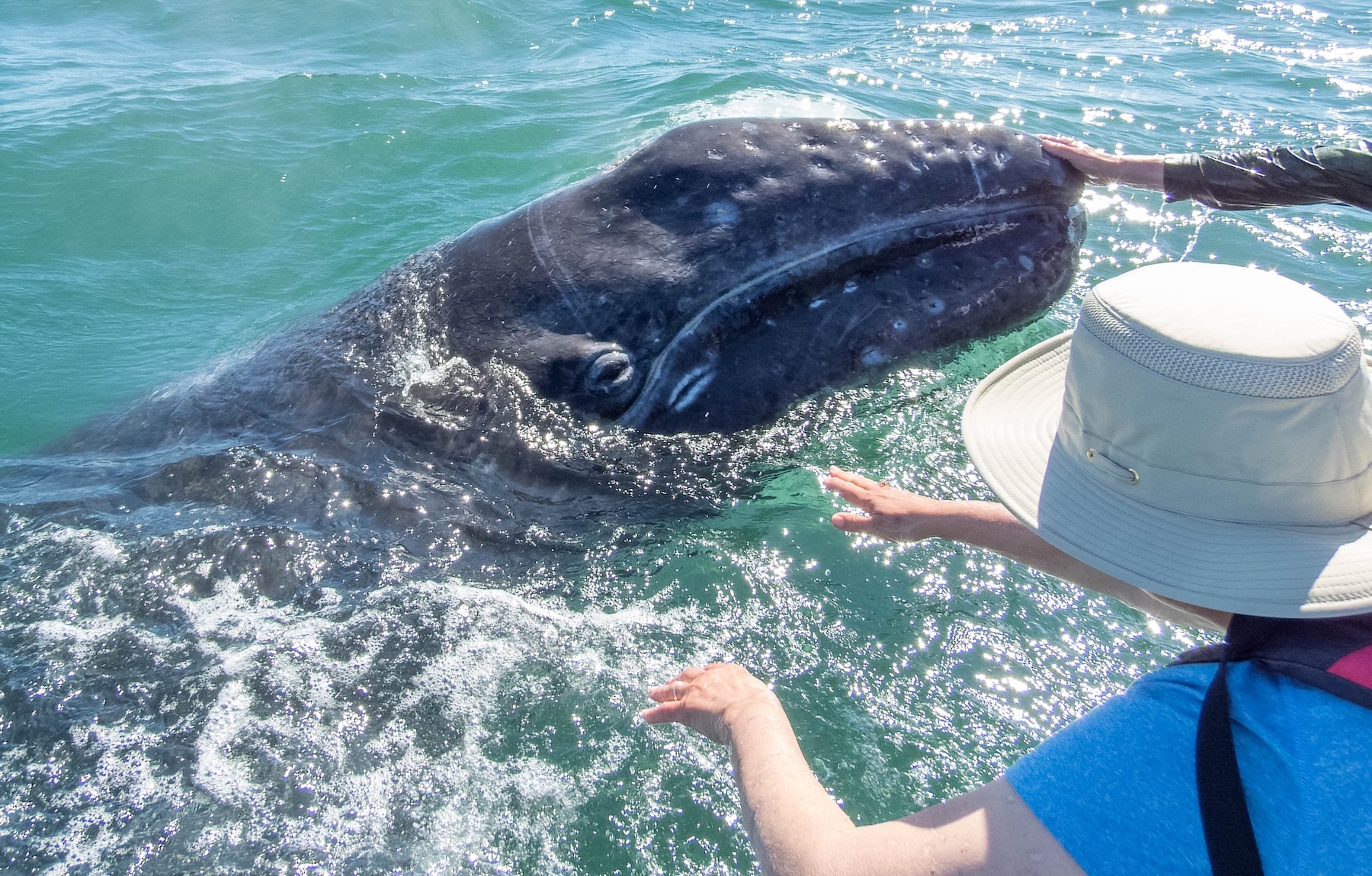
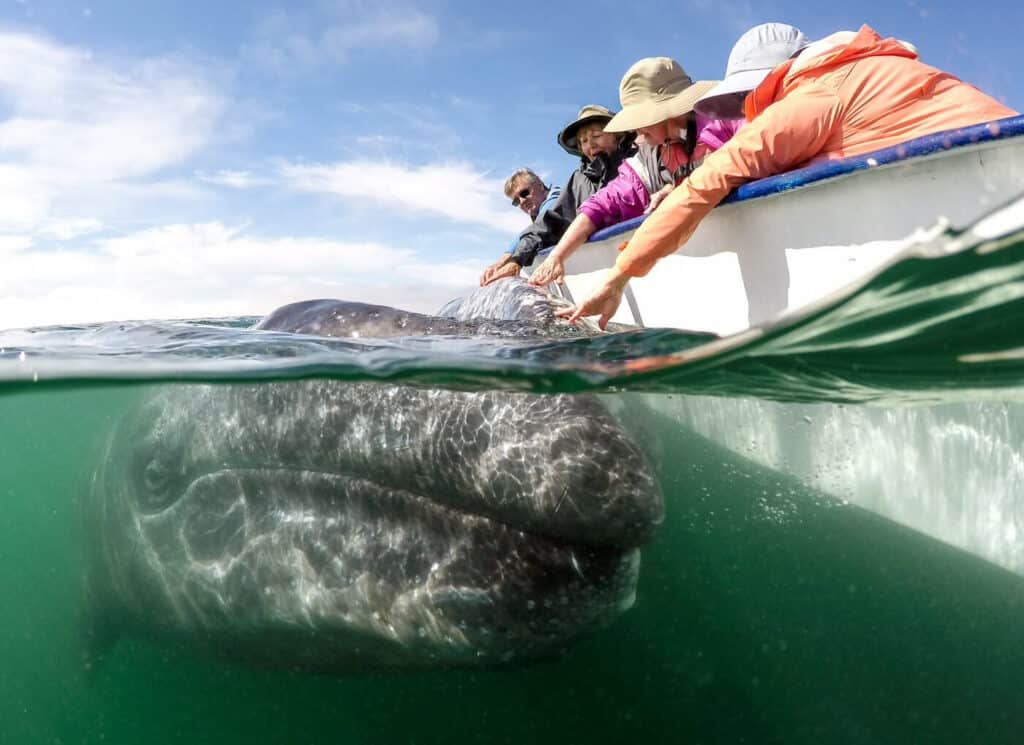
In San Ignacio Lagoon, gray whales have been approaching human visitors for decades — a behavior researchers believe may reflect curiosity, social learning, or simply the calm security of these protected nursery waters. Photo by naturalist Roger Harris
The Short Answer: Yes, when done responsibly
When guided by strict regulations, science-backed monitoring, and experienced local operators, these interactions are considered ethical. The key distinction is simple but critical: the whales are in control.
Unlike most wildlife encounters, gray whales in Baja’s lagoons often initiate contact.
Mothers and calves, in particular, are known to approach small boats, sometimes lingering alongside them. Researchers believe this behavior may be linked to curiosity, social learning for calves, or simply the calm, protected nature of these nursery lagoons.
Whale expert and Associate Director of California Programs for Oceanic Society, Chris Biertuempfel explains, “Boats set up and wait. There is no pursuing or attempting to force interaction. If whales aren’t interested, they simply do not come over.”
That voluntary engagement is what sets this experience apart from most wildlife tourism scenarios.
When done right, these encounters aren’t about human access to wildlife. They’re about wildlife choosing to engage with us. And that distinction makes all the difference.

The Role of Regulation and Oversight
These interactions don’t happen freely or without structure. They are governed by a well-established regulatory framework in Mexico, enforced by federal agencies like SEMARNAT and CONANP.
Protected areas such as the El Vizcaíno Biosphere Reserve, a UNESCO World Heritage Site, provide another layer of oversight and conservation management.
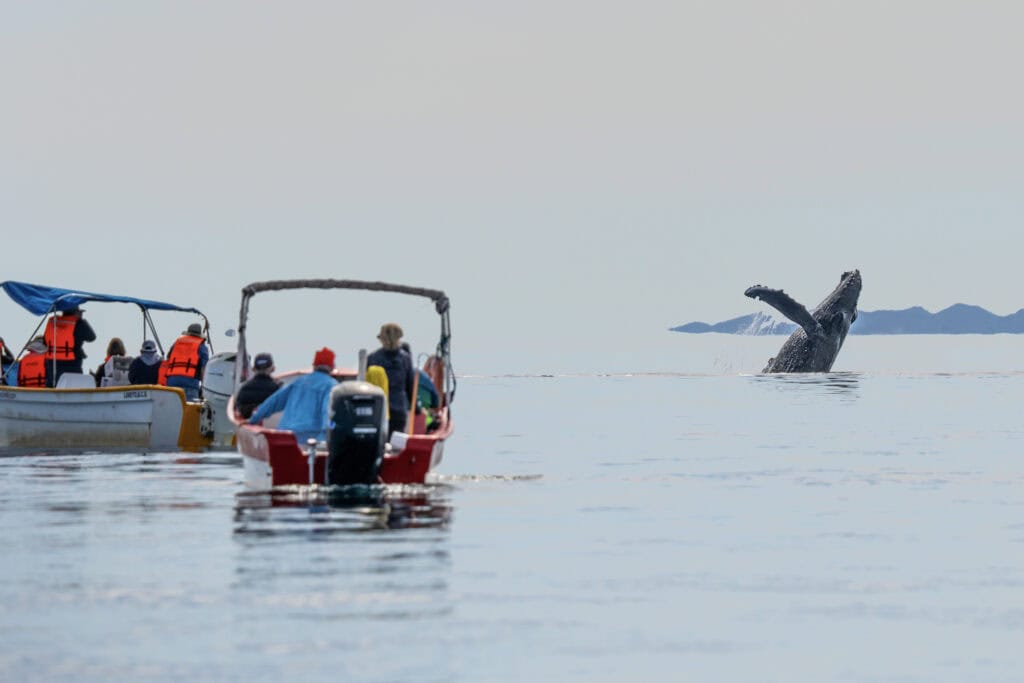
Key regulations include:
- Limited number of boats allowed in whale zones at any given time
- Strict permits for licensed operators only
- Designated no-go zones where whales can remain undisturbed
- Time limits on interactions to reduce stress and crowding
- Mandatory guidelines for approach distance and behavior
San Ignacio Lagoon sits within the El Vizcaíno Biosphere Reserve, a UNESCO World Heritage Site. The protections that make this place special are the same ones that make these encounters possible. Photo by Jose Sanchez
Importantly, these rules are actively enforced, not simply written policy. On the water, trained local guides and government monitors actively oversee every interaction, ensuring compliance in real time.
What Ethical Whale Watching Looks Like
Not all whale watching experiences are equal. Ethical interactions in Baja follow a few core principles:
- No chasing or pursuing whales
Boats position themselves and wait. If whales choose not to engage, that decision is respected. - Whale-led contact only
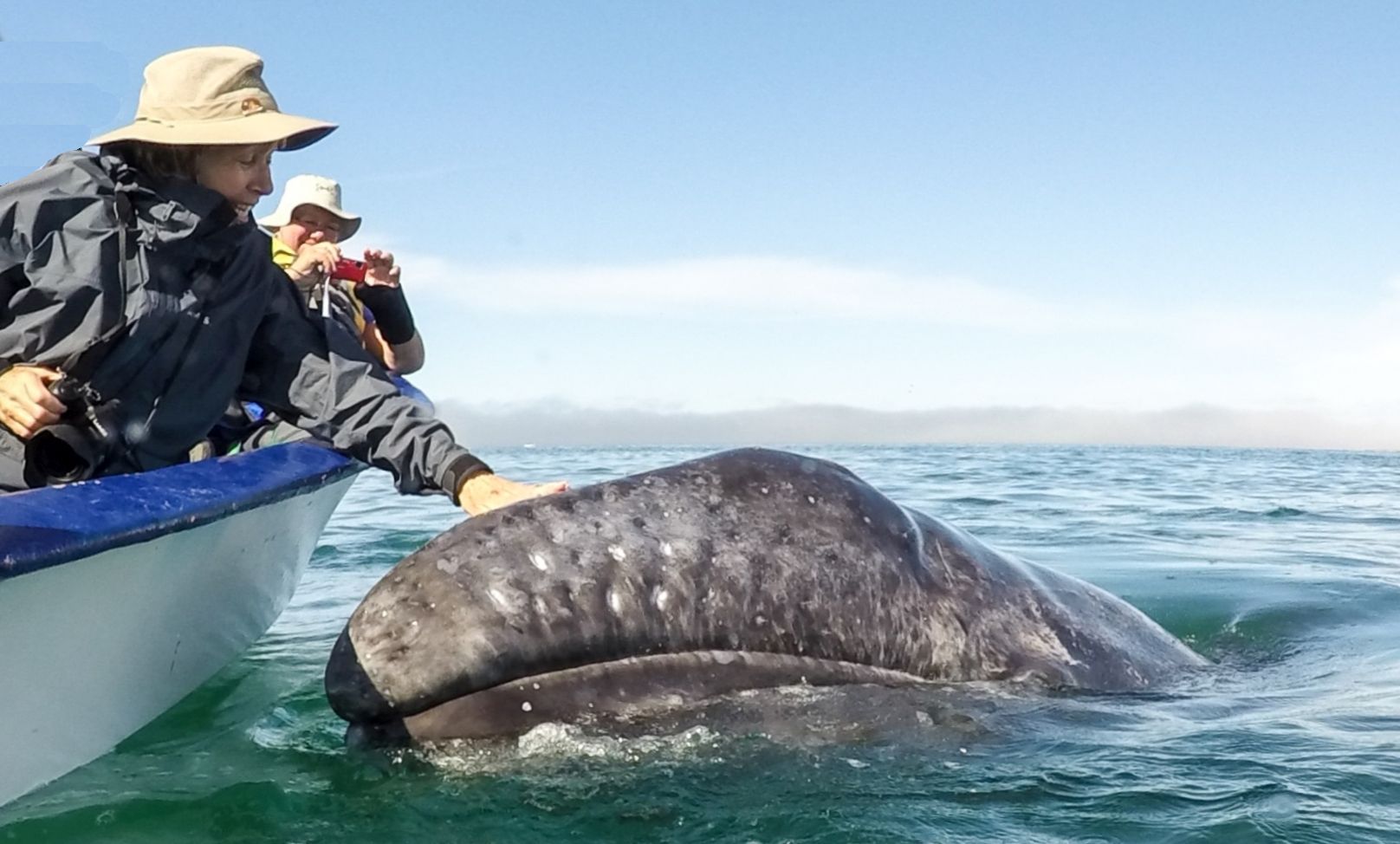
Touching is only possible when a whale voluntarily comes within reach. No one leans out, reaches aggressively, or attempts to initiate contact. - Respect for space and time
Encounters are brief, calm, and carefully managed. - Protected refuge areas
Large sections of lagoons remain completely off-limits to boats, ensuring whales always have a place to rest without human presence. - Ongoing scientific monitoring
Decades of research, by both tourism-affiliated and independent scientists, continue to evaluate whale health, stress levels, and population trends. So far, that body of research has found no evidence of negative population-level impacts from these regulated interactions.
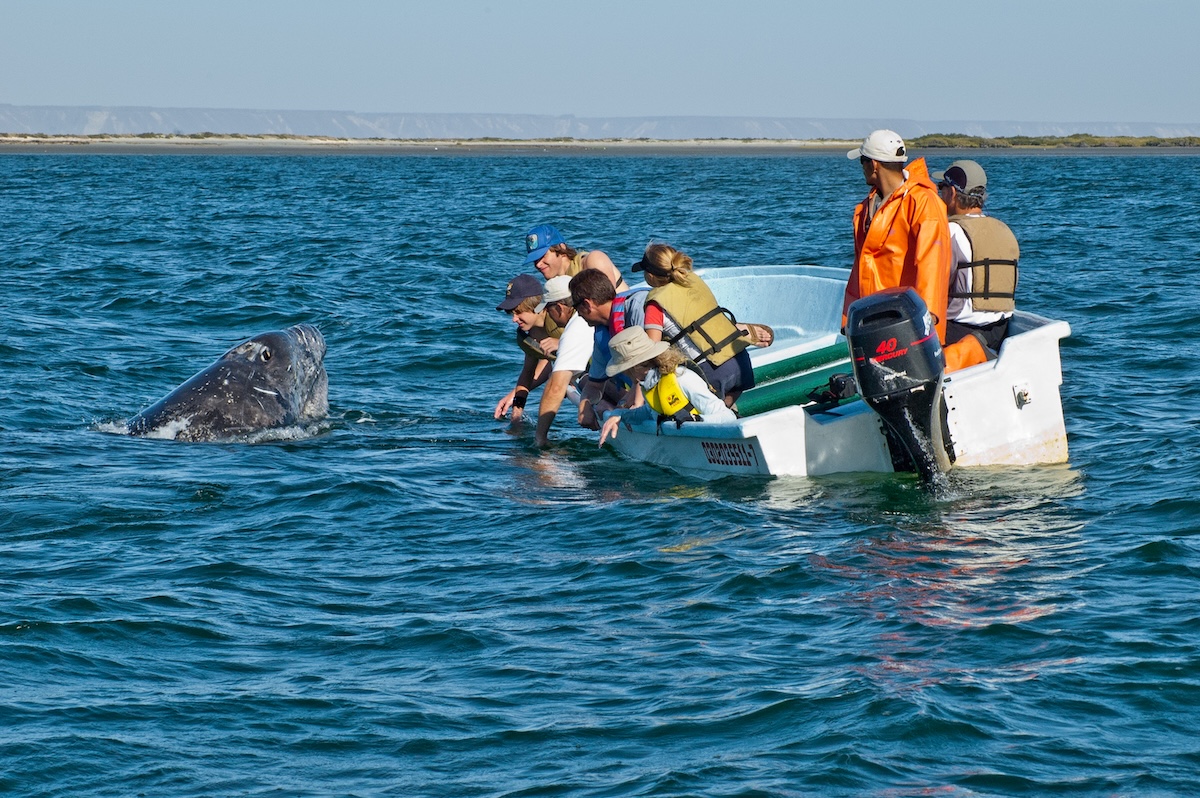
Curious and unhurried, a gray whale surfaces alongside a panga to investigate its visitors. These encounters happen on the whale’s schedule: boats hold position, and contact only happens when the whale chooses to come within reach. Photo by Roderic Mast
Why Responsible Tourism Matters
Supporting reputable, locally operated eco-tour providers does more than create a meaningful experience; it directly contributes to conservation.
In places like San Ignacio, whale tourism provides sustainable income for local communities, reinforcing the long-term protection of these habitats. When communities benefit from conservation, they have a powerful incentive to safeguard it.
When you choose to participate in responsible Baja whale watching, you become part of the reason these lagoons and the whales that return each winter remain protected for generations to come.