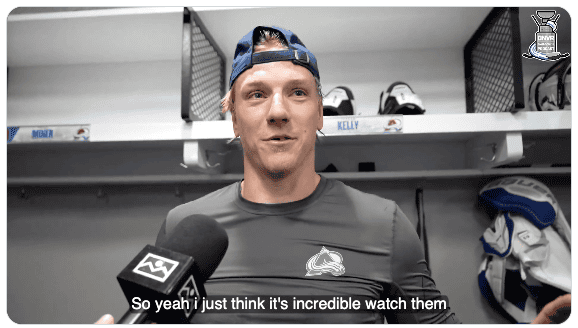
It was the Olympic break in the middle of an NHL season, and Colorado Avalanche forward Parker Kelly had just gotten back from his honeymoon in Hawaii. Standing in front of a media scrum in the locker room, he could have talked about rest, recharging, or anything else athletes typically say after time away. Instead, he couldn’t stop talking about whales.
He had gone whale watching one day. Then he went again. And again. He described hearing them sing beneath the surface of the water. A low, resonant, otherworldly sound that carries through the open ocean for miles. He said, without hesitation, that he had become “addicted to whales.”
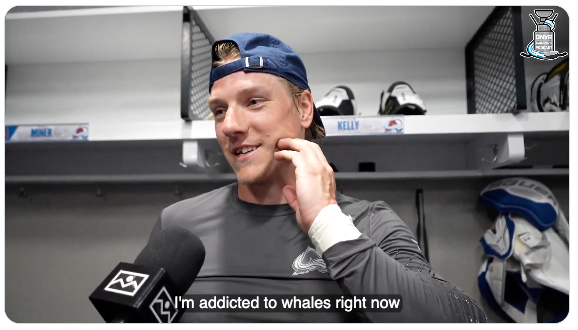
What no one knew yet was that one locker room interview — a hockey player, beaming, talking about humpback whales on his honeymoon, was about to become a small but genuine conservation event. And in the process, it quietly echoed something that happened in San Francisco more than fifty years ago.
From a Locker Room Story to a Whale Named Parker Kelly
When Parker described his whale watching experiences to Denver media, he wasn’t trying to make a conservation statement. He was simply telling the truth about his experience. He and his wife, Kiarra, had been out on the water during peak humpback season — January and February, when thousands of North Pacific humpbacks gather in the warm waters off Maui to mate, calve, and rest after their long migration from Alaska.
The singing he mentioned is real: male humpbacks produce some of the most complex vocalizations in the animal kingdom, structured sequences of sound that scientists have likened, in their organization, to elements of human language. To hear it, even faintly, is to feel the hair stand up on the back of your neck.

Meghan Angley of Guerilla Sports, who covers the Avalanche and hosts a live show with a highly engaged hockey community, picked up the story and took it further—making a friendly wager that if Kelly scored 20 goals on the season, she would adopt a whale in his honor.
Soon after, he hit 20, and the Avalanche and Guerilla Sports fans quickly sprang into action.
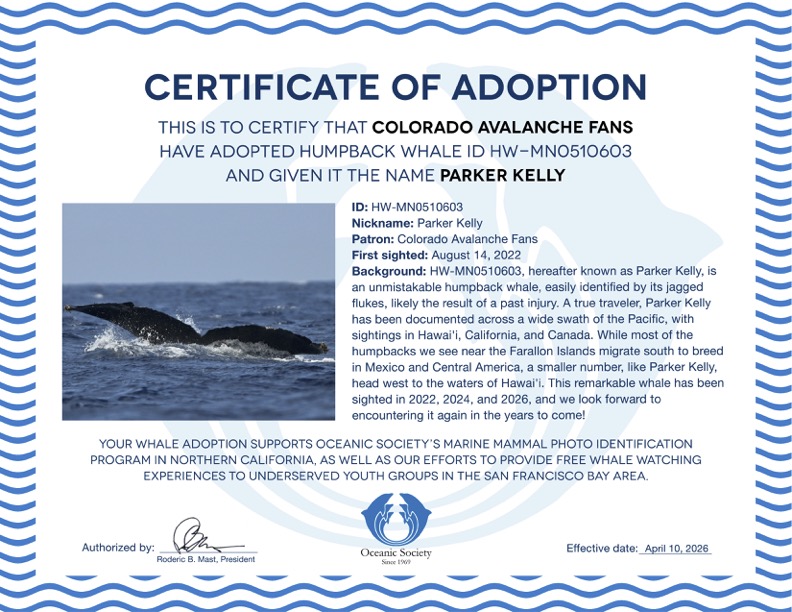
A GoFundMe was launched with a goal of $1,000, enough to formally name a humpback whale after Parker Kelly through Oceanic Society’s whale adoption program. The funds would support marine mammal photo-identification and help provide free whale-watching tours for underserved youth in the San Francisco Bay Area.
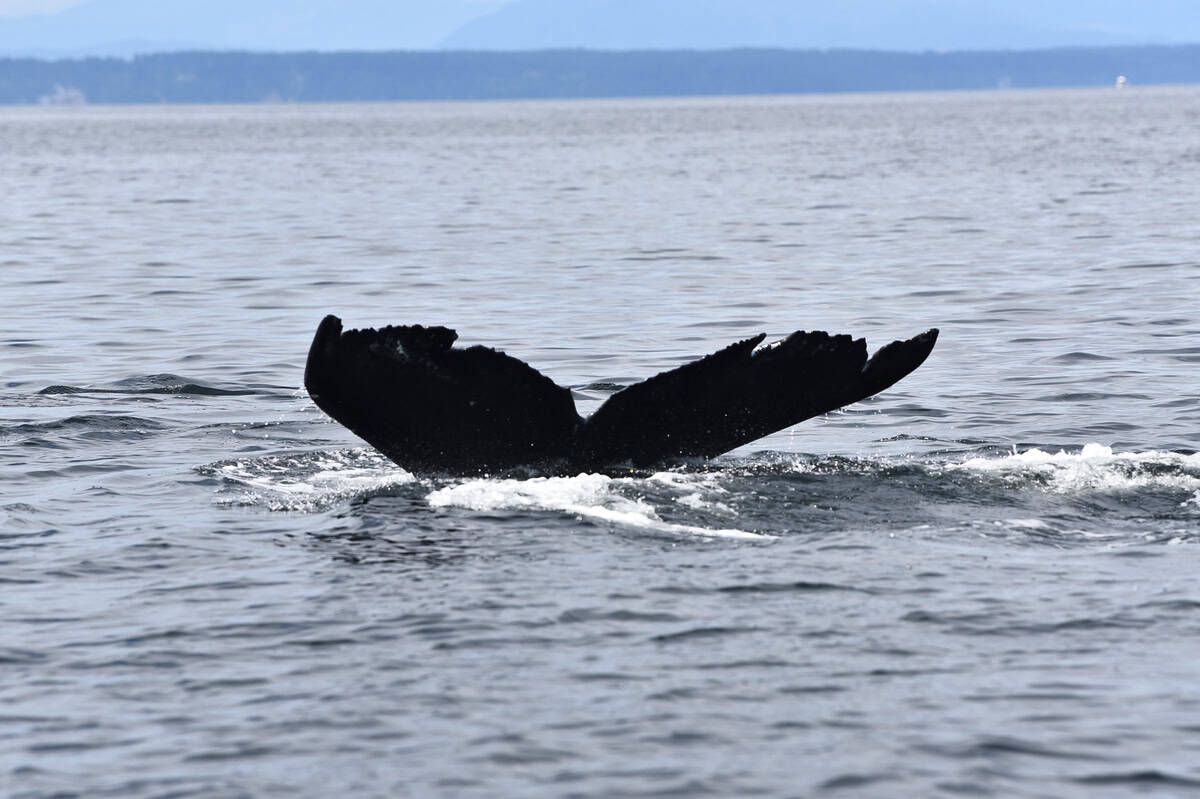
Meet Parker Kelly — a North Pacific humpback whale named after Colorado Avalanche forward Parker Kelly, whose flukes have been spotted in both Hawai’i and Canada. ©Sheila Thornton
A Honeymoon Pair
The campaign raised more than three times its goal, and with the extra funds raised, a second whale was named after Parker’s wife, Kiarra. Now, officially, swimming somewhere in the North Pacific are two identified humpback whales: Parker Kelly and Kiarra Kelly, last spotted in Hawai’i. A honeymoon pair. Named by fans. Supported by 120 strangers who were moved to action.
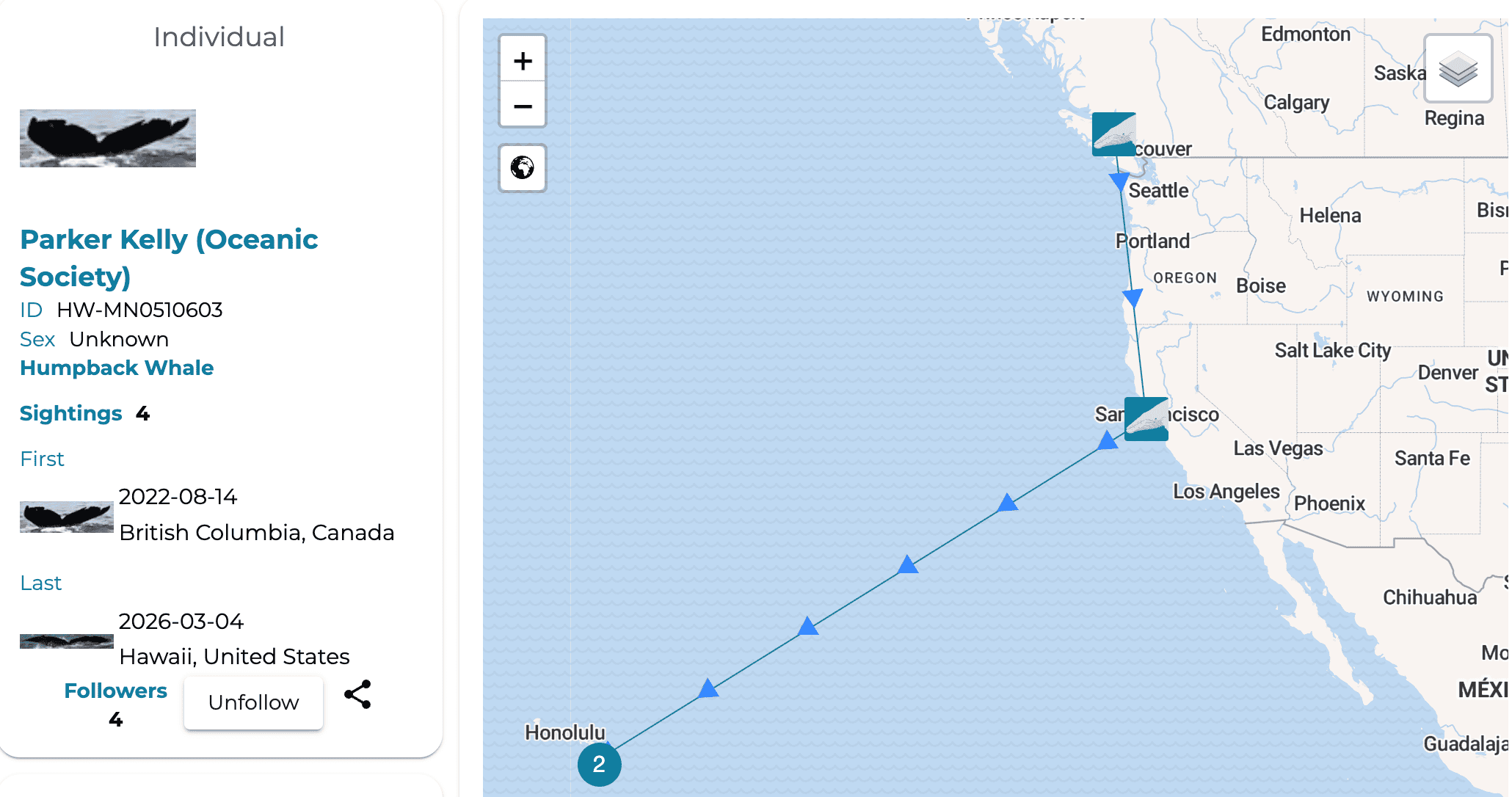
Stay updated with sightings of Parker Kelly and Kiarra Kelly through Happywhale, a citizen science platform that helps identify individual marine mammals through photo matching — supporting both conservation research and public engagement.
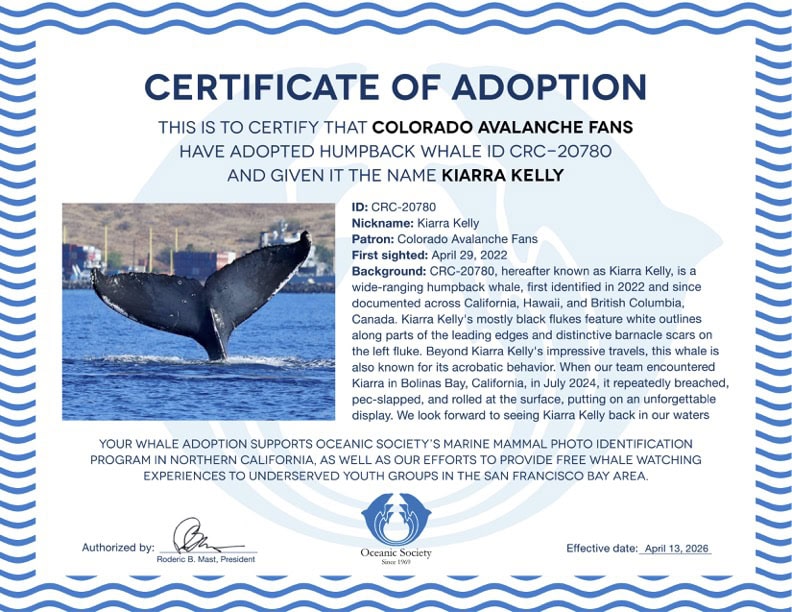
When a fan shared what was unfolding, I immediately recognized that what happened to Parker Kelly off the coast of Maui wasn’t just a memorable moment; it was the kind of experience that fundamentally reshapes someone who cares about the ocean for the rest of their life.
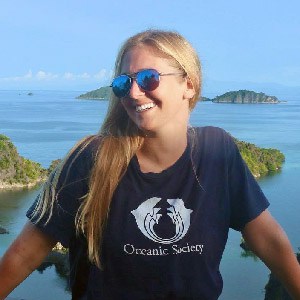
As an Oceanic Society naturalist, I’ve spent years guiding travelers into the water alongside these animals. Close enough to witness the quiet bond between mother and calf. Close enough feel the low-frequency pulse of a male’s song move through your chest. And I’ve seen it, time and again: that shift in people’s eyes when something clicks. The moment awe turns into something deeper.
I’ve led expeditions to swim with humpbacks in Tonga for years, and I still struggle to put that experience into words.
I was invited onto the Guerilla Sports live show to share more about Oceanic Society’s whale naming and adoption program and how the funding from those efforts supports conservation while also expanding access to nature for underserved youth in California’s Bay Area.
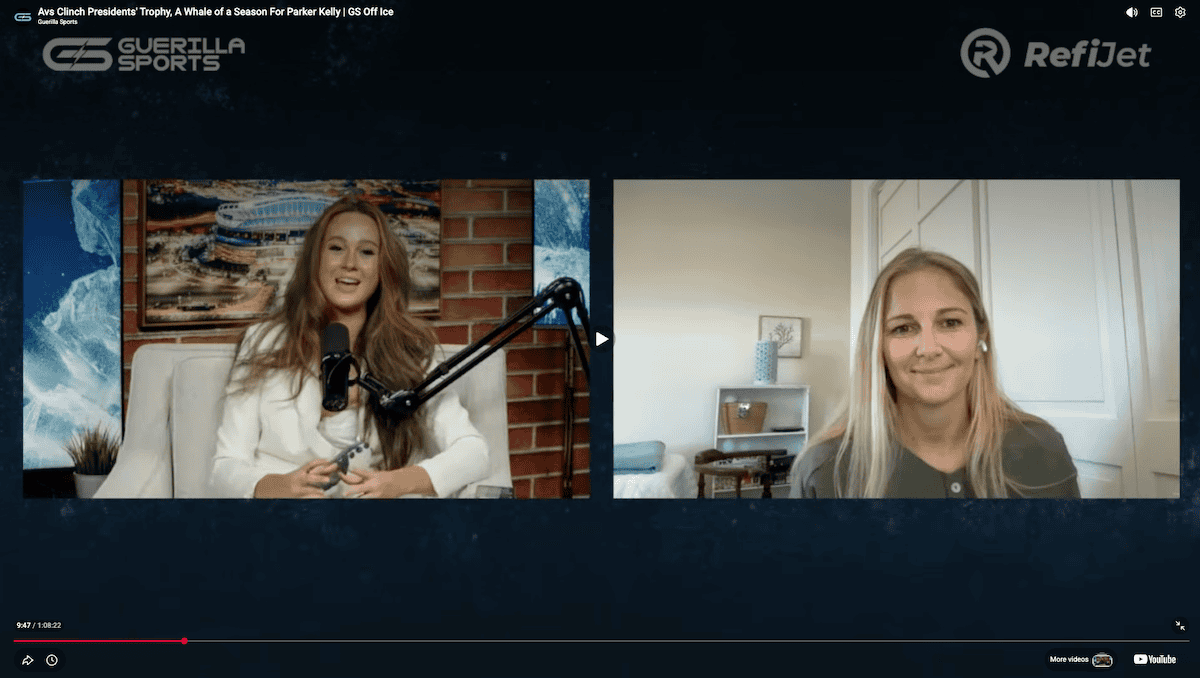
I detailed the fluke identification process and shared the thinking behind the whales chosen for Parker and Kiarra, individuals with sighting histories that thoughtfully connect Canada, where Parker is from, and Hawai‘i, where the experience first took hold.
It was a chance to bring people into the world I care deeply about, talking through the science and behavior behind whale songs and communication, and what it’s like to encounter them in the wild through the expeditions we lead as a nonprofit.
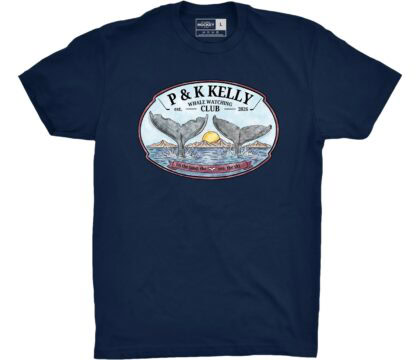
The wave keeps going — fans can now shop the official P&K Kelly Whale Watching Club tee, designed by the community, with 50% of proceeds benefiting Oceanic Society’s ocean conservation programs.
The Throughline That Hasn’t Changed
This is, in miniature, exactly what Oceanic Society was founded to do.
Not to wait for people to care about the ocean before they’ve ever seen it. Not to argue them into action with statistics. But to create the conditions for something deeper to take hold.
Parker Kelly wasn’t recruited or targeted by a campaign. He had a raw experience within nature and shared it unprompted with enthusiasm and authenticity.
Within 48 hours, a community from a very different world found itself emotionally invested, rallying to name a whale after witnessing that sense of wonder in Parker’s eyes.
Ask anyone working in ocean conservation how they got here, and it almost always comes back to a single moment in nature. Going to the beach as a kid, or witnessing a whale breach for the first time. That’s the mechanism. That’s always been the mechanism.
San Francisco, 1969: The Same Story, Fifty Years Earlier
In 1969, George C. Kiskaddon, founder of Marine Chartering Company, and Dr. Jerold M. Lowenstein, director of the Pacific Institute of Nuclear Medicine, came together with a group of San Francisco Bay Area sailors and scientists who shared a mounting sense of alarm. These were people who spent real time on the water. They weren’t watching the ocean decline from a distance; they were witnessing it firsthand, season by season. And what they were seeing troubled them.
Oil spills. Increasing pollution. The slow, visible degradation of the ocean they loved. The Santa Barbara oil spill had just shocked the nation. Environmental alarm bells were ringing, but most people simply didn’t know what was happening because they had never experienced the ocean up close. And without that connection, it’s impossible to feel the weight of what is being lost.
They recognized this fundamental disconnect: the people experiencing the ocean’s decline firsthand were not the same people making decisions about it. And the people who might care most, if only they knew, had never been given the opportunity to experience it at all.
Their solution was simple: Connect people to the ocean, and inspire them to protect it.
An Expedition Program Designed to Connect
In 1972, Oceanic Society launched its Expeditions program, one of the first conservation travel programs of its kind. Among the first organizations in the country to promote and lead whale-watching trips, we ran our first whale watch out of San Francisco in the early 1970s and later began offering regular trips out of Sausalito, Pillar Point, and Bodega Bay.
These were not passive sightseeing cruises. They were deliberate acts of introduction: putting people on the water, in the presence of whales, and trusting the encounter to do what no lecture ever could.
The belief was straightforward, and it has guided every program we’ve run in the fifty-plus years since: people protect what they know and love. And they can only love what they’ve had the chance to know.
A humpback surfacing alongside your boat is not an abstraction. It is a living creature the size of a school bus rising from the depths to take a breath, and if you are standing at the rail when it happens, something shifts inside you. The ocean stops being a backdrop. It becomes a world.
And this is exactly what happened to Parker Kelly.
The Work Continues — On the Water and in the Classroom
More than five decades after its founding, Oceanic Society continues to lead expeditions where nature and wildlife lead. In places like Tonga, where travelers swim with humpback mothers and calves in the South Pacific, to Alor, Indonesia, where thresher sharks glide through crystal-clear water, to Trinidad, where leatherback sea turtles nest on the beaches. Each trip is designed to be exactly what those early whale watches were: an encounter that changes something.
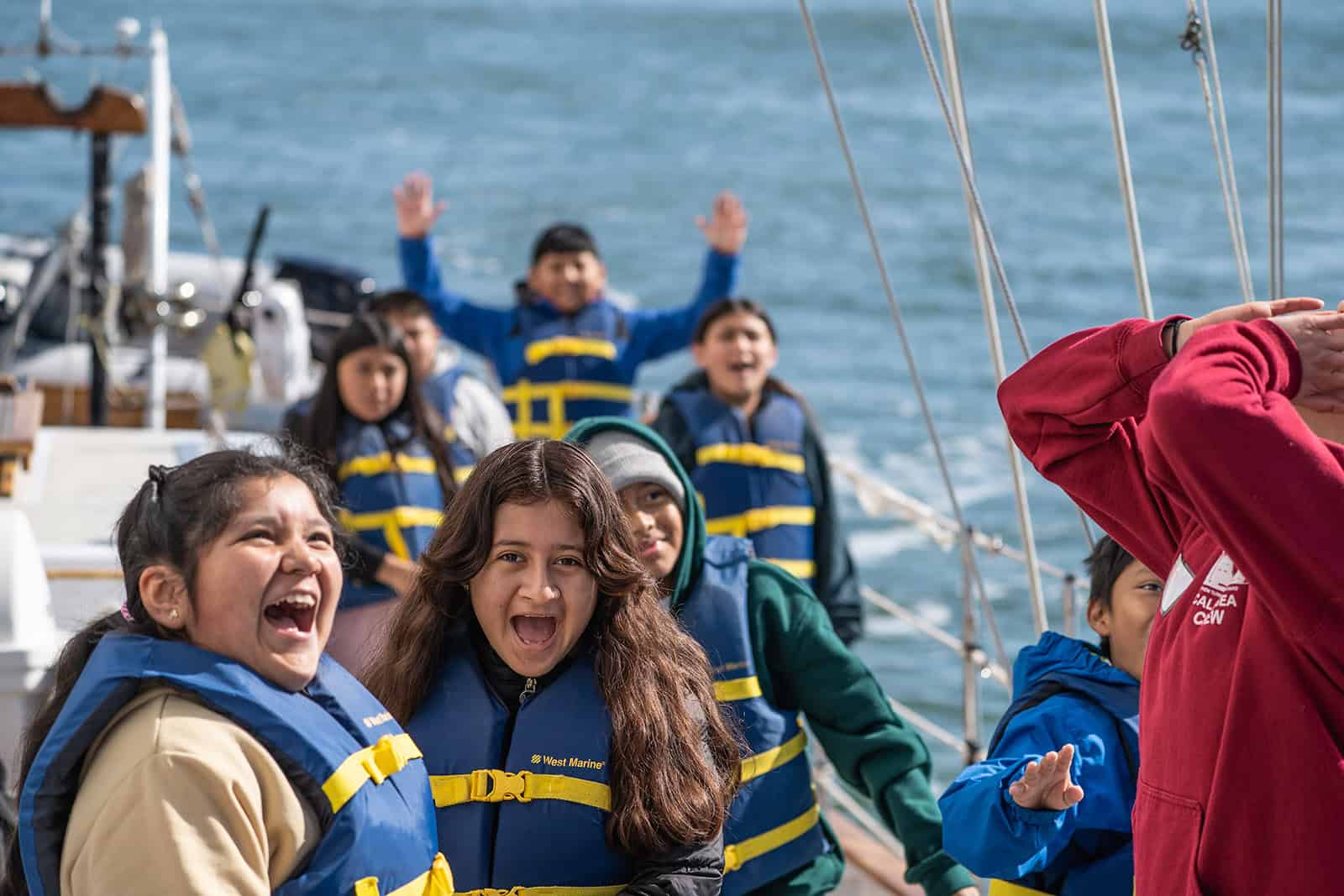
Closer to home, our Conservation Scholars Program brings the same principle to Bay Area students who have grown up within miles of one of the world’s most vibrant marine ecosystems but have rarely — or never — experienced it firsthand. Some of them will grow up to be scientists, or advocates, or policymakers. Some will simply be adults who remember the day they pulled a plankton trawl, saw a harbor porpoise, and understood — felt, in their body, that the ocean is alive.
One Experience, Rippling Outward
Parker Kelly went whale watching on his honeymoon. He talked about it in the locker room. Fans named two whales. Funds flowed to research and youth ocean access. And somewhere in the North Pacific, a humpback named Parker Kelly is diving and surfacing and singing to no one and everyone.
A single experience. A ripple that reached further than anyone planned.
This is what Oceanic Society has believed since 1969: that the ocean, given the chance, does the work. Our job is just to make the introduction.
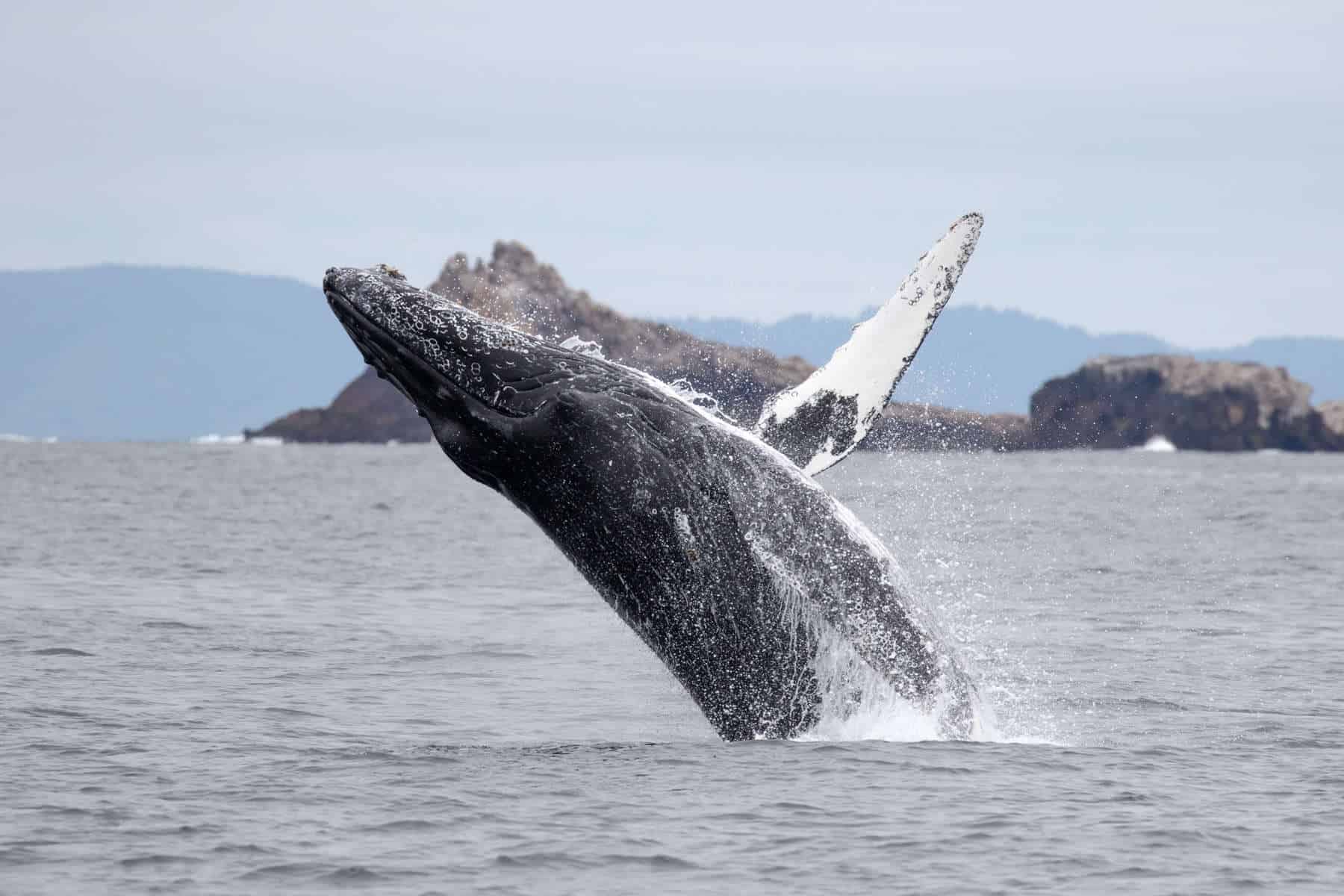
Adopt Your Own Whale
Name a humpback, fund marine research, and help provide free whale watching trips for kids in San Francisco. Your adoption makes a real difference.
Want to be part of the story?
- Name a whale in perpetuity and ensure a humpback’s story helps fund conservation for years to come.
- Join an expedition to Tonga, Alor, Trinidad, or another destination and experience the ocean the way it was always meant to be experienced — firsthand.
- Support the Conservation Scholars Program and help put the next generation of ocean advocates on the water.
- Because all it takes, sometimes, is one whale. And the right person paying attention.