Around the world, the most effective conservation solutions are led by the communities and organizations closest to the challenge. Oceanic Society’s Community Conservation Grants—part of our broader Expedition Impact Program—provide direct funding to ocean conservation projects led by partners in the places we visit during our international, multi-day expeditions.
Twice a year, we use a portion of our expedition revenues to support community-based organizations tackling urgent marine conservation challenges, from research and monitoring to community-led protection efforts and initiatives that create sustainable, conservation-based income for local communities.
These grants empower local leaders, scientists, and communities to protect species, restore habitats, and strengthen sustainable livelihoods. Because each trip directly supports this fund, every booking helps drive meaningful, measurable conservation impact.
Below are the first of our 2026 Community Conservation Grant recipients:
Reducing Shark and Ray Bycatch in Indonesia
Grantee: Kebersamaan Untuk Lautan (Togetherness for the Oceans) – $5,000
Conservation Challenge
Addressing the overexploitation of sharks and rays is an urgent conservation priority. Continued pressure on these species risks further population declines and potential extinction, and sharks and rays play critical roles in maintaining healthy ocean ecosystems. In many Indonesian small-scale fisheries, however, threatened sharks are both intentionally targeted and retained as valuable secondary catch. At the same time, these fisheries are integral to local food security and livelihoods, thus creating complex trade-offs where restrictive conservation measures may impose significant economic burdens on coastal communities with limited alternatives.
Kebersamaan Untuk Lautan (Togetherness for the Oceans), led by Dr. Hollie Booth, is an Indonesian-registered nonprofit working to implement evidence-based behavioral interventions and incentive programs to reduce bycatch of critically endangered sharks and rays in small-scale fisheries in Indonesia’s Aceh and West Nusa Tenggara provinces.
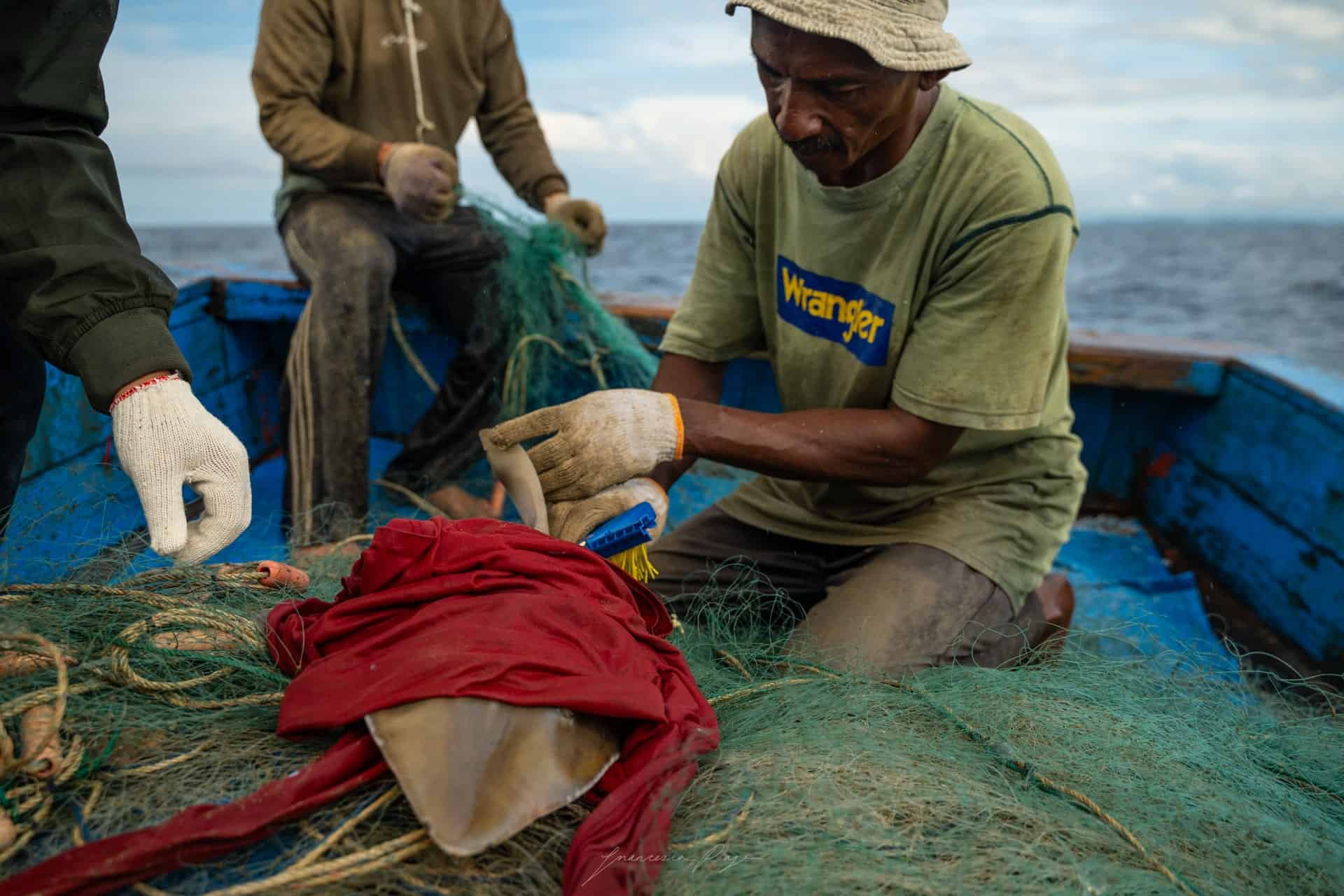
Sharks like these are increasingly vulnerable to overfishing. However, now, through a pay-to-release program and incentive auction scheme, fishers have alternatives that reduce reliance on shark catch. © Francesca Page
Funded Project
The project deploys two complementary interventions: a compensate-to-release scheme that reimburses fishers for safely releasing incidentally caught threatened species, a vessel buyout, and a gear-swap program that replaces unselective nets and shark longlines with lower-impact alternatives.
Funding will scale these proven pilot efforts through participatory workshops, training, and ongoing monitoring. Measurable outcomes include reduced catches of threatened species (documented via daily landings monitoring), improved fisher incomes, and sustained or enhanced household wellbeing (tracked through surveys).
The organization employs a four-step, people-centered approach: understanding local behavioral drivers, co-designing solutions with communities, rigorous evaluation via randomized controlled trials, and adaptive scaling.
“Kebersamaan Untuk Lautan aims to directly solve this trade-off by protecting marine biodiversity whilst improving the well-being of coastal communities. Specifically, we have developed a portfolio of locally-appropriate incentive programs that are tailored to local realities and can drive pro-conservation behaviour whilst supporting economic welfare.” – Dr. Hollie Booth
Field Update
Already, Kebersamaan Untuk Lautan (Togetherness for the Oceans) has purchased and decommissioned two shark fishing vessels through the voluntary, incentive-based buyout program. These vessels were responsible for catching more than 400 sharks in the past year alone, meaning their removal is expected to prevent thousands more sharks from being caught in the years ahead. Read the full field update.
View this post on Instagram
Controlling Crown-of-Thorns Starfish Outbreaks on Rainbow Reef
Grantee: Sau Bay Resort & Spa, Fiji – $4,000
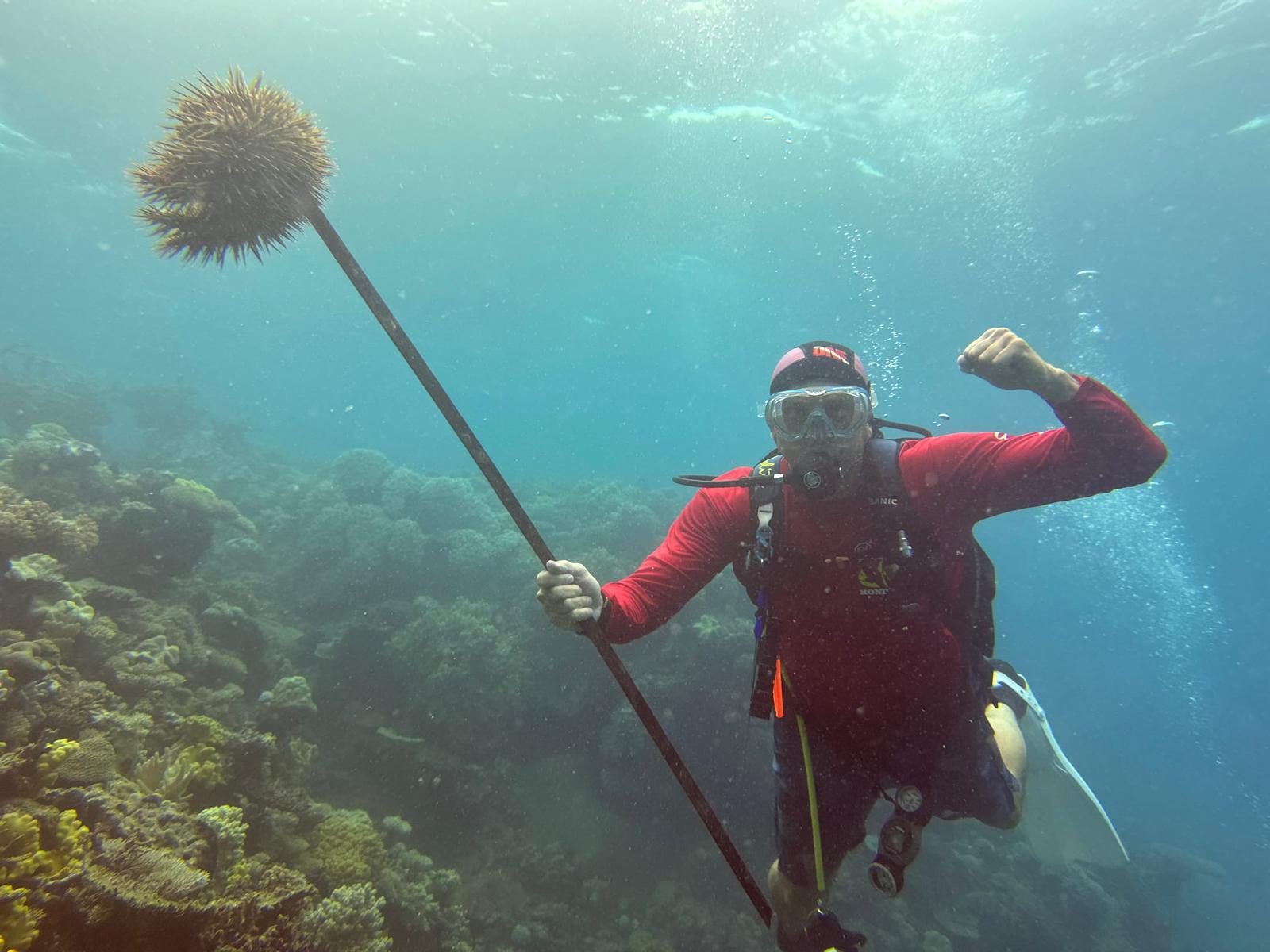
Sau Bay diver successfully removes a crown-of-thorns starfish from a coral reef, contributing to efforts to protect reef ecosystems from this coral predator. © Sau Bay Resort & Spa
Conservation Challenge
Crown-of-Thorns (COTS) outbreaks, which can rapidly consume living coral tissue, have intensified over the past year on Fiji’s Rainbow Reef, placing significant pressure on reef systems already affected by climate change and sedimentation. Preventing avoidable coral loss from COTS predation is therefore critical to maintaining reef resilience and the ecological integrity that supports local fisheries and tourism.
Sau Bay Resort & Spa, a PADI Eco Center located on Rainbow Reef in Fiji’s Somosomo Strait, is advancing efforts to control outbreaks of Crown-of-Thorns starfish (COTS) in one of the region’s most biodiverse coral ecosystems. Led by oceanographer and resort owner Leo Rebele, the program works with dive professionals and local communities, including Kioa Island and Nawi, and will expand to additional villages around Rainbow Reef.
Funded Project
Funding will enable the expansion of Sau Bay’s COTS culling program by supporting diver training, specialized equipment, boat fuel, monitoring dives, and safe disposal practices. This investment will transition the program from small-scale, volunteer-driven removals to a more systematic reef management approach, targeting priority sites where COTS aggregations are known to occur.
Project activities include baseline surveys, quarterly monitoring of COTS density alongside coral cover assessments, and weekly removal dives, with the aim of removing at least 200 COTS per session. This program strengthens local participation through school visits, volunteer days, and community outreach, increasing the scale of COTS removals beyond guest and staff efforts alone.
This partnership invites Oceanic Society travelers to take part in this active conservation effort while on a Fiji snorkeling expedition at Rainbow Reef. Through guided interpretation, participants gain insight into the ecological impacts of Crown-of-Thorns starfish outbreaks and, where appropriate, contribute by identifying starfish for trained divers to remove. In doing so, travelers move beyond observation, developing a deeper understanding of reef conservation challenges and the tangible outcomes of targeted intervention.
Protecting Hawksbill Turtles in Panama Through Community-Led Nest Monitoring
Grantee: MarAlliance, Panama – $2,500
Conservation Challenge
In Panama’s Guna Yala Comarca, MarAlliance advances community-led efforts to protect Critically Endangered hawksbill turtles on Masargandup Island. Here, hawksbills are both a keystone species essential to coral reef health and a culturally significant species for Indigenous Guna communities. Despite ongoing conservation work, the population continues to face significant human pressures, including egg poaching, accidental entanglement in fishing gear, habitat degradation, and the impacts of climate change on nesting beaches and reef habitats.
Since 2021, MarAlliance has partnered with local guardians to monitor nests, conduct patrols, and deliver environmental education. While local efforts have begun to reduce some immediate threats, critical knowledge gaps and limited resources continue to constrain long-term protection and recovery.
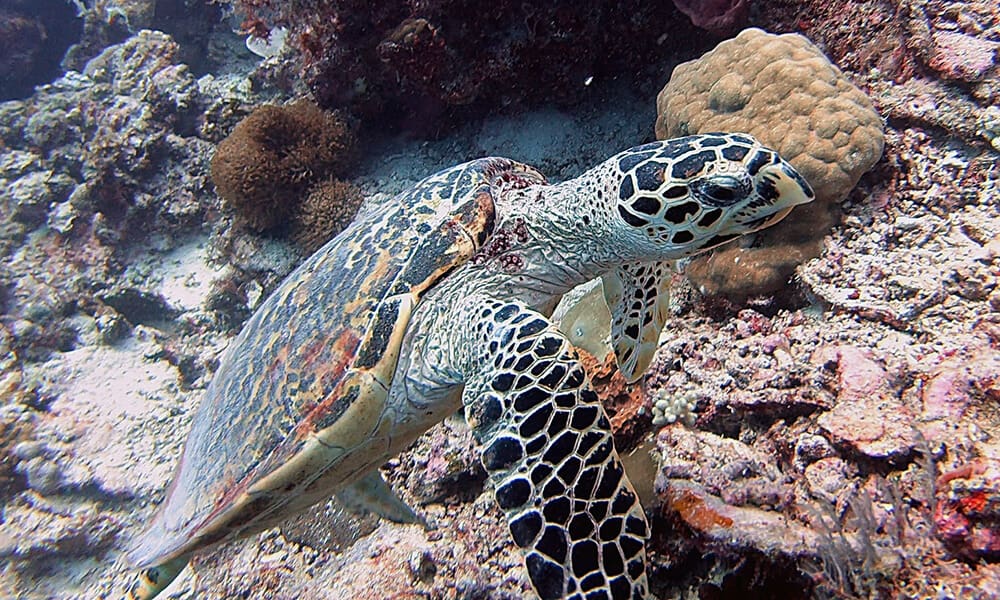
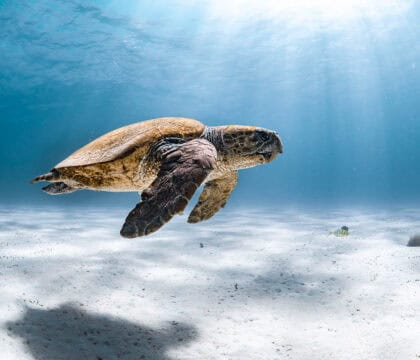
Hawksbill sea turtles like this play a vital role in maintaining healthy coral reefs. In Panama, community-led efforts are helping protect nests and safeguard their future.
Funded Project
Grant funding will expand existing on-the-ground efforts during the May–October nesting season through increased nest monitoring, patrols, youth conservation training, and community workshops.
The project integrates Indigenous knowledge with scientific approaches to enhance protection across the turtles’ life cycle. Outcomes include increased hatchling survival through systematic nest protection and reduced disturbance—documented through monitoring logs, GPS-mapped nesting sites, and hatch success rates—as well as strengthened local capacity through training Guna youth as conservation monitors and educators. By building community leadership alongside improved data collection, the initiative supports more resilient, long-term stewardship of hawksbill turtles and their habitats.
Understanding The Role of Herbivores in Caribbean Coral Reef Recovery
Grantee: Isla Mar, Puerto Rico – $2,000
Conservation Challenge
Across the Caribbean, coral reefs are declining due to climate change, coastal development, overfishing, and repeated disturbance. In response, restoration efforts such as coral outplanting and the release of herbivores like crabs and sea urchins are essential for controlling macroalgae that can otherwise smother corals. However, a key gap remains in understanding what happens to herbivores after their release. Their survival, movement, and behavior are largely unknown.
Funded Project
At Tres Palmas Marine Reserve in Rincón, Puerto Rico, Isla Mar is working to address this gap.
With support from the Expedition Impact grant, the project will implement a structured citizen science monitoring following the summer 2026 release of nursery-raised crabs and sea urchins as part of the broader Caribbean Reef Project.
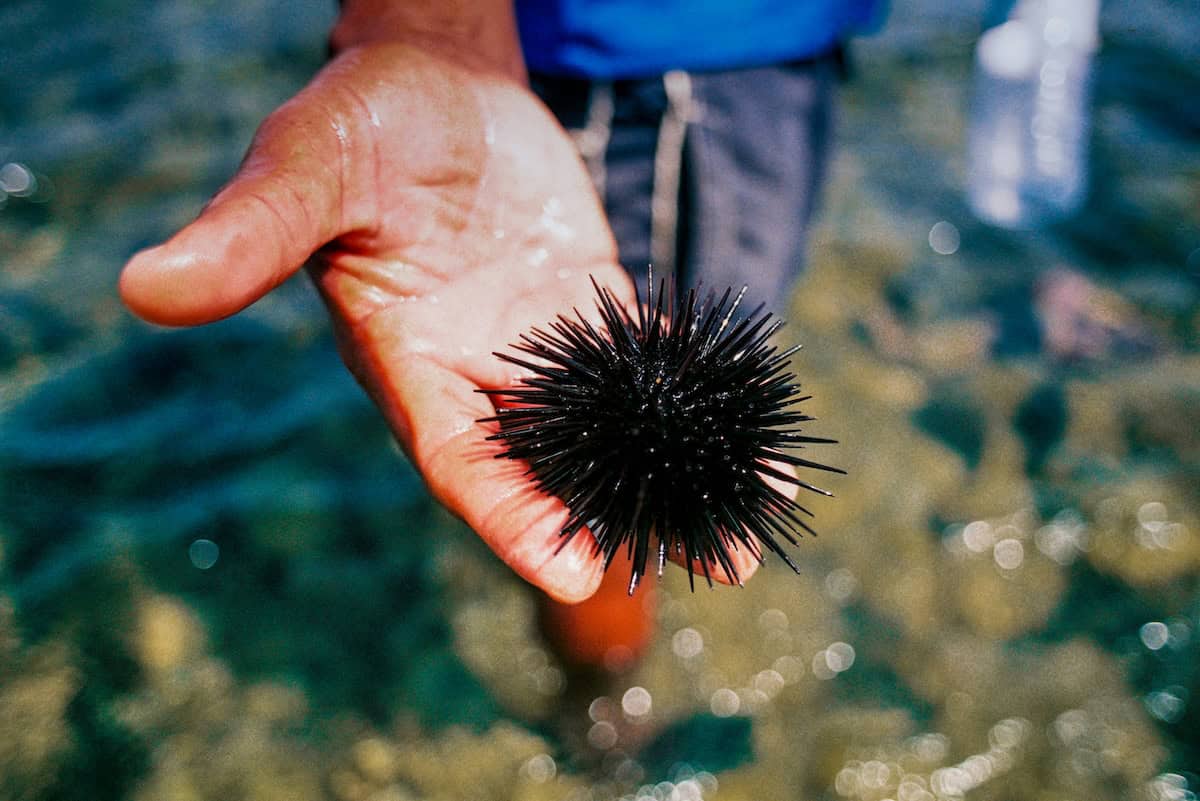
Sea urchins like this play a critical role in keeping coral reefs healthy by grazing algae. In Puerto Rico, new research is tracking what happens after they’re released—helping improve reef restoration efforts.
Trained participants, guided by Isla Mar staff, will conduct in-water surveys over time to track herbivore survival, movement, and behavior. Using roving snorkel surveys and photo quadrat assessments, they will also document changes in reef conditions, including macroalgal cover. The result will be one of the first datasets linking herbivore reintroductions to measurable ecological outcomes.
This effort builds on Isla Mar’s established Tres Palmas Citizen Science program, engaging local residents, many of whom contributed to earlier coral outplanting, in ongoing reef stewardship. Oceanic Society travelers on our Puerto Rico snorkeling expedition will have the opportunity to observe this work firsthand, practice monitoring techniques, and learn how data collected in the field informs more adaptive and effective restoration strategies.
Strengthening Youth Connection to Aldabra and Assomption Amid Development Pressure
Grantee: Friends of Aldabra, Seychelles – $1,000
Conservation Challenge
Aldabra Atoll, a UNESCO World Heritage Site in the Outer Islands of Seychelles, is one of the most intact and biologically significant coral atolls in the world. Today, it faces growing risk from a proposed luxury hotel development on nearby Assomption Island, which could introduce pollution, invasive species, and long-term ecological disruption.
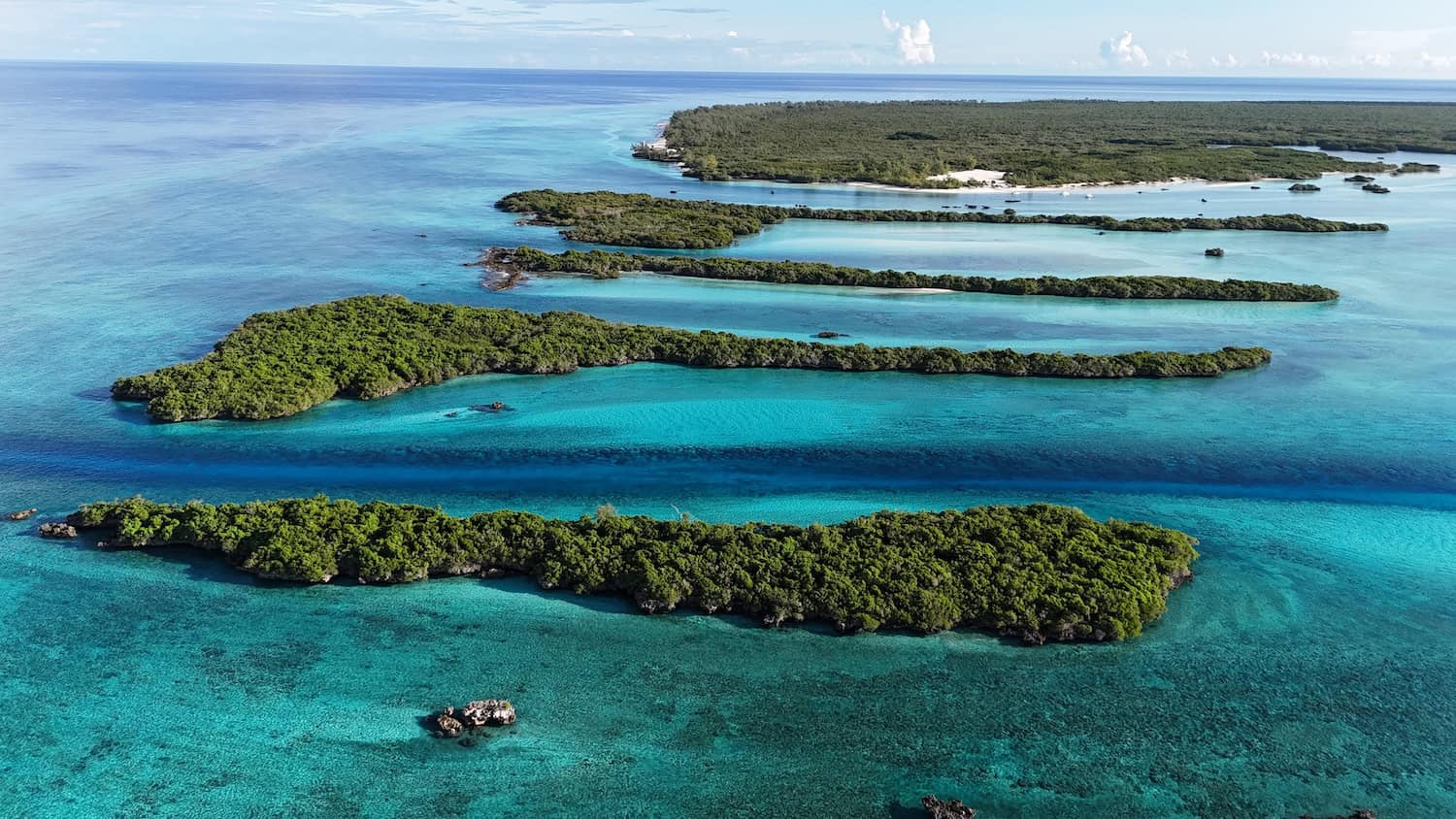
From above, Aldabra Atoll reveals its untouched beauty—but its future is not guaranteed. In Seychelles, a youth-led movement is working to inspire the next generation to protect this extraordinary place. © Joey Latsha
Funded Project
In response to this development, Friends of Aldabra, a youth-led movement in Seychelles, is working to protect these islands by building long-term stewardship and awareness.
Their 2026 work focuses on helping Seychellois youth build a deeper connection to Aldabra and Assomption, especially given the geographic and emotional distance between the remote Outer Islands and the more populated Inner Islands.
As they explain, “We will work with schools and reach Seychellois youth to increase their sense of ownership and guardianship for Aldabra and Assomption. This will be done by developing a mix of creative and science-focused materials to increase their knowledge in this area and develop a sense of wonder and an emotional link to the Aldabra Group.”
The goal is to nurture early awareness and ownership so that conservation values carry forward into communities and future decision-making.
The Expedition Impact grant will support the development of learning tools, including a short video series featuring Seychellois researchers, an illustrated educational map with a school coloring version, and support for a children’s book by Seychellois author Frances Benstrong. These materials will be shared through schools and youth organizations to help make Aldabra’s ecology more tangible and locally meaningful.
Every Trip Makes a Difference
Together, these projects reflect the power of locally led conservation to address some of the ocean’s most pressing challenges. From protecting endangered species to restoring critical habitats and strengthening community stewardship, each initiative demonstrates what’s possible when the right support reaches the right hands.
Learn more about how traveling with Oceanic Society supports conservation projects and impactful programs, including removing 200 pounds of plastic waste from the ocean and planting climate-resilient corals on degraded reefs.