April 29, 2026 • News Announcements
Since 1969, Oceanic Society has been connecting people with extraordinary ocean wildlife, ecosystems, and communities—not just to experience them, but to help protect them. Through our Expedition Impact Program, every trip benefits the places we visit while inspiring travelers to engage in ocean conservation. Here, we highlight how our Belize expeditions support local ecosystems and the remarkable organizations we partner with.
Belize: A Conservation Legacy on the Mesoamerican Reef
Belize is home to three of only four coral atolls in the Western Hemisphere, unique ring-shaped reef systems that act as critical nurseries and refuges for marine life. These atolls sit along the Mesoamerican Reef, the largest barrier reef in the Western Hemisphere and a UNESCO World Heritage Site, harboring wildlife like bottlenose dolphins, endangered Antillean manatees, sea turtles, and queen conch.
Two areas act as a home base for our expeditions in Belize:
- Turneffe Atoll, the largest and most biologically diverse coral atoll in the Western Hemisphere, is now a designated marine reserve and home to extraordinary snorkeling along reef walls, channels, and the legendary Great Blue Hole.
- St. George’s Caye, a secluded island just a mile from the Belize Barrier Reef, serves as the base for our volunteer research program, where travelers work alongside scientists studying the marine mammals and reef systems that depend on these protected waters.
Belize has been a place of inspiration and discovery for Oceanic Society travelers for over three decades. Among our most meaningful experiences in the region, we operated our own field station on Turneffe Atoll for more than 15 years and helped permanently protect that land from development. That history reflects our long-standing commitment to Belizean conservation — one that continues through every expedition we lead today.
Oceanic Society’s Local Conservation Partners in Belize
In every destination we visit, we aim to partner with organizations, businesses, and champions that are spearheading impactful conservation on the ground. In Belize, two long-standing partnerships anchor our work.
ECOMAR — Protecting Belize’s Marine Wildlife
Oceanic Society’s partnership with ECOMAR is one of the longest in our history. Since 1996, John and Linda Searle, founders of ECOMAR, have hosted Oceanic Society groups in Belize, building a shared commitment to protecting the region’s marine wildlife.
Citizen Science & Marine Research

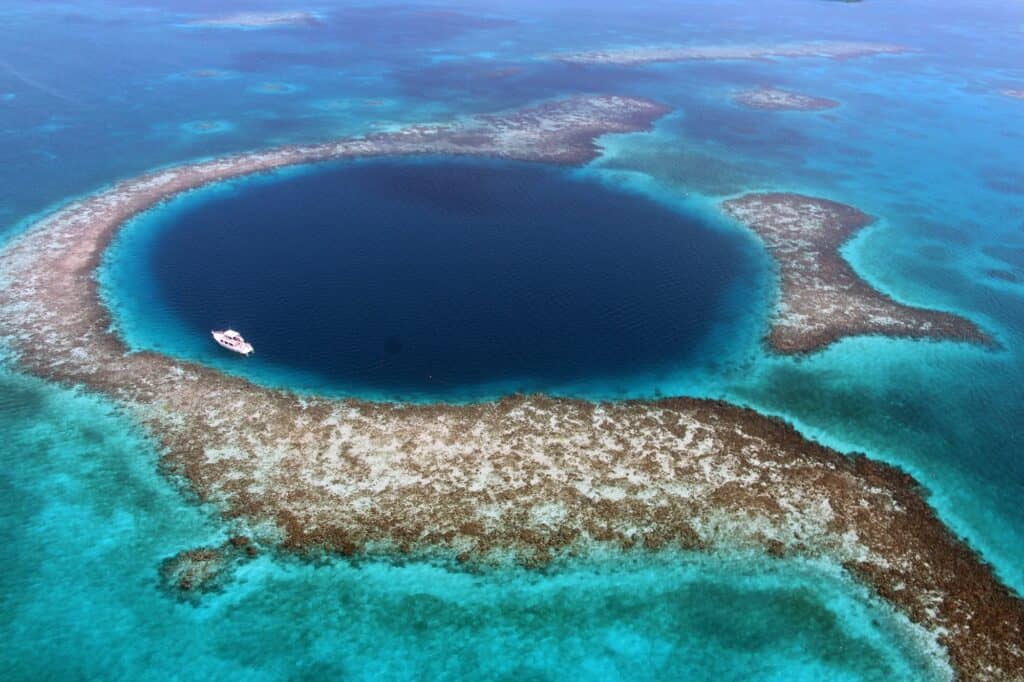
An Oceanic Society naturalist guides travelers through the coral ecosystems of the Great Blue Hole, one of the most iconic dive sites on the Mesoamerican Reef. ©Pei Lun Lee
Based at the St. George’s Caye Research Station, ECOMAR focuses on the protection of dolphins, manatees, sea turtles, conch, and coral reefs along the Belize Barrier Reef. Our Ocean Wildlife Volunteer Program is built around this partnership: travelers work directly alongside ECOMAR researchers on boat-based surveys, collecting data on marine mammals, reef health, and conch populations across the reefs and seagrass beds of St. George’s Caye and the Drowned Cayes.
Data collected during the program feeds into annual reports shared with the St. George’s Caye Village Council and Belize Fisheries Department, directly informing local management decisions. Over the years, this partnership has also contributed to a body of peer-reviewed research on Belizean marine mammals, reef systems, and coastal ecosystems.
A portion of trip fees supports ECOMAR’s ongoing research and operations, helping sustain their year-round conservation work.
Expedition Impact Program Grant Recipient
ECOMAR Sea Turtle Education (2021): We provided a grant to ECOMAR to create an educational sea turtle display at the St. George’s Caye Research Station, helping travelers and local visitors connect with sea turtle conservation efforts along the Belize Barrier Reef.
Antillean Manatee Research (2024): We supported research on the use of drone technology for Antillean manatee population assessments in Belize, helping advance new methods for monitoring one of the Caribbean’s most endangered marine mammals.
Turneffe Atoll – Safeguarding Belize’s Largest Marine Reserve
Our Snorkeling & Coral Reef Ecology expedition is based at Turneffe Flats Lodge on the eastern edge of Turneffe Atoll, where travelers explore the atoll’s spectacular reef systems with expert naturalists.

Turneffe Atoll offers a perfect hub for travelers looking to explore the surrounding mangroves, seagrass beds, and coral reef systems of the Belize Barrier Reef – the second largest reef system in the world.
Marine Reserve Management & Enforcement
The Turneffe Atoll Sustainability Association (TASA), co-manager of the Turneffe Atoll Marine Reserve, plays a central role in safeguarding these waters through ranger patrols, fisheries enforcement, and visitor management. As a part of the expedition, travelers visit TASA to meet the team responsible for protecting the atoll and learn about their local conservation efforts. At the Marine Reserve Station, guests explore nature trails and underwater snorkeling trails that highlight the diversity of Turneffe’s ecosystems while offering a firsthand look at how the reserve is managed.

Nestled within the protected waters of the Turneffe Atoll Marine Reserve, Calabash Caye serves as the headquarters for the Turneffe Atoll Sustainability Association (TASA), the primary co-manager of Belize’s largest marine reserve. ©Pei Lun Lee
Reef Research & Monitoring
TASA works alongside University of Belize researchers at Calabash Key to conduct reef health assessments, track key species, and develop science-based management strategies for the reserve.
Land Conservation & Environmental Advocacy
The Turneffe Atoll Trust protects the atoll from threats, including destructive development, unsustainable fishing, and invasive species. Oceanic Society’s own history with the Trust runs deep: our 12-acre Blackbird Caye property was purchased by and transferred to the Trust in 2020 for permanent protection.
Local Belizean Naturalists
Our expeditions at Turneffe are led by naturalist Abel Coe, who has been exploring the atoll’s reefs for more than two decades. Born and raised in a Mayan village in Southern Belize, Abel built his career guiding in Belize’s rainforests before turning to the ocean. His expansive knowledge of Turneffe’s marine and terrestrial life, combined with his accomplished underwater photography, makes every expedition both educational and unforgettable. Abel is one of many local Belizeans whose careers have been shaped by conservation tourism, and his deep connection to these ecosystems enriches every expedition.
How Our Belize Expeditions Contribute to Conservation
Our expeditions center on connecting travelers directly with the wildlife, ecosystems, and communities that benefit most from conservation efforts. And our travelers notice the difference.
“This was one of the best experiences of my life! We had so many up close and personal experiences with sea turtles, manatees, dolphins, and nurse sharks. I really felt like a little mini marine biologist, learning to ID fish, helping with conch surveys, and filtering water for DNA samples. I would recommend this trip to anyone who loves ocean conservation!” — Belize Volunteer Program Traveler
Engaging Travelers as Conservationists
Our Ocean Wildlife Volunteer Program is one of the most hands-on expeditions we offer. Volunteers are trained in survey equipment and research techniques, then spend the week working alongside ECOMAR scientists collecting data on dolphins, manatees, sea turtles, conch, and coral reef health. On the final day, travelers visit Hol Chan Marine Reserve to compare fish abundance between protected and unprotected reefs, a powerful, firsthand lesson in why marine reserves work.

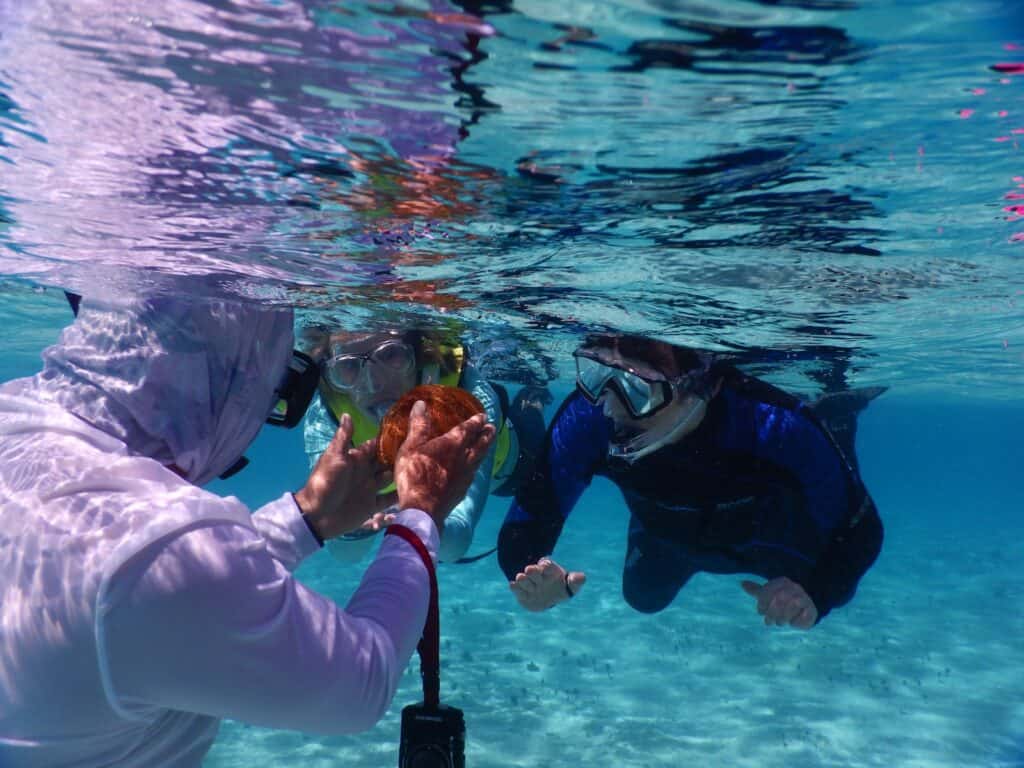
Travelers in the Ocean Wildlife Volunteer Program work directly with ECOMAR scientists, collecting data on dolphins, manatees, sea turtles, and reef health along the Belize Barrier Reef. ©Linda Searle
On our Snorkeling & Coral Reef Ecology expedition, travelers explore Turneffe Atoll’s reef systems with expert naturalists, visit the TASA Marine Reserve Station, and gain insight into reef ecology shaped by Oceanic Society’s decades of work in the region.
Expeditions and partnerships in Belize demonstrate what’s possible when passionate travelers connect with strong local leaders on the frontlines of ocean conservation, supporting the local economies and livelihoods that depend on healthy reefs. It’s what Oceanic Society has pioneered for over 50 years, and nowhere is that history deeper than in Belize.
How Our Expedition Impact Program Works
Every Oceanic Society expedition contributes to our Expedition Impact Program, supporting ocean conservation through three core pillars:
- Plastic Pollution: Funding the removal of 200 pounds of plastic from the ocean per traveler
- Coral Restoration: Planting three climate-resilient corals for every traveler
- Conservation Grants: Supporting locally led conservation and community development in the places we visit