Just a few hours from the U.S. mainland, Puerto Rico offers something most travelers never find: a single island where forest, working farms, mangroves, seagrass beds, and coral reefs exist within miles of each other, all connected, all alive. No passport required. No long-haul flight. Just one of the most ecologically layered landscapes in the Caribbean, waiting to be explored.
This is not a typical trip to Puerto Rico. The Ridges to Reefs Adventure, offered in partnership with Isla Mar, is a week-long immersion led by marine scientists Dr. Chelsea Harms Tuohy and Dr. Evan Tuohy. Their ability to bring Puerto Rico’s ecosystems to life, both above and below the waterline, transforms each day from a sightseeing excursion into a genuine scientific journey.
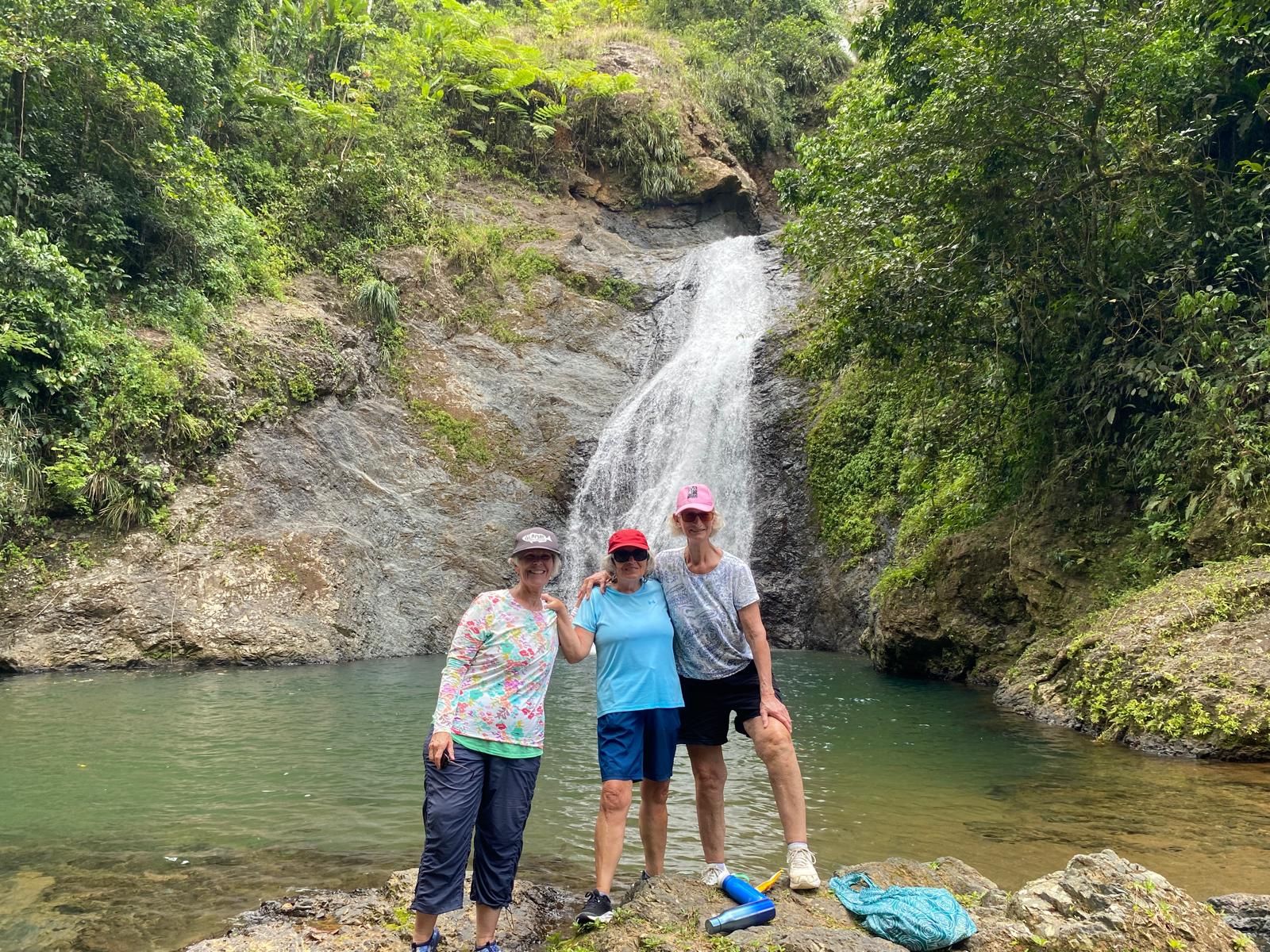
Oceanic Society travelers at one of Puerto Rico’s interior waterfalls during a hike through the island’s ridge forest. The same rainfall captured here eventually feeds the coastal ecosystems explored later in the week. Photo by Isla Mar
On our most recent departure, each guest who joined us was over 70 years old, proving that exploration and learning have no age limit. They hiked, snorkeled, and searched for wildlife after dark, moving through ecosystems with curiosity, enthusiasm, and a true spirit of discovery. By the end of the week, they called it the “best trip they had ever been on”.
“This was a wonderful adventure. Our leaders, Chelsea and Evan, gave participants an opportunity to learn more about Puerto Rico as a whole, not just one aspect of the territory. We were able to explore both on land and in the ocean. They made this a very educational experience as well as fun and adventurous. I would definitely recommend this trip!” – Sherry H.
A living classroom from mountain to sea
The name “Ridges to Reefs” isn’t poetic license. It’s a literal itinerary. The program traces the watershed of Puerto Rico’s west coast, exploring how ecosystems are linked in a continuous chain: the forests and ridges that capture rainfall, the farms and wetlands that filter runoff, the mangroves that shelter juvenile fish, the seagrass beds that anchor sediment, and finally the coral reefs that depend on all of it upstream.
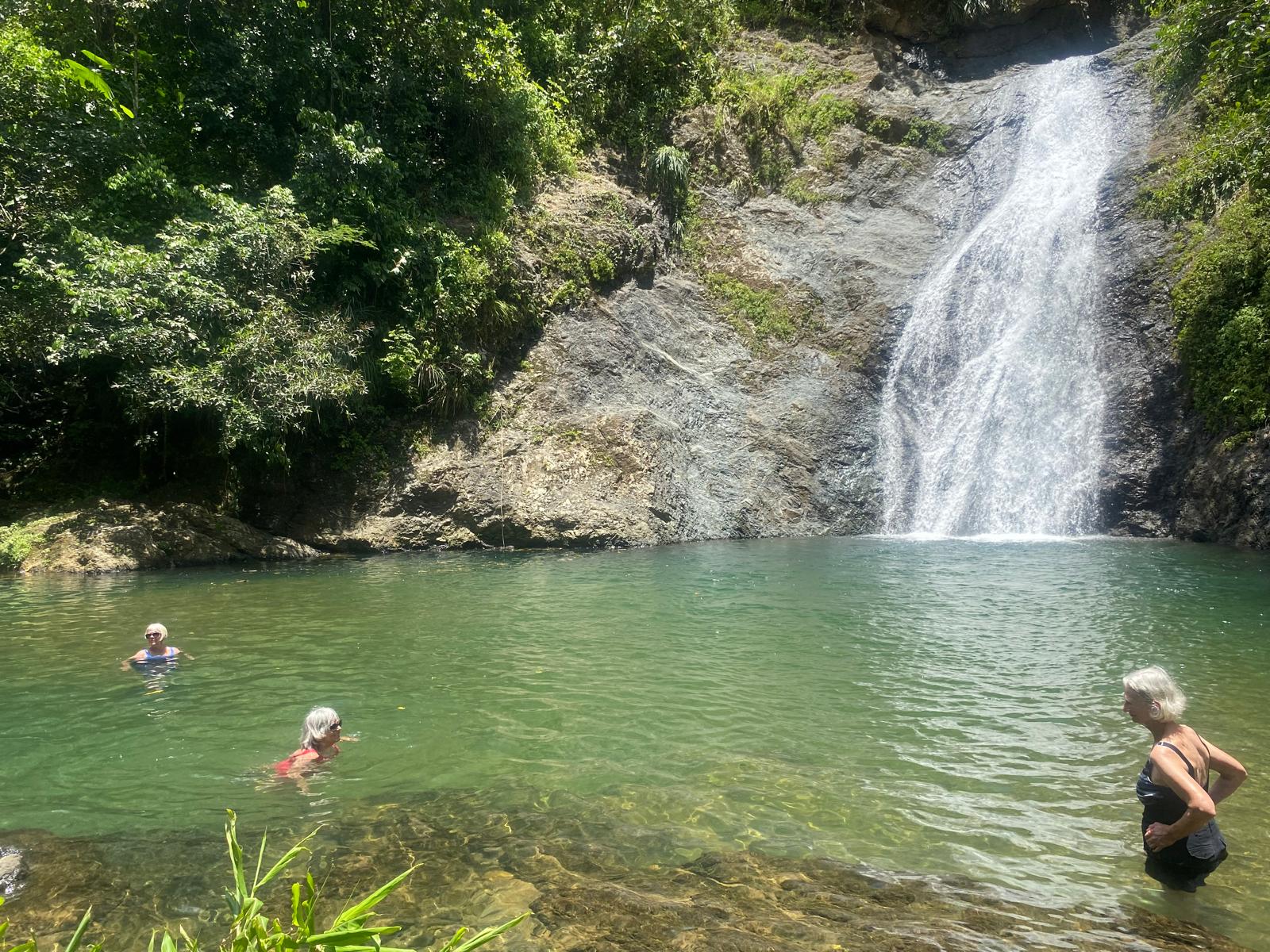
Travelers cool off in a freshwater pool beneath one of the island’s interior waterfalls, a reminder that the Ridges to Reefs itinerary covers the full range of Puerto Rico’s landscapes.
Guests explored each link in that chain through hands-on experiences, including hiking, snorkeling, and wildlife observation, with Chelsea and Evan providing context that tied each habitat to the ones before and after it.
“Guests frequently told us they hadn’t expected to learn so much,” Chelsea noted. But that’s what happens when the classroom is alive all around you.
Snorkeling mangroves and seagrass beds
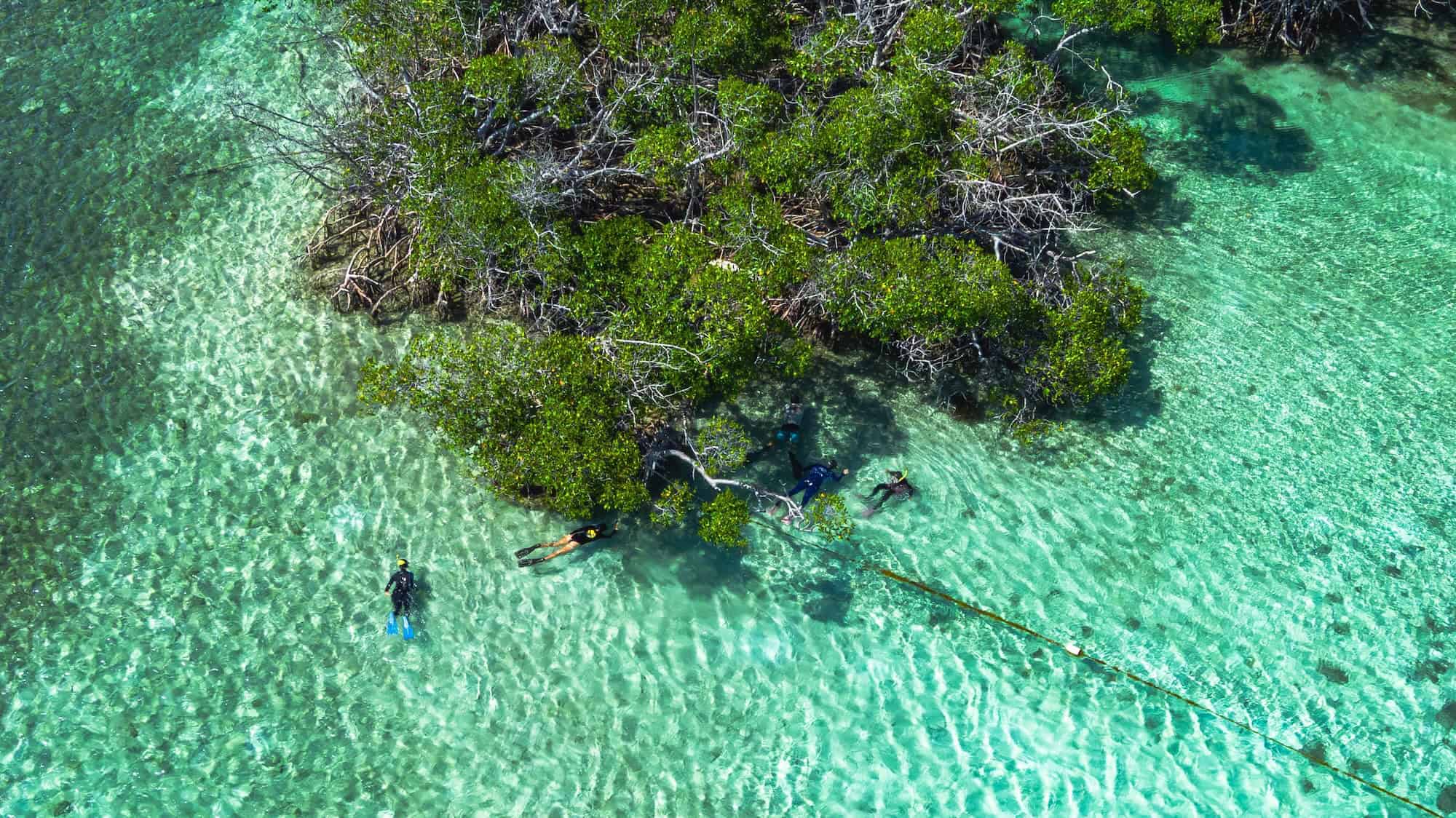
The group snorkeling the mangrove edges in La Parguera. From above, the structure of these coastal habitats and their connection to the reef becomes immediately clear. Photo by Isla Mar
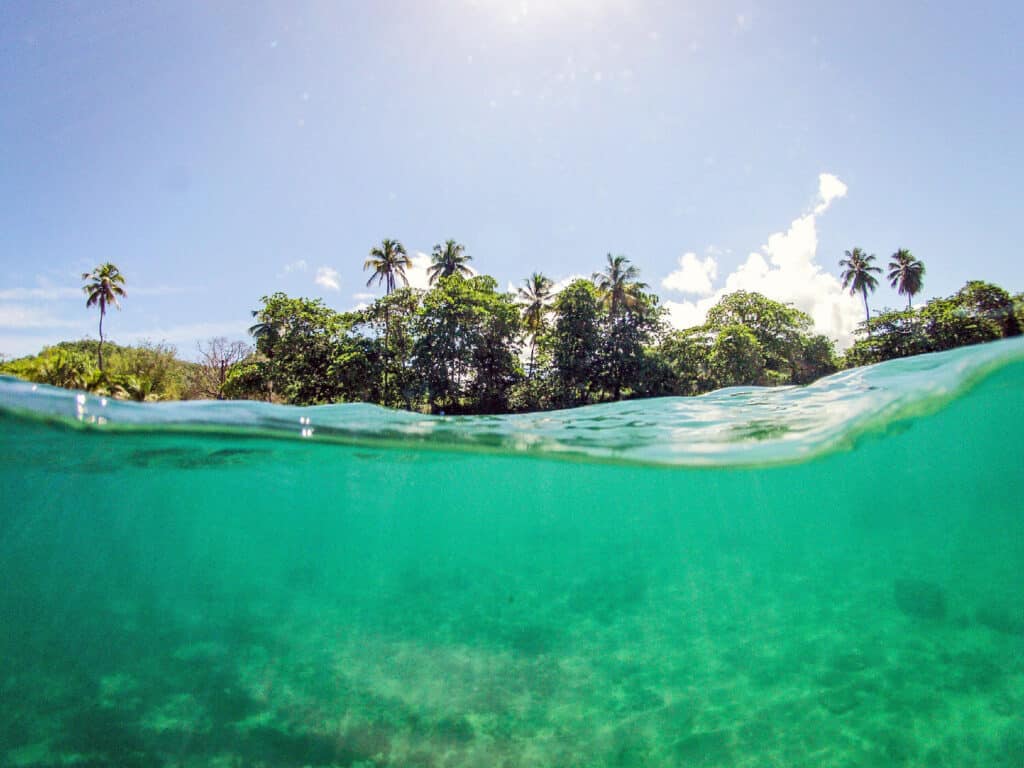
Of all the habitats explored during the week, the mangroves and seagrass beds left perhaps the deepest impression. Snorkeling through calm, sheltered waters, guests found themselves in what can be described as “the ocean’s nursery”: a tangle of roots and light-dappled shallows thick with juvenile fish finding cover among the prop roots.
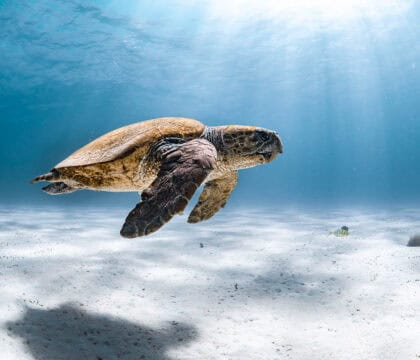
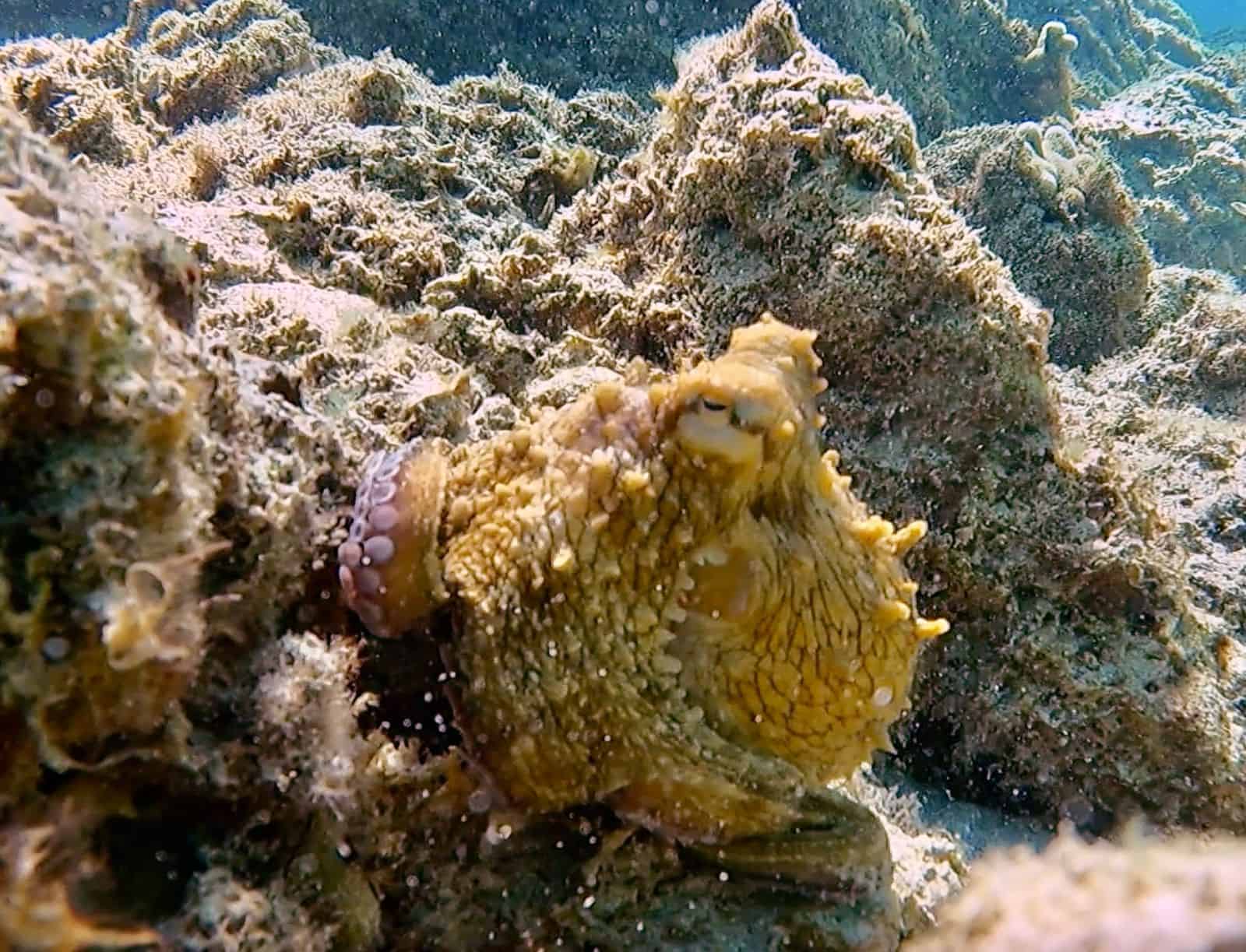
The seagrass beds beyond the mangroves offered a different kind of wonder. Here, guests encountered an octopus tucked against the reef, a variety of colorful fish, and a sea turtle.
-
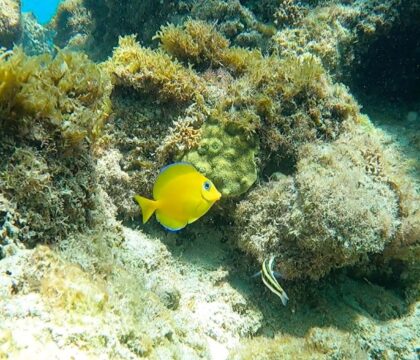

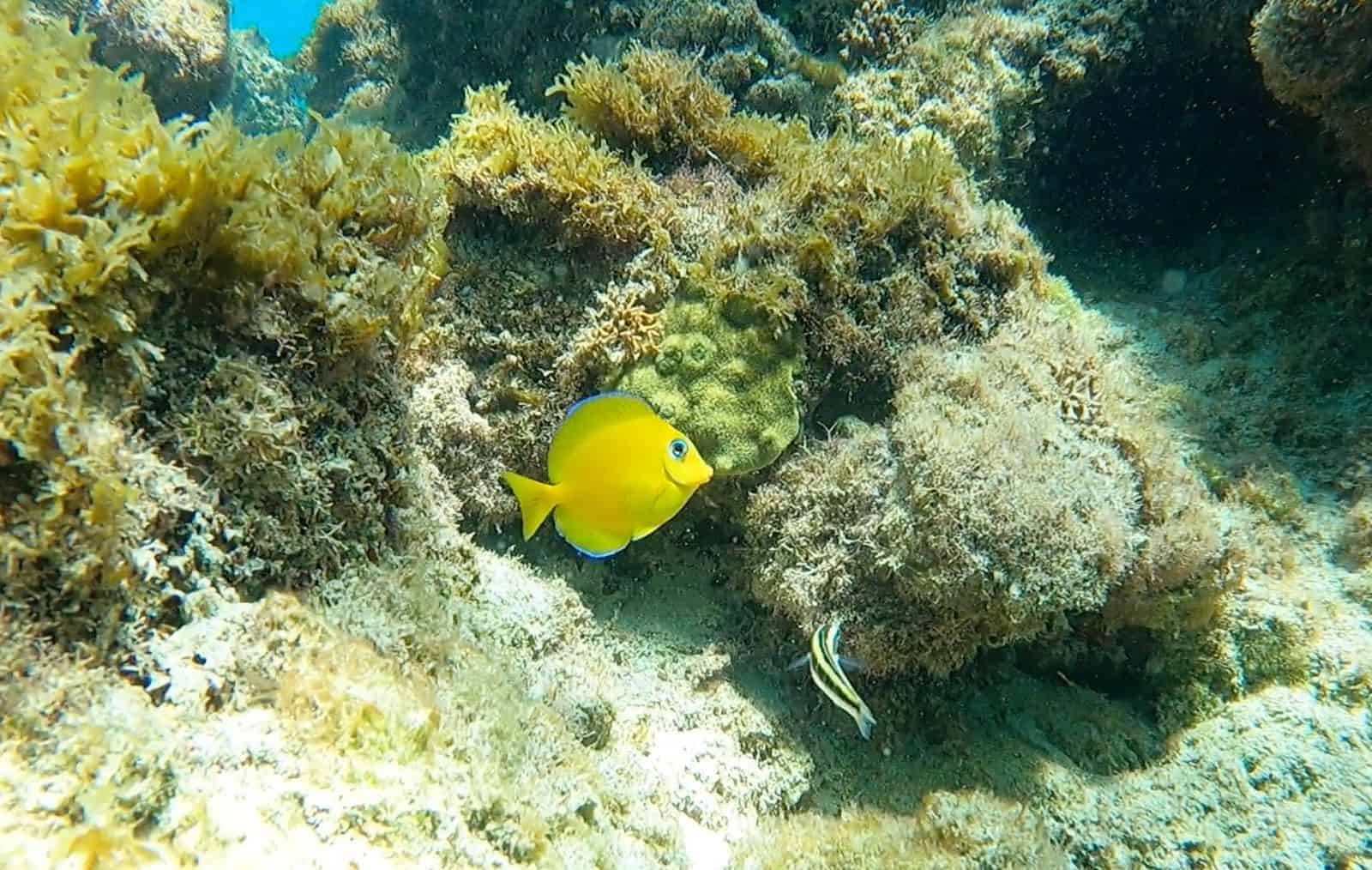
- A juvenile blue tang navigates the reef during a snorkeling excursion. Herbivores like this play a key role in keeping coral reefs healthy by grazing algae. Photo by Isla Mar
-
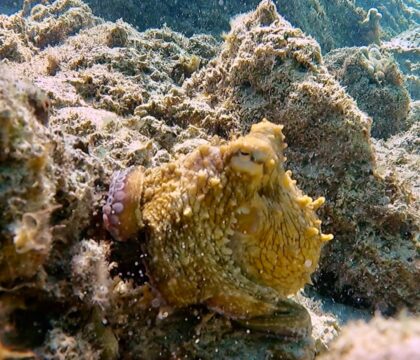
- An octopus spotted tucked into the reef during one of the snorkeling days in La Parguera. Photo by Isla Mar
La Parguera’s bioluminescent bay
One evening stood apart from all the others. The group headed out after dark to the bioluminescent bay at La Parguera. Every stroke of a hand through the water, every ripple from a passing boat, created brilliant blue shimmers beneath the surface.
Guests said afterward that they had no words for it. The natural light show, produced by a living organism invisible to the naked eye, is a striking reminder of what these coastal ecosystems hold when they are protected and healthy.
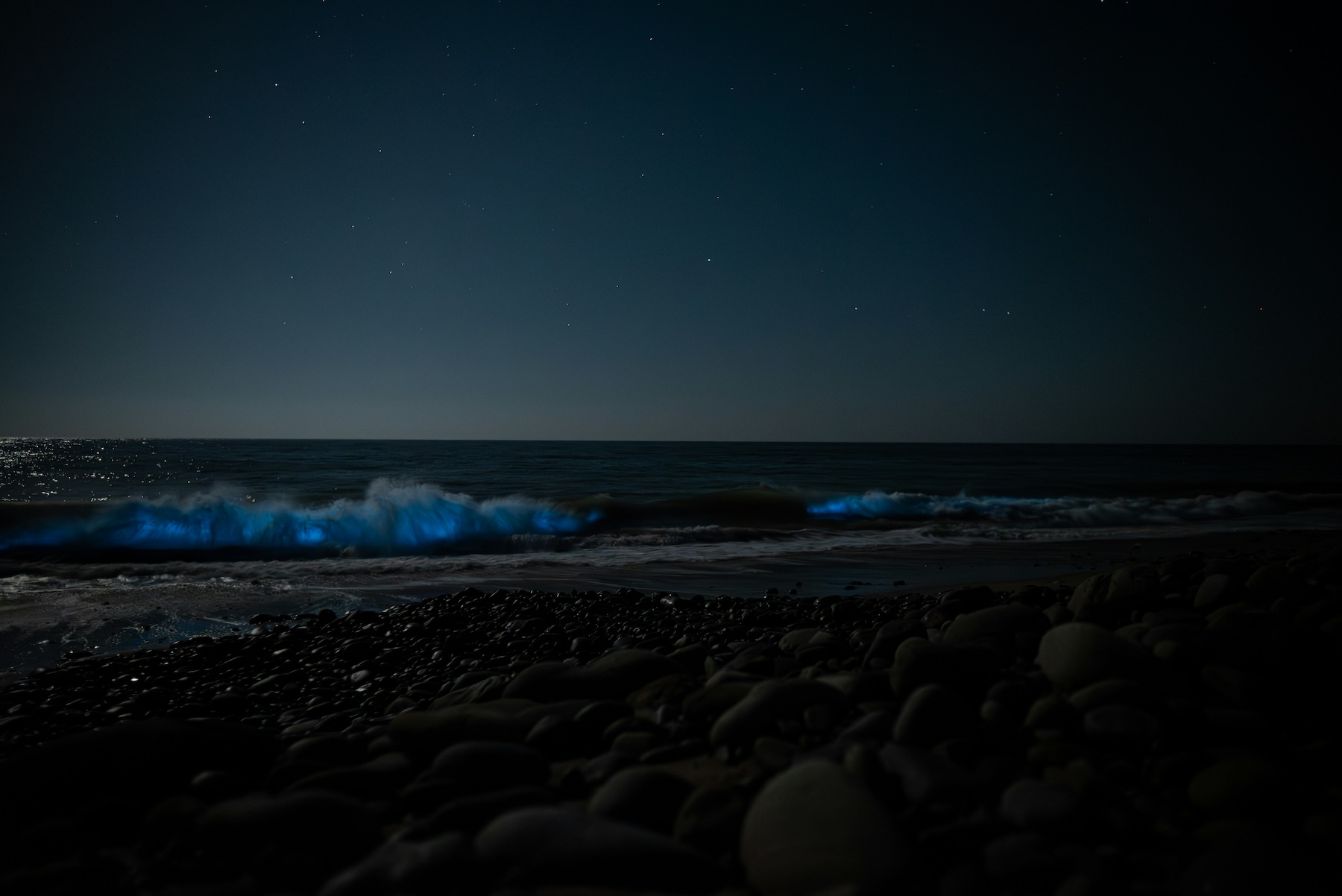
Blue light pulses through breaking waves along the Puerto Rico coastline at night. The glow is produced by bioluminescent dinoflagellates, single-celled organisms that light up in response to movement. Guests said afterward that they had no words for it.
“The itinerary was varied and fun, everything from snorkeling to a nighttime frog hunt to a walk up a river to a waterfall. My favorite was snorkeling in a bioluminescent bay, a true highlight of any snorkeling trip I have taken. I highly recommend this trip if you are interested in learning more about Puerto Rico’s nature and ecology.” – Carol S.
Frogging with a herpetologist
The biodiversity of Puerto Rico does not end at the waterline. One evening, the group ventured into the forest with a local herpetologist for a nighttime wildlife walk, with headlamps cutting through the canopy to search for Puerto Rico’s famous coquí frogs, anoles, and other nocturnal species.
An earlier outing also produced a memorable roadside encounter. A large boa constrictor, an introduced species now established across parts of the island, was carefully examined by Evan before being moved to safety. Wildlife encounters like these tend to prompt conversations that go far beyond identification, into ecology, invasion biology, and what it means for an island ecosystem to absorb a new apex predator.
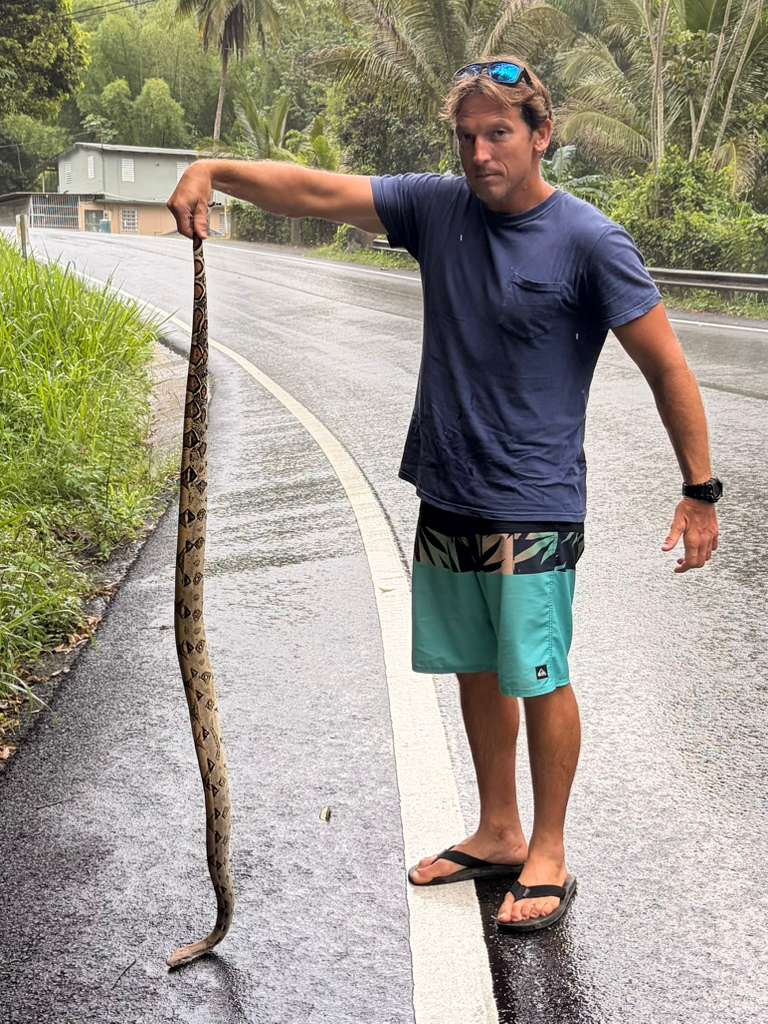
Dr. Evan Tuohy safely relocates a boa constrictor found on a rural road. An introduced species now established across parts of the island, encounters like this open conversations about invasion biology and island ecosystem health. Photo by Isla Mar
Close to home, but far from ordinary
Our guests arrived curious and left transformed. Puerto Rico rewards that kind of curiosity. Its west coast packs an extraordinary range of ecosystems into a compact geography: ridge forest, wetlands, mangrove lagoons, seagrass beds, and coral reefs, each one feeding into the next. It is the kind of ecological variety that usually requires a long-haul flight, and it sits just off the coast of the continental United States, no passport required.
“What makes this program different is that guests aren’t just observing ecosystems, they’re understanding how each one depends on the next. When you’ve walked through the forest in the morning and snorkeled the reef in the afternoon, the connections stop being abstract.” – Dr. Chelsea Harms Tuohy, Isla Mar.
At Oceanic Society, we seek out partners who share our belief that travel can inspire connection, conservation, and lifelong learning. Isla Mar embodies that belief.
This year, they were awarded a Community Conservation Grant through our Expedition Impact Program in support of their Caribbean Reef Project at Tres Palmas Marine Reserve in Rincón. The project tracks what happens to nursery-raised crabs and sea urchins after they are released onto the reef, building one of the first datasets linking herbivore reintroductions to measurable coral recovery outcomes. For guests exploring these reefs firsthand, knowing that their guides are also the ones restoring them adds a layer of meaning that is hard to find elsewhere.
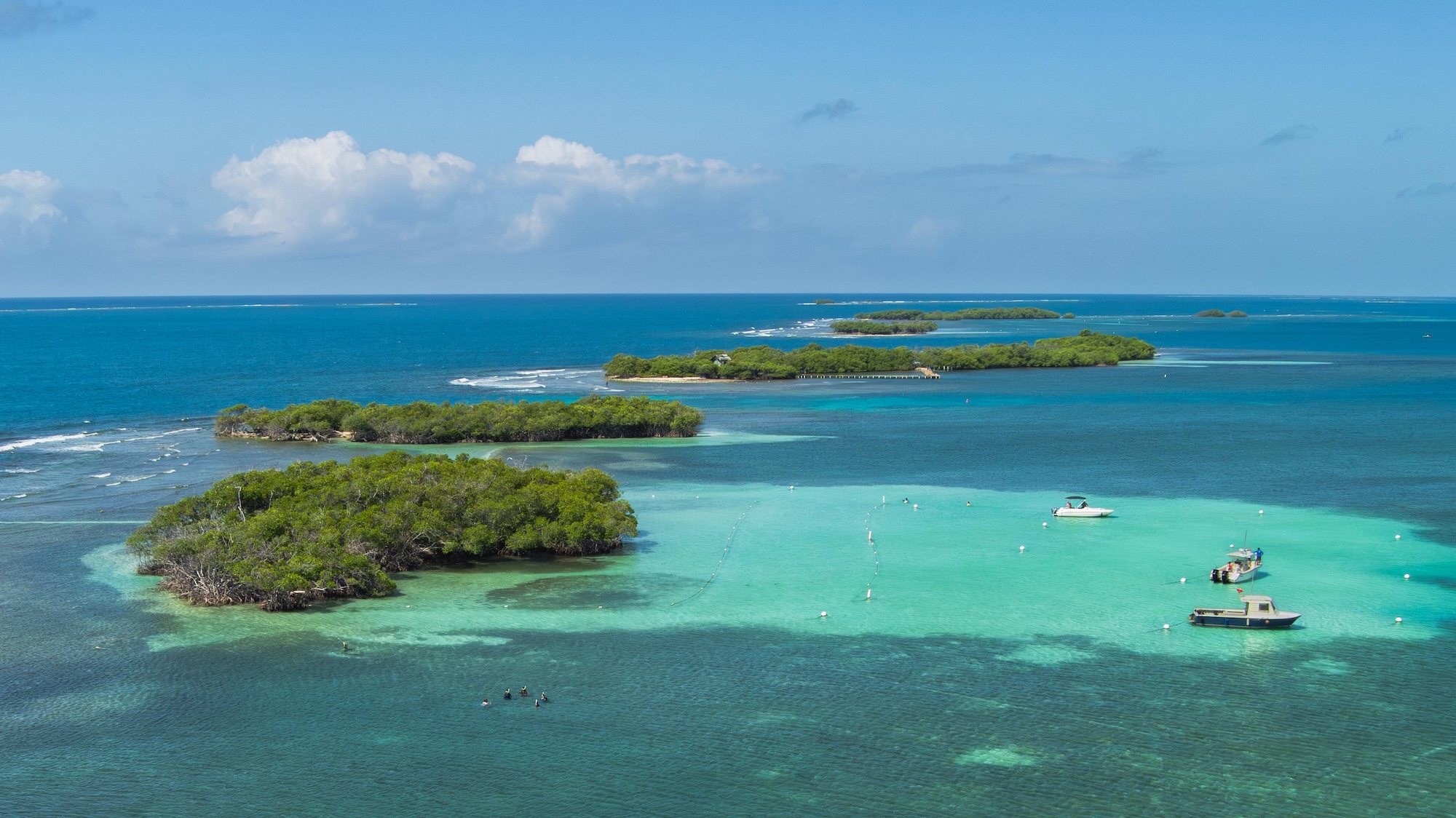
The west coast of Puerto Rico, where forested ridges, mangrove lagoons, and coral reefs exist within miles of each other, all connected, all part of the same living system. Photo by Isla Mar
Alongside their scientific research into Puerto Rico’s coastal ecosystems, Isla Mar runs youth education programs that bring hands-on marine science into local public schools along the island’s west coast. The work they do in the field and in classrooms comes from the same place: a belief that when more people understand the natural environments around them, the more inspired they become to protect them. That shared vision is why this partnership exists.
“We want guests to leave with more than memories. We want them to understand why these ecosystems matter, and to feel personally connected to what happens to them,” shares Dr. Chelsea Harms Tuohy.
Wonder and adventure belong to every stage of life. This trip was a reminder of that, and it is exactly the kind of experience we exist to offer.