If you’ve followed the Colorado Avalanche fan community’s growing fascination with humpback whales, you know it all started with forward Parker Kelly. After returning from his honeymoon in Hawai’i captivated by whales, he shared his excitement with fans, and the moment snowballed into something no one could have predicted.
Fans first adopted a humpback whale named Waffles after Kelly reached a scoring milestone. A GoFundMe campaign then raised enough to name another whale, Parker Kelly, and when donations far exceeded the original goal, supporters named a third whale, Kiarra Kelly, in honor of his wife. Since then, the fan community has continued adopting and naming even more humpback whales, creating what many now affectionately call the “Colorado pod.”
Now, the story has taken another creative turn.
One fan created a live whale tracker dashboard that allows the Avalanche community to follow the whales they’ve come to know and love.
The site brings together the growing pod of humpback whales named by hockey fans. The dashboard allows visitors to follow each whale’s latest sightings, migration history, and Happywhale profile, making it easy to stay connected with the animals the community has helped support.
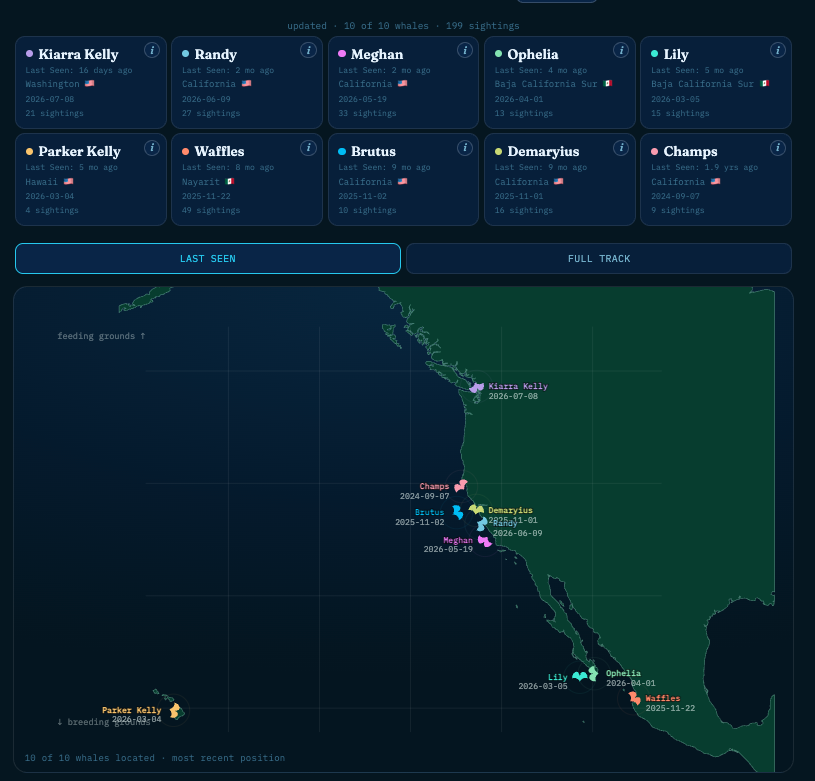
Track the Colorado Pod
Powered by sighting data from Happywhale, a citizen science platform that uses whale fluke photos to identify individual whales and track their movements, the dashboard gives fans an easy way to follow the movements of Waffles, Parker Kelly, Kiarra Kelly, and the growing “Colorado pod.”
- See the last known location for each whale in the “Colorado pod”
- Tap a whale’s name to pull up its full travel history and sighting map
- View each whale’s bio and fluke photo
What makes the dashboard so remarkable is that it wasn’t built by us, or researchers, or a conservation organization. It was built by Avalanche fans who wanted to stay connected to the whales they helped support.
A New Kind of Conservation Community
Every sighting logged for Parker Kelly, Kiarra Kelly, Waffles, and the rest of the Colorado pod contributes to the same photo-identification research scientists use to better understand humpback whale migration, health, and site fidelity across the North Pacific. The community’s fundraising has also had a tangible impact beyond research, helping provide free whale watching experiences for underserved youth in the San Francisco Bay Area.
Stories like this remind us that conservation is often powered by science, but it’s sustained by people who care.
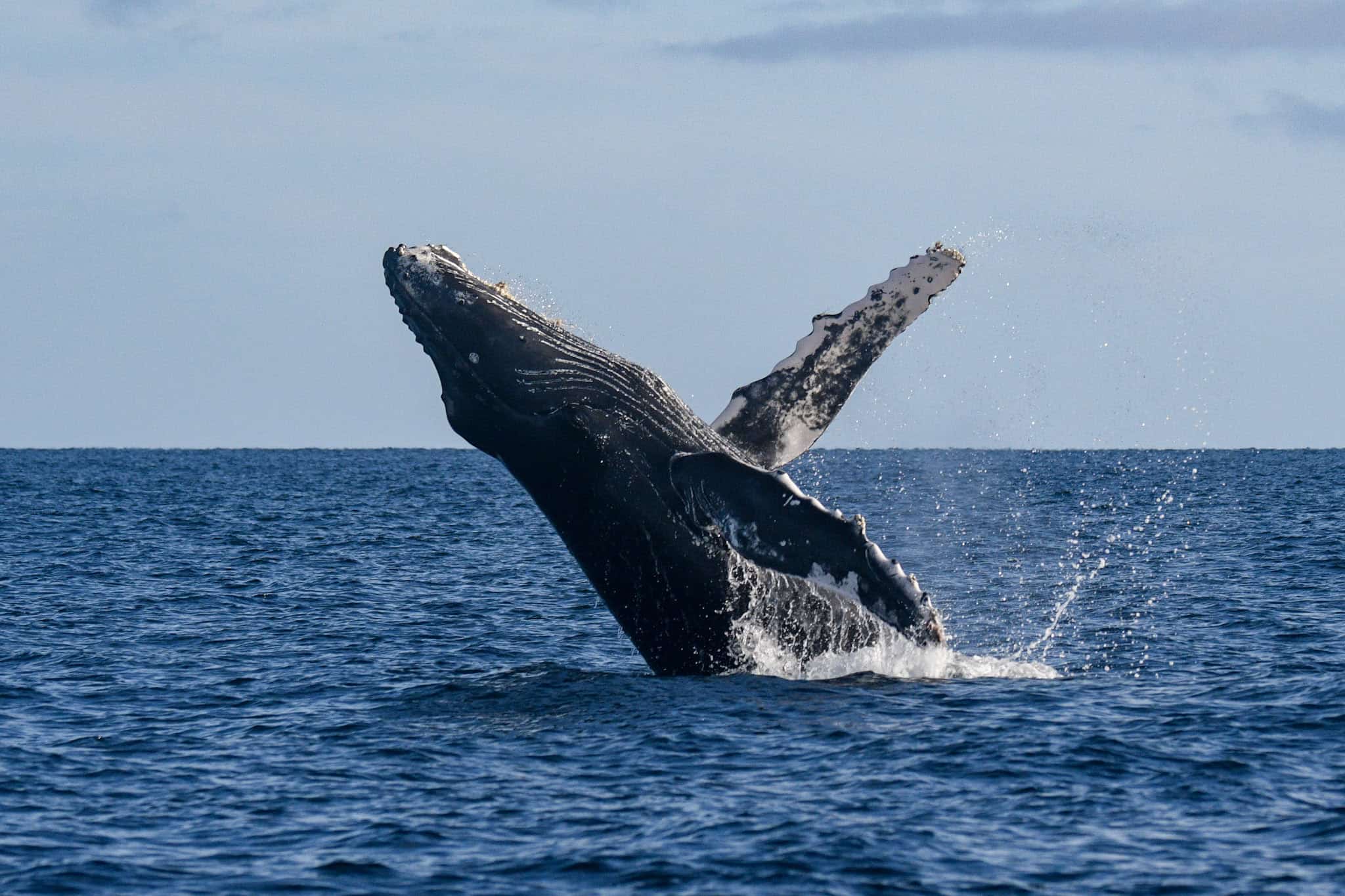
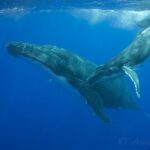
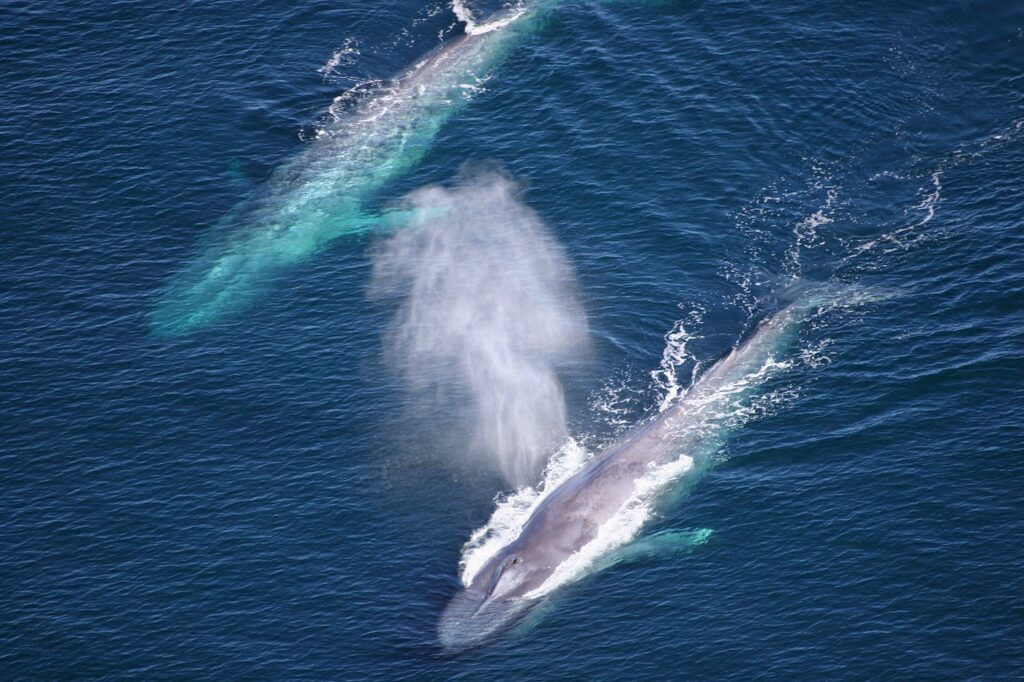
Photo by Michael Pierson
A hockey player’s excitement after seeing whales in Hawai’i inspired thousands of people to learn about humpback whales, contribute to marine mammal research, and now actively follow the movements of individual animals across the Pacific Ocean.
That’s exactly what symbolic whale adoption is meant to do: create a lasting connection between people and wildlife. Instead of a one-time donation, it becomes an ongoing story that unfolds with every migration and every new sighting.
This summer, for example, Kiarra Kelly (the whale) has been putting on a show. Whale-watching operators logged her in the Salish Sea near the San Juan Islands in early July, and Happywhale’s records show a sighting in British Columbia in June, part of the roughly 6,000-mile annual round trip she makes between Hawai’i and the waters off Washington and BC. If you are anywhere near the Pacific Northwest right now, she is a good bet to look for.
We love seeing conservation take on a life of its own, and this fan-built project is a wonderful example of how a single moment of wonder can grow into an engaged community that continues to support and celebrate wildlife.