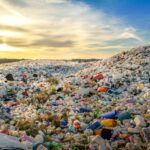
For five consecutive years, the Global Ocean Cleanup has brought together coastal communities worldwide to demonstrate that ocean health and community health are inseparable. With generous support from Planet Oat, and in partnership with SEE Turtles, Oceanic Society funds coastal cleanups led by community-based organizations in critical ecosystems worldwide, connecting thousands of people, supporting healthier oceans, and amplifying stories about what ocean health and community action mean.
2026 Global Ocean Cleanup Results
This year’s Global Ocean Cleanup took place on June 13-14, 2026, and achieved the following results:
- 46 cleanups across 17 countries on five continents
- 60,861 pounds (30.4 tons) of waste removed from the environment
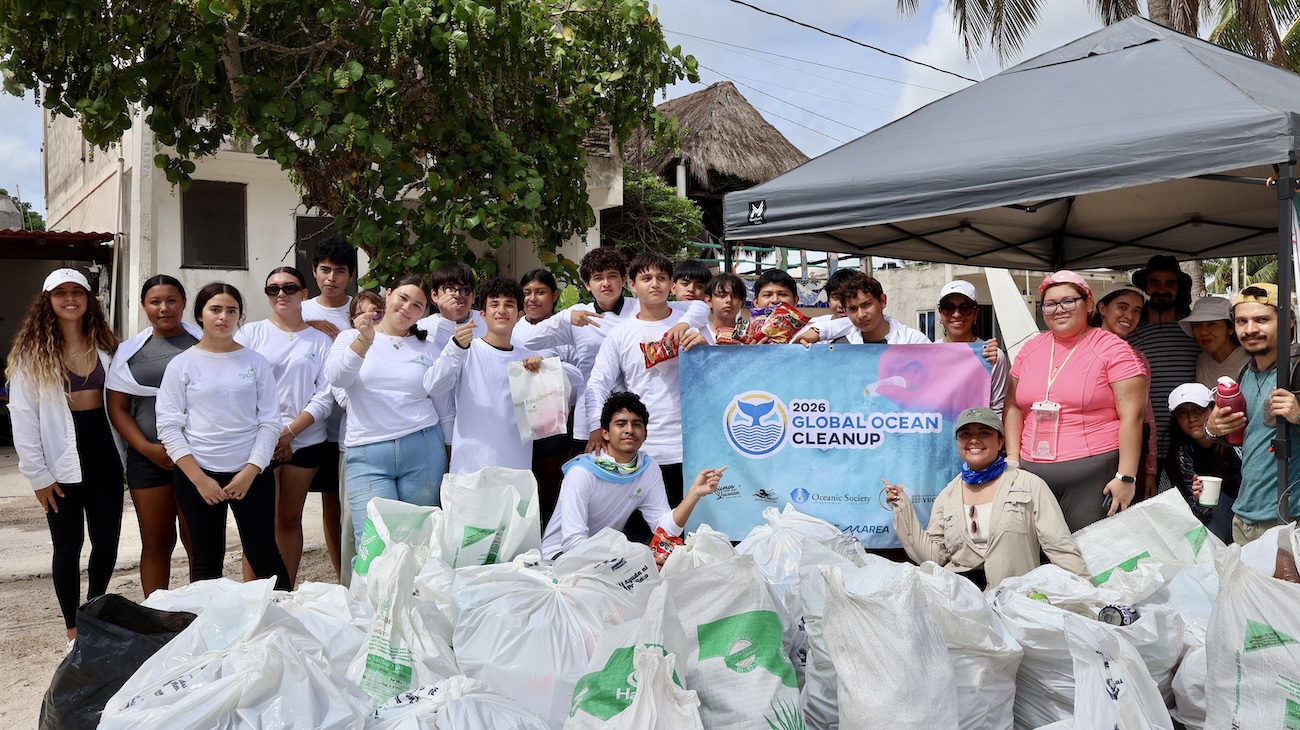
- 2,770 volunteers mobilized
- 60 miles of coastline restored
The Power of Collective Action
We asked organizers around the world what this campaign means to them. A few themes kept surfacing: pride in community, solidarity in shared effort, and a sense of the cleanup itself being a bridge to something deeper.
“Stewardship begins with connection. When people feel connected to a place, they want to protect it. That’s why this work deeply matters to me. Real change doesn’t happen because of one person. It happens when more people fall in love with a place they call home and decide it’s worth protecting.”

Lillian Ritchie, working alongside Keep Bermuda Beautiful, Bermuda, who has taken part in nearly 800 independent cleanups over the past three years.
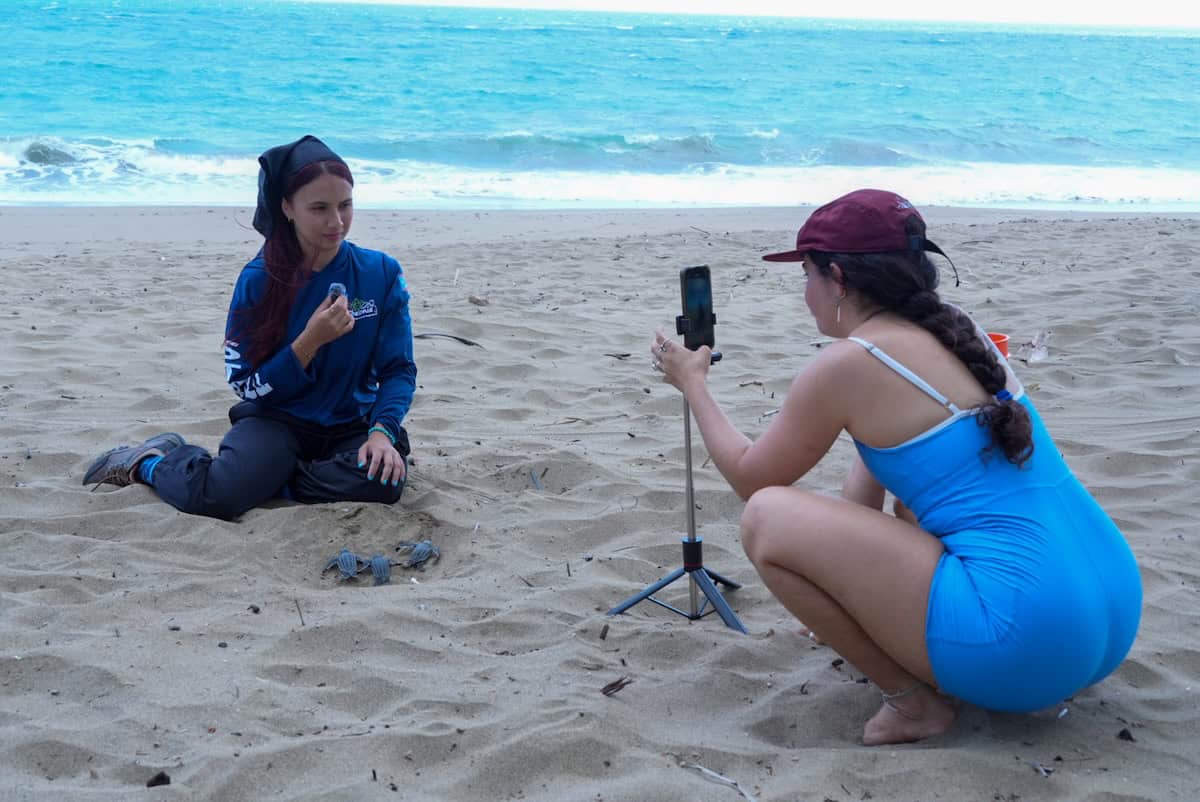
“What makes me feel most proud is seeing how the community comes together. So many families come visit us, and every bit, even the smallest, counts for us. These species can’t defend themselves. We have to be their voice.”
Paola Rodriguez, Chelonia, Puerto Rico.
“It’s easy to think that one organization or one person cannot make a difference, but initiatives like the Global Ocean Cleanup remind us of the power of collective action. Knowing that people in more than 20 countries are working toward the same goal at the same time is really inspiring.”
Angel Batista, Blue Carbon, Dominican Republic.
“We are very happy and very encouraged by this growing awareness. Understanding the challenges allows us to work together more effectively. Knowing that people around the world are carrying out the same activities at the same time helps raise global awareness about biodiversity, the ocean, and environmental protection in general.”
Togbuiga Adela Aklassou IV, Traditional Chief of the Canton of Bè, E.R.D. Afrique, Togo.
These same organizers were quick to point out that the cleanup itself is only the starting point.
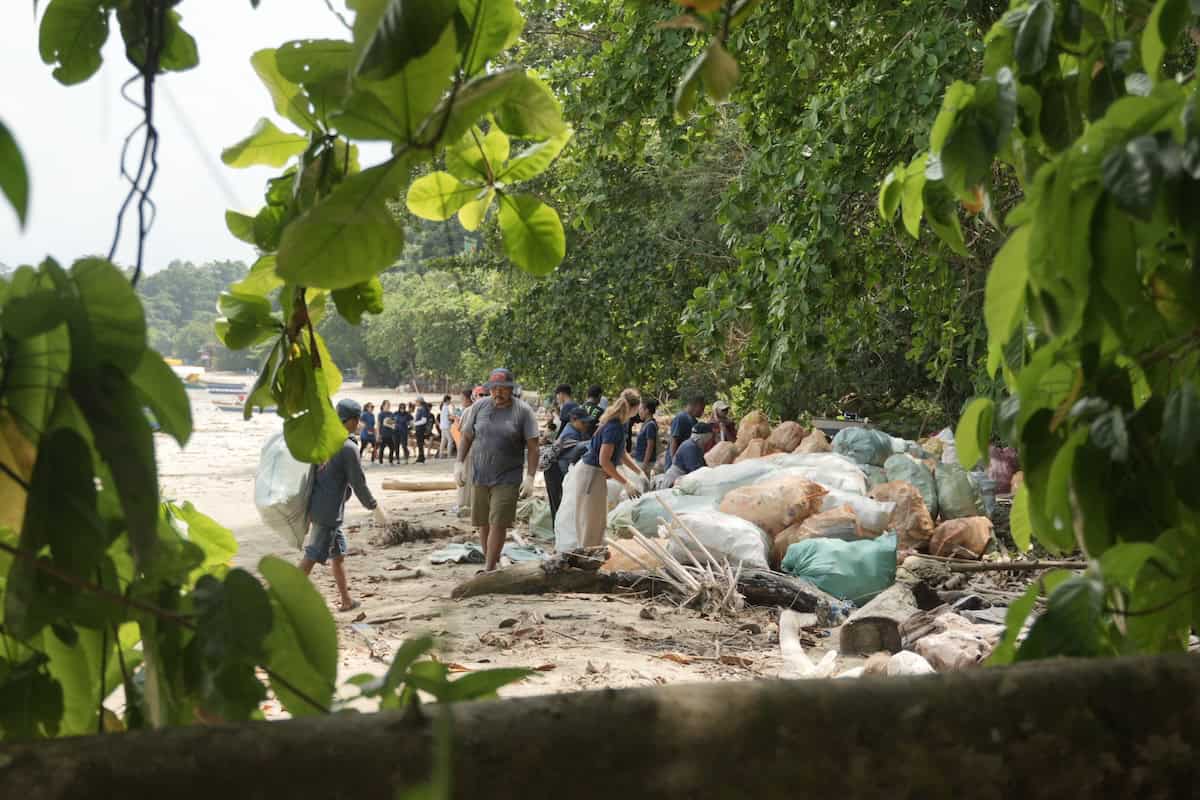
“Cleaning up a beach is not just picking up trash but it is also unfolding the darkest and most foolish mistakes of human history which is plastic pollution. It is a transboundary problem – on this beach alone, you’ll find plastic from fifteen, twenty, even fifty years ago. If you throw waste in China, Malaysia, or the Philippines, it might end up here. Doing a cleanup is more than just a good deed, it’s fixing up a problem that our species has made.”
A No Trash Triangle educator, Bunaken Island, Indonesia.
“My favorite moment happened when we started seeing life all around us. Many of the volunteers were surprised because they didn’t expect to find so much life there [in the mangroves]. It helped people understand why we were cleaning these places in the first place.”
Angel Batista, Blue Carbon, Dominican Republic, whose organization is also part of an ongoing local fight over public access to the mangrove areas it works to protect.
“It makes me feel like eventually every single state or country will come and start doing it [cleanups], and eventually the oceans won’t be polluted. That would make it a lot better for ocean life and other creatures who feed off of sea life.”
Allen, volunteer, Aquarium of the Pacific, USA
These same values of pride and shared responsibility shaped where this year’s cleanups took place, often in some of the most ecologically critical stretches of coastline on the planet.
Global Impact: Cleanups in Critical Marine Habitats
The 2026 Global Ocean Cleanup once again targeted some of the planet’s most ecologically significant coastlines:
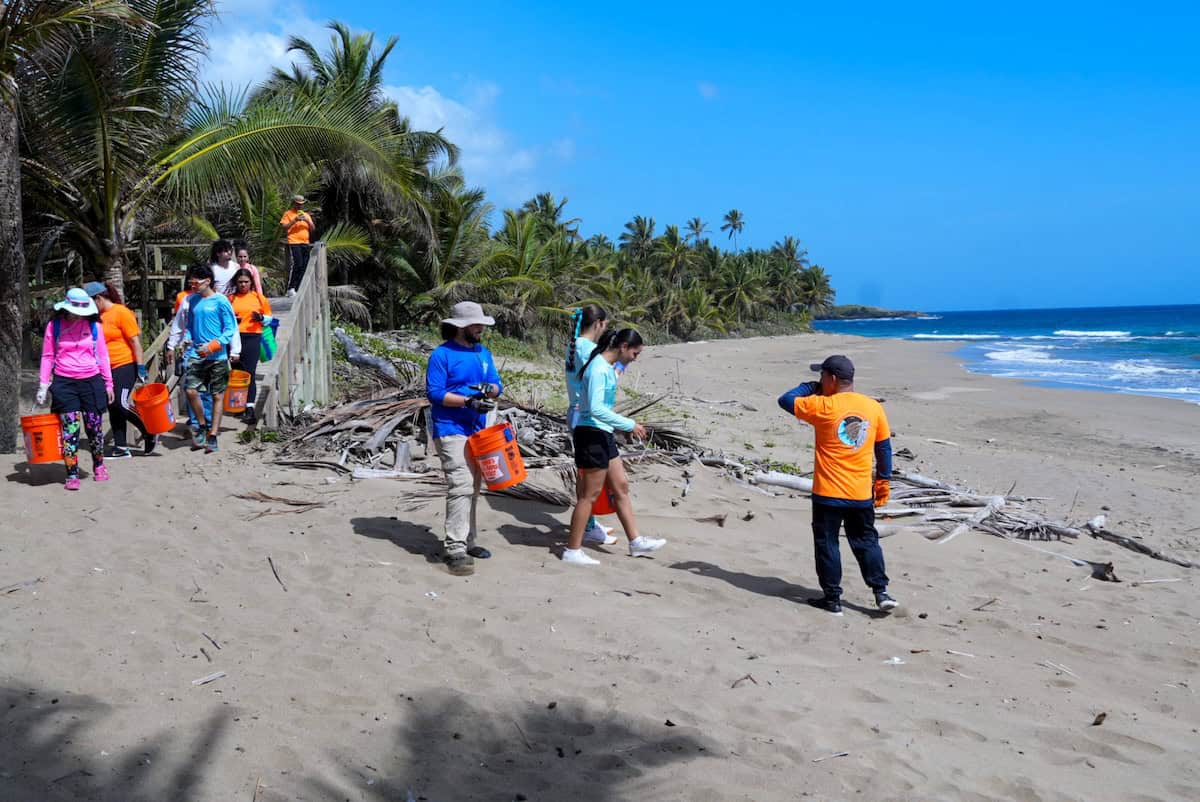
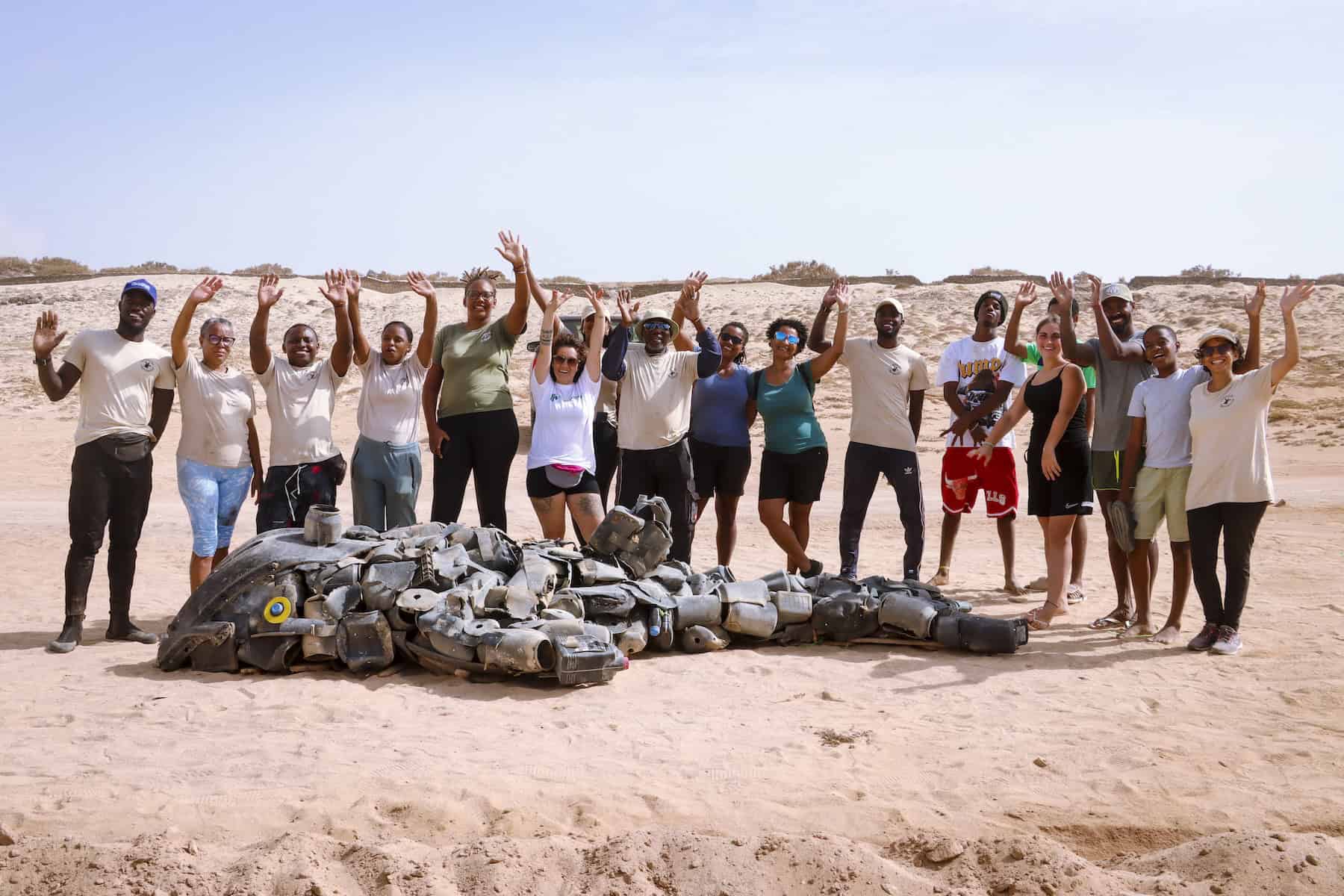
- Sea turtle nesting beaches were a throughline of this year’s campaign. Chelonia returned to Playa Grande El Paraíso in Dorado, Puerto Rico, one of the island’s most important leatherback nesting sites, while Fundação Tartaruga cleared debris from Boa Vista Island, Cabo Verde, home to an estimated 16,000 nesting loggerheads each season. ARCAS worked the beaches of Chiquimulilla, Guatemala, and Blue Carbon covered Los Pinos Island, Boca Chica, and Cotubanamá National Park in the Dominican Republic, where volunteers found mangroves teeming with wildlife they hadn’t expected to see.
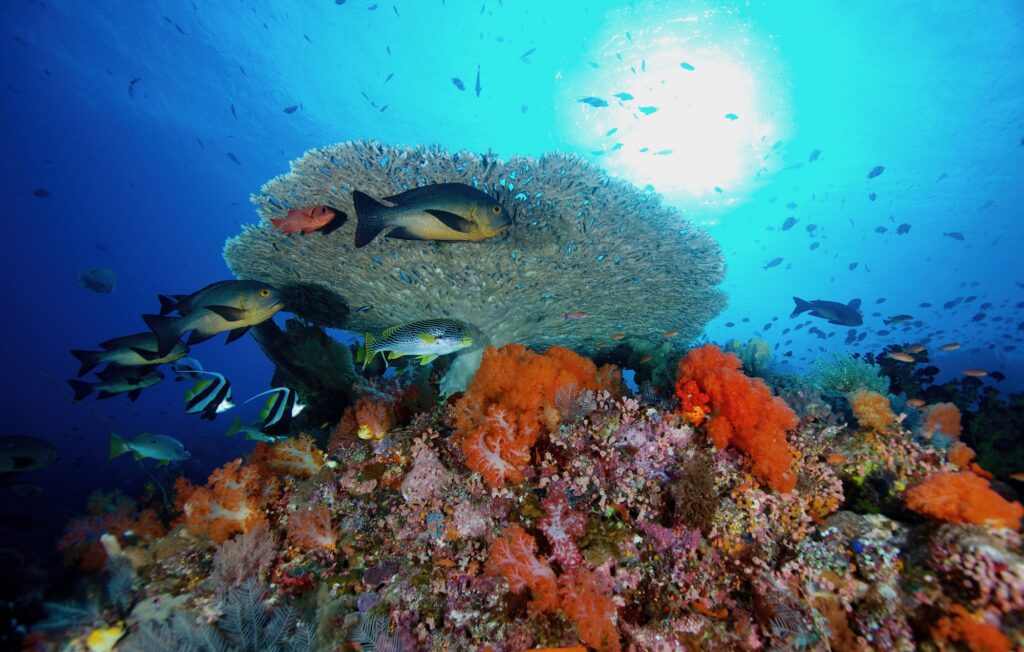
- Coral reefs and marine protected areas saw dedicated attention as well, including the No-Trash Triangle Initiative’s cleanup at Bunaken Marine Park, Indonesia, where scuba divers pulled debris from the water between dives.
- Island coastlines across Indonesia saw four separate cleanups led by Yayasan Penyu Indonesia, spanning Berau Regency, Sipora Island, Simeulue Island, and Nias Island.
- North Atlantic Gyre coastlines, one of the most valuable places on Earth for tracking global plastic pollution, were cleaned across three locations in Bermuda by Keep Bermuda Beautiful, contributing directly to research.
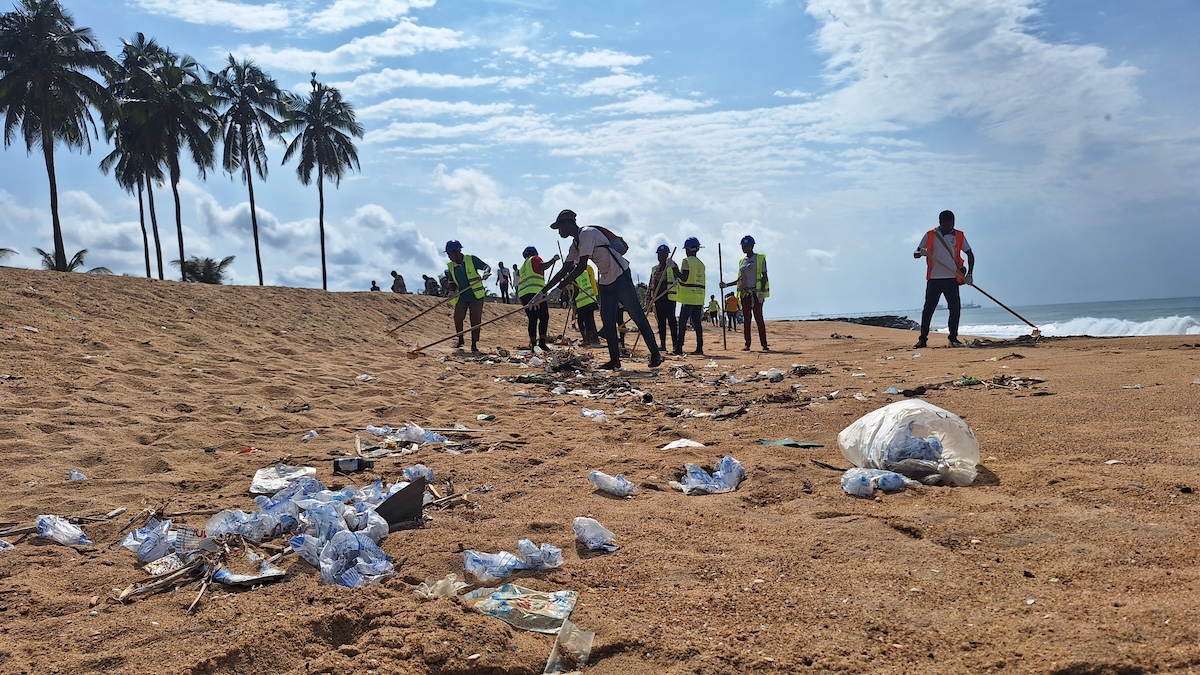
- Urban coastlines, from Long Beach, California, to San Francisco Bay to the beaches of Okinawa, Japan, showed that plastic pollution isn’t confined to remote shorelines—it shows up everywhere people live, work, and play near the water.
Strangest Ocean Trash Finds of 2026
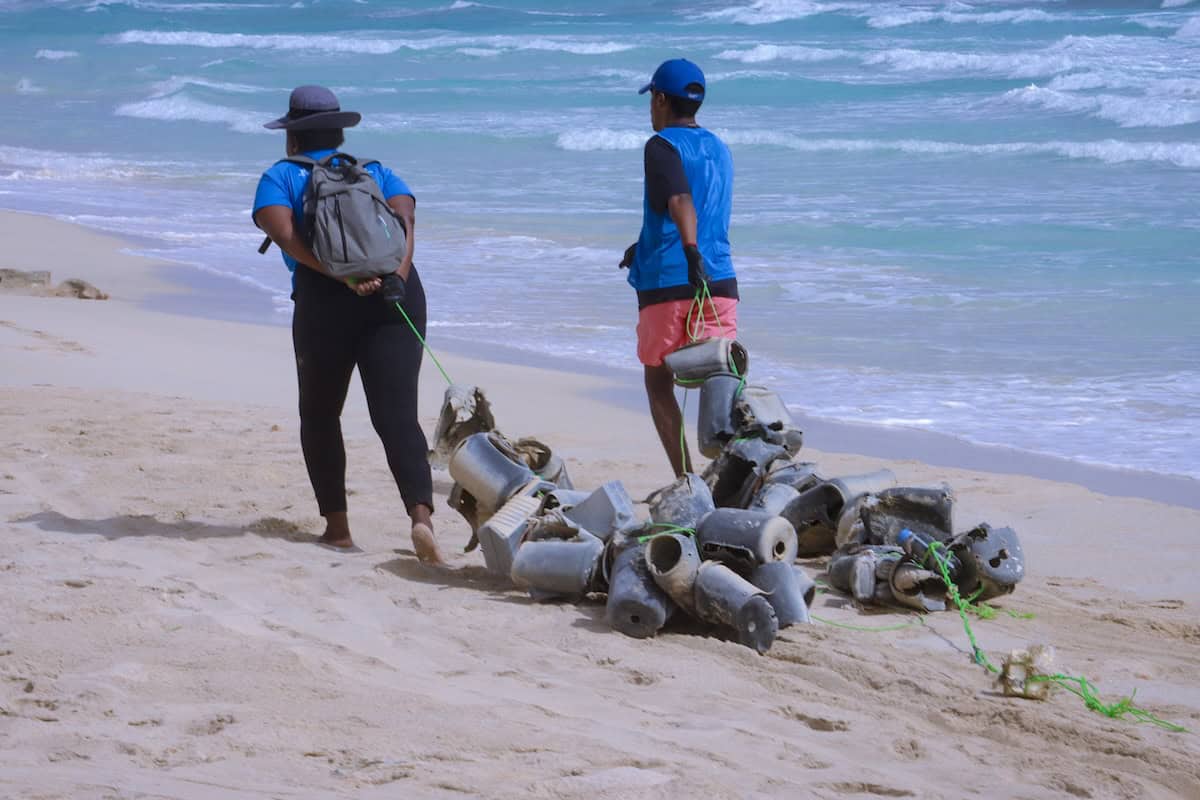
Among the 60,861 pounds of debris removed, cleanup teams once again encountered items that tell their own stories about how waste moves through our oceans:
- A b>grenade and a car bumper, found side-by-side during Projeto Mar Sem Lixo’s cleanup in Brazil
- A car battery and a section of boat hull, recovered by Keep Bermuda Beautiful volunteers
- A police-style helmet, pulled from the coastline in Okinawa, Japan, by Churamura
- Medical syringes and needles, found across multiple cleanup sites, underscore a recurring problem with improperly discarded medical waste
- A washing machine, discovered by Yayasan Penyu Indonesia volunteers
- A toy scooter, retrieved from the waterways of Long Beach, California
Teams also continued to document dead and injured wildlife encountered during cleanups, including sea turtles in Tanzania and Guatemala, a sobering reminder of why this work is urgent.
Turning Ocean Trash into Art: 2026 Winners
Fourteen partner organizations transformed collected debris into original artwork for this year’s Marine Debris Art Competition, judged by a panel of artists and conservationists alongside a public audience vote. This year’s results:
- Judge’s Choice ($500): Fundação Tartaruga (Cabo Verde)
- Runner-Up ($500): Chelonia (Puerto Rico)
- Audience Choice ($500): Projeto Mar Sem Lixo (Brazil)
The art competition continues to prove that creative expression can shift how people see waste, from inevitable pollution to material that can carry a message and inspire change.
New This Year: The Behavior Change Prize
Cleanups are a powerful entry point, but we know they aren’t a long-term solution on their own. With that in mind, this year we launched a new Behavior Change Prize designed to reward grantees who used their cleanup as a launchpad for something bigger.
The prize seeks to award efforts that go beyond building awareness by using the cleanup and campaign as catalysts to achieve lasting change at the level of a system, community, or institution. and to foster something concrete, directed at a system or institution rather than behavior alone, using the cleanup and the wider campaign as a catalyst.
We’re proud to announce the first Behavior Change Prize winners:
- Chelonia (Puerto Rico)used the cleanup as a launching point to sign an agreement with a neighboring restaurant that will install and maintain permanent waste and cigarette disposal stations.
- Sustainable Ocean Alliance Tanzania used their cleanup’s waste audit data to deepen an existing relationship with the Bagamoyo District Council, laying the groundwork for institutionalized cleanups and ongoing waste monitoring.
We will follow along on these projects as they develop and share more updates soon. Stay tuned!
Five Years of Collective Global Action
What started in 2022 as a coordinated cleanup effort has grown into a global movement, five years running. Cumulatively, here’s what the Global Ocean Cleanup has accomplished since it first began:
- 215 cleanups coordinated
- 199.7 miles of ocean and coastline covered
- 163.1 tons (359,574 pounds) of waste removed from habitats worldwide
- 10,495 volunteers mobilized
- 22.5+ million people reached with science-based behavior change storytelling
Those numbers reflect five years of coastal communities choosing to show up for the ocean they depend on, and a network that keeps growing, because of the strength of the Global Ocean Cleanup’s core model: fund local expertise, let communities lead, and amplify what they’re already building. This same model is the same model behind everything we do at Oceanic Society.
Looking Ahead
Want to see more from this year’s campaign? Watch our recap video featuring the local champions on the front lines of this year’s Global Ocean Cleanup, along with final social and campaign metrics.