On Sunday, April 19, 2026, the sky was clear, the seas were calm, and our passengers were eager for adventure. As we sailed beneath the Golden Gate Bridge, tiny harbor porpoises delighted everyone, briefly breaking the surface for air before slipping quietly back below.
We soon entered Diablo Cove, where harbor seals lay scattered across rocks 4–6 feet above the water, left high and dry by the falling tide. Above them, a Peregrine Falcon perched along the cliffs, scanning intently for its next meal. With careful observation, we spotted a pair of Black Oystercatchers foraging along the tideline. Their dark plumage nearly rendered them invisible against the rocks. If not for their bright yellow eyes, vivid red bills, and fleshy pink legs, they would have been impossible to detect.
Before long, we were back underway, heading due west toward the Farallon Islands. Along the way, we encountered Pacific Loons, Black Brant, and California Brown Pelicans — a fine transit list by any measure, and a preview of what lay ahead.
As we approached, we were greeted by the deafening calls of more than 350,000 Common Murres, now reoccupying their nesting sites. Alongside them, roughly a dozen other seabird species form the largest seabird colony in the contiguous United States. In Fisherman’s Bay on the north side of the islands, several Tufted Puffins bobbed on the water’s surface.
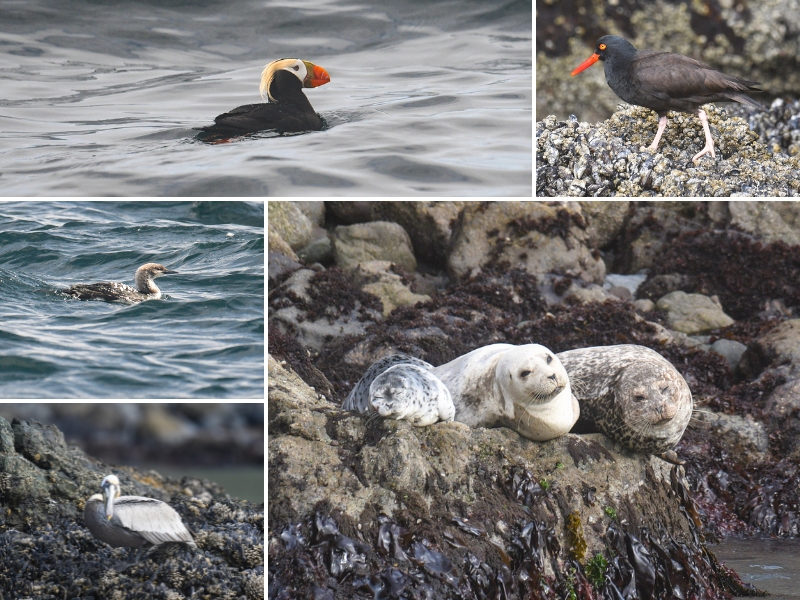
A glimpse of the extraordinary wildlife that makes the Farallon Islands one of the most biodiverse marine environments on the Pacific Coast. Clockwise from top left: Tufted Puffin, Black Oystercatcher, harbor seals, California Brown Pelican, and Pacific Loon. © Michael Pierson
We circled the rugged islands, their jagged peaks, sea caves, and arches rising dramatically from the ocean. These harsh landscapes pose no challenge to the five species of pinnipeds that haul out and breed here: northern elephant seals, California sea lions, northern fur seals, Steller sea lions, and harbor seals, each favoring different areas of the shoreline, from low beaches to near-vertical rock faces.
After taking in the islands, we turned west once more, continuing six miles to the continental shelf. Here, the ocean floor drops abruptly from 300 to 3,000 feet, a dramatic shift that triggers powerful upwelling, drawing cold, nutrient-rich water toward the surface and fueling the incredible biodiversity of the Greater Farallones National Marine Sanctuary.
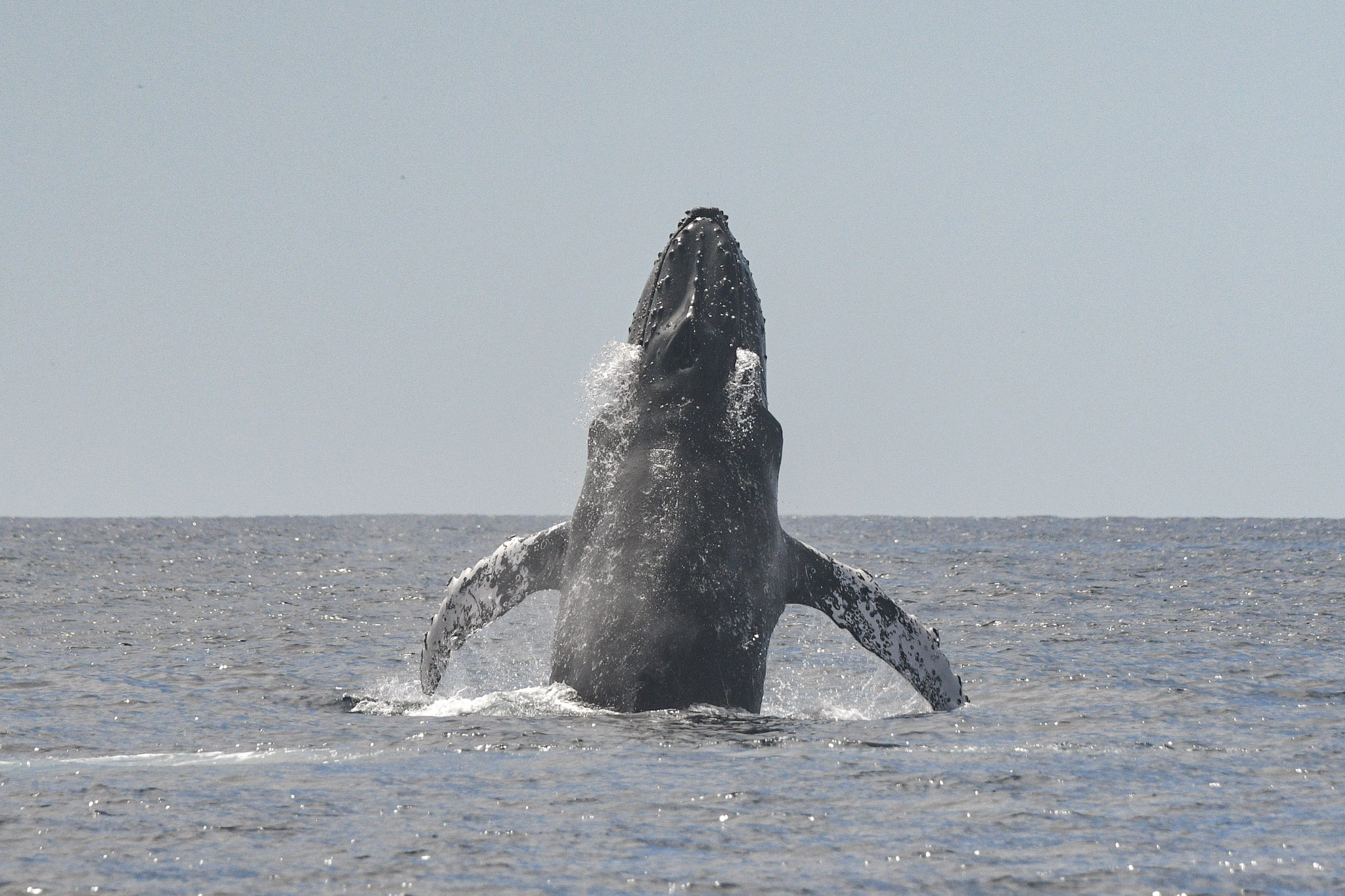
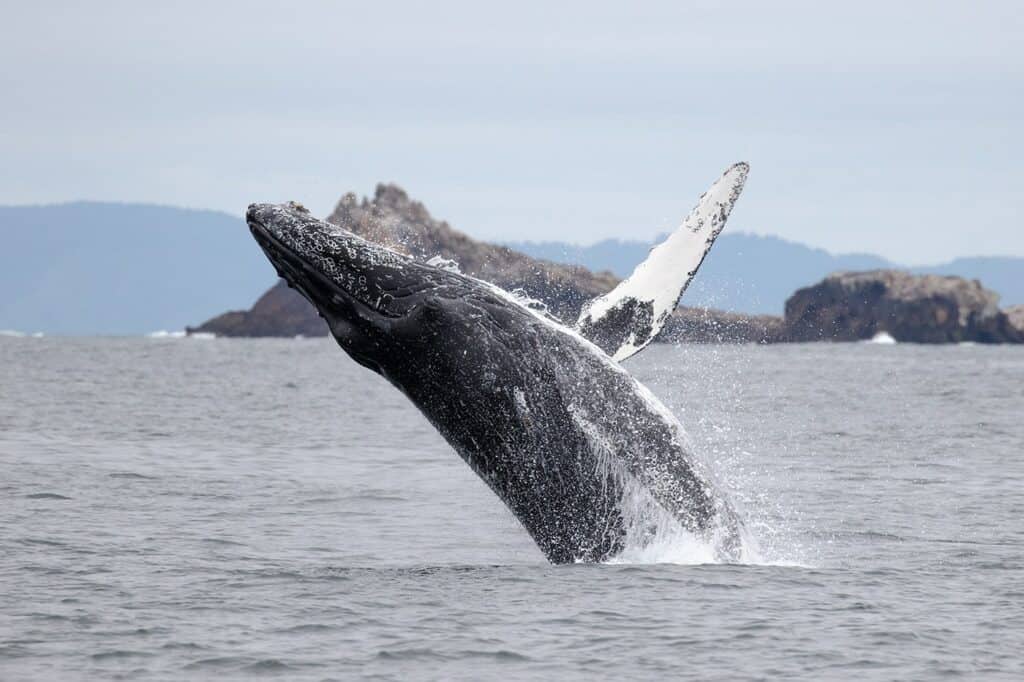
The breaching humpback that first drew our attention. This whale was first documented off Nayarit, Mexico, in 2010 and has since been documented across sixteen years of Pacific migrations. © Michael Pierson
An active humpback whale first caught our attention, breaching repeatedly in the distance.
Though unnamed, this humpback is no stranger to researchers. First documented off Nayarit, Mexico, in March 2010 by Cascadia Research Collective and ECOBAC, this whale has been traveling the Pacific for at least sixteen years. That single animal has now been observed across thousands of miles of Pacific Ocean over sixteen years — a quiet testament to the interconnectedness of the ecosystems we work to protect.
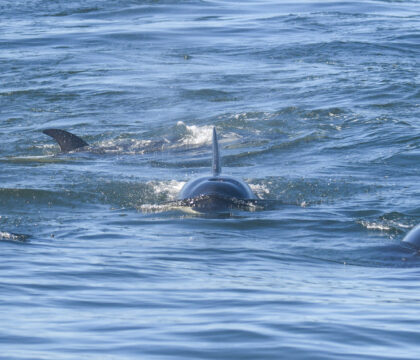
As we moved closer to follow its breaching activity, something even more remarkable occurred: a pod of approximately 15 Baird’s beaked whales surfaced nearby, rising from one of their long, deep dives.
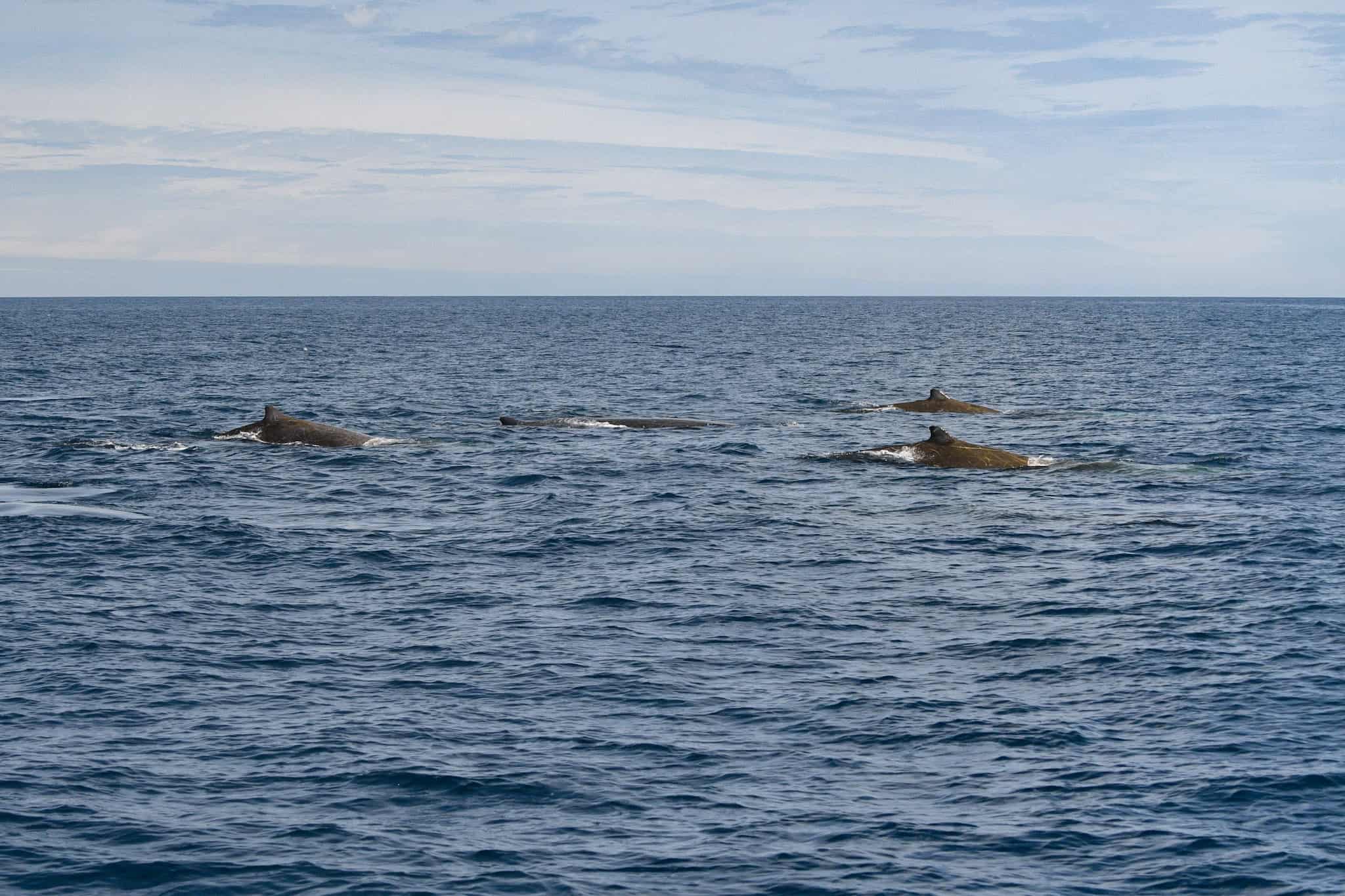
Several members of the pod surfaced together off the continental shelf near the Farallon Islands on April 19, 2026 — the first Baird’s beaked whale sighting in Oceanic Society’s expedition history in over three decades. © Michael Pierson
Recognizing the rarity of the moment, we left the humpback to its display and shifted our focus to documenting this extraordinary encounter.
These are not easy animals to find. Baird’s beaked whale (Berardius bairdii) is the largest of all beaked whale species: massive, elongate, and typically dark brown, though coloration can vary. They have long beaks and steep foreheads, with scarring often visible on both males and females, and they produce rapid, low, rounded blows that are difficult to spot. They inhabit deep offshore waters throughout the temperate North Pacific, feeding on deep-water fish, squid, and octopus. Much about their lives remains a mystery, precisely because they spend so much time in waters that are difficult to access and study.
The pod we observed was likely a family group, composed primarily of females and their offspring. Based on current research, adult males tend to leave these groups, while females are believed to remain together for life.
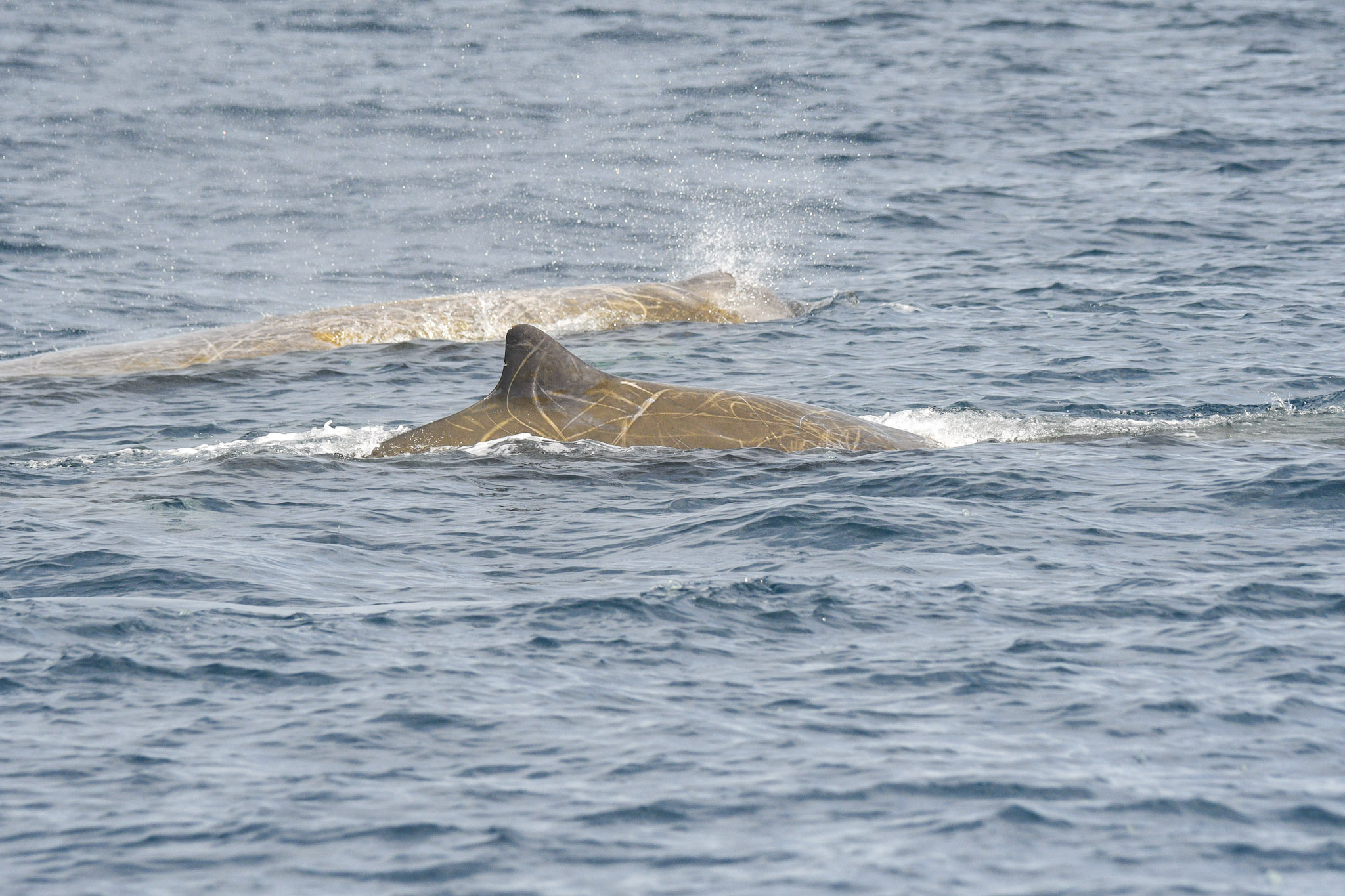
The distinctive scarring on this individual’s back, visible as pale linear marks across the dark skin, is characteristic of Baird’s beaked whales and can be utilized by researchers to identify individuals. © Michael Pierson
Using photographs taken during the encounter, I, along with onboard researchers from The Marine Mammal Center, submitted the sighting to HappyWhale, a global citizen science platform used to track individual cetaceans by natural markings. Of the 15 whales observed, seven were photographically identified and formally entered into the database as first-ever sightings. Should any of these animals surface again anywhere in the North Pacific, researchers will know they were here, off the Farallones, on April 19, 2026.
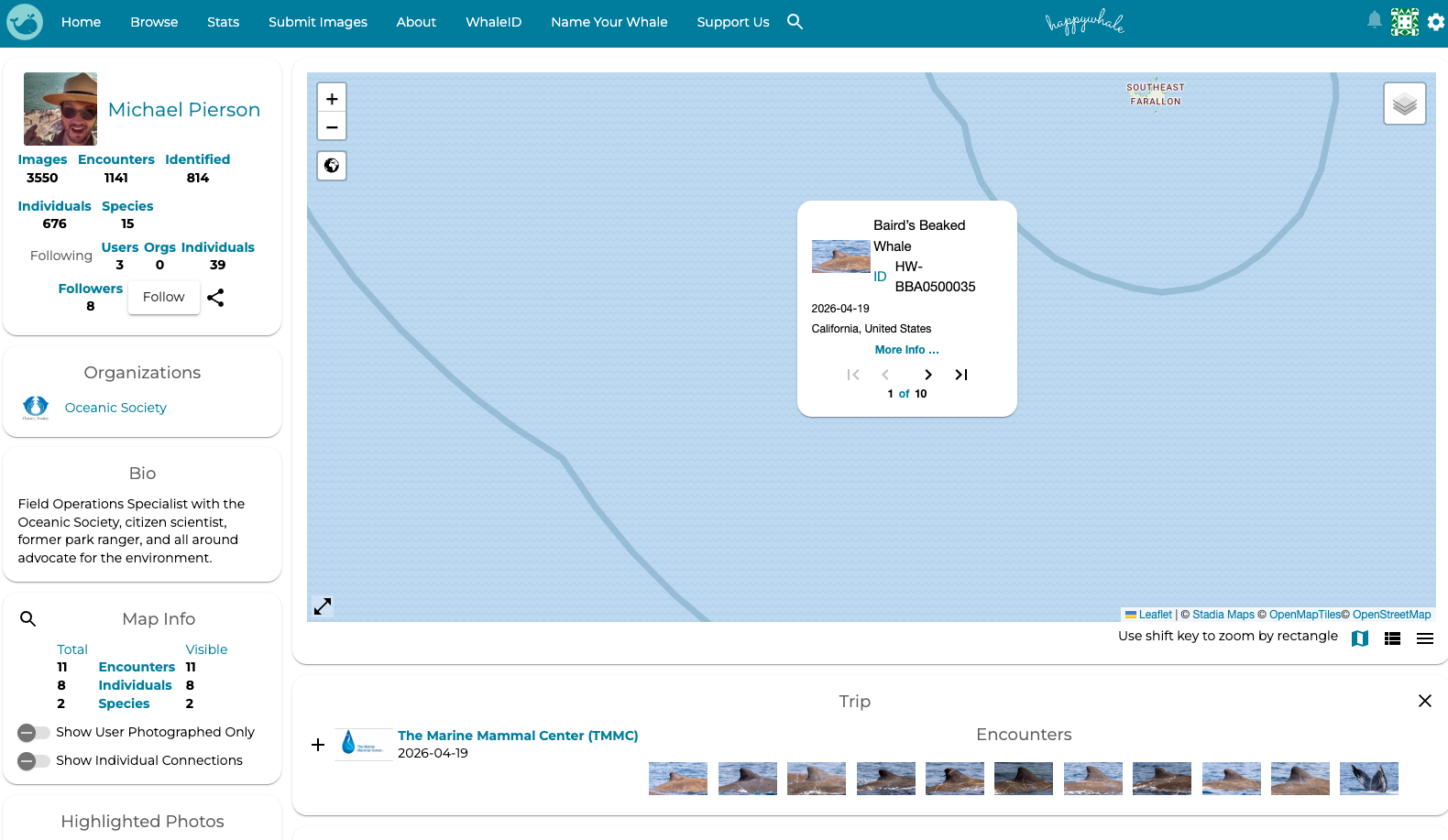
Individual HW-BBA0500035, one of seven Baird’s beaked whales from the April 19 pod now formally entered into the HappyWhale citizen science database as a first-ever sighting. Each catalogued individual can now be tracked across the North Pacific for the remainder of its life. © HappyWhale
The encounter lasted just five to ten minutes and left our team buzzing with excitement. For everyone aboard, it was a first.
More remarkably, it marked Oceanic Society’s first Baird’s beaked whale sighting in over three decades.
Moments like this don’t happen by accident. They happen because people have fought to protect these waters and continue to. The Greater Farallones National Marine Sanctuary, and the conservation work that sustains it, is what makes encounters like this one possible. Oceanic Society has been part of that work for more than 50 years, supporting public engagement, long-term ocean monitoring, citizen science, and the protection of critical marine habitats. On days like this one, the stakes of that work feel very, very real.
Join us on an upcoming Farallon Islands whale watching expedition and experience the unexpected for yourself.