Oceanic Society was founded with the belief that experiencing natural wonders firsthand has the power to transform the way we live, motivating us to protect our planet.
At the heart of every Oceanic Society expedition is a naturalist whose expertise turns travel into a deeper understanding of the natural world. Our From the Field series shares the stories of these guides, exploring the paths that led them to protect the places they introduce to travelers. Scientists, photographers, and frontline conservationists, Oceanic Society’s naturalists bring deep knowledge of local ecology, wildlife, history, and culture to every destination.
This edition features Steve Trott, a marine zoologist based in the coastal town of Watamu, Kenya, who has spent more than twenty years guiding travelers through both Kenya’s iconic landscapes and its lesser-known marine ecosystems.
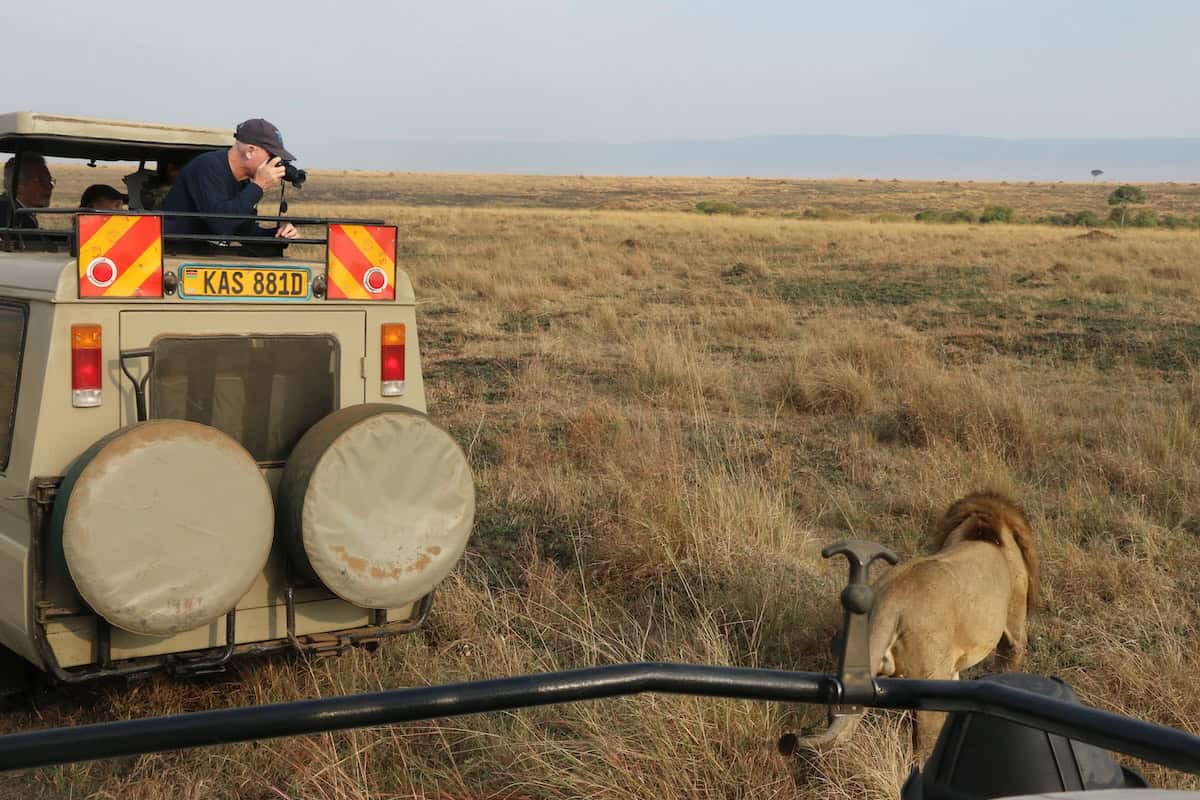
Steve Trott, marine zoologist and naturalist with Oceanic Society, photographs a male lion during a conservation-focused safari in the Maasai Mara. © Rosie Jeffrey
From Rock Pools to Kenya’s Coastline
Steve’s path to becoming a naturalist began far from Kenya, on the rocky shores of New Zealand. As a child, he spent hours rock pooling along his local beach, discovering a hidden world beneath reef boulders.
“Looking under a reef boulder and seeing a wonderful and colorful array of sea stars, brittle stars, crabs, anemones, and more started my fascination and love of marine life,” Steve recalls.
That curiosity extended onto land as well, from watching monarch butterflies emerge from their chrysalises to receiving his first bird book at the age of seven. These early encounters set him on a lifelong journey that would eventually lead him to a career in marine biology and conservation.
A Naturalist-Led Journey Across Kenya
On our Kenyan safari, travelers experience Kenya’s wildlife in a way few others do, moving seamlessly from the iconic savannas of the Masai Mara to the tropical waters off the coast of Watamu.
In the Masai Mara, one of the largest animal migrations on the planet unfolds as over a million wildebeest, zebra, and gazelles sweep down from the Serengeti into Kenya’s sprawling plains in search of lush pastures to graze. Their arrival draws predators such as lions, cheetahs, leopards, and hyenas, while elephants and rhinoceros complete what is widely considered a classic African safari experience.
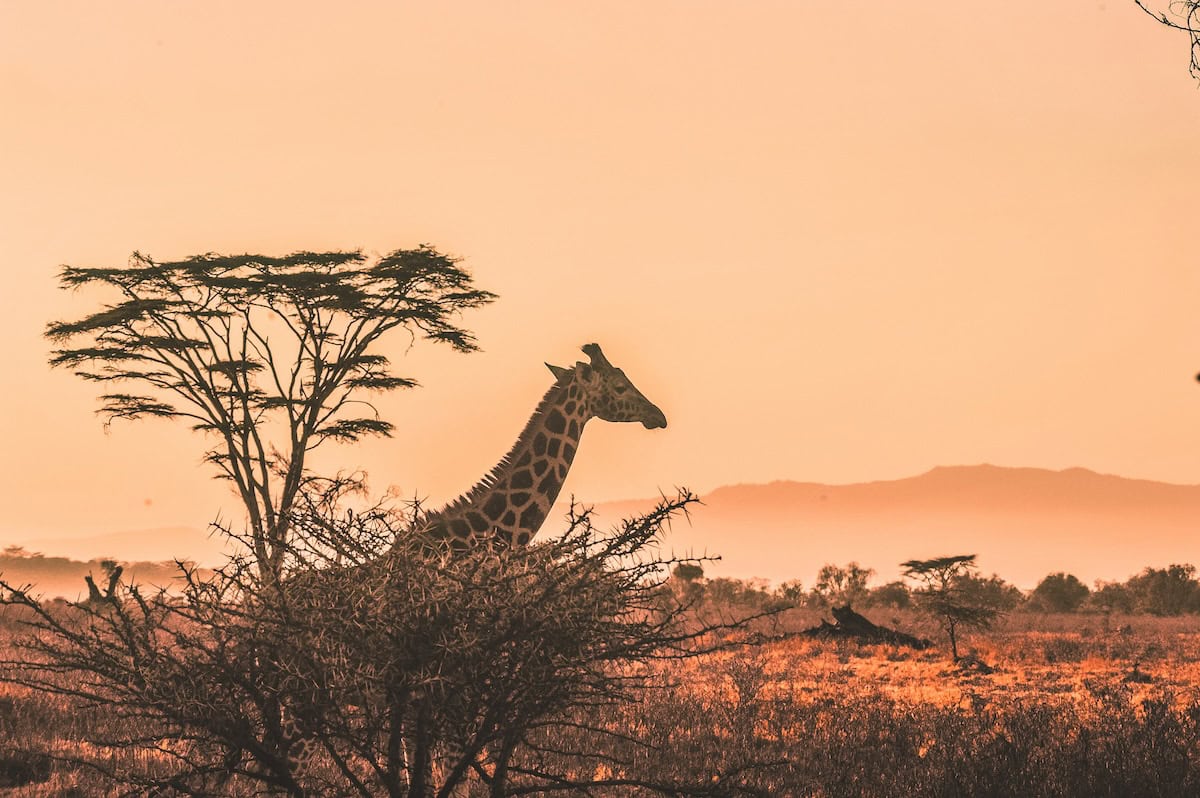
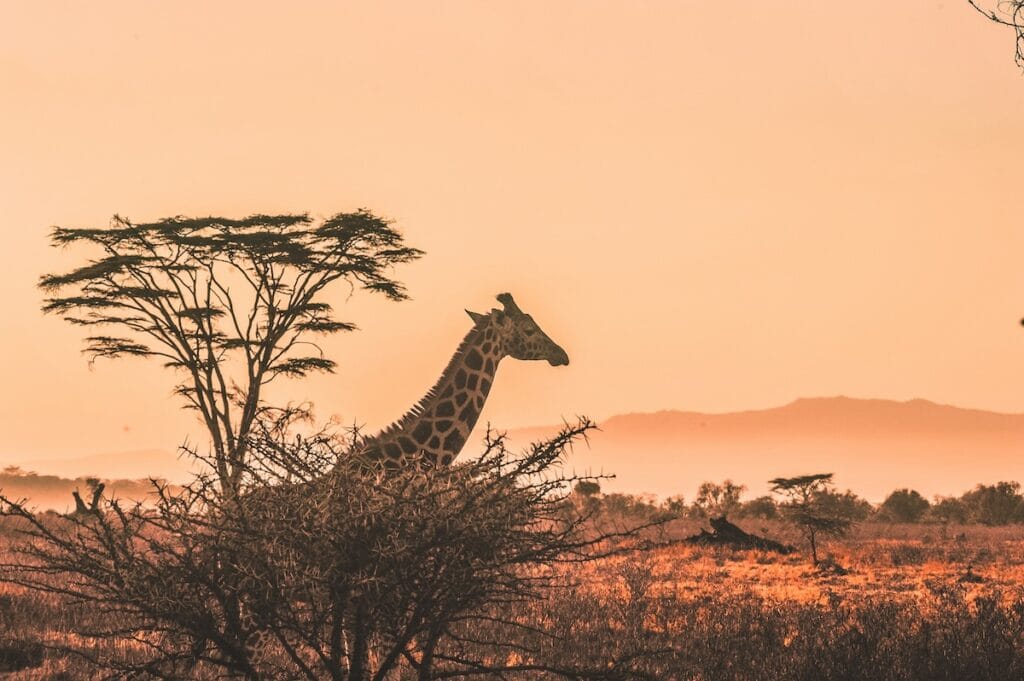
A reticulated giraffe surveys the Kenyan savanna at sunset, framed by acacia trees and thorny scrub in one of Kenya’s renowned national reserves or conservancies. © Harshil Gudka
From Savanna to Sea: A Rare Two-Ecosystem Safari
What makes Oceanic Society’s safaris truly special is that they don’t end on the savanna. They extend to Kenya’s stunning coastline in Watamu, where Steve calls home. Here, coral reefs teem with fish, and five of the world’s seven sea turtle species can be observed. Humpback whales also gather in large numbers to rest and rear their young in warm tropical waters, making Watamu one of the most underrated marine safari destinations.
Remarkably, this marine spectacle coincides with the great migration, creating a rare overlap of land and sea wildlife that makes travel during July and August truly unforgettable.
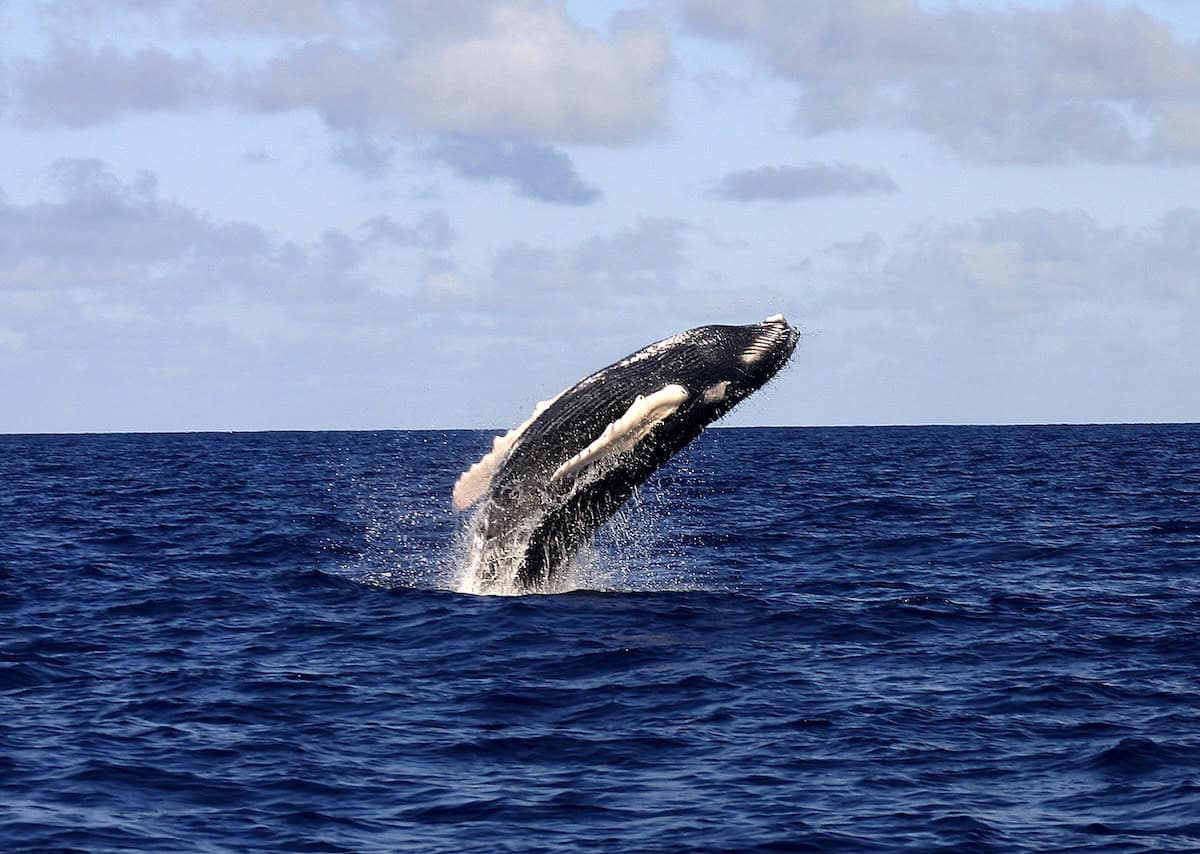
A humpback whale performs a spectacular breach in the waters off Watamu, Kenya, during its annual migration from Antarctic feeding grounds to the warm tropical coastal areas where individuals rest, mate, and rear calves. This phenomenon, peaking from July to October, creates a unique “twin migration” opportunity alongside the Great Wildebeest Migration in the Maasai Mara. © Wayne Sentman
Wildlife Diversity in Watamu, Kenya
This coastal extension of the safari reveals a side of Kenya many travelers don’t expect. When most people think of Kenya, their minds go immediately to sweeping savannas, acacia trees, and iconic wildlife like lions and elephants. What’s often overlooked is that Kenya is also a coastal nation, with more than 300 miles of shoreline along the Indian Ocean—and some of the most biologically rich marine ecosystems in East Africa.
For the past twenty years, Steve has lived and guided in Watamu, a small coastal town that is home to Kenya’s first National Marine Park. Here, the country’s terrestrial and marine worlds meet, creating an extraordinary concentration of ecosystems within a relatively small area.
“People are often surprised by how much diversity exists here,” Steve says. “Coral reefs, sandy beaches, mangrove forests, and even the ruins of a 13th-century Swahili walled city all sit side by side.”
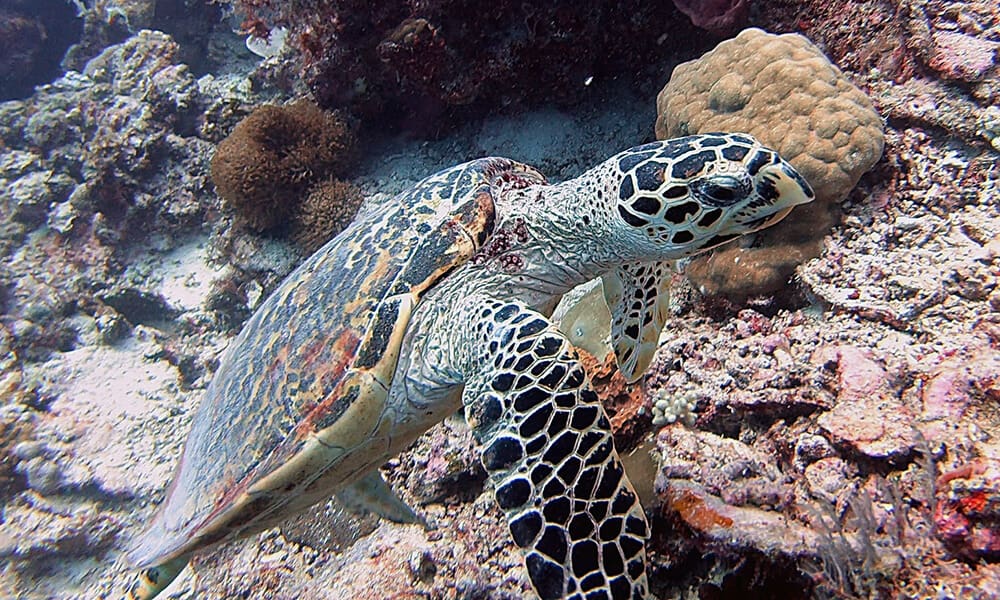
Those ancient ruins, once part of a major trading center connected to Arabia and India, are now protected within a forest reserve dotted with giant baobab trees and inhabited by monkeys and a wide diversity of birdlife. Just offshore, vibrant coral reefs support an abundance of fish and invertebrates, while mangrove forests in tidal inlets like Mida Creek provide critical nursery habitat for marine species.
Watamu’s waters are also a vital refuge for large marine wildlife. Five of the world’s seven sea turtle species, including loggerhead, hawksbill, olive ridley, leatherback, and green sea turtles, can be found here. All but the green sea turtle (whose endangered status was lifted in 2025) are currently threatened with extinction, making Watamu a globally important site for sea turtle conservation.
For Steve, some of the most powerful moments come when travelers encounter this marine richness firsthand.
“My most memorable marine moment was with Oceanic Society guests and their children when we were whale watching, and eight humpback whales started breaching at the same time close to the boat,” he recalls. “It was a once-in-a-lifetime moment, and we captured it with drone footage, which we use for conservation and ecotourism promotions.”
Empowering Kenyan Communities Through Ecotourism
Living and guiding expeditions throughout Kenya has given Steve a firsthand understanding of the challenges facing the country’s coastline, including a growing plastic pollution crisis. Nearly 37,000 tons of plastic enter Kenya’s marine environment each year, threatening coral reefs, wildlife, and the long-term sustainability of coastal tourism.
In response, Steve worked alongside local environmental advocates to help found the Watamu Marine Association, a nonprofit organization that employs local women and youth to collect plastic waste from the coastline and transform it into art and practical goods such as flip-flops. This circular economy model not only removes plastic from the environment but also provides a reliable income for the community.
“My love of nature and wild places has always driven me to protect them,” Steve says. “Ecotourism allows people to experience these places while actively contributing to their future.”
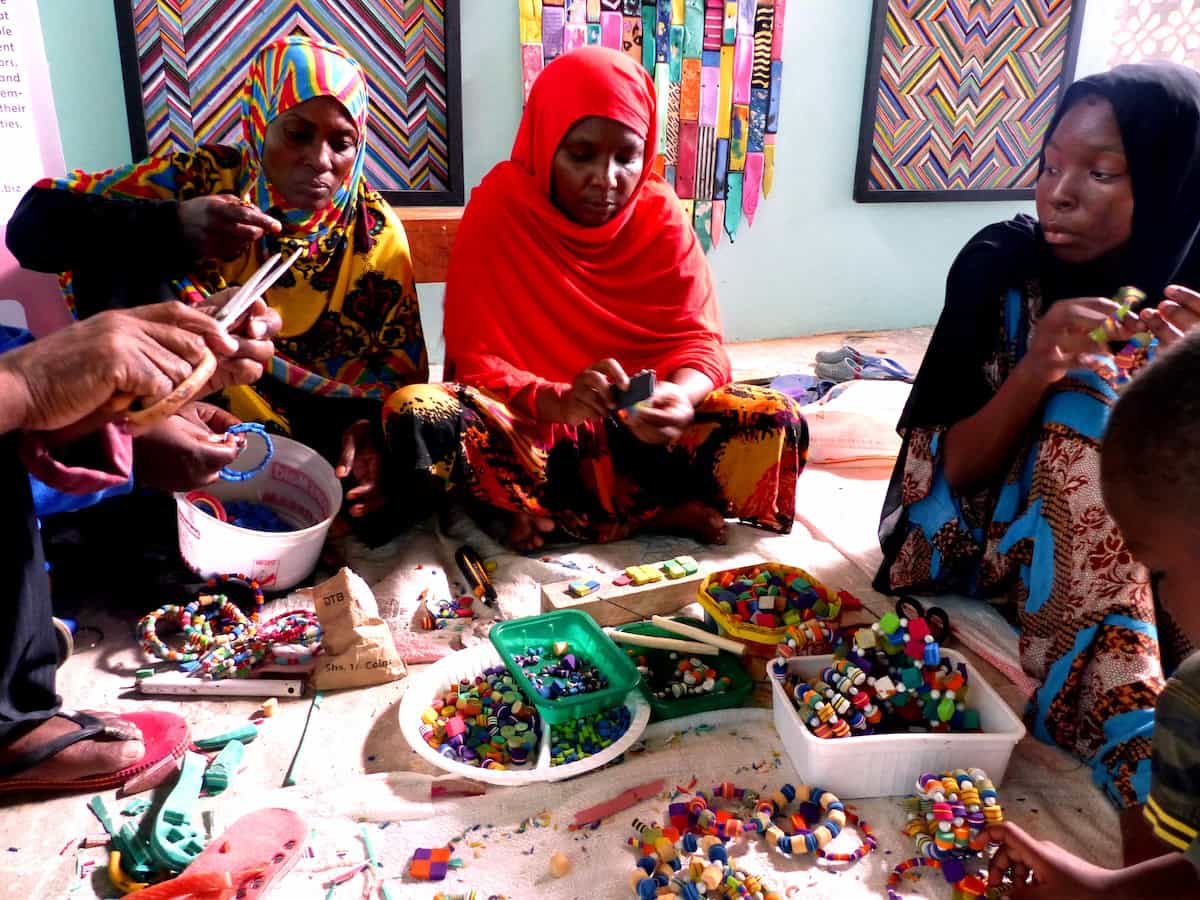
Women artisans at Eco-World Watamu collaboratively craft jewelry from upcycled materials like flip-flops and beads derived from processed plastic waste, as part of the Watamu Marine Association’s efforts to foster a circular economy, generate sustainable income, and reduce marine pollution through community-driven recycling and creative repurposing.
Today, the organization removes between 10 and 20 tons of plastic each month, protecting vulnerable ecosystems and species such as sea turtles and seabirds.
Steve also points to community-led ecotourism projects like the Crab Shack restaurant and mangrove boardwalk in Mida Creek as powerful examples of tourism done right. Operated by a local conservation group, the project supports more than 50 families while funding mangrove restoration efforts that have planted over one million seedlings in the last two decades.
How Travel Directly Supports Community and Conservation
For travelers visiting Watamu with Oceanic Society, ecotourism becomes tangible and personal.
Travelers meet local artists transforming beach-collected plastic into art and everyday products, a program run by the Watamu Marine Association that directly supports the community.
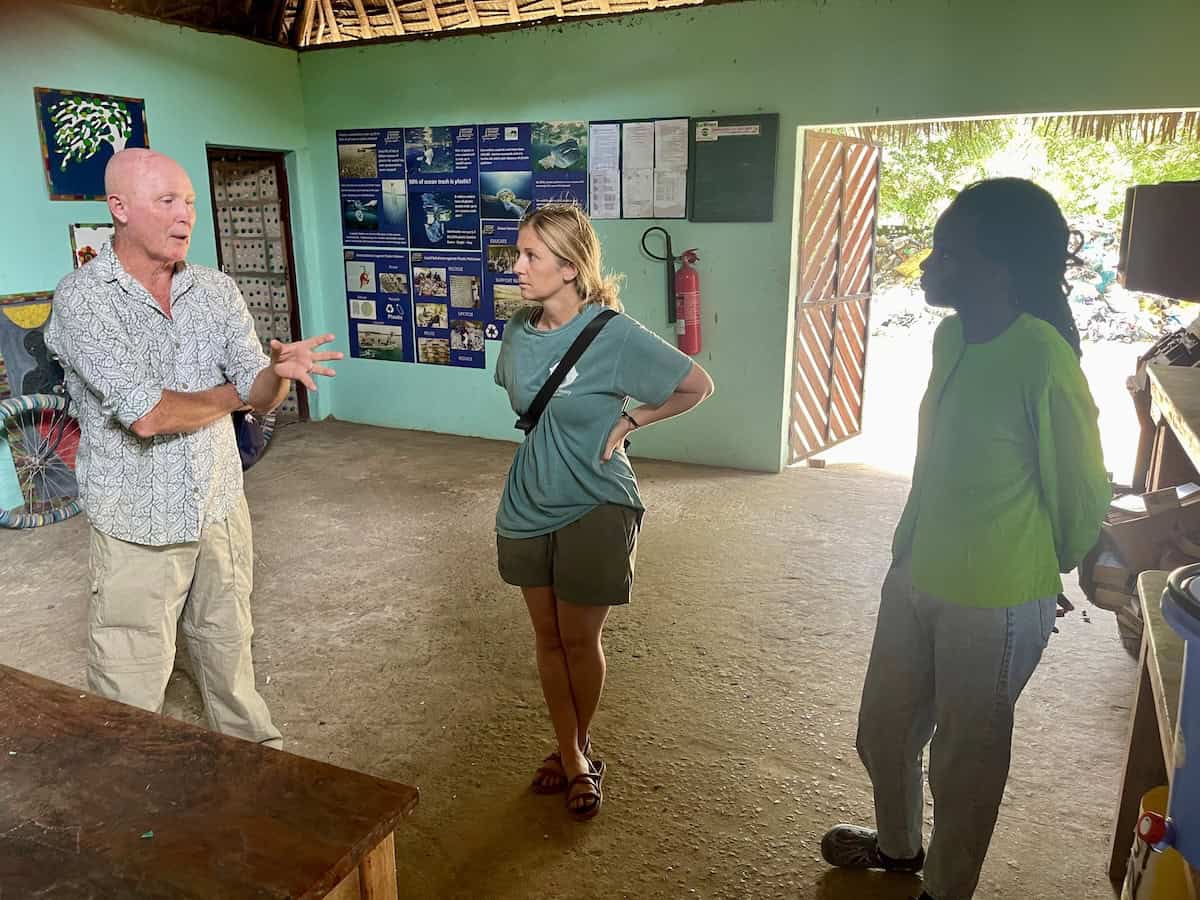
Steve Trott (left) and Rosie Jeffrey (center) discuss marine conservation and plastic pollution initiatives with a local participant at Eco-World Watamu, a community education and recycling center operated by the Watamu Marine Association.
This impactful partnership inspired Oceanic Society’s Travel Plastic Pollution Offset Program, which launched in 2022 and gives travelers a meaningful way to contribute to conservation efforts simply by embarking on an Oceanic Society expedition. For each traveler, Oceanic Society funds the removal of 200 pounds of plastic waste from the coast by Watamu Marine Association’s beach cleaners. The program is just one pillar of our Expedition Impact Program, a broader initiative that advances ocean conservation through travel-funded projects.
Beyond reducing marine debris, every traveler’s participation helps directly fund community grants for ocean conservation, coral reef restoration, and marine wildlife protection, turning each expedition into a tangible force for positive change.
For Steve, the goal of guiding travelers goes beyond incredible wildlife sightings. He hopes guests leave with a deeper connection to Kenya, its people, and its natural heritage, along with memories and photos that inspire long-term care for the places they’ve visited.
Plan a Kenyan Conservation Safari
For those inspired by Kenya’s extraordinary biodiversity, Oceanic Society expeditions offer an immersive way to experience both the Masai Mara and Watamu alongside expert naturalists like Steve, who have deep local knowledge and strong ties to the community.
Steve’s goal of guiding travelers goes beyond incredible wildlife sightings. He hopes guests leave with a deeper connection to Kenya, its people, and its natural heritage, along with memories and photos that inspire long-term care for the places they’ve visited.
By joining a Kenyan safari, you don’t just explore Kenya’s wild places—you help protect them. We also offer custom safaris, designed to match your interests and schedule while ensuring your travel supports community-led conservation, wildlife protection, and habitat restoration.