The Essential Role of Naturalists in Ecotourism
At Oceanic Society, expert naturalists are the heart of our ecotourism expeditions. These dedicated conservationists, scientists, photographers, and marine experts possess deep knowledge of the biodiversity, ecology, history, and people of the places we visit.
Guided by personal passions and often motivated by transformative early encounters with nature, our naturalists lead immersive wildlife experiences that aim to inspire travelers to become lifelong advocates for ocean conservation. The From the Field Q&A series profiles these naturalists and explores their personal journeys that have made ecotourism a central part of their lives.
In this edition, we spotlight Chris Biertuempfel, Oceanic Society’s associate director of California programs. Chris oversees our Farallon Islands whale watching expeditions, leads the Conservation Scholars Program, and serves as an Oceanic Society naturalist guiding expeditions in California, Mexico, Indonesia, and Tonga, with a focus on life-changing encounters with whales.
The Next Generation of Environmental Stewardship
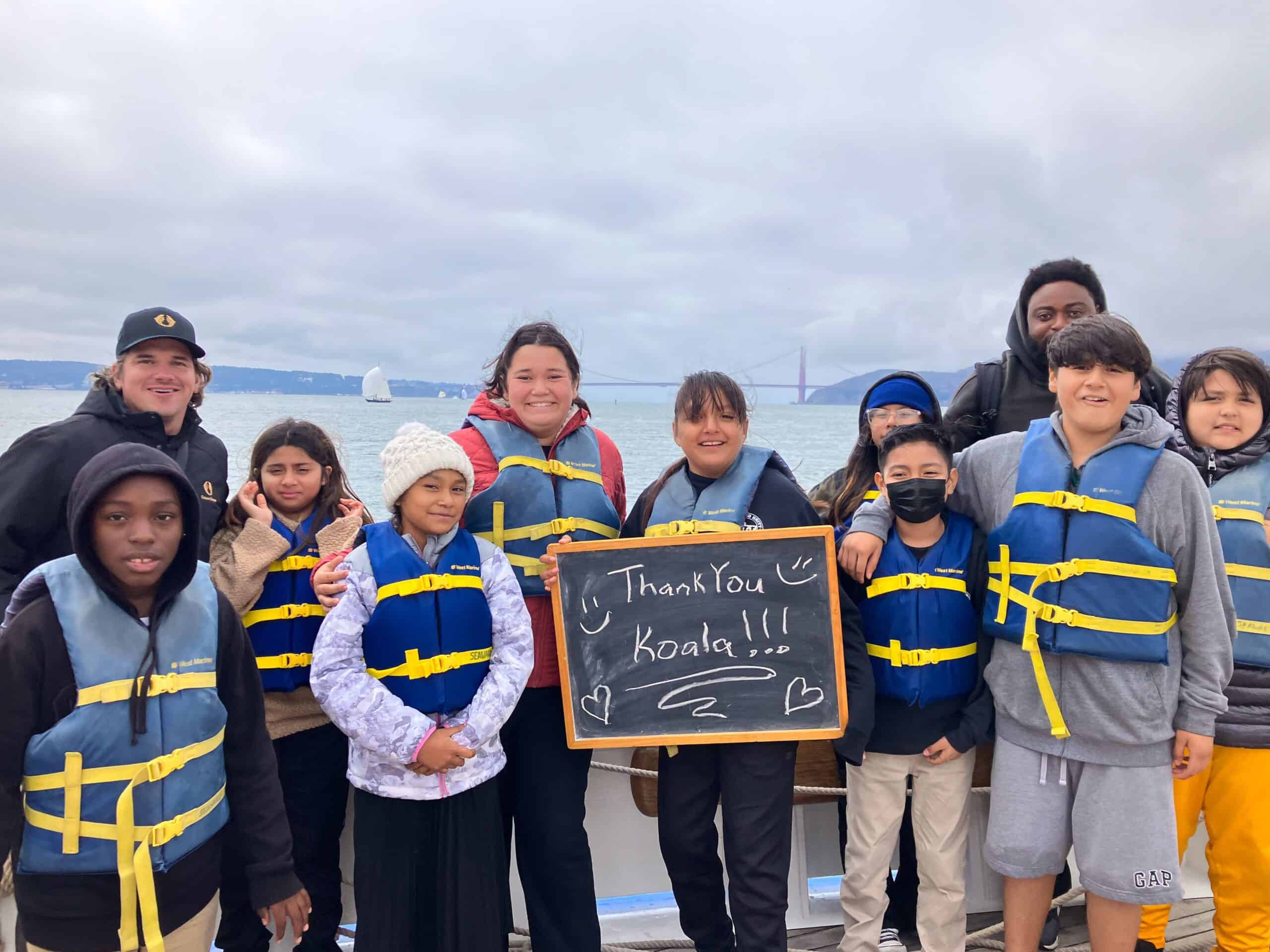
For Chris, inspiring the next generation of ocean stewards is central to his work. He leads Oceanic Society’s Conservation Scholars Program, which provides free, educational, boat-based ocean experiences to students from underserved communities in the San Francisco Bay Area.
The program was established in honor of the late Captain Roger Thomas, an Oceanic Society partner and former owner of the Salty Lady vessel, who loved introducing new people to the ocean he adored and fought to protect. Students and educators travel free of charge aboard a wooden tall ship as they explore the wildlife and ecology of the San Francisco Bay while learning about the ocean, conservation issues, and environmental career paths.
The result, Oceanic Society believes, is often a life-changing experience that instills values of environmental conservation in the next generation.
In the Company of Baja’s Whales
One destination that holds special importance to Chris is Baja California, Mexico. This thin peninsula of mountainous desert is flanked by the Sea of Cortez and the Pacific Ocean. With calm boating conditions and over 30 species of whales and dolphins migrating to these coastal waters each year, whale watching in Baja is widely regarded as some of the best in the world.
Since 2019, Chris has guided travelers through Baja’s lagoons and open seas, sharing moments that are often quiet, unexpected, and deeply moving. These expeditions have made an imprint on him and shaped his approach as a leader in the field.
© Chris Bierteumpfel
Expeditions to the Sea of Cortez immerse travelers in one of the most biodiverse seas in the world, offering opportunities to see rare blue whales, the largest animal on the planet, and to swim with whale sharks, the largest fish in the world.
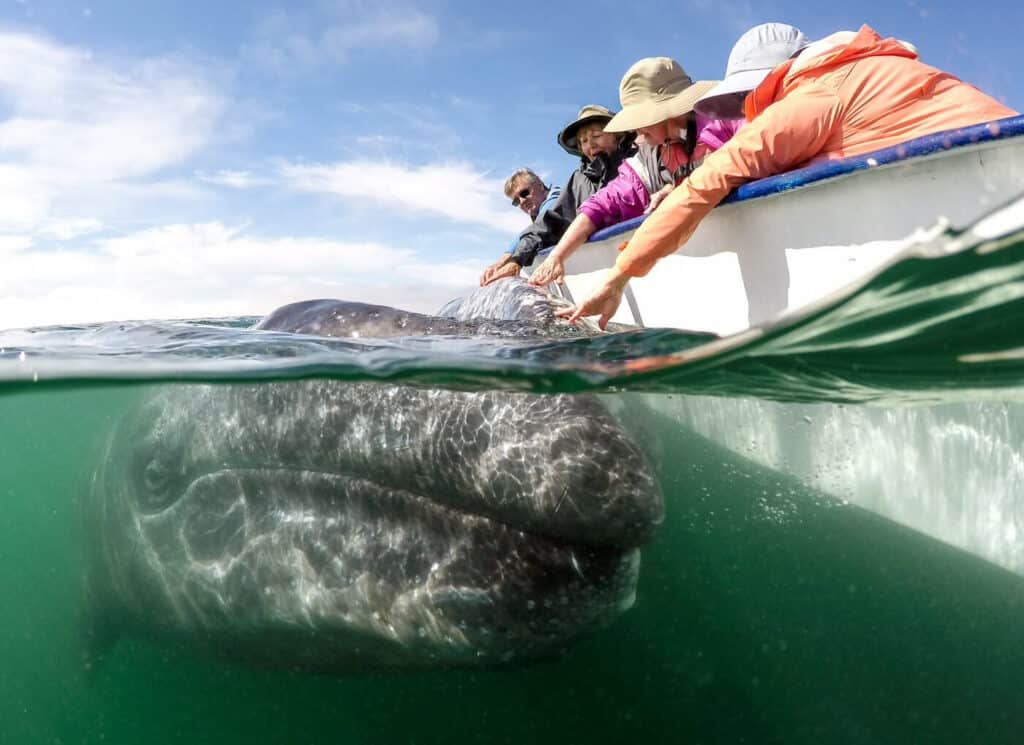
But Baja is perhaps most famous for gray whales. Along the Pacific coast, travelers experience the gray whales of San Ignacio Lagoon, which gather in protected waters to calve and nurse their young. In these quiet lagoons, gray whales are known for their curiosity, often approaching small boats with their calves in behavior observed nowhere else in the world.
In the Q and A that follows, Chris shares his perspective on guiding in Baja and why it’s such a meaningful ecotourism destination.
Q: Where are you from, and what inspired you to be a naturalist?
I’m from Northern California, and visiting the Monterey Bay Aquarium as a kid is what first lit the spark. Seeing the whole marine world beneath the surface inspired me to become a naturalist.
That formative childhood experience drives much of Chris’s work today, including his efforts to create similar sparks of wonder for young people through Oceanic Society initiatives.
→ Read more about the Conservation Scholars Program, which provides underprivileged youth in San Francisco the opportunity to embark on wildlife tours with purposeful environmental education.
Q: What is your favorite aspect of Baja that you like to share with guests?
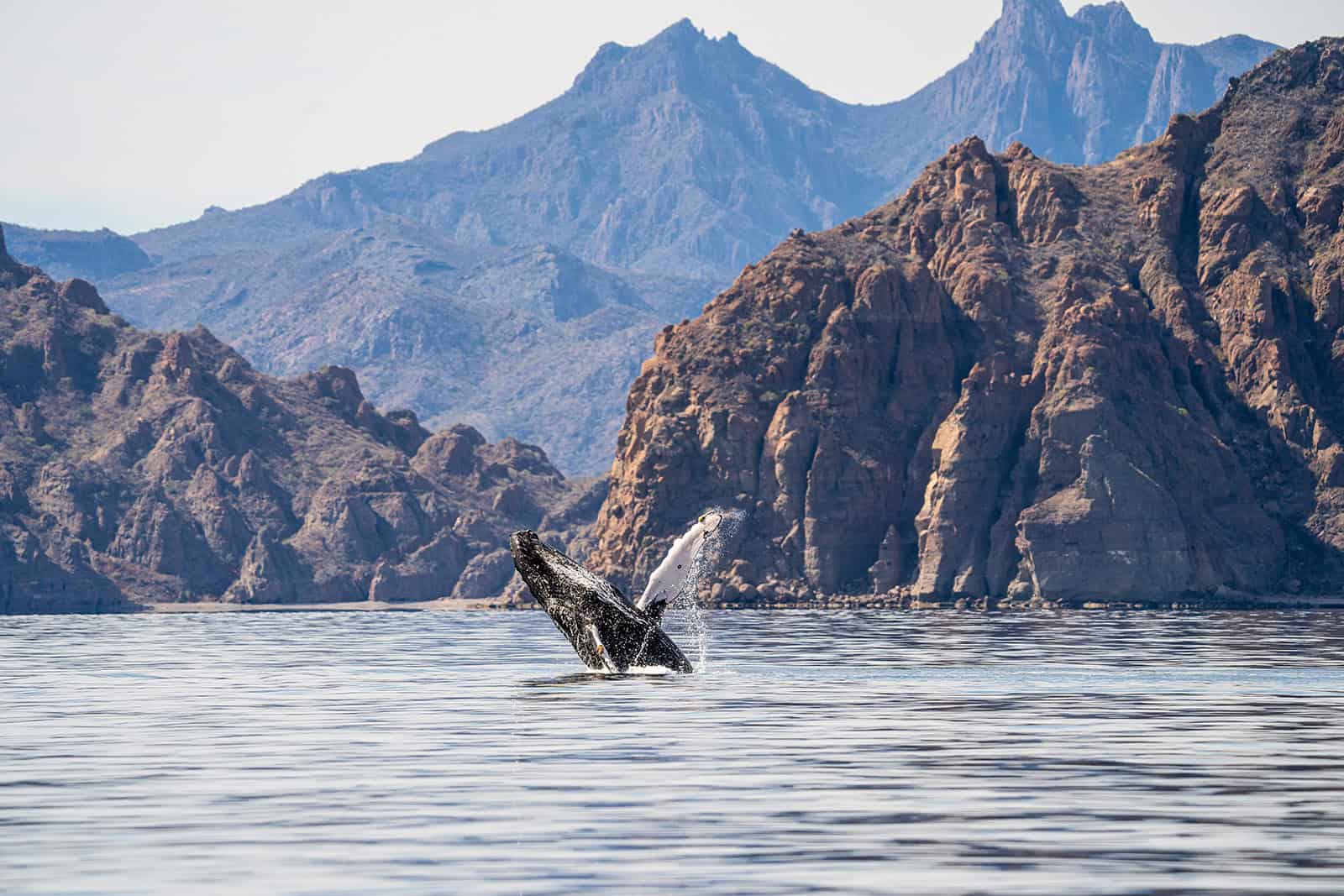
My favorite aspect is the incredible backdrop where we watch the whales. In Loreto, we begin in a charming, historic Mexican town set right on the Sea of Cortez. Once you’re out on the water, you’re surrounded by dramatic mountains and remote islands. Rust-colored peaks rise above sparkling azure water, where massive blue and fin whales surface and humpbacks often put on acrobatic displays. The setting for that show is truly second to none. The whale camp at the lagoon is equally remarkable—remote, pristine, and protected. It feels like a place preserved just for the whales, grounding you in nature in a way few places still can.
Q: What surprises guests about Baja?
Even when they’ve read about it, guests are still amazed by how curious, numerous, and approachable the whales are. The level of interaction takes people by surprise every time.
Friendly Gray Whales in Baja California, Mexico [HD] #whale #whalewatching #baja

Q: What is your favorite memory from Baja?
One year, nearly everyone in my group had touched a whale—except for a couple who had skipped a few of the sessions. On the very last day, with only minutes left, a calf appeared out of nowhere, swam straight to our boat, and gave them the chance they had been hoping for. They were overjoyed and thanked me for arranging the last-minute meet-up with the whale.
Q: Did you have a defining moment in nature that changed how you see the world?
Absolutely—my first trip to Baja. I had been guiding whale trips in California for years, but the first time I saw a cow and calf deliberately approach the boat, make eye contact, and show genuine curiosity about us, it was mind-blowing.
That moment reshaped how I view our connection with wildlife.
Q: How do you see eco-tourism supporting the community and environment in Baja?
Eco-tourism creates a sustainable way to support both the environment and the local communities. It brings income to families while also giving guests a deeper awareness of conservation through the interpretation they receive from guides. This, in turn, inspires locals to protect the area and its wildlife so they can continue building a future around it. The partners and operators we work with are striving to establish the surrounding marine area of Loreto as Mexico’s largest nature reserve, which would prevent commercial overfishing and safeguard critical habitats and whales. And at San Ignacio lagoon, eco-tourism and conservation efforts stopped a massive salt mine project that would have devastated the gray whale breeding grounds. Instead of destruction, the area now thrives as a protected sanctuary.
Explore the positive impacts of sustainable tourism on both people and wildlife in Baja California, Mexico. Meet Huber Omar Murillo Nuñez, a lifelong resident of Bahía Magdalena, and hear how tourism has impacted his life and his community.

Q: What do you hope guests take away from their experience?
I hope they leave with lasting memories of some of the best whale encounters in the world, but also with a deep sense of connection—to the whales, to the desert landscapes, to Mexico and its people.
Q: What are some ways guests can continue to support conservation efforts after they leave?
After your whale trip in Baja, you can keep supporting conservation by sharing your experience to raise awareness, supporting local organizations and research groups, making eco-friendly choices like reducing plastic and choosing sustainable seafood, and even symbolically adopting a whale. You can also carry the same conservation mindset into future travels by choosing responsible operators, joining citizen science projects, and lending your voice to advocacy efforts that protect marine ecosystems.
→ Adopt a whale to support ongoing research and ocean conservation
Inspired to explore Baja?
Chris’s story exemplifies how ecotourism can be used as a force for environmental conservation, and we hope that his journey has inspired you to explore the world with purpose.
Expeditions to Baja continue to be some of Oceanic Society’s most popular due to the wide variety of wildlife experiences offered – and the unique whale encounters offered in San Ignacio Lagoon. If Baja is calling your name, our expeditions to the peninsula run from February to March each year, a time when numerous cetaceans migrate to the coastal seas simultaneously. While guide assignments may vary, each trip is led by experienced naturalists like Chris.