This is the second in our Expedition Impact Spotlight series, showcasing the conservation outcomes our expeditions create through partnerships with local organizations and communities.
Since 1969, Oceanic Society has connected people with extraordinary ocean wildlife and communities—not just to experience them, but to protect them. Through our Expedition Impact Program, every trip benefits the places we visit while inspiring travelers to engage in ocean conservation. Here, we highlight how our Fiji expeditions support local ecosystems and the remarkable organizations we partner with.
Why Fiji Matters for Ocean Conservation
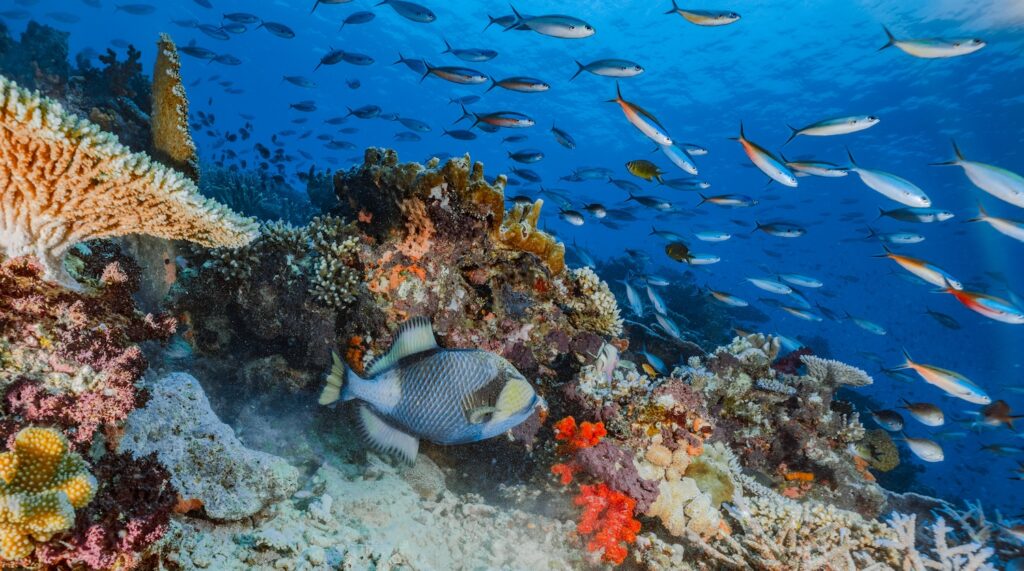
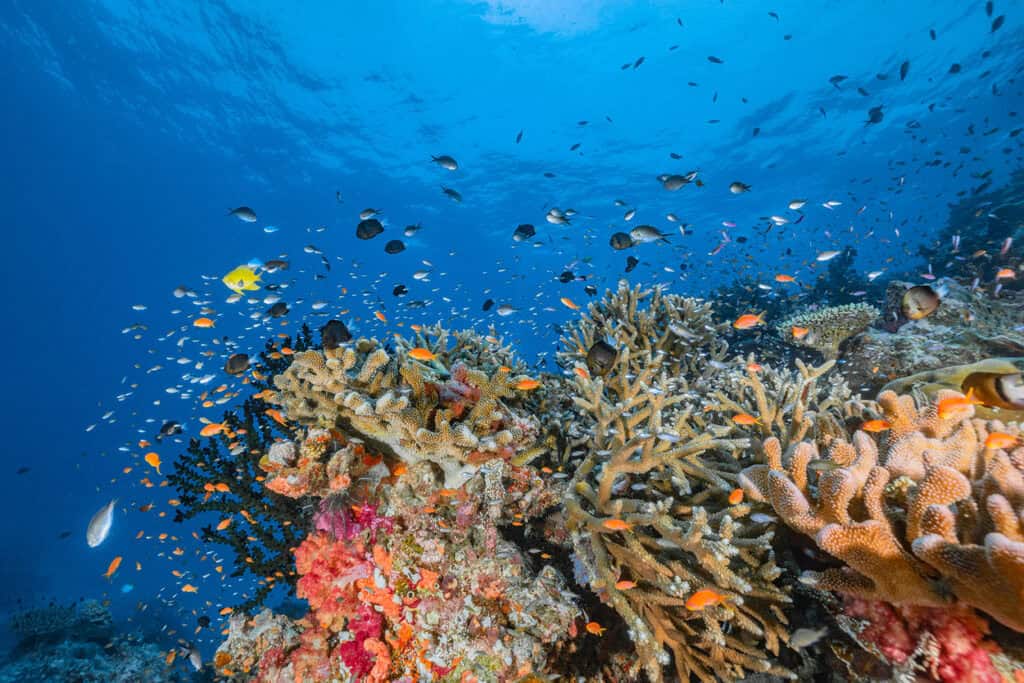
The Fijian archipelago encompasses one of the most extensive and healthy reef systems in the world, with more than 4,000 square miles of coral reefs spread around more than 300 islands.
Two of Fiji’s most remarkable marine areas anchor our expeditions:
- Rainbow Reef in the Somosomo Strait, widely known as the “soft coral capital of the world,” and home to legendary dive sites such as the Great White Wall.
- Beqa Lagoon, the largest enclosed lagoon in Fiji, recognized by the Fiji government as a “Biophysically Special and Unique Marine Area” encompassing over 440 square kilometers of water surrounded by more than 70 kilometers of barrier reef.
These ecosystems are breathtakingly beautiful—but they are not immune to pressure. These ecosystems face growing pressures from climate change, unsustainable fishing practices, pollution, and Crown-of-Thorns starfish outbreaks, making Fiji both a bucket-list travel destination and a critical priority for conservation, exactly the kind of unique destination Oceanic Society seeks out.
Oceanic Society’s Local Conservation Partners in Fiji
In every destination we visit, we strive to collaborate with organizations, businesses, and champions that are spearheading impactful conservation on the ground. In Fiji, two partnerships stand out for their deep commitment to marine conservation and community development:
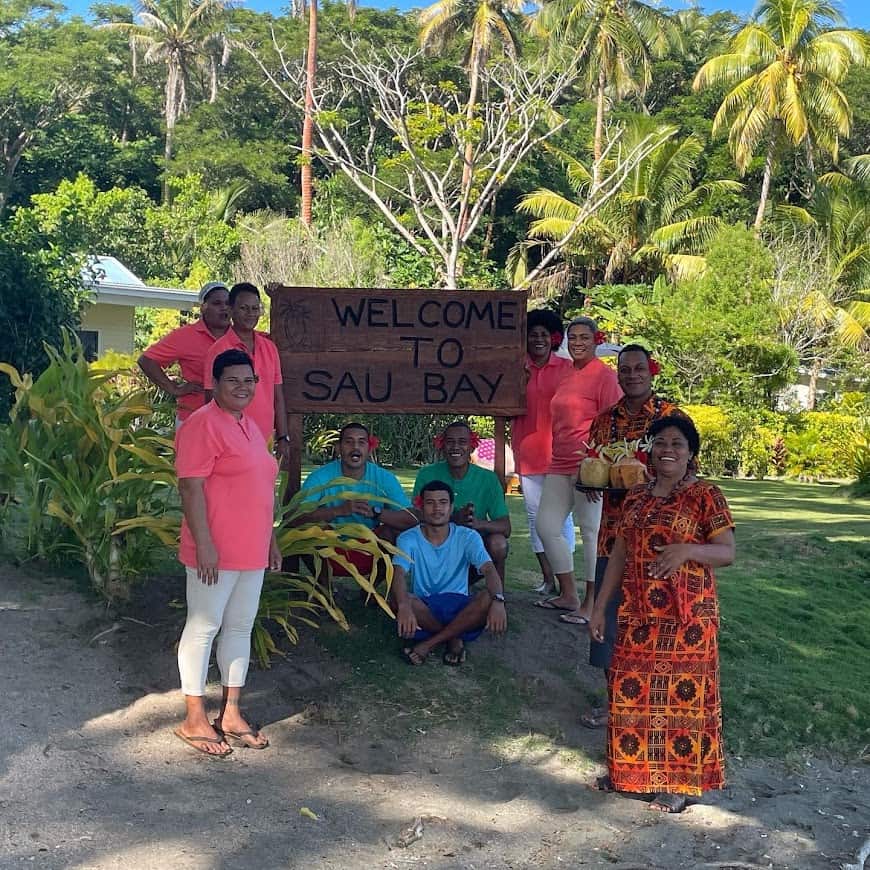
Staff at Sau Bay welcome guests to their beautiful grounds as they step off the boat ©Sau Bay Resort & Spa
Sau Bay Resort & Spa – Protecting Rainbow Reef
Sau Bay Resort & Spa serves as our home base for exploring Rainbow Reef, located less than a 10-minute boat ride from some of Fiji’s most spectacular snorkel sites.
A Leader in Sustainable Tourism
In August 2023, Sau Bay became the first resort and dive center in all of Fiji to earn the PADI Eco Center designation, which recognizes dive operations with a proven commitment to conservation and sustainability. Sau Bay is also an active participant in the UN Environment Programme’s Green Fins program, following rigorous guidelines for reef protection and continuous improvement in their dive and snorkel operations.
Sustainability extends across daily operations. Sau Bay has eliminated single-use plastics and transitioned from energy-intensive desalination to gravity-fed freshwater sourced from a nearby spring, an upgrade that also brought running water to the neighboring community.
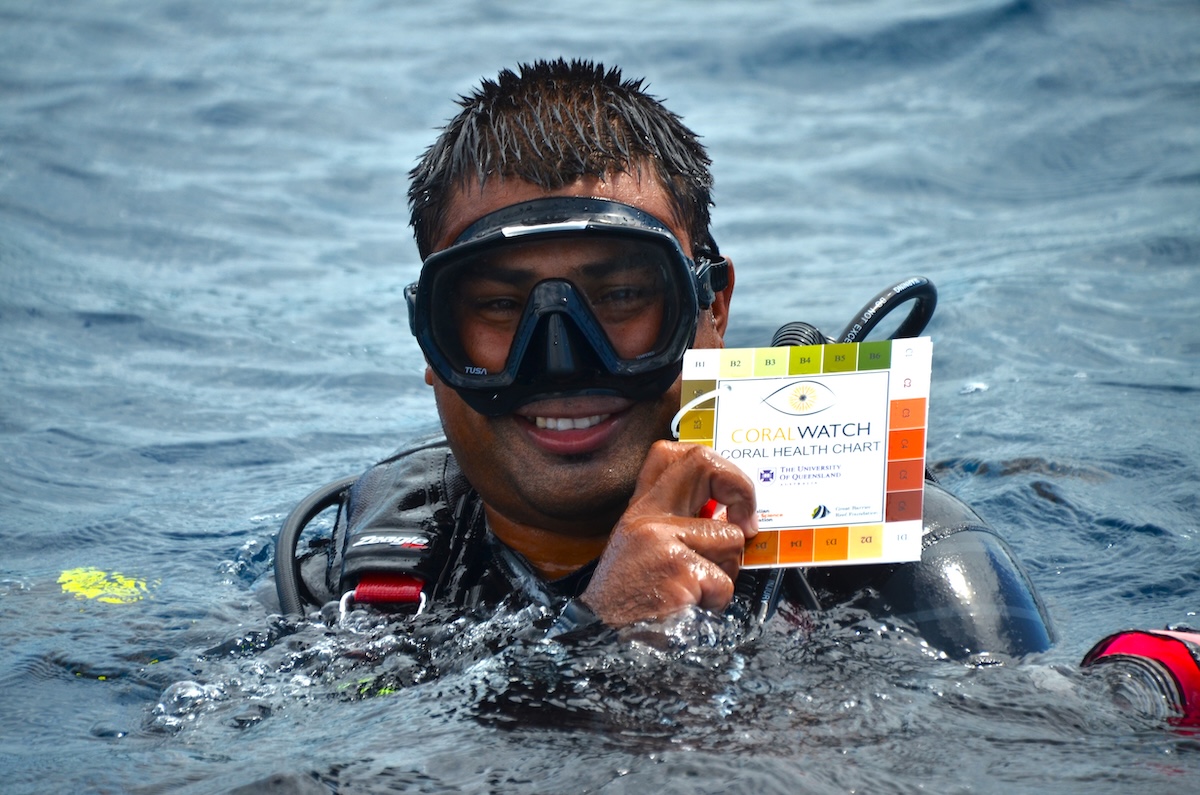
Sau Bay Dive Master, Carl, surfaces holding the Coral Watch Coral Health Chart, using standardized color references to monitor coral condition and bleaching status as part of integrated reef health assessments in Fiji. © Sau Bay Resort & Spa
Reef Monitoring & Citizen Science
Conservation is deeply integrated into daily operations. Through PADI AWARE’s Adopt the Blue program, the resort has adopted the Great White Wall, one of Rainbow Reef’s most iconic dive sites, committing to monitor reef health and report citizen-based scientific observations. Guests participate in CoralWatch citizen science, collecting reef health data that contributes to a global coral bleaching monitoring effort. The resort also runs an active Crown-of-Thorns starfish (COTS) removal program and offers regular beach cleanups paired with cultural exchange through Tourism Fiji’s Loloma Hour program, where participants earn complimentary village visits.
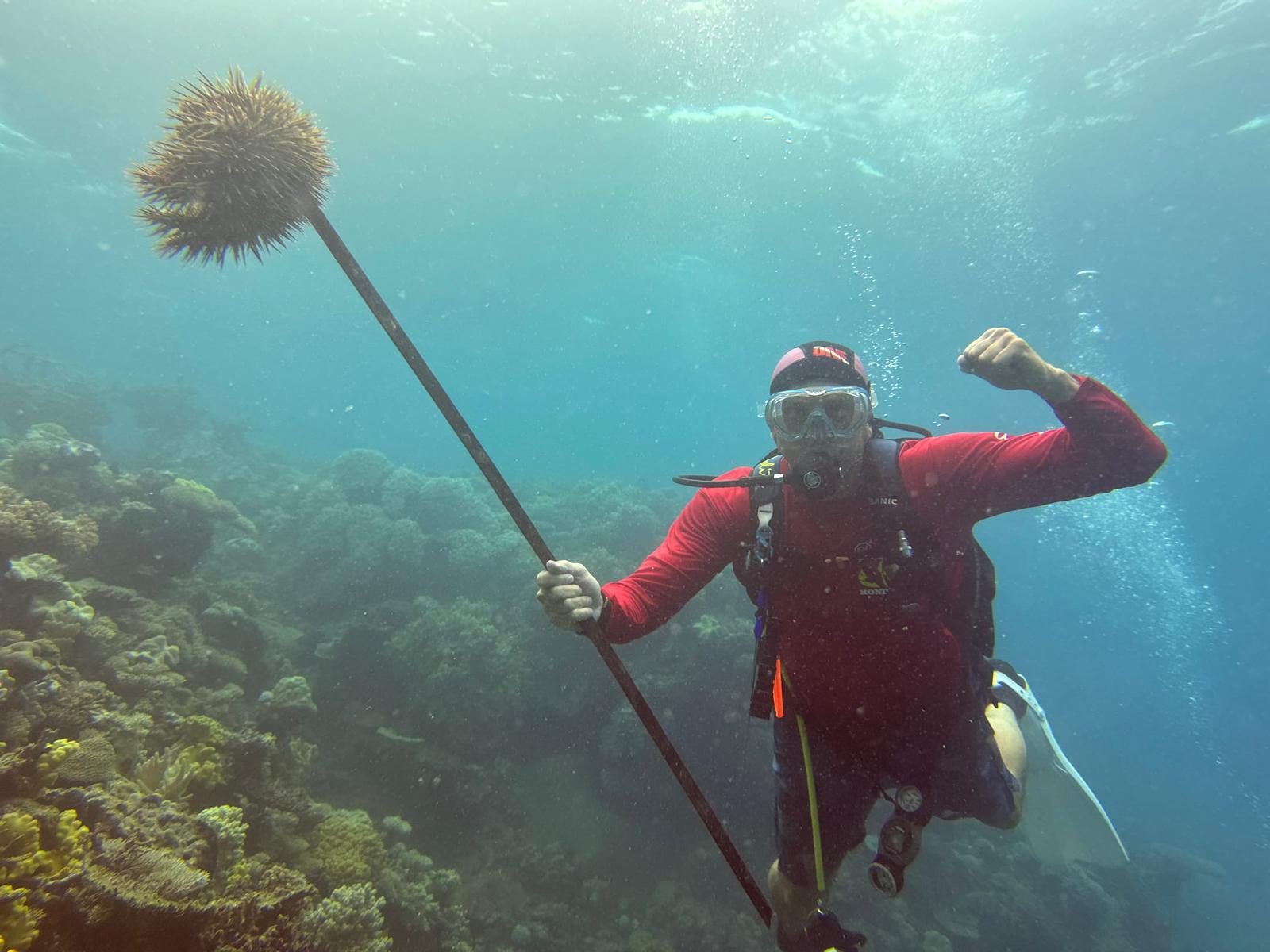
A diver successfully removes a crown-of-thorns starfish from a coral reef, contributing to efforts to protect reef ecosystems from this coral predator. ©Sau Bay Resort & Spa
Beyond its own operations, Sau Bay is working with PADI AWARE and nearby operators to advocate for formal marine protected area status for Rainbow Reef, aligning with the global 30×30 goal, an international commitment to protect 30% of the world’s land and ocean by 2030, for which Fiji has set national targets.
Expanding Protection through the Rainbow Reef Fiji Foundation
In 2025, Sau Bay Resort & Spa established the Rainbow Reef Fiji Foundation to further empower local communities to participate in and lead conservation and research efforts aimed at safeguarding the world-famous Rainbow Reef. The foundation works in partnership with global NGOs, including PADI, and focuses on:
- Supporting the establishment of the Rainbow Reef Marine Protected Area, helping build the policy and community framework for long-term protection.
- Leading citizen-based marine research and monitoring, encouraging both guests and locals to contribute scientific observations that inform reef health and conservation actions.
- Driving hands-on conservation efforts, such as beach cleanups, mangrove plantings, and continued Crown-of-Thorns starfish population control.
- Education and community empowerment, teaching the next generation the importance of reef protection, sustainable tourism, debris removal, and restoration activities.
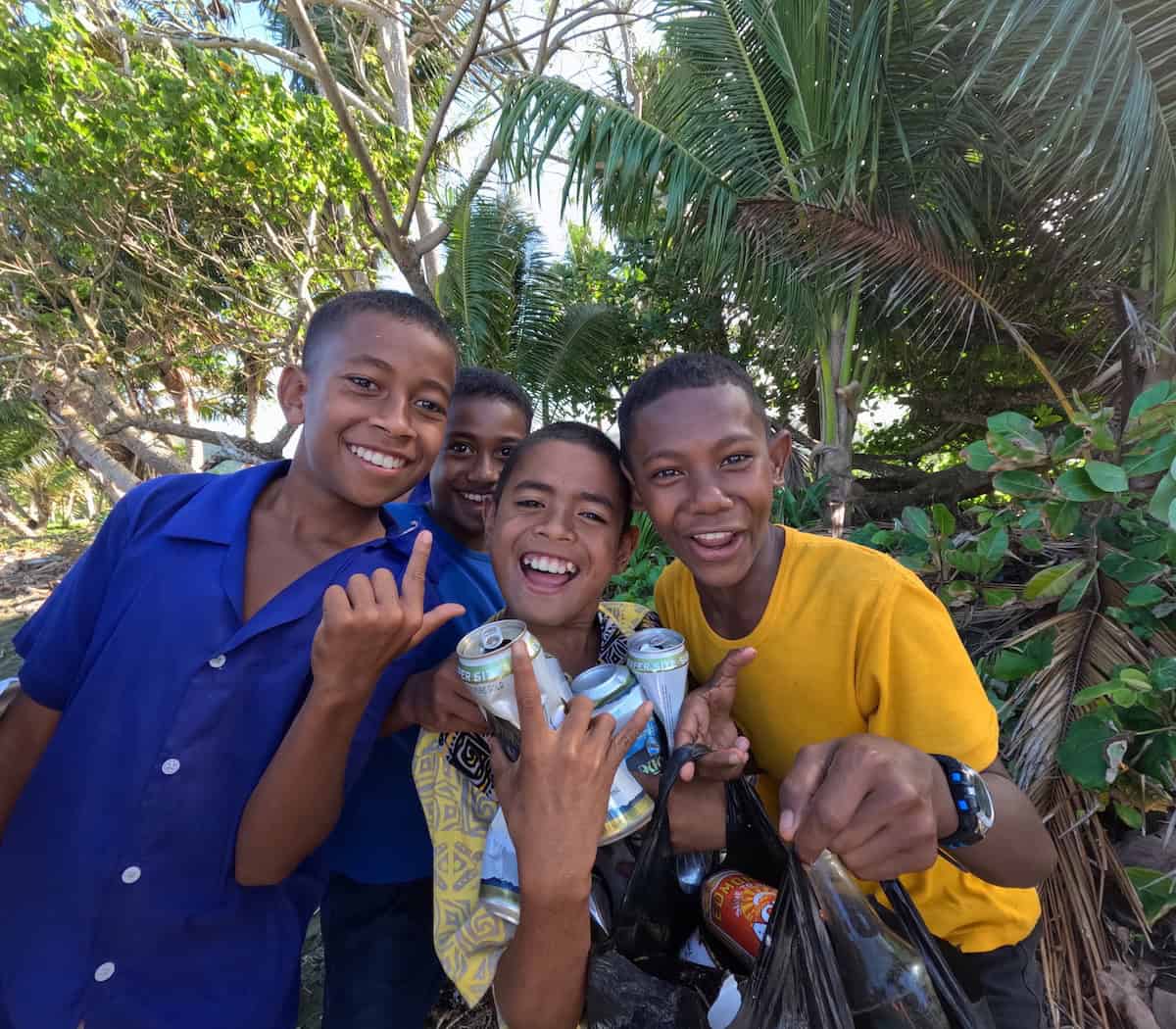
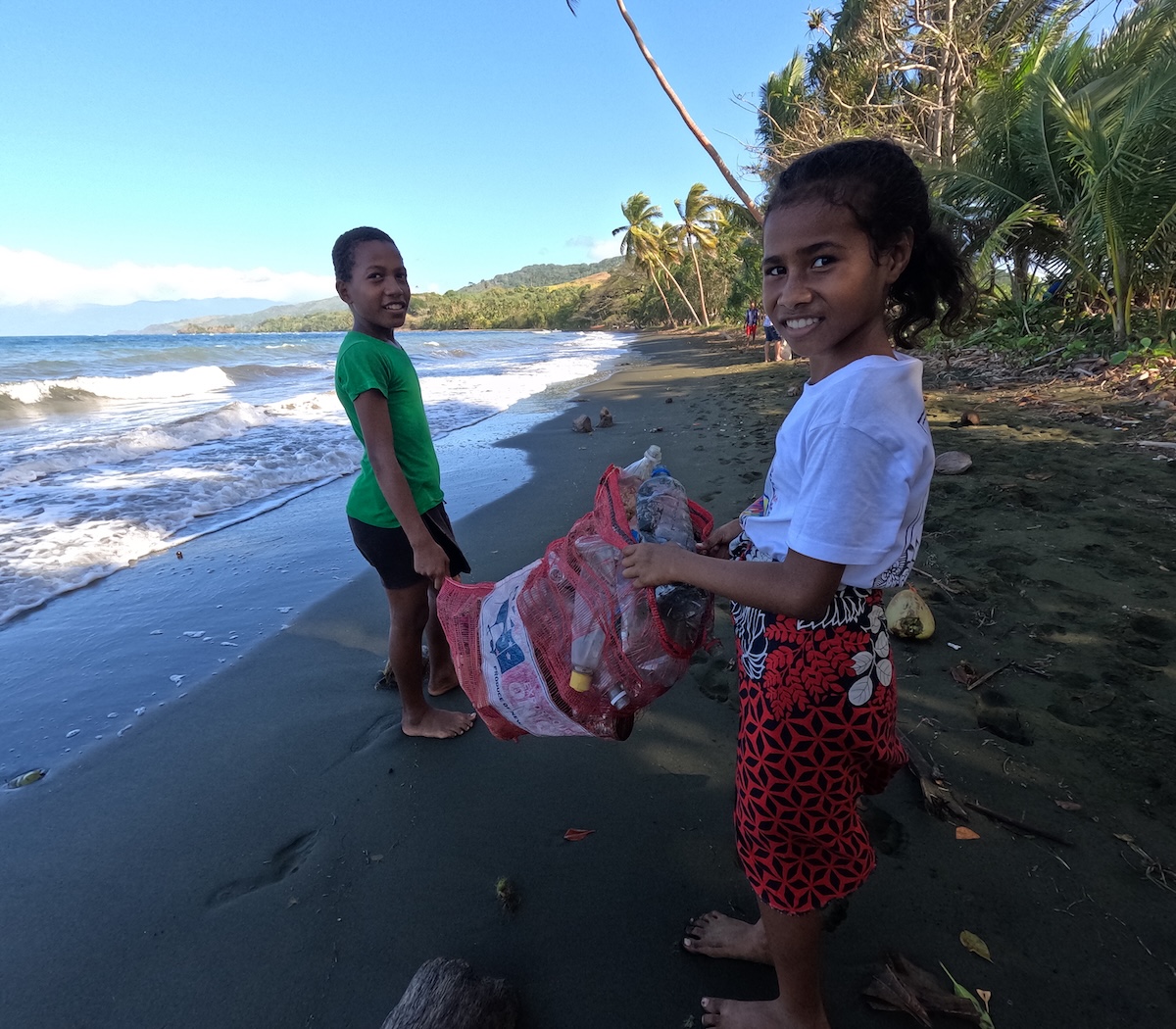
Expedition Impact Program Grant Recipient
Sau Bay Crown-of-Thorns Removal (underway in 2026): We are providing a grant to Sau Bay Resort to expand their COTS removal efforts on Rainbow Reef. The grant supports weekly removal dives, monitoring, and community engagement. Oceanic Society travelers will be able to contribute as spotters during removal dives, gaining firsthand insight of reef threats and direct conservation action.
Beqa Lagoon Resort – Community-Based Conservation & Shark Protection
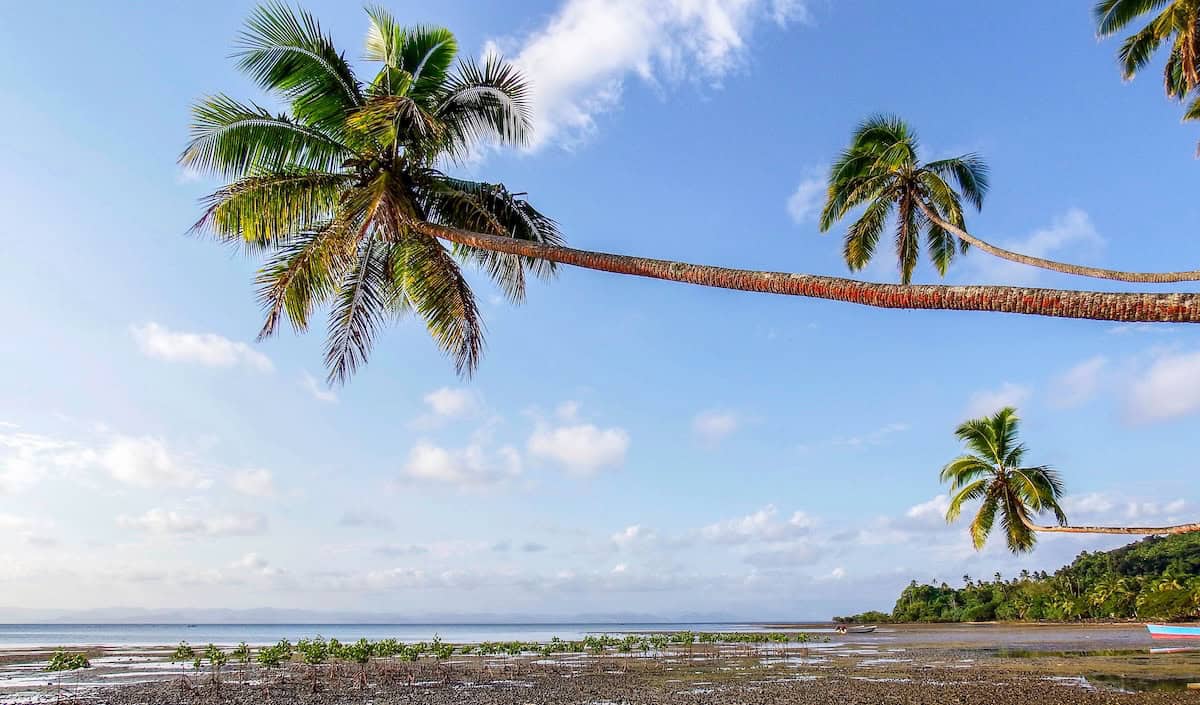
Mangroves in Beqa sheltered lagoon help stabilize shorelines, filter runoff, create nursery habitat for marine life, and protect nearby coral reefs while supporting coastal resilience. © Roger Harris
Beqa Lagoon Resort serves as our base for exploring the vast reef systems of Beqa Lagoon, which boasts more than 100 snorkel and dive sites. The resort is deeply committed to community-based conservation and shark conservation, working hand-in-hand with local villages and conservation organizations.
Community-Declared Marine Reserves
The resort works closely with the local Rukua village, which holds traditional fishing rights (Qoliqoli) over the surrounding reef areas. Rukua village has declared both the resort’s House Reef and Star Reef as tabu areas: traditional no-take marine reserves where fishing and harvesting are strictly prohibited, allowing fish populations to replenish and spill over into surrounding, sustainably fished areas.
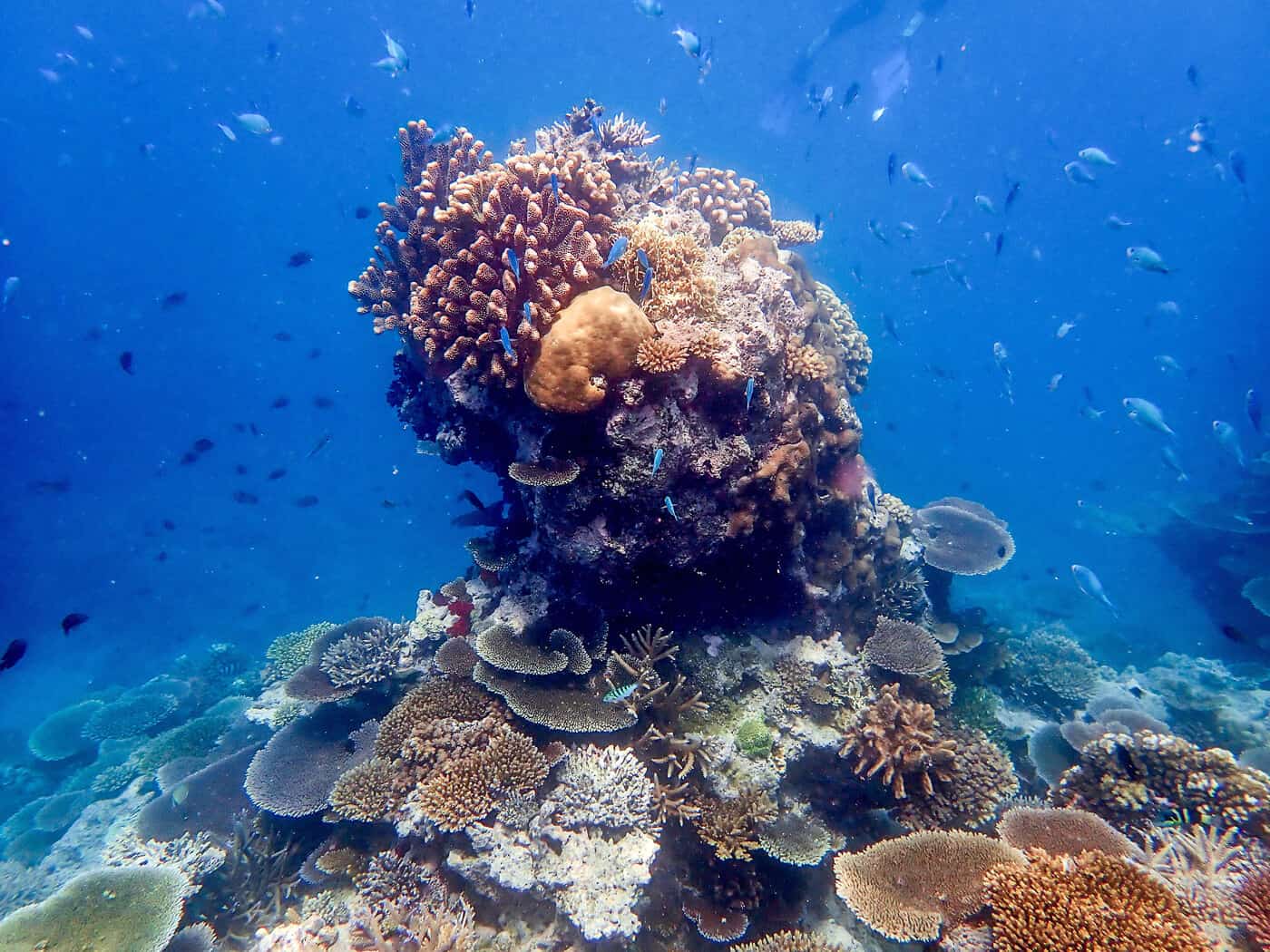
A coral head at Beqa Lagoon. © Roger Harris
Shark Conservation & Education
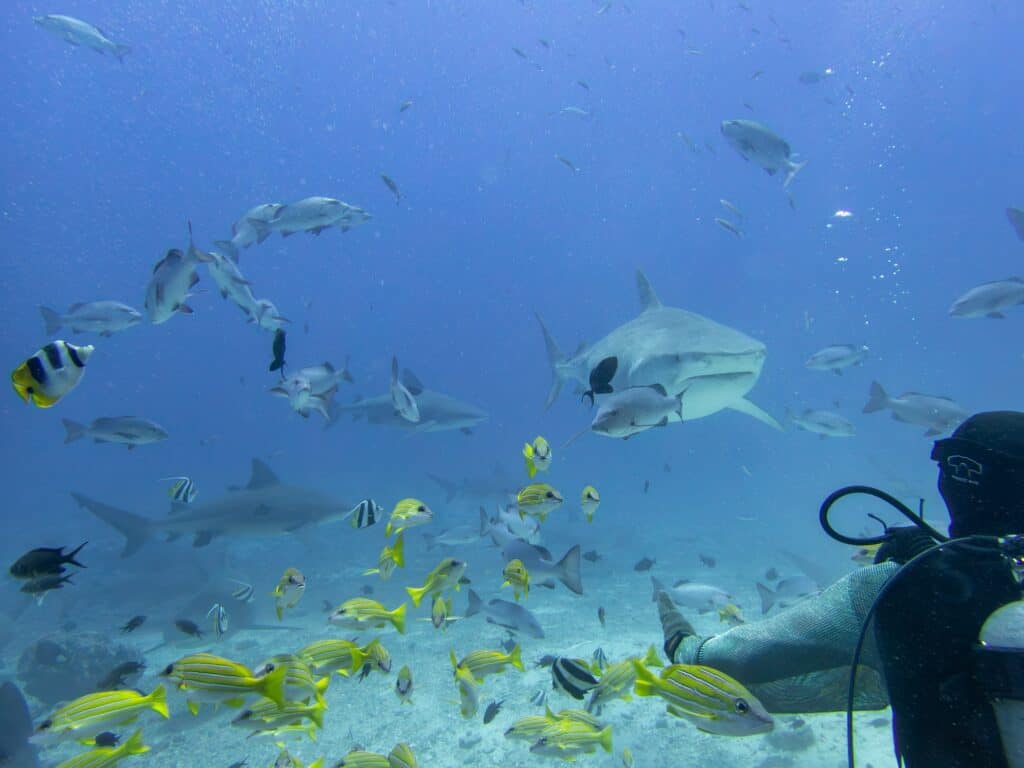
Beqa Lagoon is also world-renowned for its shark populations, with up to eight species regularly encountered, including bull sharks and tiger sharks. The resort’s long-running shark dive program at “The Cathedral” provides a carefully managed, educational experience that transforms visitors into shark ambassadors, while tourism revenue incentivizes local communities to protect rather than fish shark populations.
The Beqa Lagoon Initiative
The resort also partners with the Pacific Blue Foundation (PBF), which facilitates the Beqa Lagoon Initiative, a community-driven program working with ten local villages on locally managed marine areas, Crown-of-Thorns starfish monitoring and control, mangrove restoration, waste management, environmental education, and sustainable livelihood training. Together, the resort and PBF have planted over 50 star reef frames with coral colonies, with plans to include guest participation.
Expedition Impact Program Grant Recipient
Beqa Lagoon Cleanup Campaign (2023): We provided a grant to Pacific Blue Foundation to support a coastal cleanup campaign as part of our 2023 Global Ocean Cleanup. The grant funded community-led cleanups across Beqa Lagoon’s villages, addressing pollution threats while building community capacity for ongoing waste management. Read more.
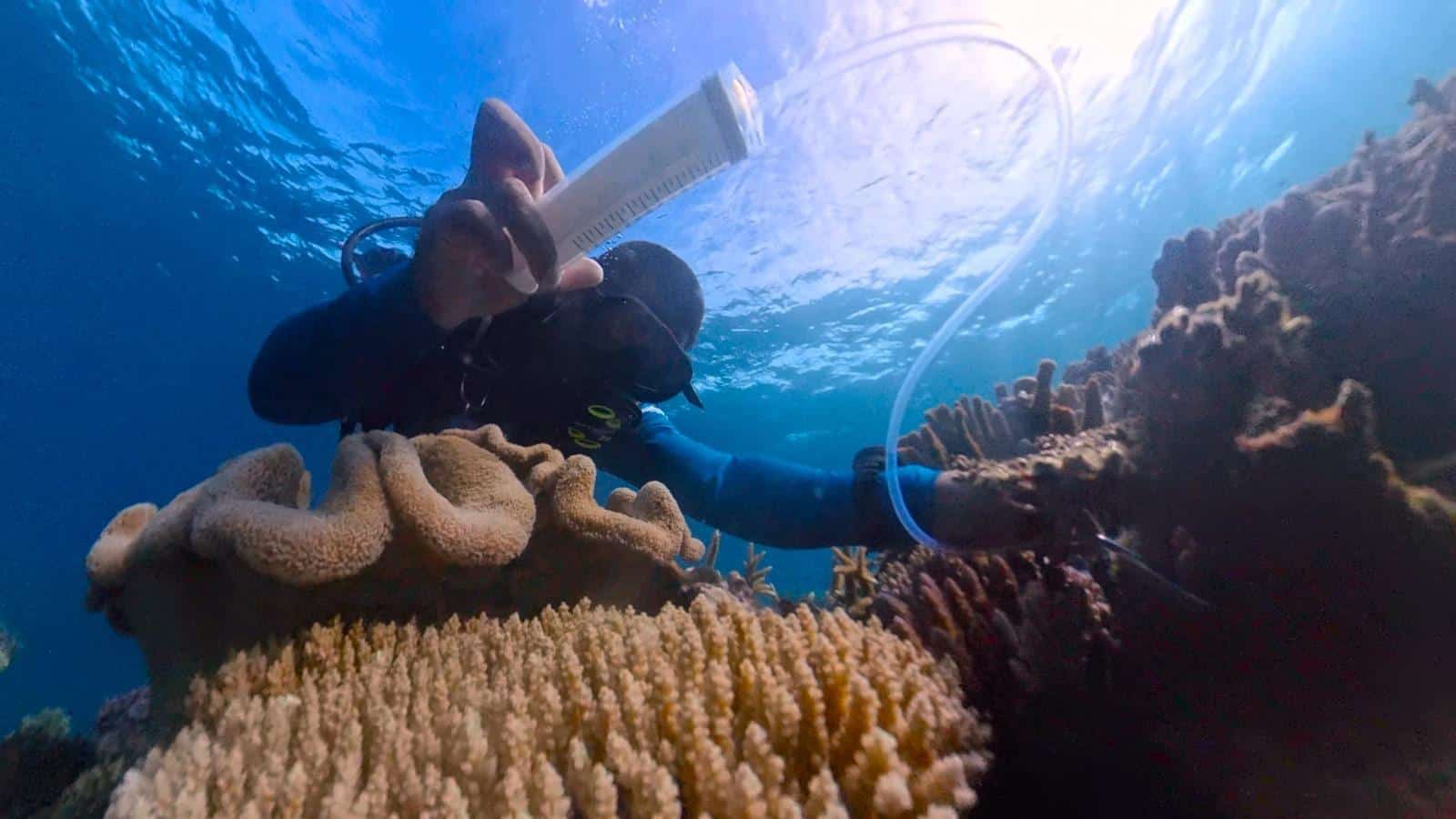
Diver helps to remove Crown-of-Thorns starfish using low-impact methods like vinegar injection © Sau Bay
Our Conservation Travel Model in Action
Engaging Travelers as Conservationists
Our Fiji expeditions connect travelers directly with the species, ecosystems, and communities that benefit most from conservation efforts, ensuring an unforgettable experience.
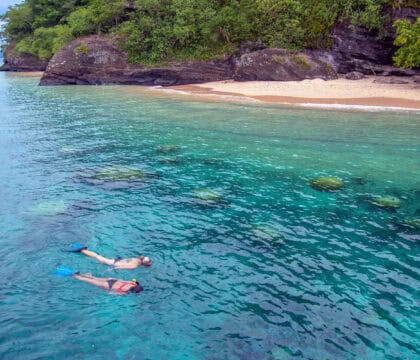
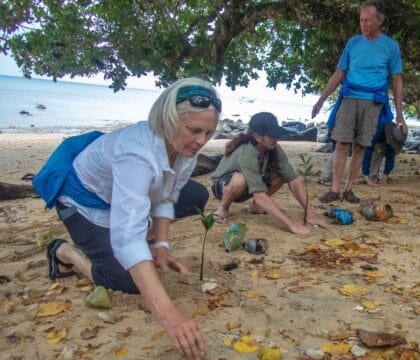
NEW IN 2026: This year, we are launching a new trip titled, Fiji’s Rainbow Reef: Snorkeling & Conservation Expedition, taking our conservation travel model a step further with hands-on conservation activities including Crown-of-Thorns starfish monitoring and removal, community beach cleanups with Nawi Village School, and mangrove planting. This expedition gives travelers the opportunity to more directly contribute to the health of Rainbow Reef while deepening their connection to the communities working to protect it.
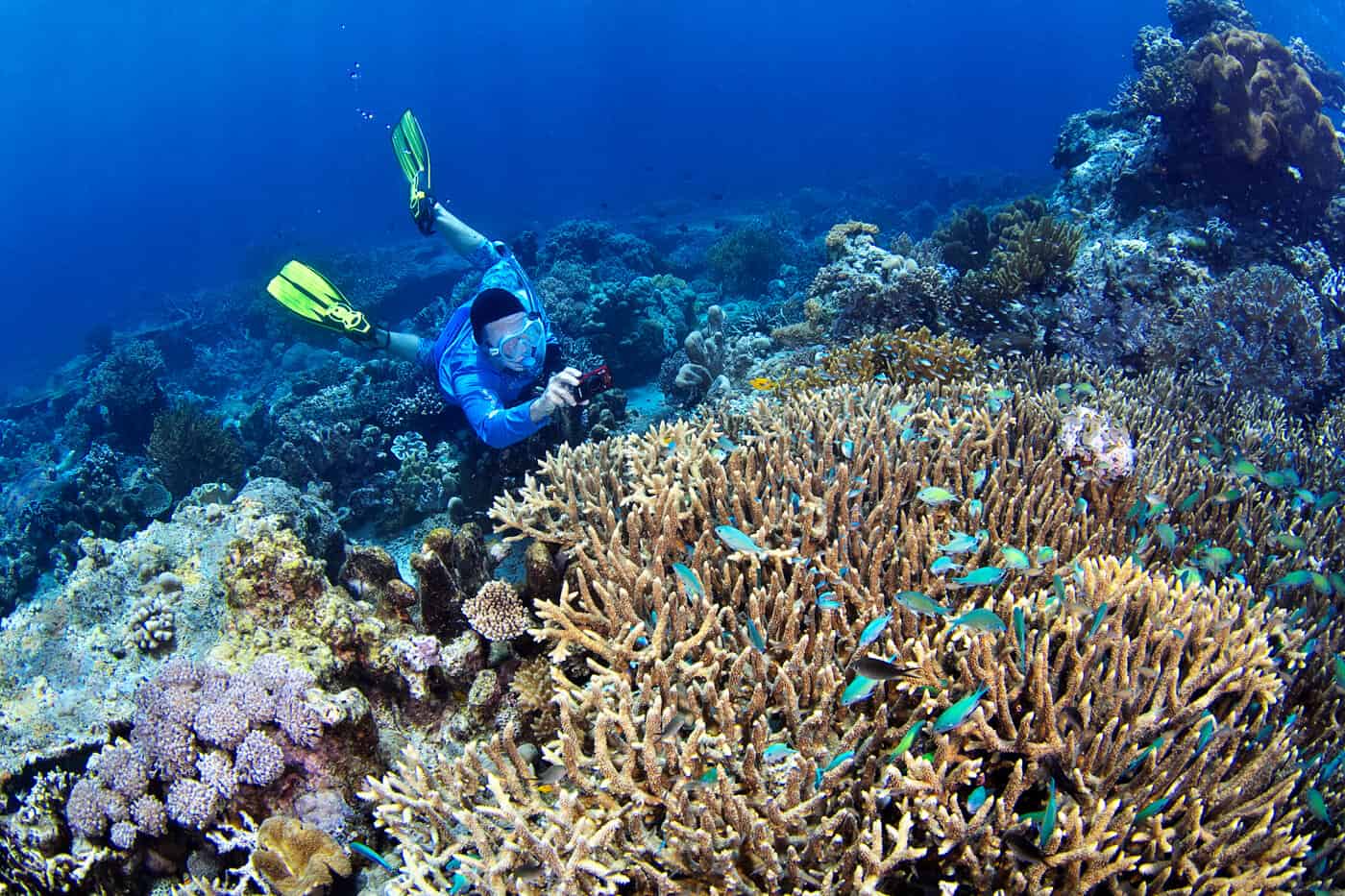
A snorkeler photographs reef fish. © Keoki Stender
“Snorkeling at Rainbow Reef was stunning—the water clarity is fantastic, seems like you can see forever underwater. Talks with our naturalist were always enjoyable and educational, and the Fijian people were unforgettable in their warmth and terrific hospitality. Well worth the efforts to get there!”– Fiji Expedition Traveler
By embedding conservation into every aspect of the journey, from citizen science to community partnerships, travel becomes more than observation. It becomes participation.
Our expeditions and partnerships in Fiji demonstrate what’s possible when passionate travelers connect with strong local leaders on the frontlines of ocean conservation. It’s what Oceanic Society has pioneered for over 50 years by connecting people deeply with nature and funding the science and community initiatives that protect the places we visit.
Supporting Ocean-Friendly Economies
Our partnerships with Sau Bay and Beqa Lagoon Resorts provide consistent employment for local Fijian staff, demonstrating that conservation and sustainable tourism can drive economic opportunity. Our expeditions support and reinforce traditional Fijian tabu systems, community-managed marine reserves practiced for generations, by demonstrating the economic value of healthy, protected reef systems. And through Beqa Lagoon’s partnership with Pacific Blue Foundation, we help support skills training and small-scale business development for women and youth in Beqa Lagoon communities, helping diversify livelihoods beyond fishing.
In Fiji, conservation is not separate from community. It is intertwined with culture, economy, and identity.
Through responsible travel and strategic partnerships, Oceanic Society helps ensure that Fiji’s reefs remain vibrant—for wildlife, for communities, and for future generations.
How Our Expedition Impact Program Works
Every Oceanic Society expedition contributes to our Expedition Impact Program, supporting ocean conservation through three core pillars:
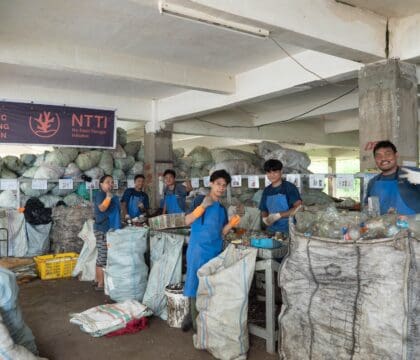
- Plastic Pollution: Funding the removal of 200 pounds of plastic from the ocean per traveler
- Coral Restoration: Planting three climate-resilient corals for every traveler
- Conservation Grants: Supporting locally led conservation and community development in the places we visit
Snorkeling in Fiji: The Complete Guide
Discover the best places for snorkeling in Fiji in this comprehensive guide. Learn where, when, and how to get to the best snorkeling in Fiji.