We’re excited to announce the latest recipients of Oceanic Society’s Community Conservation Grants, supporting five projects in Timor-Leste, Indonesia, Honduras, and Cuba. From blue whale protection and coral reef restoration to youth empowerment, each project addresses a unique conservation challenge while putting local people and communities at the heart of the solution.
These grants are made possible through our Expedition Impact Program, which funds on-the-ground conservation for every expedition booking with Oceanic Society. This gives travelers a tangible way to contribute to meaningful conservation efforts in the places they explore.
Here are the organizations and the programs our travelers are helping to support with this round of grants:
Restoring Coral Reefs in Raja Ampat, Indonesia – The SEA People
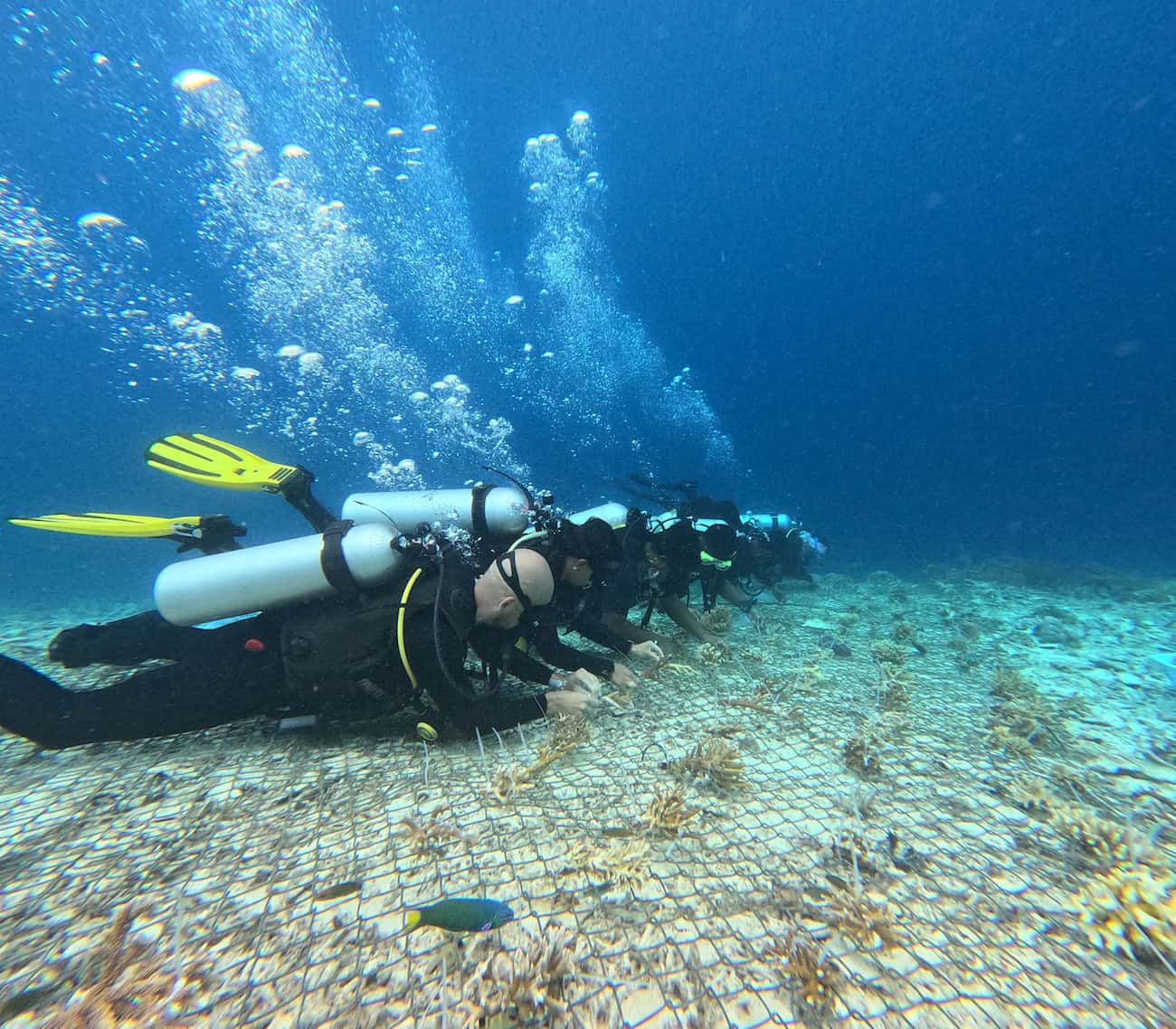
Members of the Yaf Keru team attach coral fragments to steel mesh frames laid over loose rubble in Raja Ampat. The frames hold the seafloor in place so transplanted corals can take root. Photo: The SEA People
Raja Ampat is renowned for its remarkable marine biodiversity, but even its spectacular reefs face challenges. In some areas, past destructive fishing practices and coral mining have left behind fields of loose coral rubble that make natural recovery difficult.
Coral fragments may settle on a damaged reef, but if the rubble beneath them shifts with currents and waves, young corals struggle to attach and grow. Moving rubble can also slide downslope, damaging or smothering otherwise healthy reef habitat.
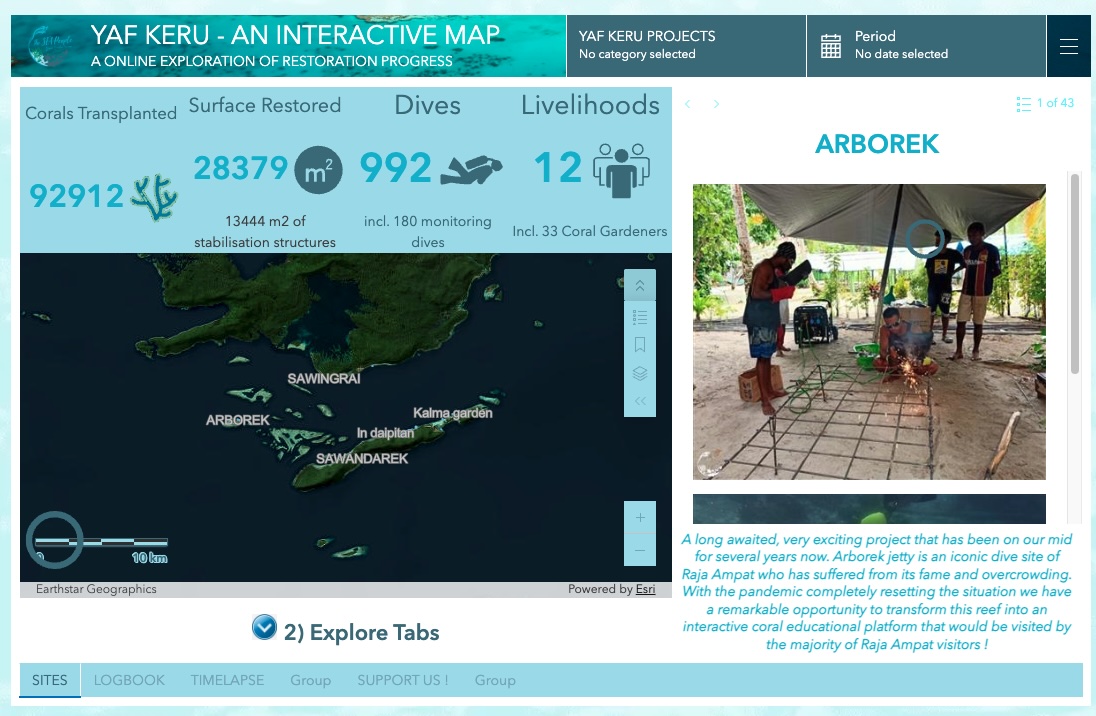
Yaf Keru’s public dashboard tracks restoration progress across Raja Ampat in real time. Photo: The SEA People
Through its community-led Yaf Keru Reef restoration and conservation program, The SEA People has worked alongside Papuan communities in Raja Ampat for more than 10 years, training local teams to stabilize loose rubble and transplant naturally occurring coral fragments. This grant will restore about 250 square meters of reef (roughly the size of a tennis court), protect at least as much healthy reef downslope, and transplant more than 1,000 coral fragments, with progress tracked on public impact dashboards.
Lasting reef conservation also means investing in the people who protect these ecosystems. Papuans are the customary owners and long-term custodians of Raja Ampat’s reefs, yet often face barriers to skilled employment. This grant will support The SEA People’s ongoing work with local communities, combining reef restoration with practical training and mentorship to build pathways to future conservation careers. This helps ensure Papuans can play a leading role in protecting their home reefs for generations to come.
Oceanic Society travelers on select Raja Ampat liveaboard trips may also have opportunities to see this work firsthand. When itineraries allow, guests can visit The SEA People’s restoration site on Mansuar Island, where the team has restored more than 2.3 hectares of degraded reef, or join the Reef Restoration for a Day program for hands-on coral transplantation alongside local restoration staff.
Learn more about our ongoing coral reef restoration efforts in Indonesia.
Developing Responsible Whale Tourism in Timor-Leste – Planet Deep
Timor-Leste’s waters are home to an extraordinary diversity of marine mammals, including blue and sperm whales that travel through important migratory corridors.
Whale-swimming tourism is growing rapidly under Timor-Leste’s blue economy strategy. Seasonal encounters with blue whales, which peak from late October to late November, have gained international attention, bringing more boats and swimmers into the water without national guidelines to protect whales or ensure safe encounters.
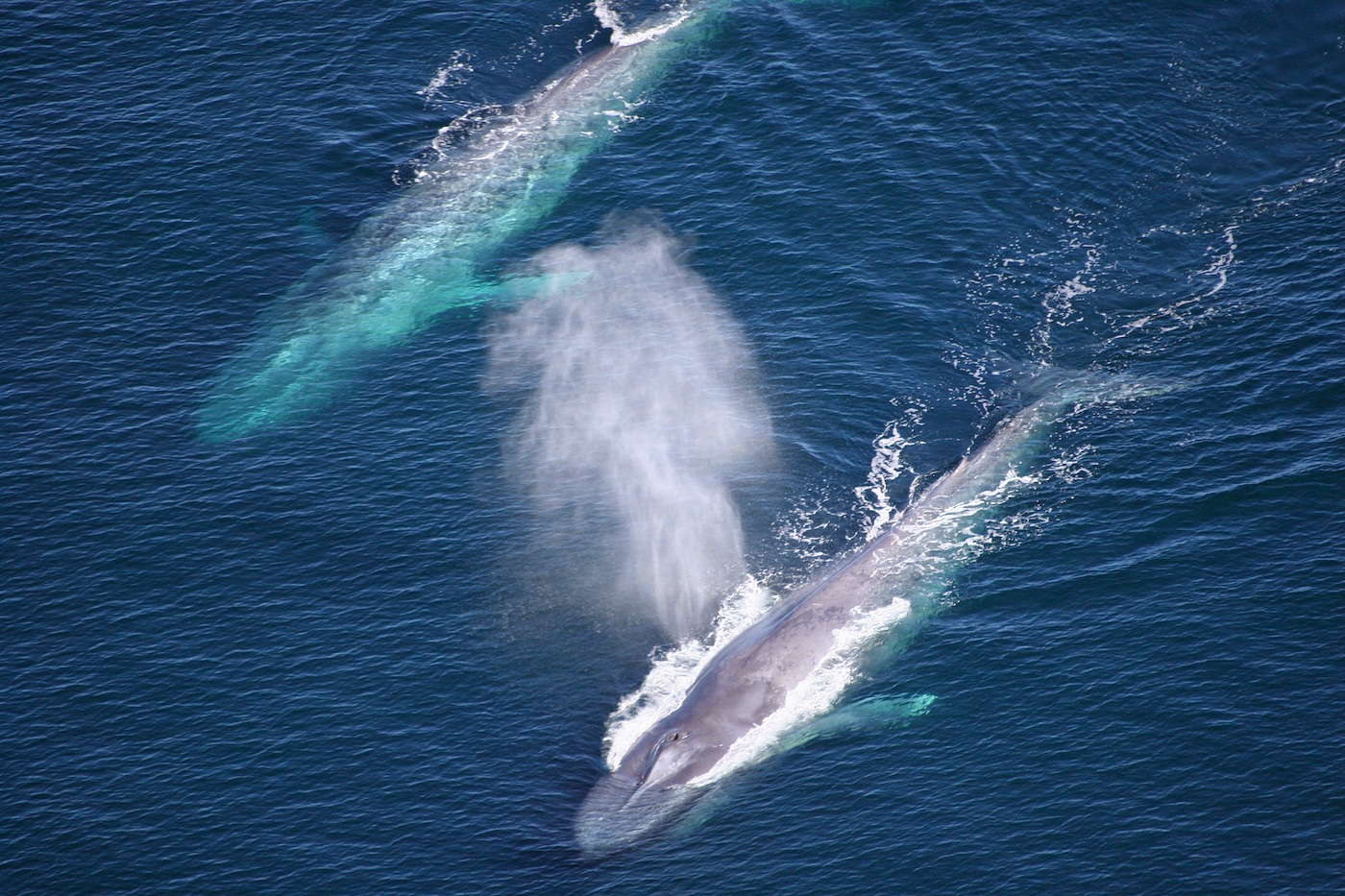
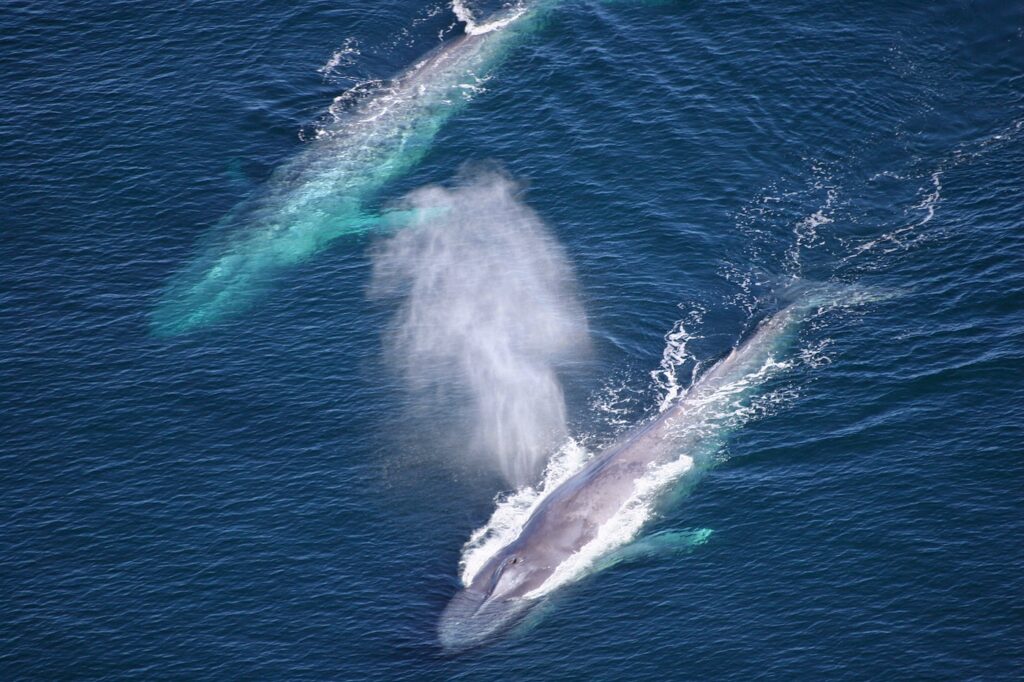
Blue whales are the largest known animals ever to have lived. © NOAA
To address this, Planet Deep, a longtime Oceanic Society partner led by cetacean experts Benjamin Kahn and Alexander Tanody, has been invited by the Office of the President of Timor-Leste to support the development of responsible whale tourism. This November, with support from Oceanic Society, Planet Deep and local and government partners will lead a three-day workshop for 50 tour operators, guides, skippers, government officials, researchers, and other stakeholders.
The workshop will cover cetacean ecology, species identification, stranding response, and best-practice Codes of Conduct for swimming with blue whales. These guidelines help minimize disturbance by establishing how boats approach whales and how many swimmers enter the water. The framework will also draw on lessons from Vava’u, Tonga, a world-class example of responsible humpback whale tourism, adapting relevant practices for Planet Deep’s programs in Indonesia and Timor-Leste.
Planet Deep and its partners have already helped develop and implement legally adopted codes across Marine Protected Areas in neighboring East Nusa Tenggara, Indonesia, where blue whales share migratory habitat with Timor-Leste.
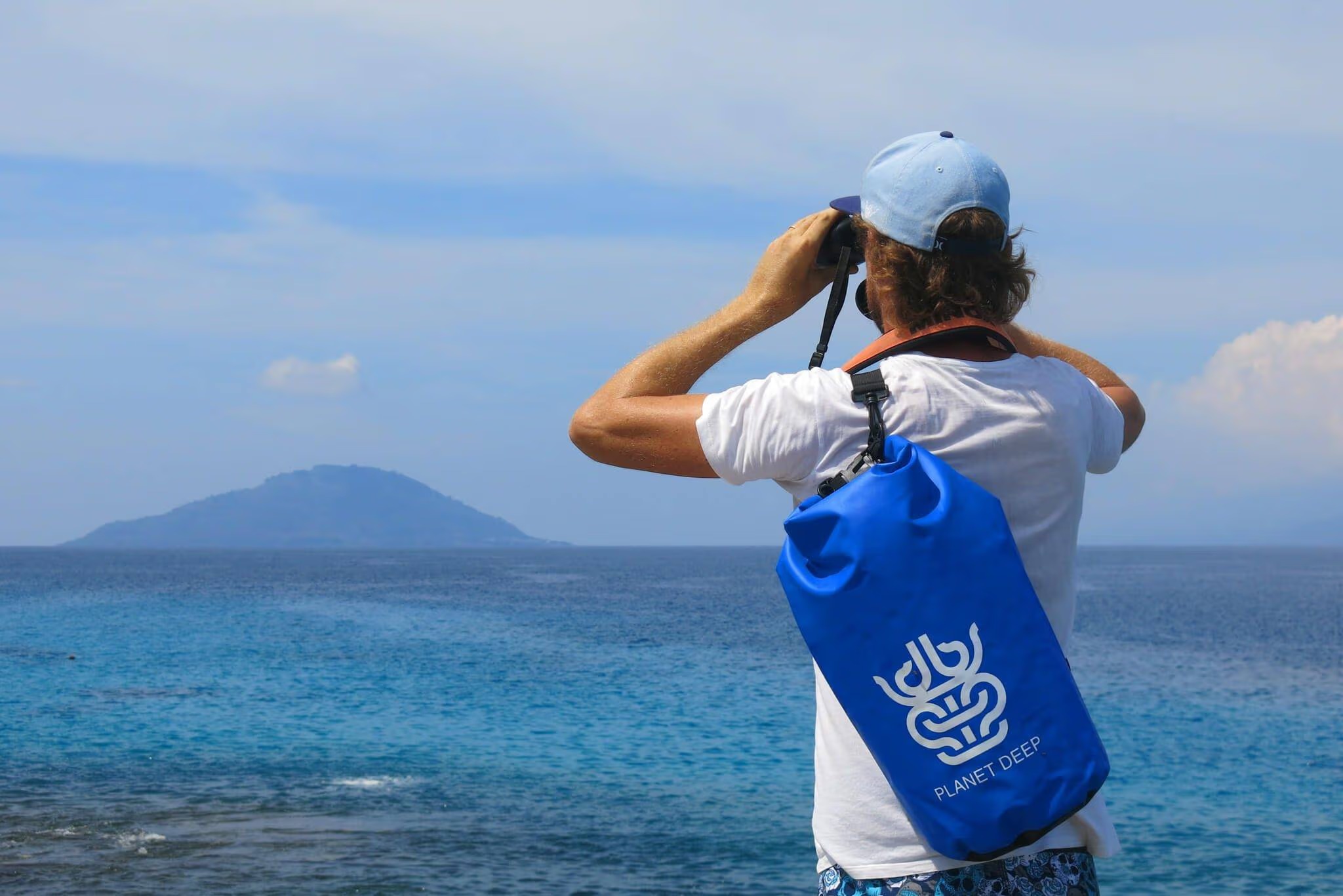
Empowering the Next Generation of Ocean Leaders in Roatán, Honduras
On Roatán, the reef is a source of food, culture, and the backbone of the island economy. It’s also under pressure from pollution, poor waste management, and climate change. Many island kids grow up right beside the reef but have few chances to study it, explore it safely, or help lead its protection. Oceanic Society is supporting two organizations committed to protecting the Bay Islands’ marine and coastal ecosystems and their work to invest in the next generation through environmental education, research, conservation, and community engagement.
Opening Doors to Girls in Marine Science – Roatán Marine Park
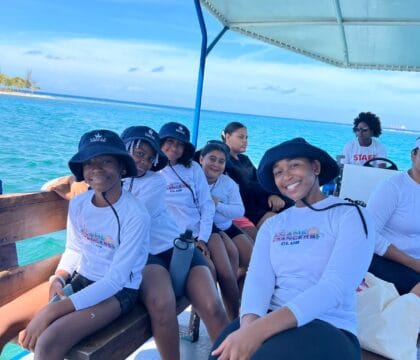
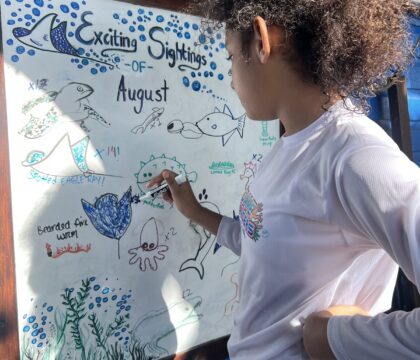
Roatán Marine Park’s Game Changers Club helps girls overcome barriers to marine science through snorkeling sessions, visits to research labs and conservation sites, and mentorship from local women in STEM. Despite living beside critical coral reef, mangrove, and seagrass ecosystems, cultural norms often reinforce the perception that the ocean is solely a space for commercial resource extraction rather than scientific inquiry, leadership, or professional careers. This grant will sponsor a cohort of 15 young women through hands-on learning and activities that build confidence, curiosity, and create opportunities to see themselves as future scientists and conservation leaders.
Building Community Ocean Leaders – Bay Islands Conservation Association
BICA’s Islanders for Change ocean conservation and leadership program helps young islanders become active stewards of the marine environment through hands-on training, marine education, diving certifications, conservation activities, community outreach, and leadership development, empowering them to understand how their daily actions affect the ocean.
The project will combine ocean literacy with practical conservation and behavior change, enabling youth to move from learning about environmental problems to becoming active community leaders who educate others and participate in conservation actions. Participants will also mentor younger children through BICA’s PATH (Promoting Arts, Teamwork, and Hope) program, serving as role models for the next wave of island youth.

Turning Coral Reef Research into Conservation Action in Cuba – EDF
Cuba is home to some of the Caribbean’s most celebrated coral reefs, but marine heatwaves, pollution, and overfishing are taking a toll. Live coral cover has fallen below 25% on nearly half of surveyed reefs. For years, inconsistent monitoring has made it difficult to compare reef health across sites and determine where conservation efforts are most urgently needed.
The Bojeo a Cuba, Spanish for a circumnavigation of the island, set out to change that. Covering nearly 2,000 nautical miles of coastline, the expedition assessed the health and resilience of Cuba’s reefs and marine life as ocean temperatures rise, resulting in the country’s first unified national baseline of reef health.
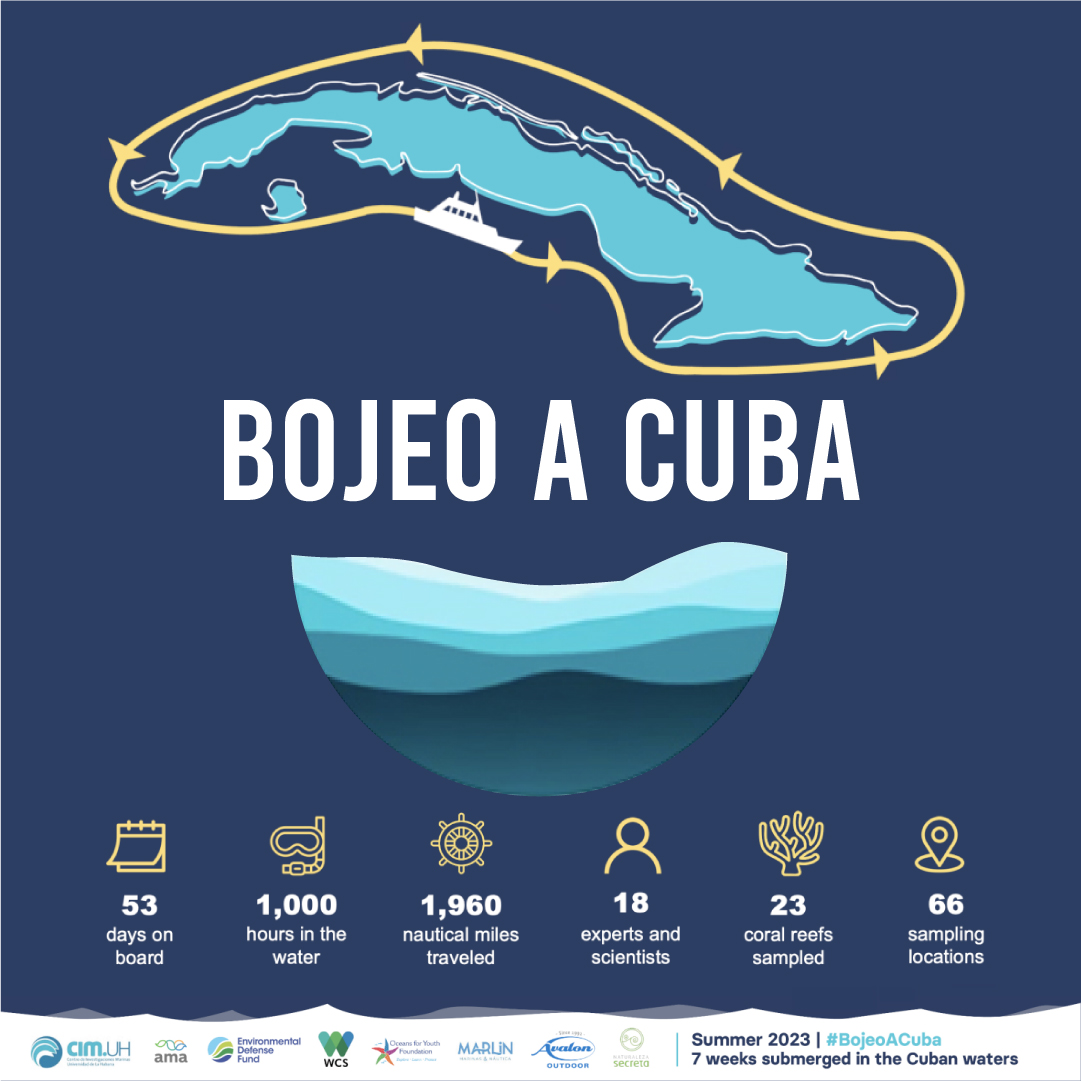
In summer 2023, the Bojeo a Cuba expedition spent 53 days circling the island. Eighteen scientists logged 1,000 hours underwater, surveying 23 coral reefs at 66 sites to build Cuba’s first national baseline of reef health. Graphic: Bojeo a Cuba partners
Through a grant to the Environmental Defense Fund (EDF), Oceanic Society supported the workshop that put those findings to work. On October 9–10 in Havana, EDF and Cuban partners gathered more than 100 scientists, managers, protected area staff, and community leaders to turn data into concrete actions for reef restoration, stronger protection on the water, sustainable fisheries, and nature-based local economies, all under Cuba’s Coral Reef Conservation Roadmap.
The project is co-led by EDF and Cuban partners Dr. Fabian Pina, Tamara Figueredo, and Dr. Patricia Gonzalez, who have led Oceanic Society’s Cuba snorkeling expeditions.
Conservation Starts with People
Oceanic Society believes that lasting conservation depends on the people and communities leading the work, and each of these projects embodies that belief. When you travel with Oceanic Society, you become part of this work.
Beyond funding nearly $20,000 in community-led conservation grants each year, the Expedition Impact program supports the removal of 200 pounds of ocean trash per traveler and the planting of three climate-resistant corals per traveler. Together, these efforts turn every expedition into an opportunity to make a tangible difference for the ocean and the people who depend on it.
When you travel with Oceanic Society, you’re not just experiencing these remarkable places. You’re helping protect them. Learn more about our Expedition Impact program and how your travels support ocean conservation.