Bunaken, a crescent moon-shaped island in a remote corner of Sulawesi, Indonesia, sits at the heart of the Coral Triangle, one of the most biodiverse marine regions on the planet. Ocean trenches drop over 1,500 feet from its coral walls into the abyss, and the intertwining currents that surround it have made the island a haven for marine life that draws snorkelers and divers from around the world.
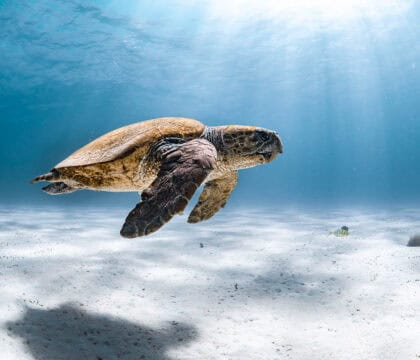
More than 1,000 fish species and 390 coral species can be found in the UNESCO World Heritage Bunaken National Park alone. Its crystal-clear waters and dramatic coral reefs shelter thriving populations of green and hawksbill sea turtles, along with countless other species.
But the same currents that make Bunaken a wildlife-rich ecosystem also carry plastic waste from neighboring cities and towns, much of which becomes trapped in the island’s bow-shaped bay at high tide.
It was here, on Bunaken’s Liang Beach, that volunteers with No Trash Triangle Initiative (NTTI) began cleaning the celebrated marine park as part of Oceanic Society’s Global Ocean Cleanup, an annual international campaign bringing together thousands of volunteers in more than 14 countries to remove plastic waste from critical ocean habitats.
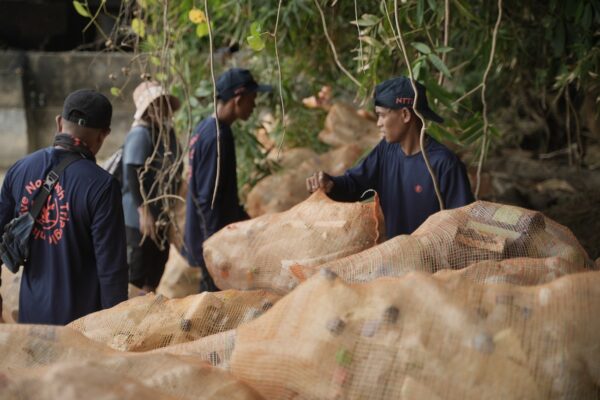
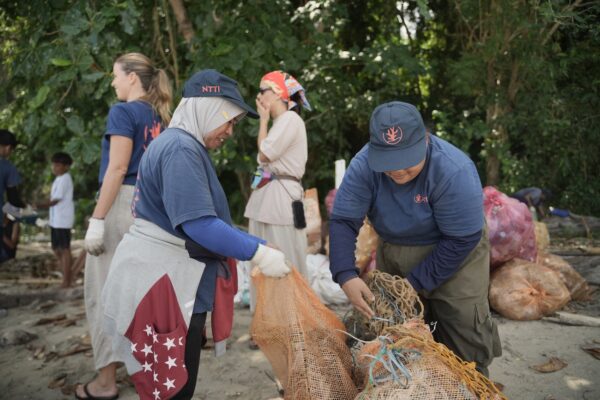
The beach was buried beneath plastic bottles, containers, bags, and other debris. Some of it had been there so long that you had to dig to uncover it. And so 73 volunteers spread across the beach and into the water, with teams on shore collecting debris by hand while scuba divers retrieved plastic from below the surface.
When they finished, more than 3.2 tons of plastic had been removed from that single stretch of beach.
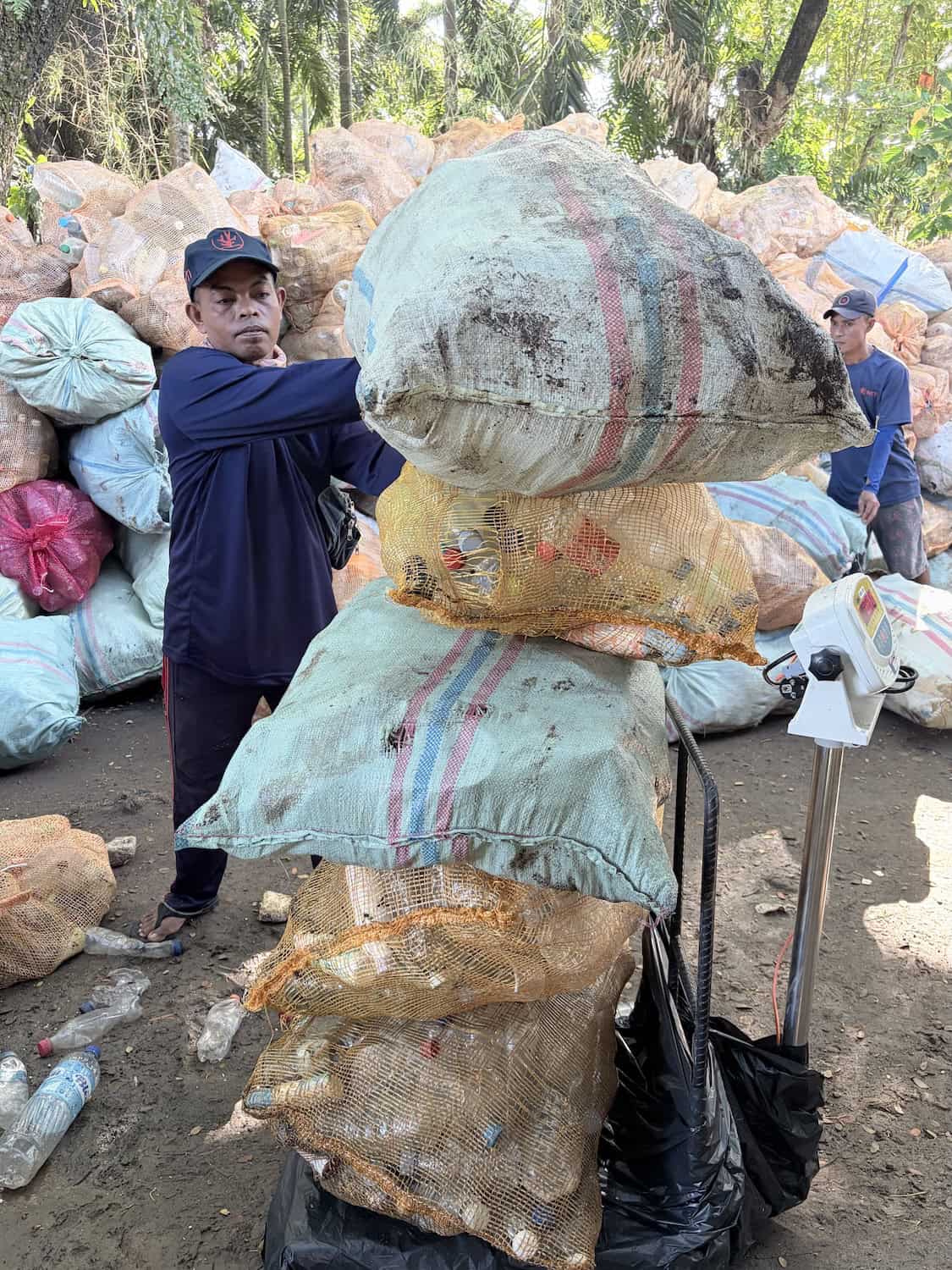
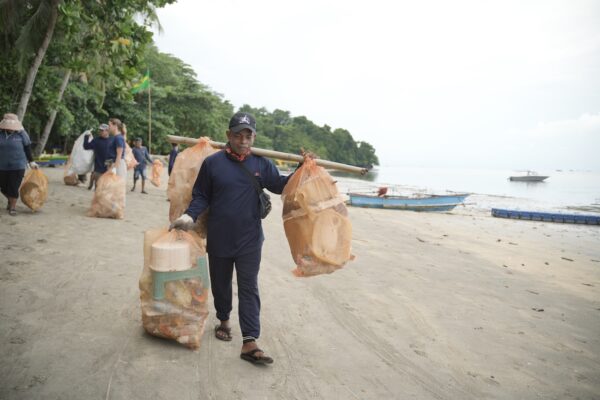
Filled bags of collected plastic waste are staged at a loading point on Bunaken Island, ready to be carried to waiting boats and transported across the water to NTTI’s sorting facility on the mainland. Photo credit: NTTI
“What we did that day was an incredible, incredible job. We just removed what was there — not even focused on the small pieces, because it was so full of the big stuff. You take it, take it, take it, take it,” says Anna Clerici, Operations Lead at NTTI, a nonprofit based in Manado, Indonesia, dedicated to eliminating plastic waste from the Coral Triangle.
What Happens to 3 Tons of Plastic?
The timing of the cleanup itself was critical. Volunteers worked during low tide, when the broad stretch of beach and accumulated debris were exposed. Once the tide returned, much of the area would become difficult or impossible to access.
“The plastic waste just stays there if you don’t have any other high tide that can bring it back,” explains Clerici. Once it reaches Bunaken, it settles along beaches, tangles in mangrove roots, and drifts toward the reefs.
By the end of the cleanup, over 584 bags were filled with waste, creating what Clerici describes as a “mountain of plastic.”
View this post on Instagram
Removing the debris was only the first challenge. On a remote island like Bunaken, three tons of garbage cannot simply be loaded into a truck and hauled away. Moving waste off the island requires coordination around the tides, boat transportation, and a receiving system ready on the mainland.
Clerici and her team loaded the bags onto three large boats to transport them to NTTI’s sorting facility in Manado. Oceanic Society’s Global Ocean Cleanup grant helped cover a portion of the transportation and logistics costs, alongside contributions from volunteers and other local supporters.
At NTTI’s sorting facility, the waste has to be unloaded, separated, and sorted by hand. Workers pull out recyclable plastics and send them into the recycling system, while everything else requires another solution.
That means the work of a cleanup continues long after the last bag leaves the beach. Waste has to be collected from remote communities, transported across water and roads, sorted, processed, and given somewhere to go. Without that infrastructure, even a successful cleanup can only temporarily remove the problem.
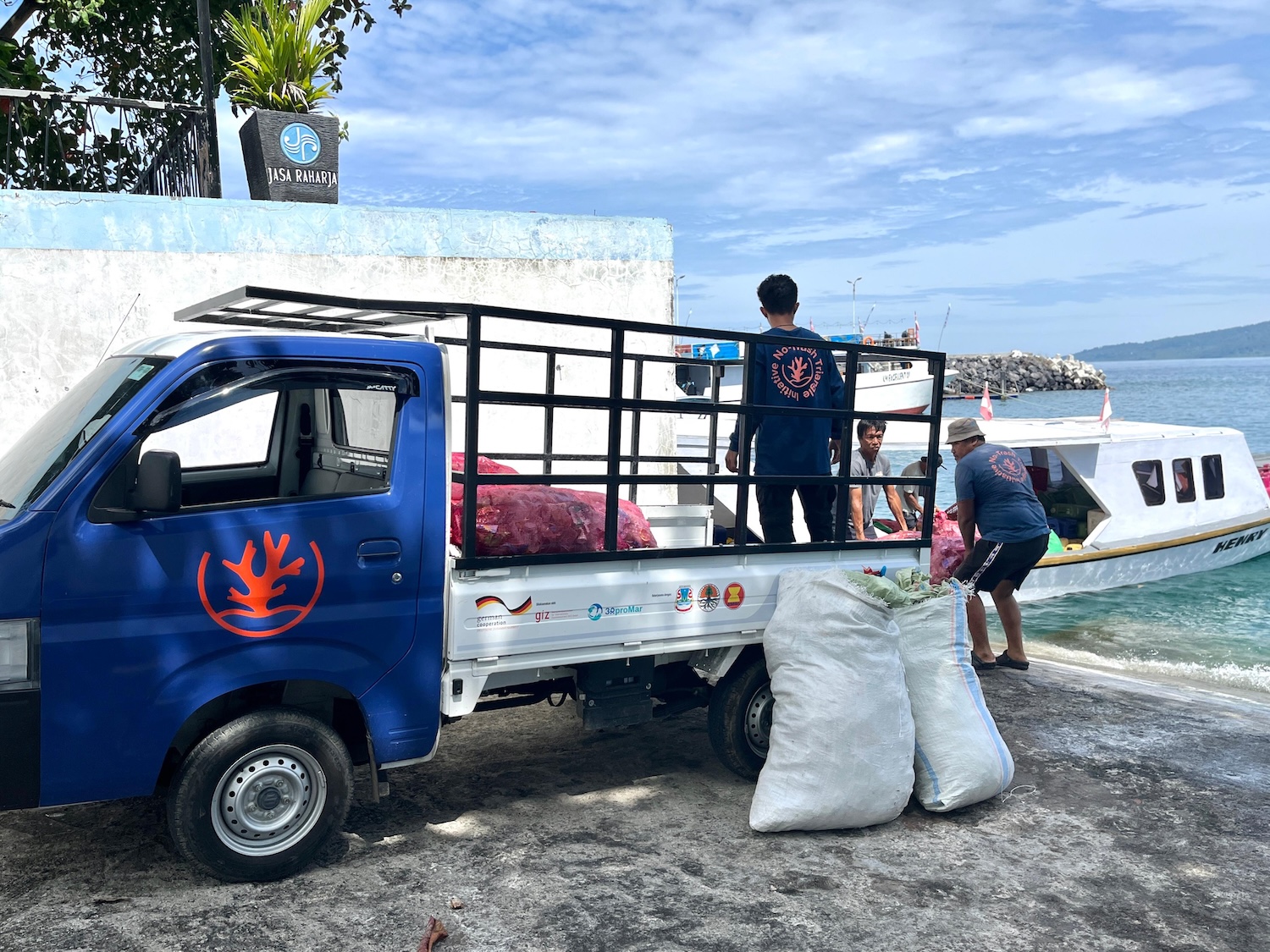
Bags of collected plastic waste are transferred from a boat to an NTTI pickup truck at the Manado waterfront, completing the final leg of a journey that began on a remote island beach. Photo credit: NTTI
Clerici knows that cycle well. “It’s a beautiful story to tell, but the reality is that sometimes it can be really frustrating because you see that, you know, for example, you do a beach cleanup, and then the day after it’s the same again and again.” Her frustration is part of what pushed NTTI toward building systems that address waste beyond the shoreline.
A Community Initiative
That infrastructure did not exist when Clerici first encountered the problem.
In 2018, she was managing a dive resort on Bangka Island in North Sulawesi, Indonesia, where she saw firsthand how plastic pollution threatened the marine ecosystems that attracted visitors and the local communities whose livelihoods depended on them.
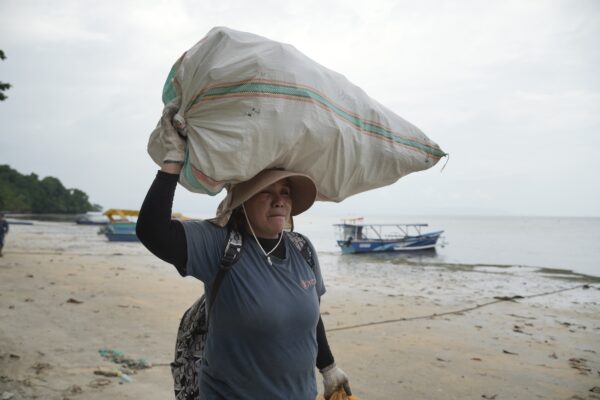
At the time, there were few good options for dealing with the waste. Resort staff collected plastic from beaches and house reefs, but transporting it to the mainland was expensive. Waste might be stockpiled until there was enough to justify hiring boats and trucks, with no guarantee that it would actually make it to a landfill.
Sometimes, there was an even more immediate solution.
“At night or when the guests were diving, we used to burn the plastic waste,” Clerici recalls.
The practice was not sustainable, but there were few alternatives. For Clerici, the problem called for a practical solution.
“For me, it was like a natural process: OK, there is a problem, we must find a solution.”
The problem was bigger than any one resort. Packaging and other unavoidable waste continued to accumulate, while resorts across the region faced the same challenge. Eventually, Clerici began connecting them, forming a coalition that could work together on waste collection and disposal.
Around the same time, German scientists Dr. Miriam Weber and Christian Lott partnered with researchers at Sam Ratulangi University in Manado to study the effects of biodegradable plastic on local ecosystems. Their research helped inspire the creation of NTTI, with a mission to educate communities about plastic pollution and develop better ways to manage waste.
Clerici ultimately joined the organization, bringing her experience managing resort operations and her connections with communities across the region. She began organizing cleanups and building partnerships with resorts, schools, and local communities.
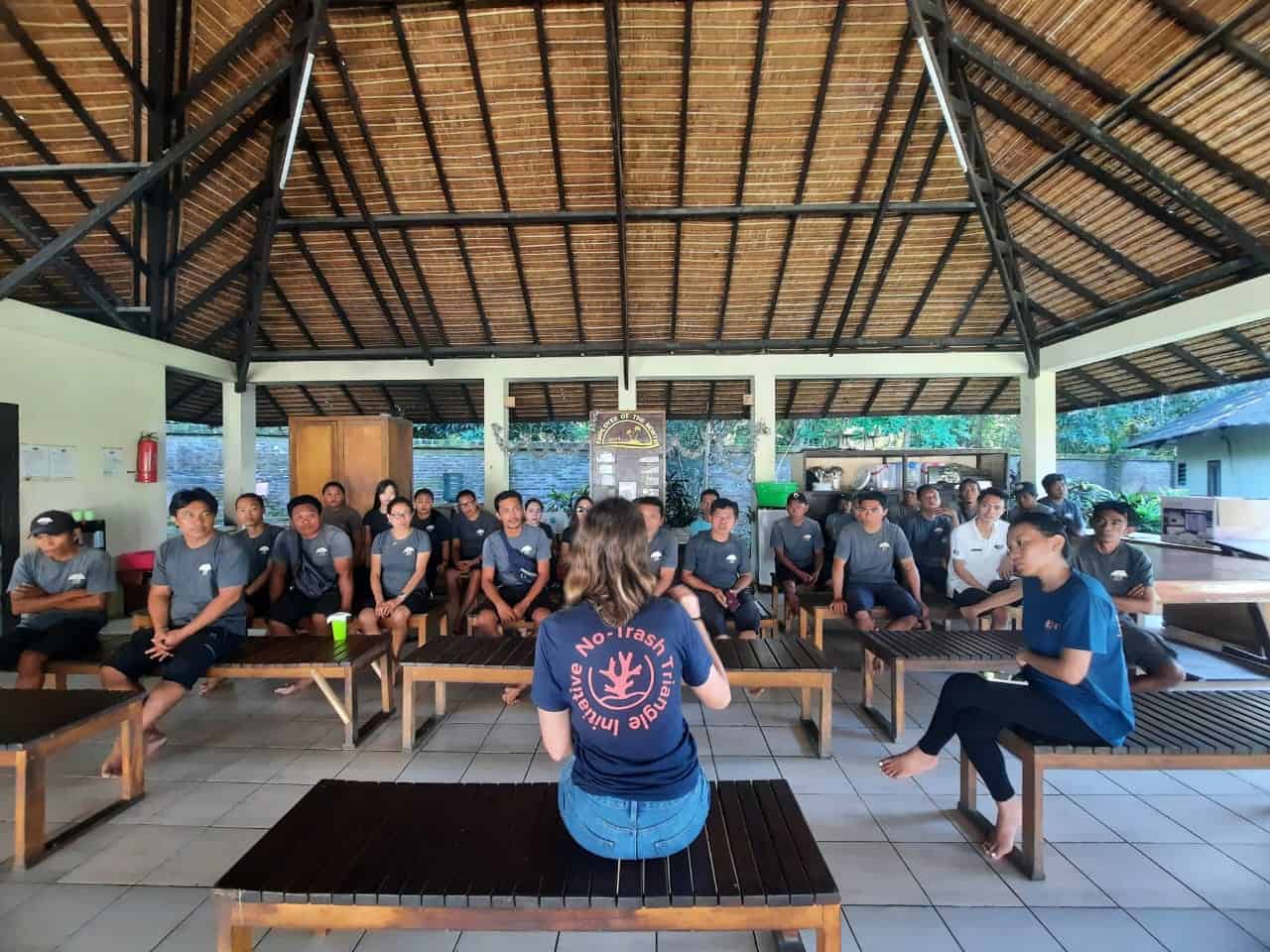
Anna Clerici leads a waste sorting training session for resort staff in North Sulawesi — part of NTTI’s growing network of partnerships that equip hotels and dive resorts to sort waste at the source before collection. Photo credit: NTTI
“I found myself completely involved and completely in love with this [work],” she says. In 2022, she left the resort industry to work with NTTI full-time.
Over the years, Clerici and the NTTI team have built a growing network of resorts and communities across the region. Resort staff are trained to collect and sort waste, which NTTI then picks up and transports to its facilities in Manado and on Bangka Island for processing. The organization also works with schools to teach children how to manage waste and understand the risks it poses to human health and the environment.
Together, these partnerships give remote communities a way to move waste out of the places where it would otherwise accumulate, while creating a consistent system for collecting, sorting, recycling, and repurposing what they can.
What Happens to the Waste?
Waste is transported to NTTI’s facility in Manado, where it is sorted and processed before being sold to recycling companies or repurposed.
But sorting through the waste reveals another challenge: much of what is collected cannot be recycled. According to Clerici, only about 30 percent of the waste NTTI collects can be recycled.
Unlike many industrial waste management facilities, NTTI’s sorting station does not rely on machinery. Instead, local workers sort by hand, laying collected waste onto a net, allowing rubble, sand, and other debris to fall through before manually sorting the remaining material into piles.
“I consider the sorting station where the magic happens,” Clerici says. This is where the waste is separated and sent along for recycling, repurposing, or other forms of processing.
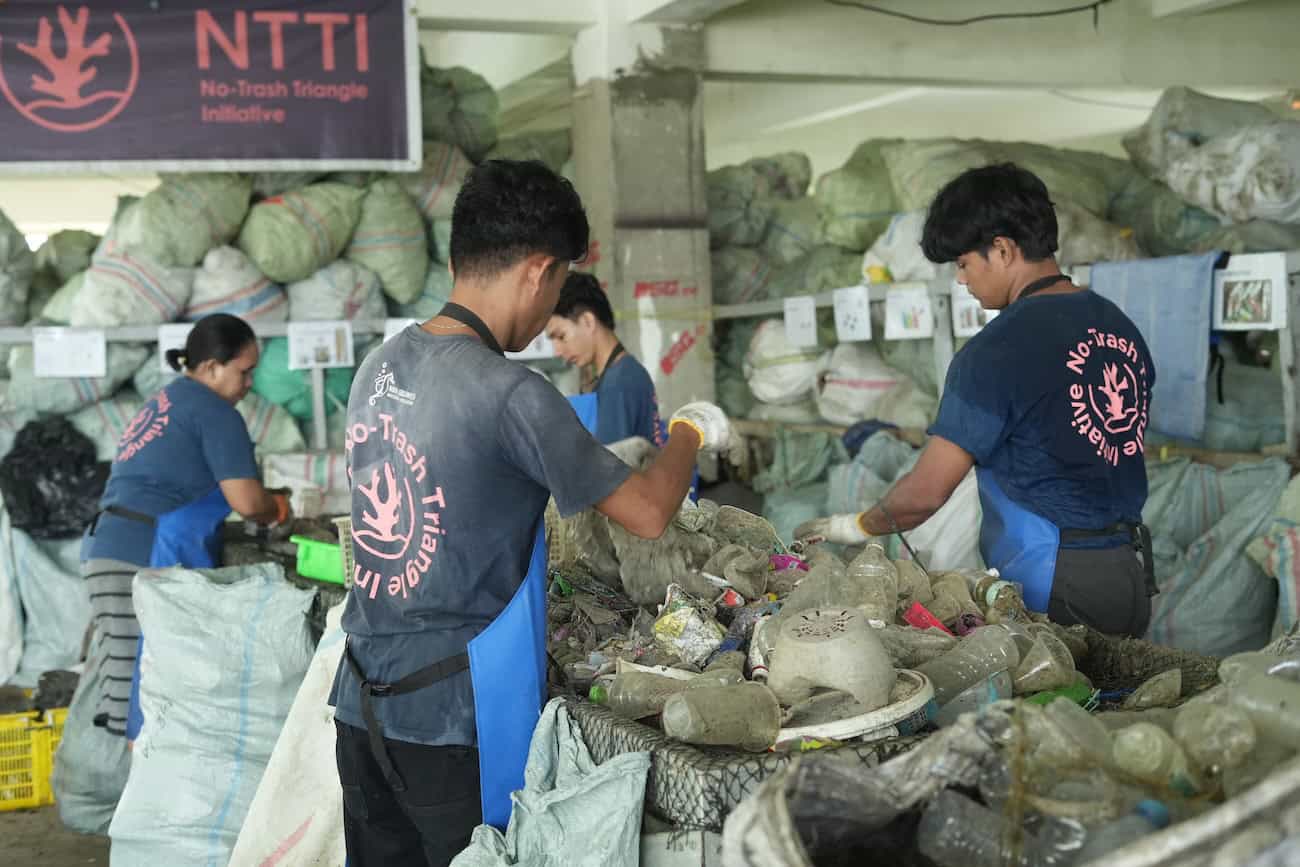
No Trash Triangle Initiative staff sort through collected plastic waste by hand at the organization’s Ocean Plastic Sorting Station in Manado, Indonesia — separating materials by polymer type, color, and recyclability to ensure nothing goes to landfill. Photo credit: NTTI
The work can also reveal just how difficult recycling can be. Recycling companies may pay little for certain types of plastic, particularly material that is not transparent, because colors can reduce its value for applications such as new water bottles.
“It really makes you realize what the plastic companies and what the government could do differently,” she says, pointing to the ways packaging is designed in ways that can create unnecessary waste and make materials difficult or impossible to sell to recycling companies.
For recyclable waste, NTTI partners with CleanHub, which tracks material through the recycling process and provides certifications documenting its processing.
“Landfilling is not a solution, especially here in Manado,” Clerici says. “Every time we have rain, there is a high risk, high potential, of plastic waste going back into the river, into the waterways, and then, of course, going back to the sea.”
That leaves the majority of collected waste requiring another solution. Materials such as styrofoam, fishing nets, plastic bags, film plastics, and hygiene products cannot be recycled through conventional systems.
NTTI sends some of this material to Indo-Cement, a local cement factory where some waste is incorporated into cement and other material is incinerated to provide energy, replacing the use of coal.
Clerici acknowledges that incineration is not a perfect solution. But in a place where waste can otherwise end up in a landfill and potentially wash back into waterways, NTTI is working with the options currently available.
“Maybe it’s not the ideal world, or we would not have this problem,” she says. “We try to do the best thing we can do here.”
Ultimately, Clerici says, the goal is not simply to become better at managing plastic waste. It is to reduce the amount of plastic being produced and discarded in the first place.
Stopping Plastic Before It Reaches the Ocean
NTTI has also learned that the most effective place to collect plastic is sometimes before it reaches the beach at all.
In Indonesia, rivers are estimated to carry and discharge 83 percent of annual plastic debris into the sea, making them critical choke points for preventing plastic from reaching coastal ecosystems.
In 2024, NTTI installed a waste collection barrier across the Manado River. Stretching more than 650 feet across the river, the barrier collects plastic waste and other debris while allowing marine life to pass through unharmed.
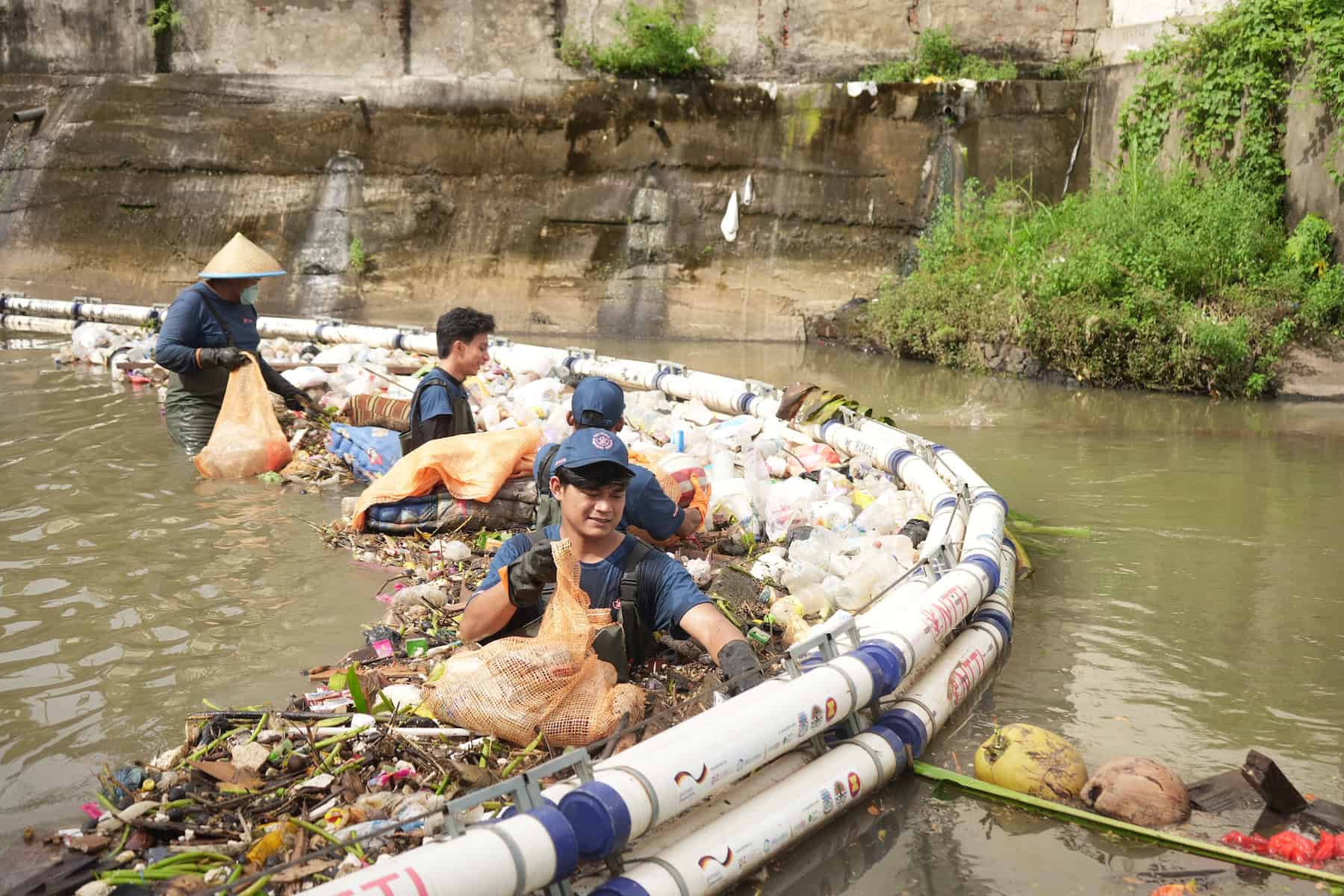
NTTI staff wade into the Manado river to collect plastic waste intercepted by the organization’s 650-foot river barrier — a system that captured over 100 tons of debris in its first year alone. Photo credit: NTTI
The amount of waste it collected in its first year was staggering: more than 100 tons.
The project nearly doubled the amount of plastic NTTI collected in a single year while dramatically increasing the team’s efficiency compared with roaming coastlines in search of waste.
“We put a river barrier and, bam! You have two tons in a week,” Clerici says.
The approach reflects a larger shift in NTTI’s work. Instead of only responding to plastic once it has reached beaches and reefs, the organization is building infrastructure that can intercept it earlier.
Changing Behavior
For NTTI, building proper waste-management infrastructure is only part of the solution. In Indonesia, nearly one third of the 4.9 million tons of plastic waste is mismanaged each year, meaning it is not properly collected, contained, or disposed of and can ultimately make its way into waterways and the ocean. Addressing that problem requires infrastructure, but also changes in how people think about, use, and handle waste.
Clerici and her team are working with schools and communities to help make those changes.
In 2019, the organization started a “School on the Beach” program, bringing schoolchildren to the coast on Saturdays to learn about mangroves, plant trees, clean plastic waste, and snorkel through coral reefs while learning about local wildlife.
The program was paused during COVID, but when Clerici and her team returned to the neighborhood, they found that the students had continued the work themselves.
The principal of the school, inspired by the students’ motivation, created a waste-plastic sorting station in the school garden.
“The principal decided to replicate that because the kids were so happy, you know, to go and clean the beach and clean the village and clean the garden,” Clerici says.
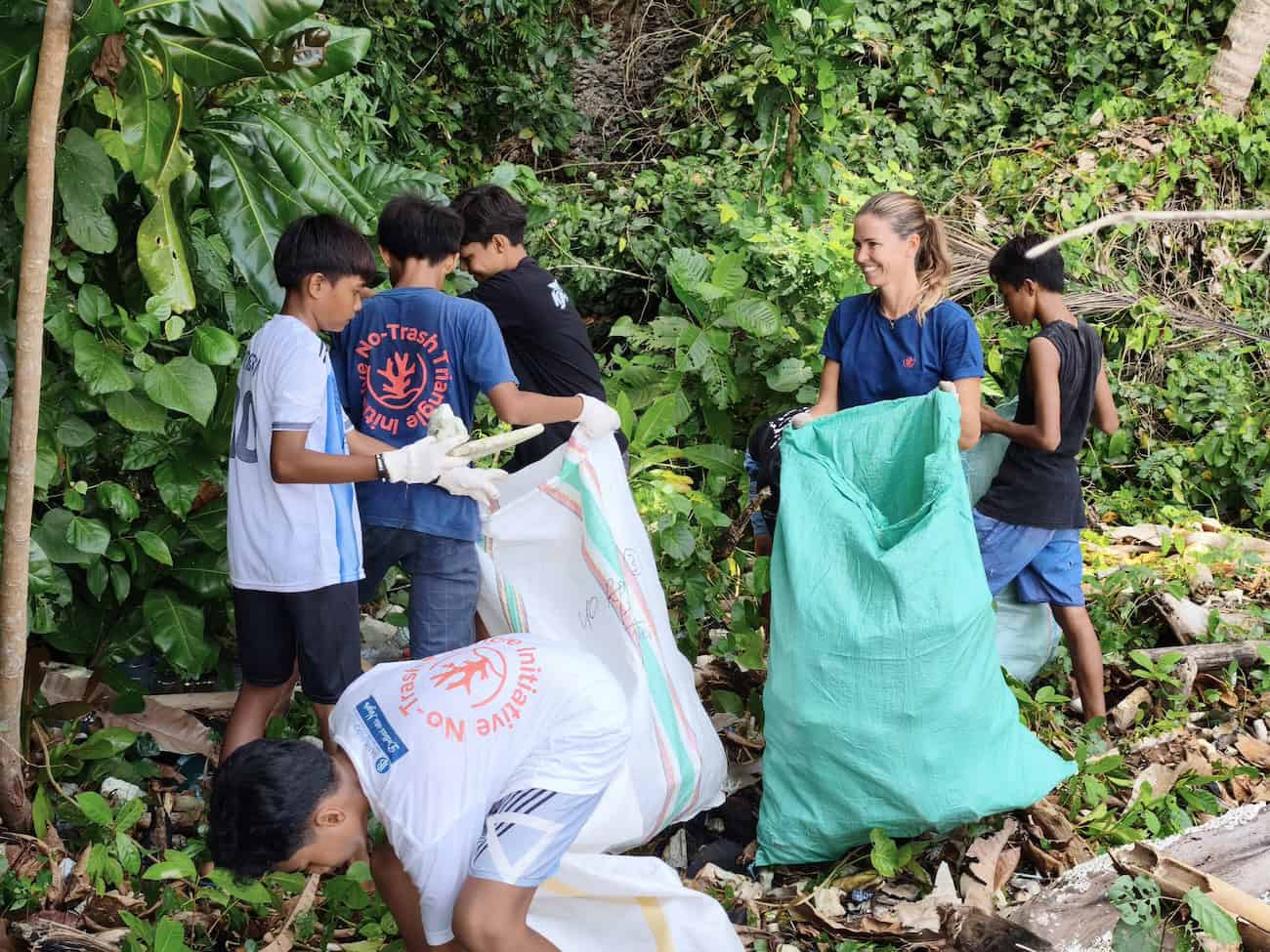
Local youth and an NTTI volunteer collect plastic waste together along the forested edge of Liange Beach. Photo credit: NTTI
She still sees students walking around with tote bags, collecting waste in their free time.
“You can really see that there is a little bit of change.”
That change may be harder to measure than the 3.2 tons removed from Liang Beach or the more than 100 tons intercepted by a river barrier. But it may ultimately be just as important.
Worldwide efforts like Oceanic Society’s Global Ocean Cleanup show what can happen when communities coordinate across borders to tackle plastic pollution together. “It felt good because you feel that you’re not alone,” Clerici says.
But lasting change also depends on what happens closer to home. It takes infrastructure to collect and manage waste, government action to address the systems that allow plastic to accumulate, and ways to intercept waste before it reaches the ocean. It also takes communities equipped to change how waste is handled in the first place.