Sea turtles have been navigating a changing planet for more than 100 million years. They have outlasted ice ages, shifting continents, and rising and falling seas. But the pace and scale of climate change today is one thing turtles have never experienced before – and concerned researchers are watching its effects unfold in real time.
Climate change is now recognized as one of the most significant threats sea turtles face. Its impacts are not confined to one life stage or one part of the ocean; they touch every stage of a turtle’s life, from egg to adulthood. And most critically, these climate-driven pressures are compounding other existing threats: fisheries bycatch, coastal development, direct take, and pollution. The combined effect may push sea turtle populations toward conditions they cannot adapt to quickly enough.
Here is what scientists are observing and what it means for conservation going forward.
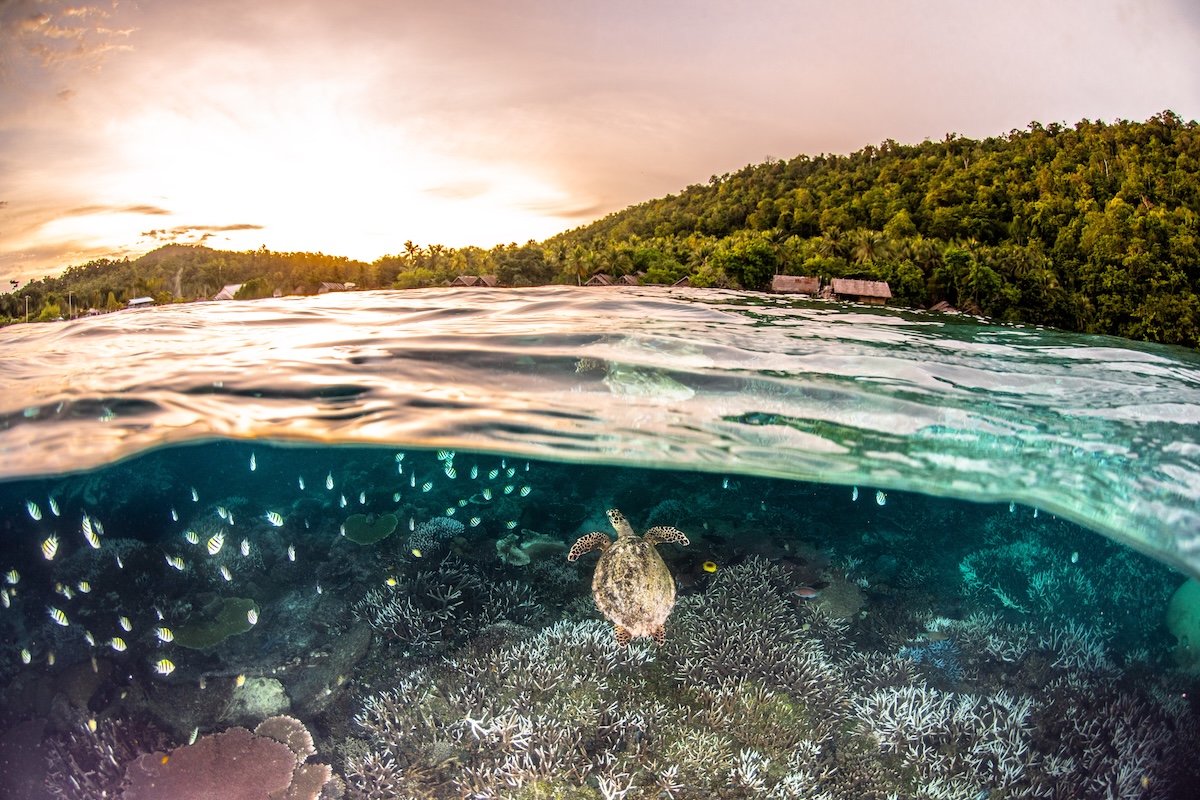
A sea turtle passes over a reef showing signs of coral bleaching, a visible reminder of the mounting impacts of climate change on marine ecosystems. © Dani Escayola / Ocean Image Bank
Rising Seas Shrink Sea Turtle Nesting Beaches
Nesting beaches are the foundation of sea turtle reproduction, and they are eroding. Rising sea levels are accelerating coastal erosion in many parts of the world, particularly on low-lying barrier islands and atolls where sandy beaches have little room to retreat.
St. Catherines Island, Georgia, offers one of the most closely documented examples. Scientists there have been tracking shoreline changes since 1998 and have found that the island is losing beach at an average rate of three meters per year. Within a decade, the portion of beach suitable for nesting dropped from 25 percent to just 12 percent, and what was once a continuous nesting beach has fragmented into eight discrete stretches of sand.
In response, conservation teams have adopted a proactive nest relocation strategy, moving at-risk nests before tides or storms can wash them out. Storm inundation alone has been shown to reduce hatching success by as much as 77 percent, making intervention a necessity.
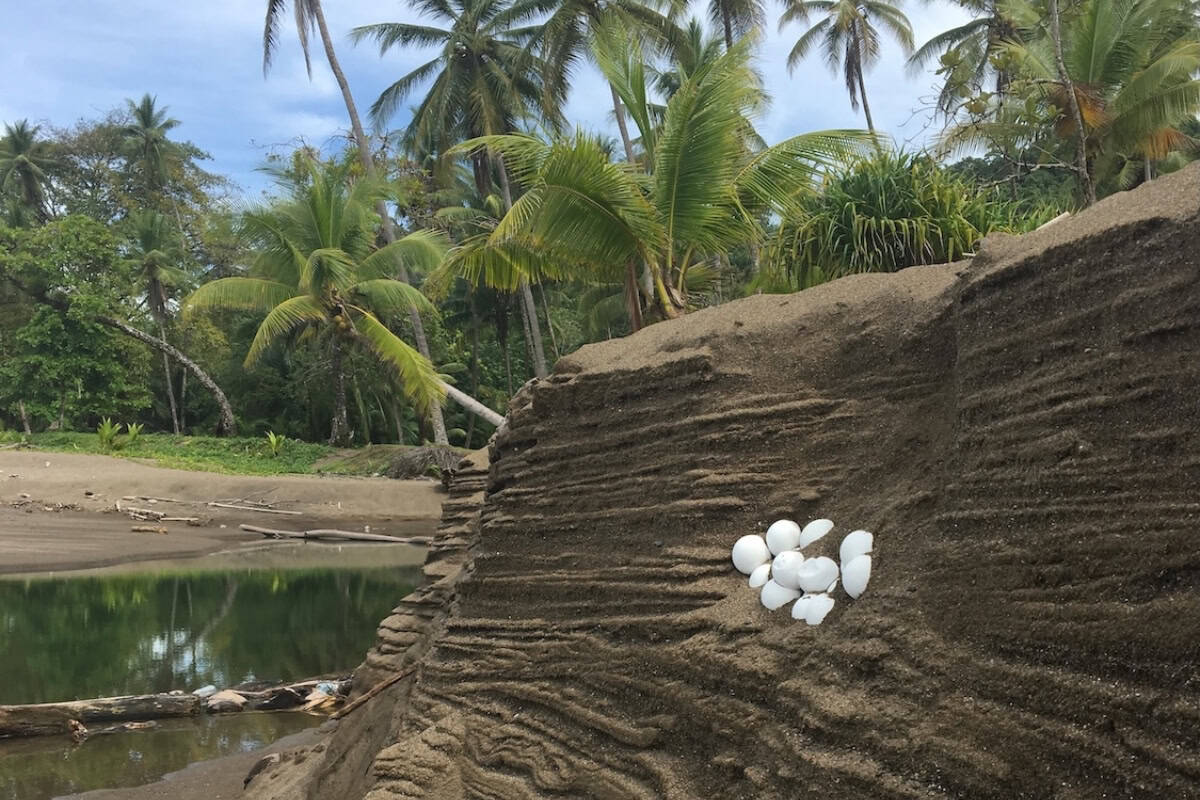
A clutch of sea turtle eggs exposed after beach erosion washed away the surrounding sand, leaving the nest vulnerable. © Asheleigh Bandimere
Beachfront development and coastal armoring – seawalls, rock revetments, geotextile tubes – exacerbate the issue. Seawalls built to protect property deflect wave energy back onto the beach, accelerating erosion of the sand in front of them. In Florida, where nearly one-half of beaches are considered critically eroded and roughly 25 percent of the shoreline is already armored, seawalls deter females from nesting and increase nest inundation risk. As sea level rises and armoring continues, the available nesting space gets compressed from both sides: water on one and concrete on the other.
Warmer Nest Temperatures Skew Sea Turtle Sex Ratios and Impact Hatchling Survival
One of the most consequential – and least visible – ways that warming temperatures affect sea turtles occurs underground, in the incubating nest. The sex of a sea turtle hatchling is determined by the temperature of the sand surrounding the nest during incubation. Cooler nests produce more males; warmer nests produce more females. As average sand temperatures rise with the climate, nest conditions tip increasingly toward female-producing warmth, and the male-to-female ratio in a population can shift significantly.
Raine Island, the world’s largest green turtle rookery, is where the implications are most starkly visible. Located on the outer edge of Australia’s northern Great Barrier Reef, Raine Island is a small coral cay that hosts what is arguably the largest concentration of nesting green turtles on Earth. Up to 20,000 females have been recorded coming ashore in a single night.
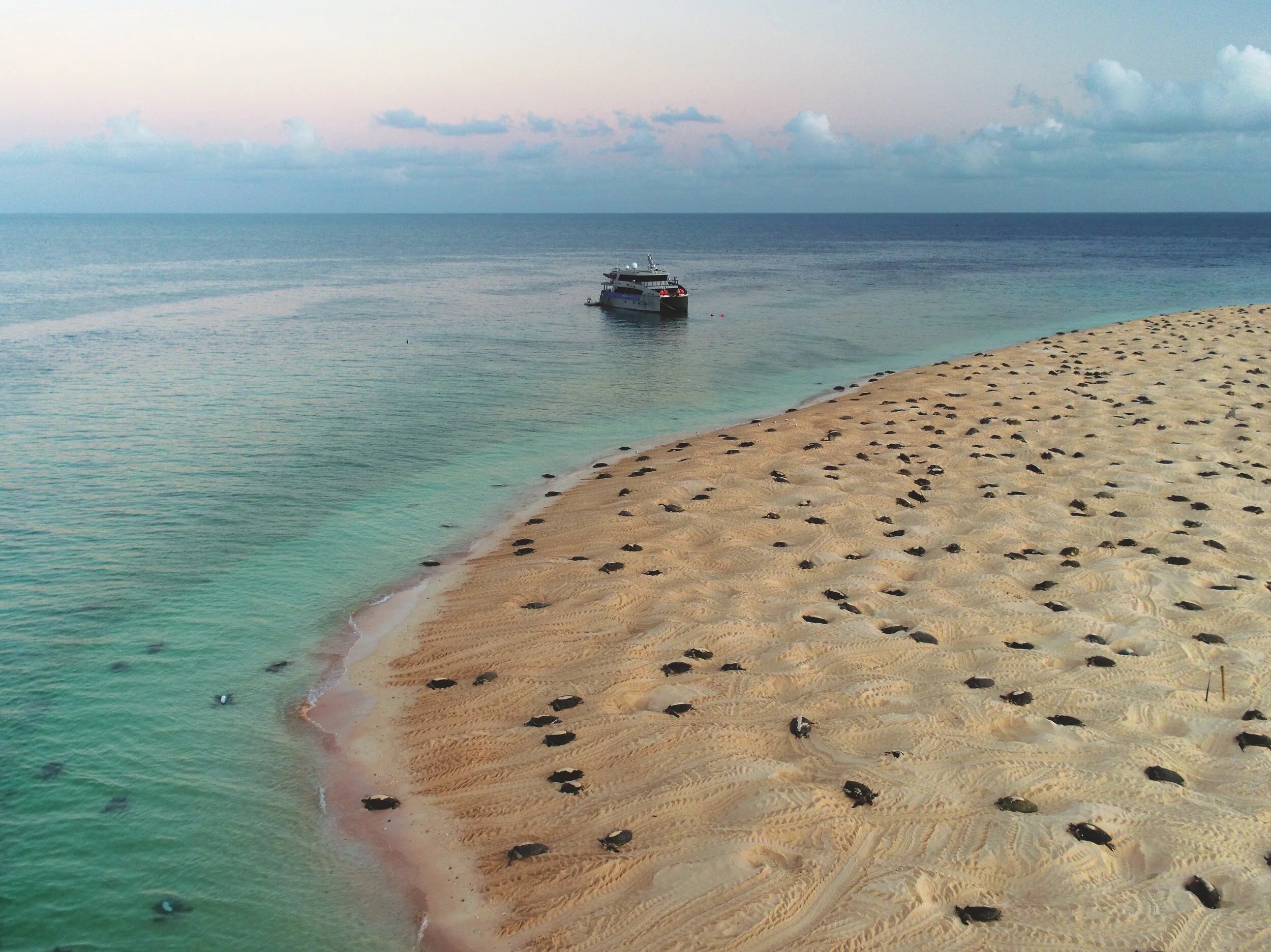
Thousands of nesting green sea turtles crowd the beaches of Raine Island, the world’s largest green turtle rookery, during peak nesting season. © Queensland Government
Recent research estimates that more than 90 percent of all hatchlings emerging on Raine Island are female. Because Raine Island produces such a large portion of this population’s hatchlings, it is believed this stock of green turtles may become unsustainably feminized.
The impacts are imminent. Nests at Raine Island and nearby Moulter Cay have been incubated consistently above the pivotal temperature since the early 1990s. We are now seeing the hatchlings produced during an era when virtually no males were produced approaching reproductive age. The full demographic consequences of this skew will soon become evident, and the trajectory is already set.
Raine Island is an extreme case, but it is not an isolated one. Similar sex-ratio skews have been documented in loggerhead populations in Florida and West Africa, and in green turtle populations in other warming regions. Conservationists around the globe are mobilizing interventions to mitigate these impacts: gaining back nesting habitat through reprofiling, relocating nests to safe parts of the beach, cooling nests under their care, and protecting vulnerable nesting turtles.
Sea Turtle Ranges are Shifting to Accommodate New Climate Patterns
One of the clearest signals of climate’s influence on sea turtles is the shift in where they are showing up. Nesting range shifts are being observed from Peru to Hawaii to the waters off Cape Cod.
Peru, historically considered too cold for sea turtle nesting, recorded its first documented nest in 1979, then essentially nothing for the next 30 years. Starting around 2007, documented nesting events began to climb, and by 2014 researchers had recorded roughly 70 – predominantly olive ridley – nests in the country’s northernmost regions. Warming land and sea temperatures may be making these habitats newly viable for nesting. The expansion brings an immediate management problem, though: the coastlines where turtles are now appearing have developed rapidly, with beachfront homes and hotels built over or in place of dunes. The conservation infrastructure needed to protect this emerging nesting zone, i.e., awareness, regulation, and management capacity, does not yet exist.
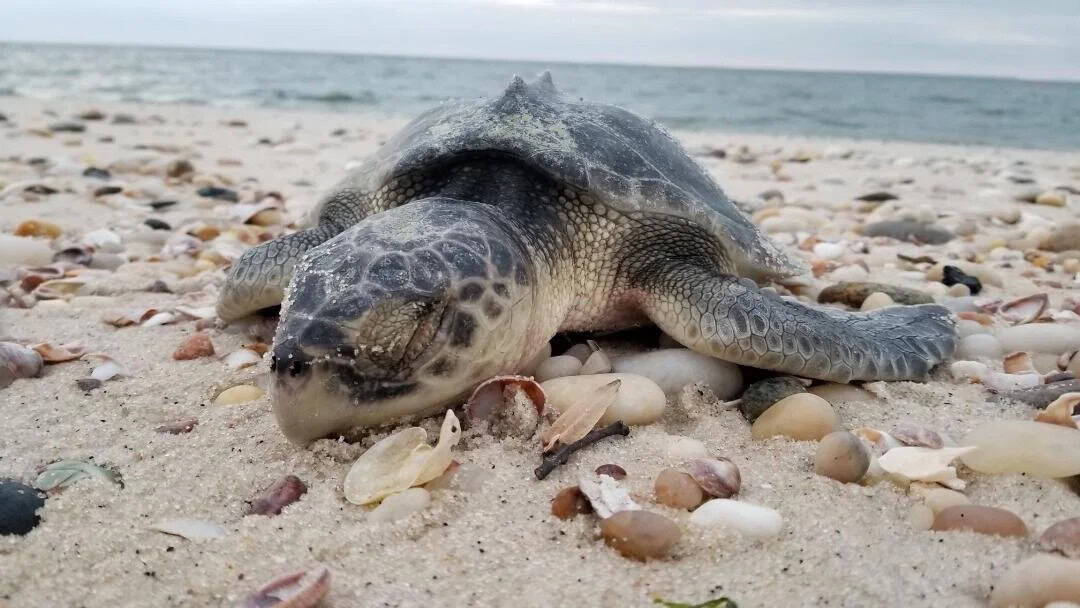
A critically endangered Kemp’s ridley sea turtle affected by cold stunning, a condition that occurs when water temperatures drop too low for normal movement and survival. © Maxine Montello
Cape Cod, Massachusetts, illustrates a different climate impact. Each fall, hundreds of sea turtles, mostly critically endangered Kemp’s ridleys, enter Cape Cod Bay to forage, then become trapped by the hook-shaped landmass as they try to migrate south. When water temperatures drop below 10°C (50°F), turtles become cold-stunned and wash ashore. In 2014, more than 1,400 turtles became stranded in the bay, exceeding all previous records. An annual rescue effort coordinated between the Wellfleet Bay Wildlife Sanctuary and the New England Aquarium has rehabilitated and released more than 1,400 turtles over 20 years. The increasing scale of strandings may partly reflect recovery of the Kemp’s ridley population, but it also shows how climate-altered habitat patterns create new survival risks.
Climate Change Compounds Threats to Sea Turtles
Each of these case studies reflects a different dimension of the same underlying problem. Warming temperatures, rising seas, and more frequent and intense storms are reshaping the coastlines and ocean systems that sea turtles depend on. But the threat of climate change cannot be separated from the other pressures sea turtles face. Populations already reduced by centuries of harvest, fisheries bycatch, and habitat loss are less resilient to environmental change. A species or population with a robust and genetically diverse population can better adapt to shifting conditions; one that has been whittled down to a fraction of its historical size has fewer options.
What this means practically for conservation is that protecting sea turtles from climate change also requires reducing bycatch, managing coastal development, and maintaining both nesting and foraging habitats. A strong, robust population has a higher likelihood of weathering the impacts of climate change.
Thanks to the hundreds of conservationists, researchers, and communities across the globe, we are understanding the multifaceted threat to sea turtles and strategies to help them survive the next 100 million years.
Supporting Sea Turtle Conservation
Protecting sea turtles requires action on multiple fronts, from advancing scientific research and protecting nesting beaches to reducing marine debris and supporting local conservation leaders. This work is made possible in large part through Oceanic Society’s six-year partnership with Seiko Prospex.
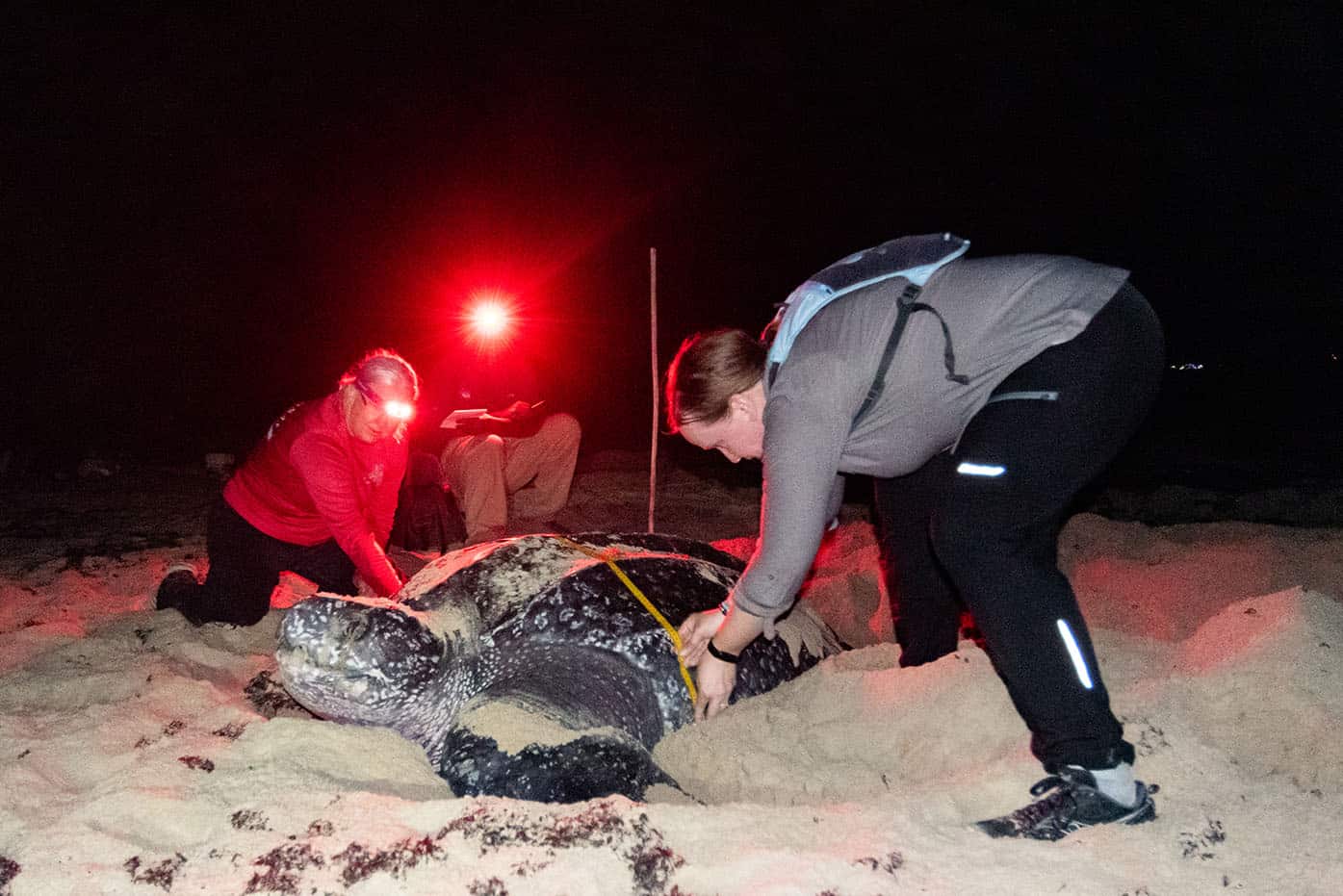
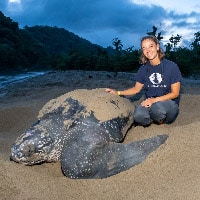
Volunteers work together to collect data on a nesting leatherback. © Ashleigh Bandimere
Advancing Global Sea Turtle Research
Understanding how climate change affects sea turtle populations requires data from nesting beaches across the globe, since shifting temperatures and sea levels play out differently from one region to the next.
Oceanic Society’s State of the World’s Sea Turtles (SWOT) program brings that data together, giving researchers and conservation practitioners a shared, global picture of how these threats are unfolding. Seiko’s support has helped make the annual SWOT Report possible, most recently volume XXI – an invaluable resource for scientists, policymakers, and conservation practitioners working to protect these ancient mariners.
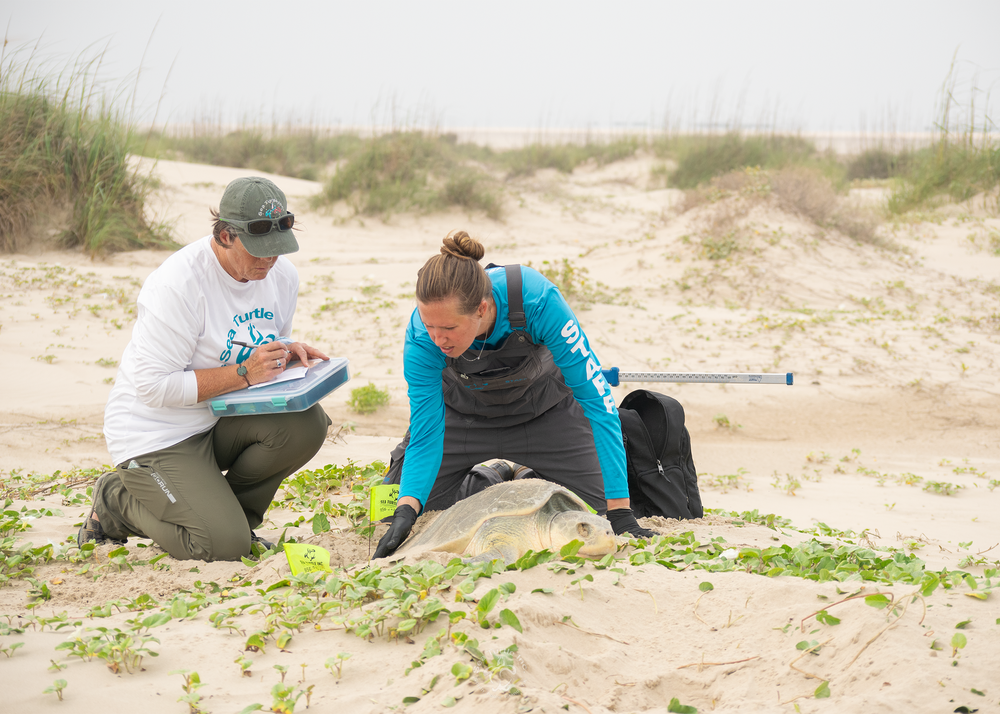
Sea Turtle, Inc. received a 2024 SWOT Conservation Fund grant to improve the resilience of its hatchery, helping protect vulnerable Kemp’s ridley eggs and hatchlings from increasingly severe coastal storms. Photo courtesy of Sea Turtle, Inc.
Funding Conservation Projects Worldwide
Sea turtles face different threats depending on where they nest and forage, and local conservationists are often best positioned to recognize and respond to those emerging risks in real time. Small, targeted grants can give these on-the-ground teams the resources they need to act quickly, whether that means protecting a nesting beach or responding to a new threat. Seiko’s partnership has supported the efforts behind more than 60 small grants to global sea turtle conservation initiatives Oceanic Society has awarded over the life of the partnership.
Reducing Plastic Pollution
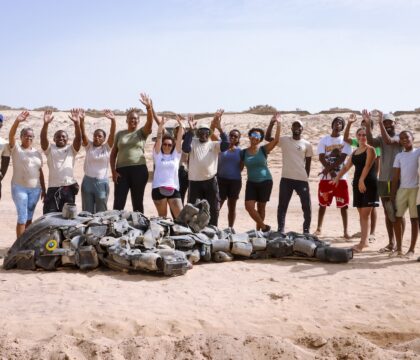
Plastic debris is another main threat to sea turtles, who can mistake floating plastic for food or become entangled in marine litter, often with fatal consequences. Oceanic Society’s Global Ocean Cleanup campaign tackles this threat at the source, mobilizing volunteers to clear debris from coastlines before it reaches the water. Seiko-sponsored cleanups have helped remove more than 171,000 pounds of trash collected by 290 volunteers across community events in California, Florida, Maryland, and Virginia.
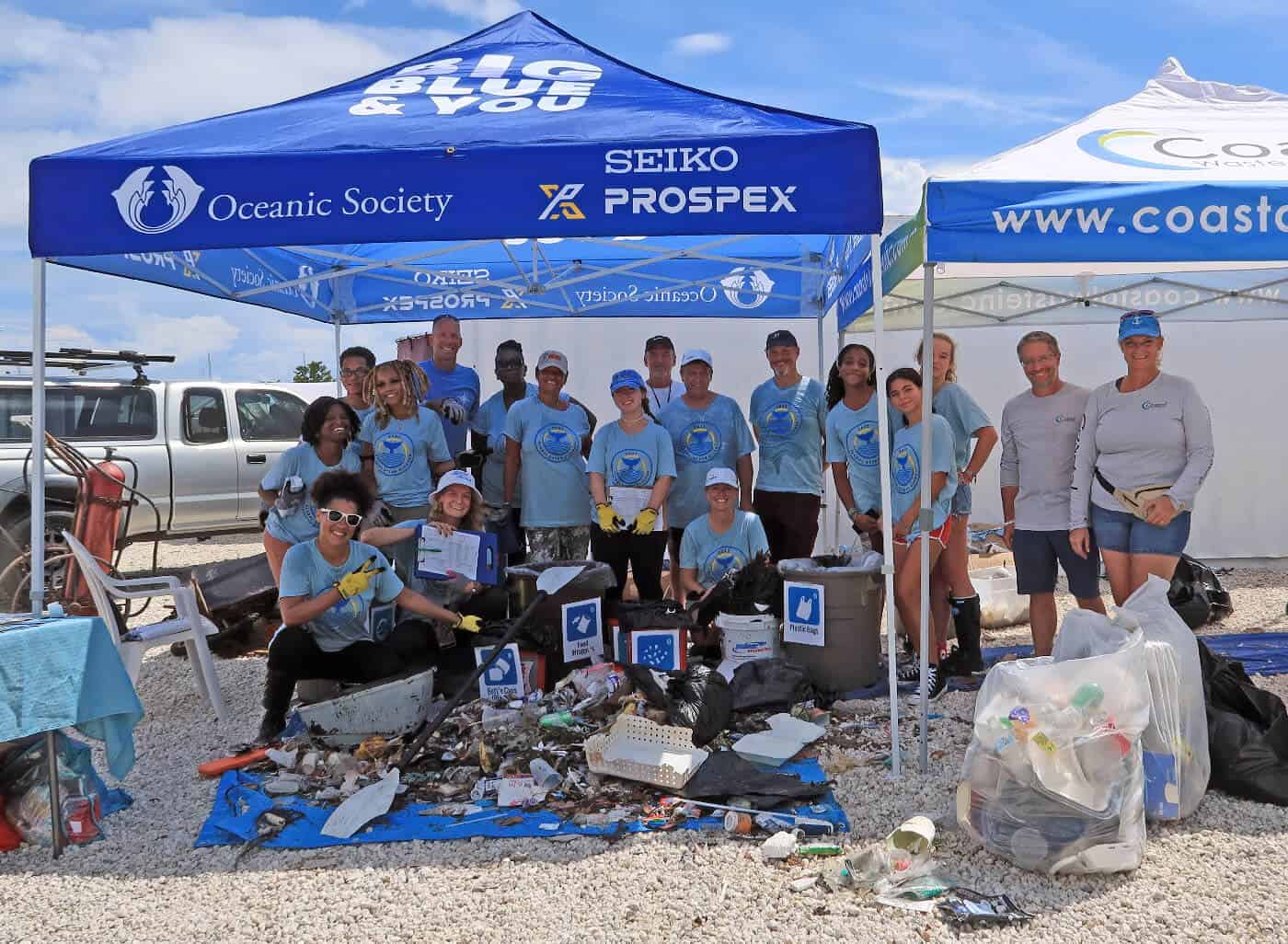
Staff from Oceanic Society and Seiko joined the cleanup and brand audit led by Big Blue & You and Blue Scholars Initiative in Miami, Florida. © Big Blue & You
About the Partnership
For more than 50 years, Oceanic Society has worked to inspire and empower people worldwide to take part in building a healthy future for the world’s oceans. Our partnership with Seiko Prospex, reflects a shared commitment to ocean conservation.
Ocean conservation is part of a broader commitment for Seiko Prospex. The brand’s “Save the Ocean” initiative supports a range of marine conservation activities, including citizen science and cleanup efforts. Oceanic Society is proud to be one of the causes Seiko supports as part of that wider commitment to the ocean.
Looking Ahead
Sea turtles have survived 100 million years of planetary change, but the speed of today’s climate crisis is testing their resilience in unprecedented ways. Meeting that challenge requires the kind of sustained, multi-front effort outlined above: tracking how populations are responding through global research, equipping local conservationists with the resources to act quickly, and reducing the everyday threats, like plastic pollution, that compound climate stress. Thanks to Seiko’s continued partnership, Oceanic Society is able to keep this work moving forward, helping sea turtle populations build the resilience they need to navigate the next century and beyond.