September 5 began like any other Saturday aboard Oceanic Society’s Farallon Islands whale watching trip. We departed from San Francisco Yacht Harbor near Marina Green and headed west beneath the Golden Gate Bridge, beginning the journey toward one of the most wildlife-rich stretches of ocean on the California coast.
Along the way, harbor porpoises surfaced beneath the bridge. In Diablo Cove, several harbor seals rested on the rocks while a Spotted Sandpiper stood nearby like a vigilant sentry.
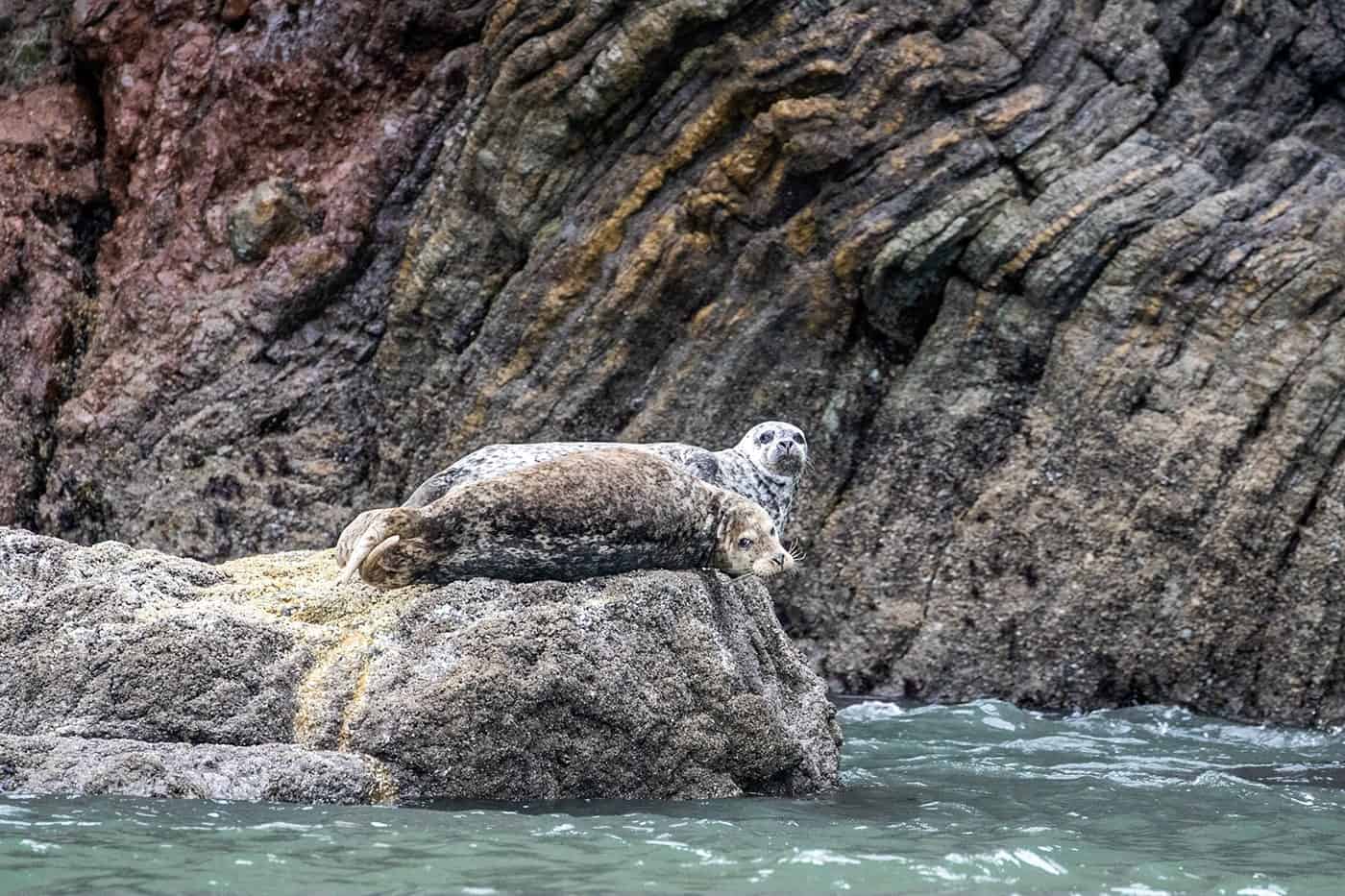
Harbor seals hauled out at Point Bonita. © Rhys Watkin
As we continued west toward the islands, we entered the San Francisco Approach Zone, an area of heavy shipping traffic just outside the Bay. We began seeing scattered groups of humpback whales feeding in the area. With so many whales spread across the water, it was difficult to decide which group to approach first.
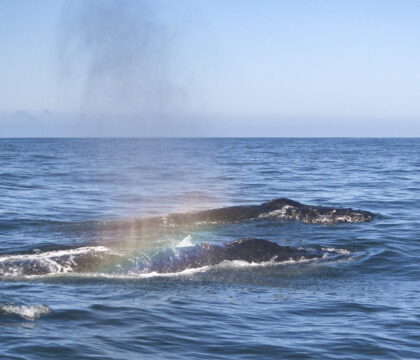
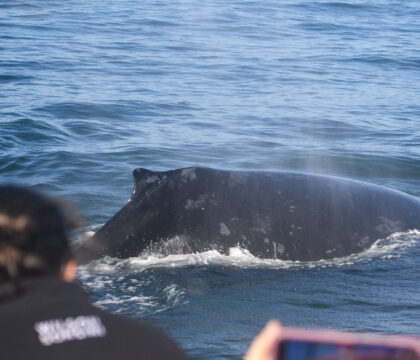
Then we noticed that a few humpbacks farther south were behaving differently. They were tail-lobbing and rolling at the surface, and something about their behavior caught our attention.
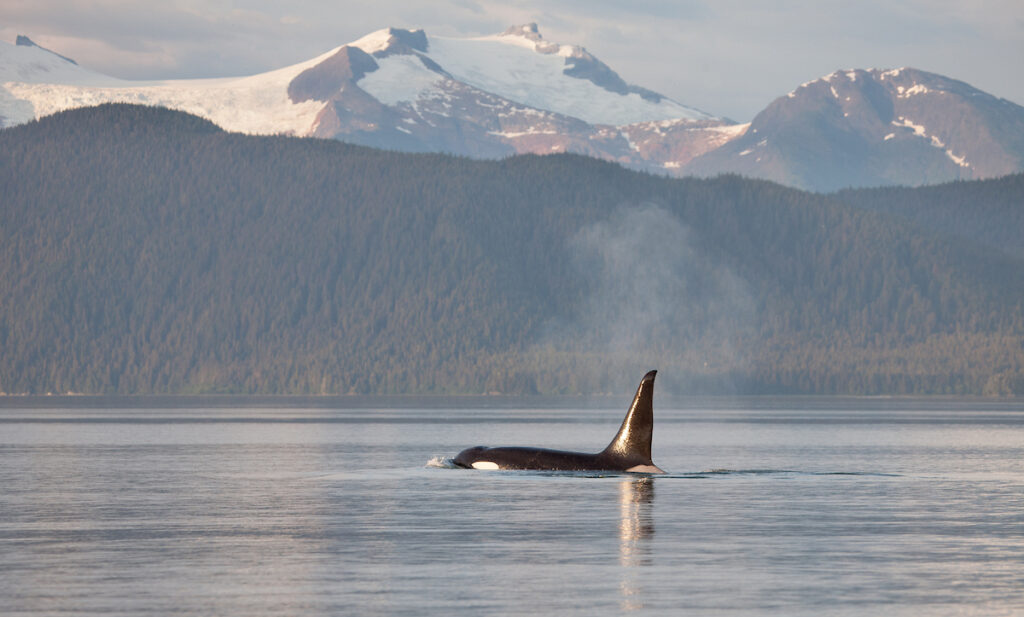
Upon closer examination, several tall dorsal fins appeared near the humpbacks. An unmistakable identification for everyone’s favorite black-and-white cetacean: killer whales (or orcas).
We quickly began photographing the animals, and by comparing our images with catalogs of known transient, or Bigg’s, killer whales in California, we were able to identify the group as the CA140Bs.
The family is led by matriarch Louise (CA140B), along with her four daughters: Stinger (CA140B1), Bee (CA140B2), Buzz (CA140B3), and Bumble (CA140B4).
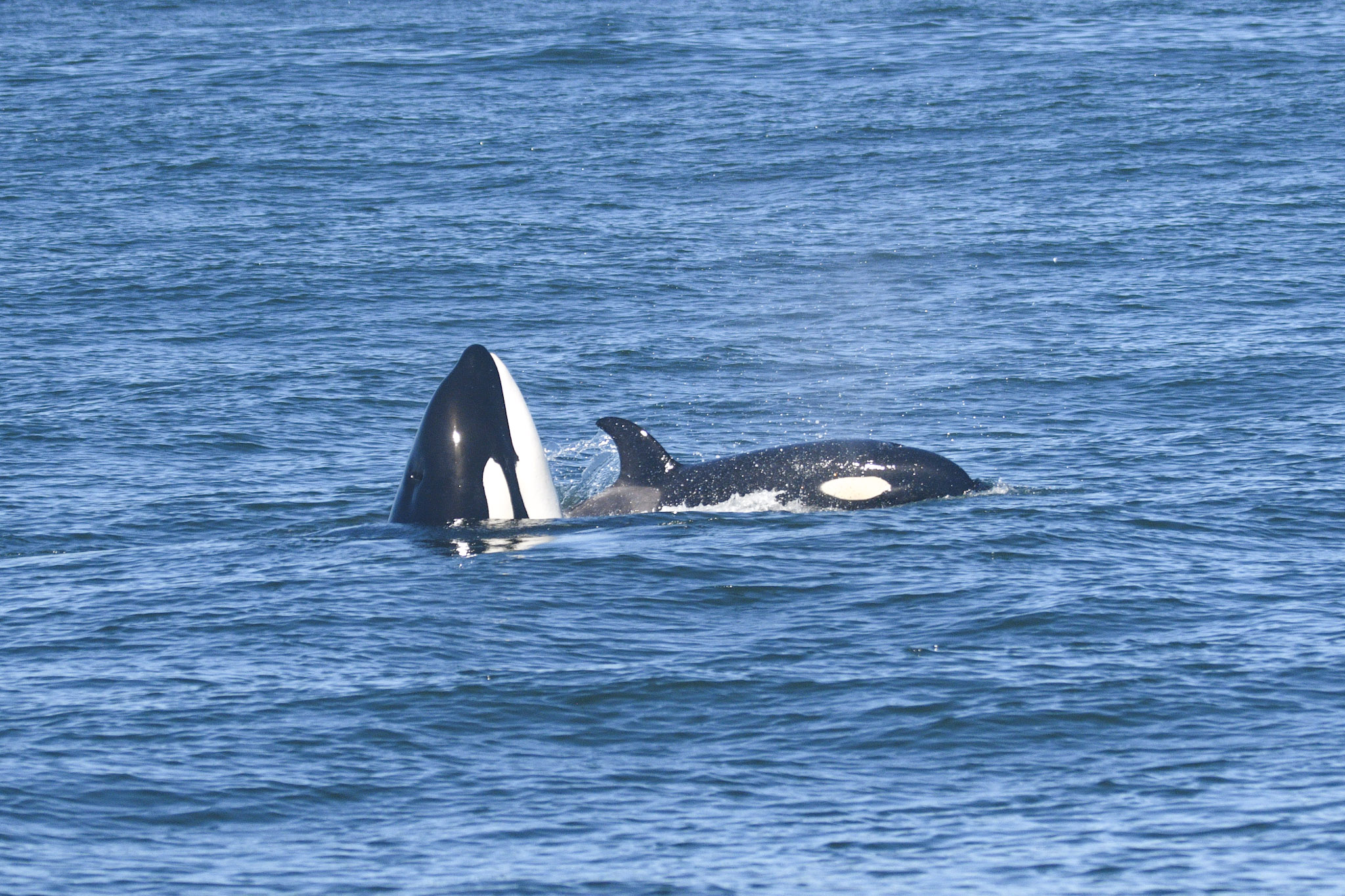
One CA140B orca rises dramatically out of the water beside another family member during their hunt. Photo Credit: Michael Pierson
Individual orcas can be identified by the unique combination of markings on their bodies, including the shape of their eye patches, markings and scars on their saddle patches, and the size, shape, and notching of their dorsal fins. These features work much like fingerprints, allowing researchers to recognize individual animals and document their movements and behavior over time.
And on this day, we witnessed some remarkable behavior from this family.
When we first encountered the CA140Bs, they were interacting with three adult humpback whales. As we approached, the humpbacks moved toward the boat, positioning themselves between the orcas and us. It was difficult to tell exactly what was happening. The orcas may have been pursuing the humpbacks, or the humpbacks may have been attempting to interfere with their hunt. Whatever was unfolding, the orcas soon broke away and headed north.
Then, suddenly, the entire pod accelerated in one direction. They were sprinting across the surface, occasionally leaping high out of the water. It was clear they were chasing something. When we caught up, we realized their fixation was on a harbor porpoise.
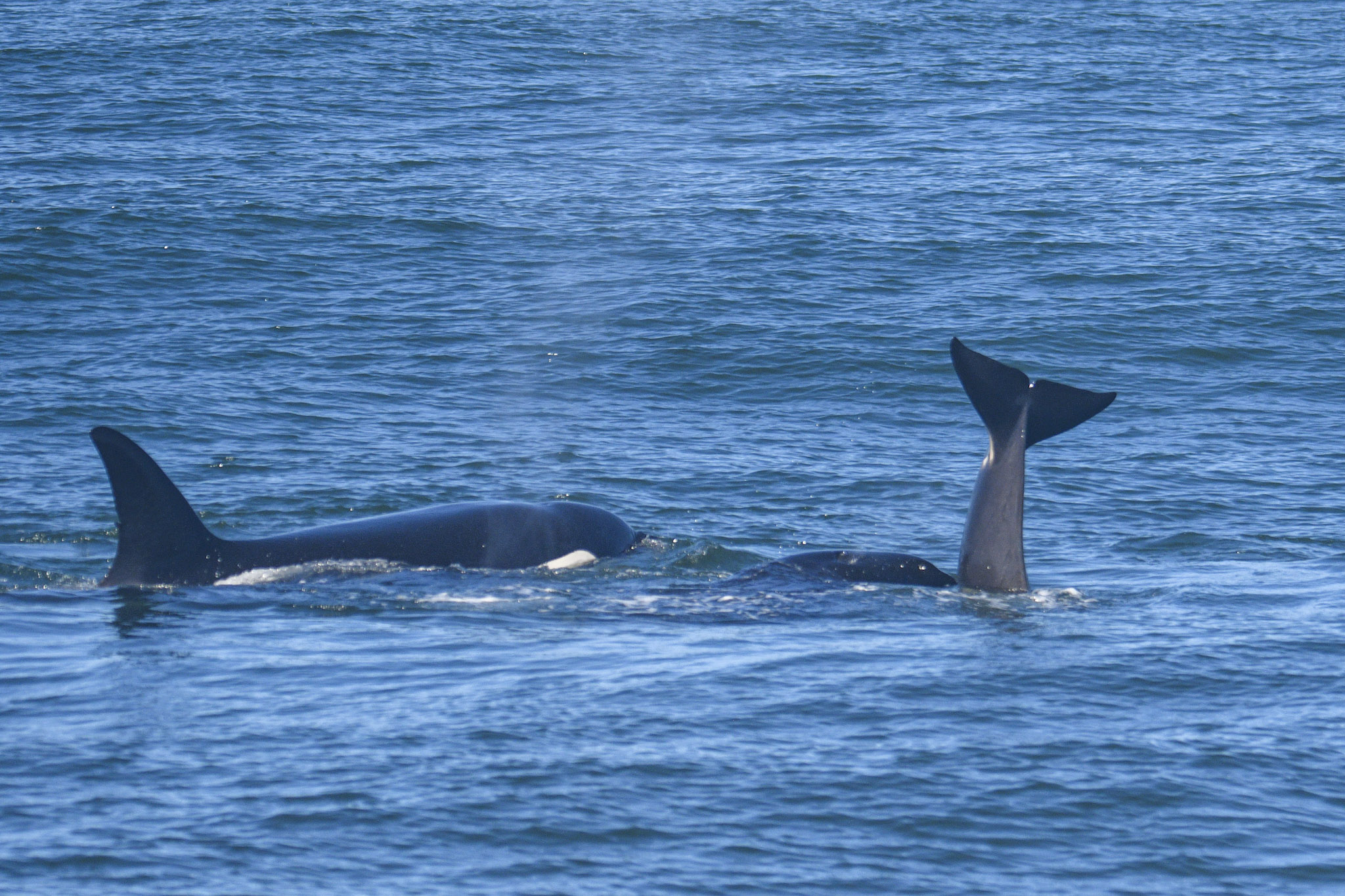
Trying to escape the pod, a harbor porpoise dives beneath the surface, sending its tail into the air. Photo Credit: Michael Pierson
The pod quickly surrounded the animal. Louise and her eldest daughters, Stinger and Bee, repeatedly rammed the porpoise with their heads, sometimes throwing it completely out of the water.
But there was something else happening that we naturalists noticed. Once the porpoise was injured and exhausted enough that there was little likelihood of escape, the older orcas backed away, allowing the younger members of the group to engage in the hunt.
They began practicing the same techniques their mother and older sisters had just demonstrated: ramming and throwing the porpoise as they practiced the skills necessary to hunt. It was a striking glimpse into how knowledge can be passed from one generation to the next.

Eventually, the porpoise yielded, and it disappeared beneath the surface. The orcas followed.
Several minutes later, the group resurfaced and engaged in what can only be described as celebratory behavior. The CA140Bs became highly active around one another, leaping from the water, circling together, and rubbing against one another. They remained near the boat as if to show off their successful hunt.
We remained with them for several more minutes before the activity subsided and the group moved on in search of its next meal. That was our cue to leave them to their business. We turned toward the islands, naturalists and guests both still trying to process what we had just witnessed.
Seeing a predation encounter such as this unfold at close range can be uncomfortable, but it’s an essential part of nature, and observations like these are important for expanding our understanding of the complexity and veracity of nature.
Experiences like this help build a deeper respect for the intensity of the natural world and strengthen our commitment to protecting these wild places and the creatures that call them home.
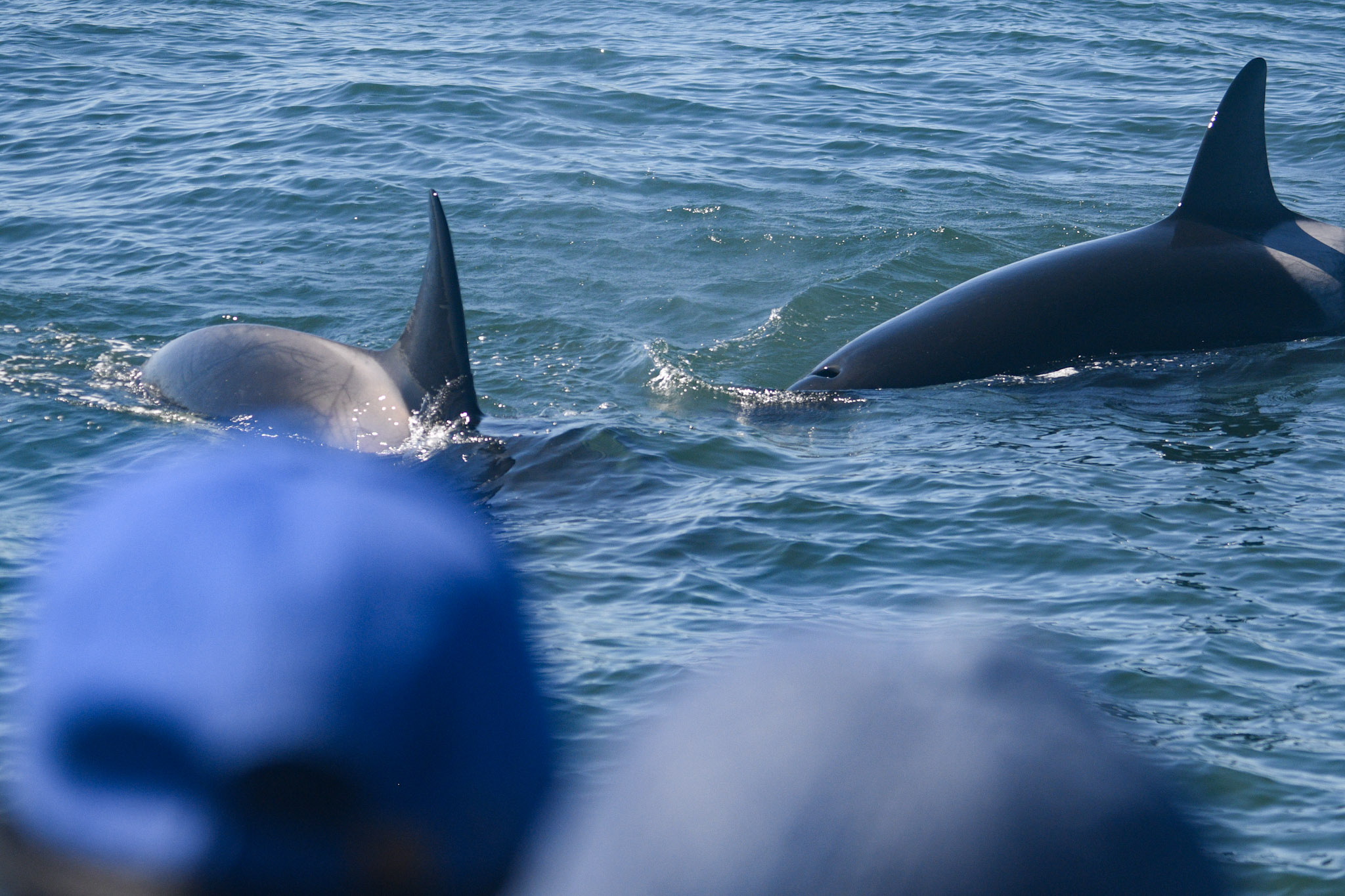
Two members of the CA140B family swim side by side near the boat, giving passengers an incredible up-close view. Photo Credit: Michael Pierson
The rest of our trip continued much as expected, with sightings of birds, whales, seals, and sea lions around the islands.
But after several hours on the water, there was really only one thing everyone was still talking about: the CA140B family and the lesson we had all learned by having the privilege of observing their hunting session.
Following the encounter, I joined KTVU to talk about what we witnessed and explain more about the CA140B family and their hunt off the San Francisco coast.