The average temperature of the global sea surface broke record highs this summer, following decades of warming driven by human-induced climate change and intensified by a strong El Niño unfolding this year.
The Copernicus Climate Change Service, part of the European Union’s climate monitoring program, recorded a global average sea surface temperature of 21.1°C on August 22, breaking the previous daily record set in March 2024.
However, the full impacts of this year’s El Niño are predicted to peak in the Northern Hemisphere this fall and winter, compounding stressors on vulnerable marine ecosystems.
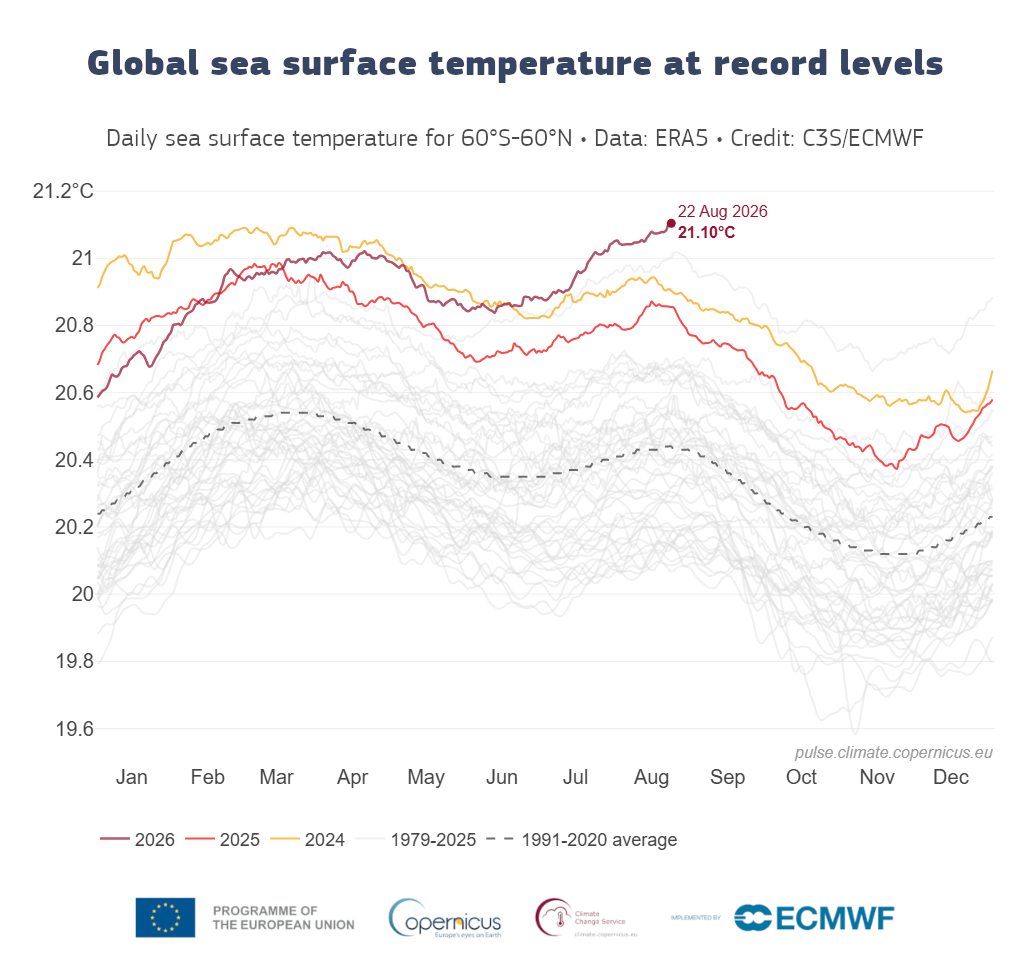
Daily sea surface temperature (°C) averaged over the extra-polar global ocean (60°S–60°N) for 2024 (yellow), 2025 (orange) and 2026 (red). All other years between 1979 and 2023 are shown with grey lines. The daily average for the 1991–2020 reference period is shown with a dashed grey line. Data source: ERA5. Credit: C3S/ECMWF.
What Is El Niño?
El Niño is a natural climate pattern in the tropical Pacific Ocean that occurs when the trade winds blowing from east to west weaken, allowing warm surface water to shift eastward and altering ocean circulation and atmospheric patterns. The resulting changes can influence weather around the world, contributing to events such as heatwaves, heavy rainfall, droughts, and wildfires.
An El Niño is identified if the surface temperature of the Equatorial Pacific exceeds +0.5°Celsius of its average for a consecutive period. Effects can be observed in the ocean before they become apparent on land, and can last nine to 12 months, but sometimes longer.
El Niño events occur irregularly, generally every two to seven years, and alternate with La Niña, which is characterized by cooler-than-average conditions in the central and eastern tropical Pacific. Today, scientists are studying whether El Niños are becoming stronger and more frequent due to warming ocean conditions (this marks the third in eleven years).
The El Niño that developed this spring has continued to strengthen, with surface temperatures surpassing the average by 4℃ in August.
NOAA reported in August that there is a 90% chance of a “very strong” event during the Northern Hemisphere fall and winter, leading to a chaotic array of weather conditions, including stormier weather in parts of the southern United States, high tide flooding on the western coast, and increased tropical storms in the western and central Pacific.
How Are Warming Oceans Affecting Marine Ecosystems & Coastal Communities?
The impacts of warming oceans on marine ecosystems are complex and vary by region. Rising ocean temperatures can alter currents, nutrient availability, and the distribution of marine species, disrupting food webs and putting additional stress on ecosystems already facing multiple pressures. El Niño events can compound some of these effects by temporarily shifting ocean temperatures, circulation, and weather patterns.
For example, El Niño affects a process known as “upwelling” that brings nutrient-rich waters to the surface and supports the spawning of krill—a keystone species in marine food webs. Thus, if upwelling weakens, it impacts the feeding and migration behaviors of seabirds and marine mammals that depend on krill.
Elsewhere, the giant kelp forests in the United States’ Pacific Northwest depend on cool water to grow and recover from heatwaves. But the arrival of the 2026 El Niño so soon after the previous El Niño has cut this recovery time, with compounding heatwaves threatening this ecosystem.
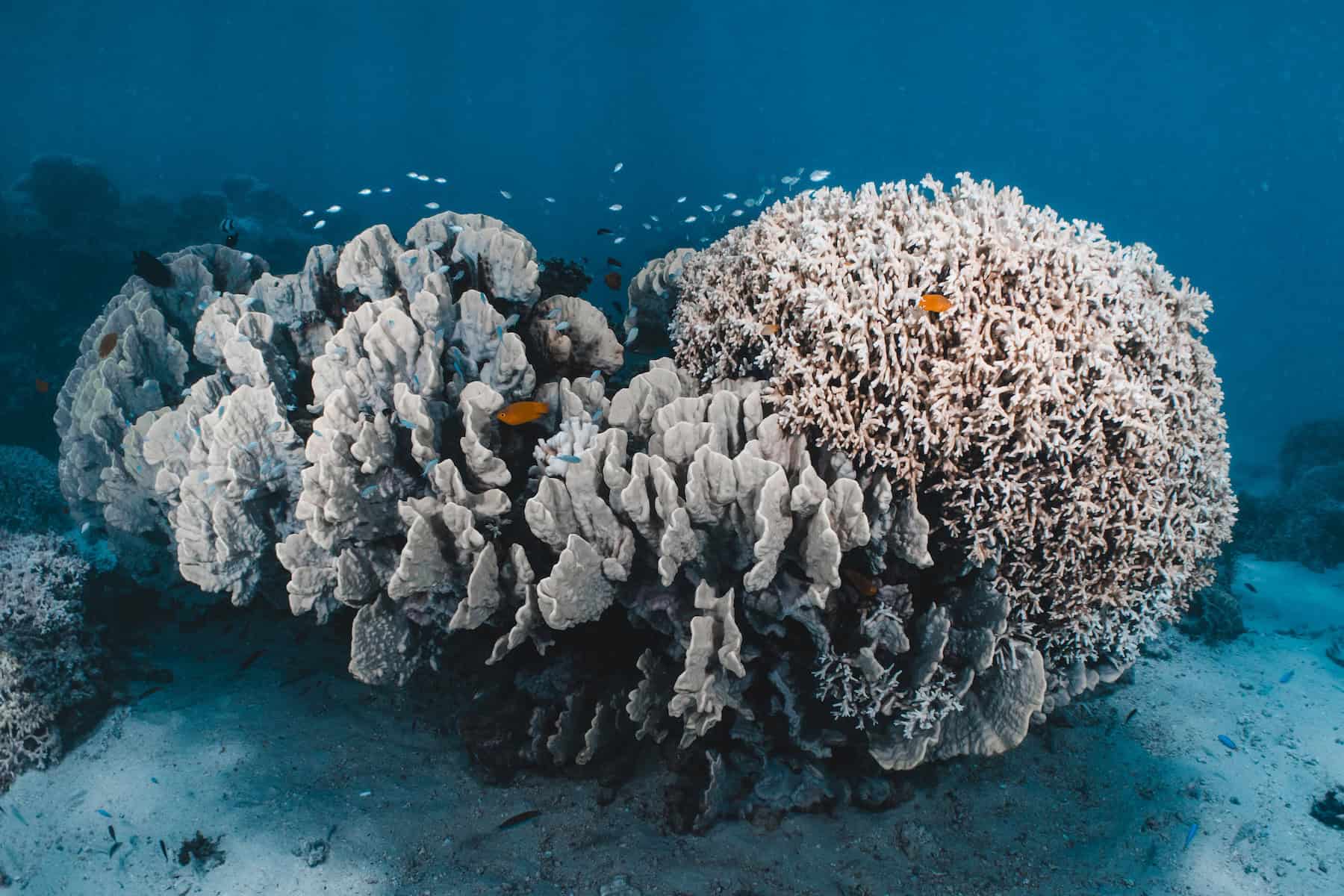
Coral bleaching observed in Ningaloo, Western Australia, February 2025. Credit: Daniel Nicholson / Ocean Image Bank
Likewise, coral reefs are already under stress due to warming conditions brought on by climate change, and the additional heat associated with El Niño can trigger coral bleaching. While corals can recover from bleaching, prolonged or severe heat stress can lead to coral mortality. This is particularly concerning following the fourth global coral bleaching event, during which bleaching-level heat stress affected more than 84% of the world’s coral reef area between 2023 and 2025.
The effects of warming oceans extend beyond wildlife. Healthy marine ecosystems support fisheries, tourism, and coastal communities around the world, so changes in fish populations, coral reefs, and other marine habitats can have consequences for people whose livelihoods and food security depend on the ocean. Changes in ocean and atmospheric conditions associated with El Niño can also increase the risk of coastal flooding and other extreme weather impacts in some regions.
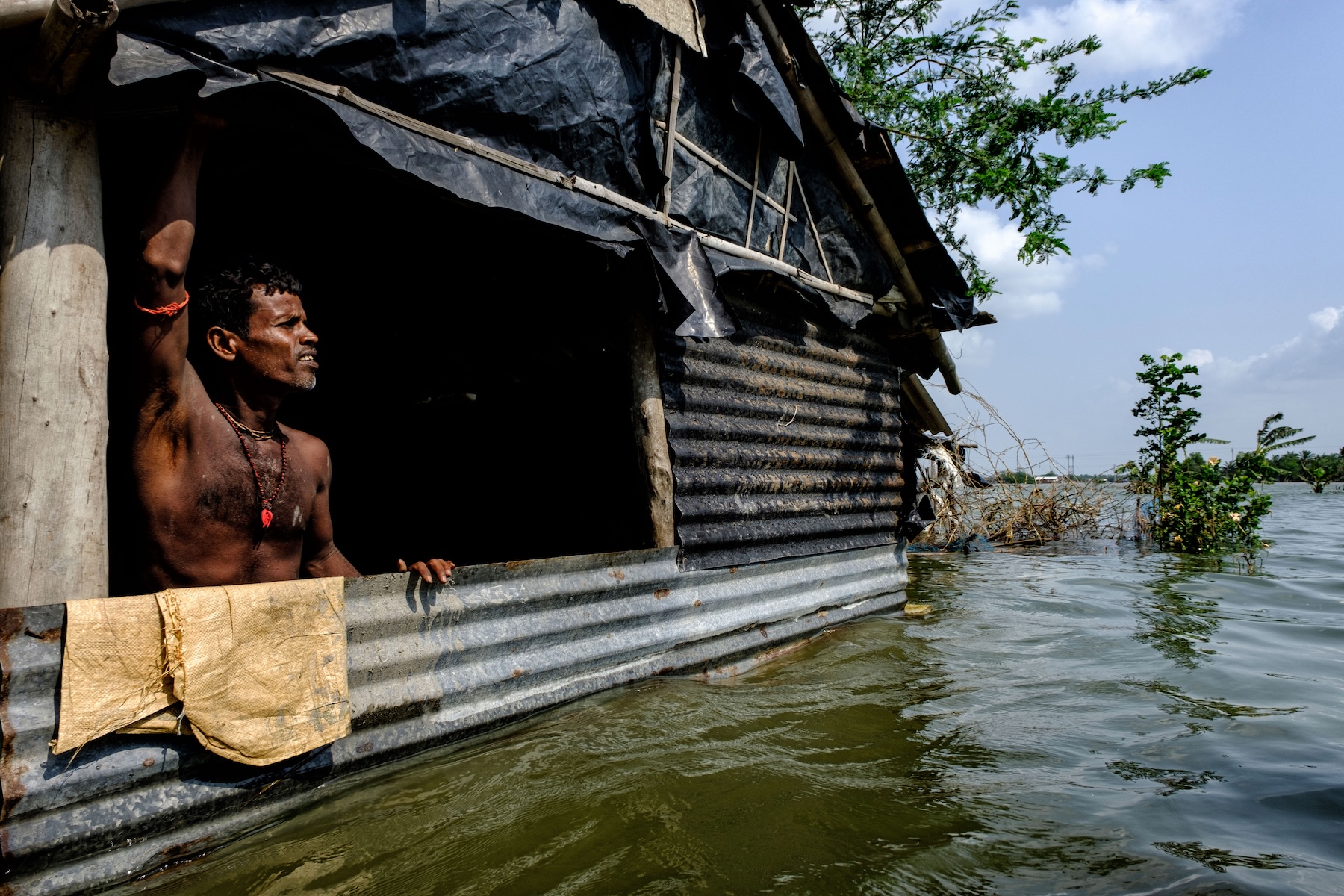
Due to repeated tropical cyclones and sea level rise in the Bay of Bengal, river embankments have become broken by high tides in coastal villages across the Sundarbans, West Bengal. As a result, homes and farms have flooded, fisheries have become destroyed by seawater, and people have been forced to migrate, victims of climate change. Credit: Dipayan Bose / Ocean Image Bank / Mangrove Photography Awards
These pressures are especially concerning because marine ecosystems are already adapting to a rapidly warming ocean. El Niño is a natural part of the climate system, but when it adds another period of unusual heat or disrupts established ocean patterns, it can compound existing stress and make recovery more difficult for ecosystems and the communities that depend on them.
Learn More and Take Action
While the challenges facing our oceans are significant, there are reasons for hope.
Understanding how climate change and changing ocean conditions affect marine life is an important first step toward protecting the ecosystems and communities that depend on them. Explore these resources from Oceanic Society:
- 9 Powerful Ways to Help the Ocean: Explore simple, science-backed actions you can take in your everyday life, from choosing sustainable seafood to reducing your carbon footprint and plastic use.
- Coral Reefs and Climate Change: What to Know and What to Do: Understand how warming oceans affect coral reefs and discover ways to support their future.
- How Climate Change Is Threatening Sea Turtles: Learn how rising temperatures and other climate impacts are affecting sea turtles and what we can do to help.
- Watch Blue Habits: Climate Change and Coral Reefs: See the impacts of climate change on one of the world’s most biodiverse coral reef regions through the eyes of artist and ocean advocate Courtney Mattison, whose intricate coral sculptures bring the beauty and vulnerability of reefs to life.
- 7-Day Fight Plastic Pollution Challenge: Take a weeklong challenge to identify ways to reduce your plastic consumption and build new habits.