On our recent Fiji snorkeling expedition, naturalist Andy Wheatcroft led travelers into the water alongside the conservation team at Sau Bay Resort & Spa for a hands-on crown-of-thorns starfish population control program. Between two snorkel sessions, the group spotted and logged just under 100 crown-of-thorns starfish, helping Sau Bay’s trained dive team identify individuals for treatment and removal.
For travelers, it was an opportunity to do more than snorkel the beautiful reefscape. They became part of the work to protect it, gaining a closer understanding of a conservation challenge unfolding on one of the South Pacific’s most celebrated coral reefs.
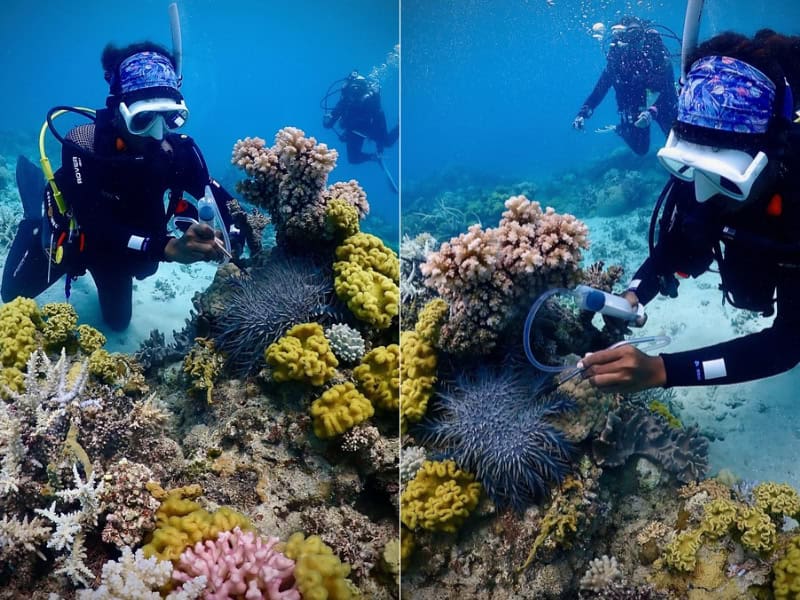
A Sau Bay conservation diver injects a crown-of-thorns starfish with vinegar as part of the reef’s targeted population control efforts. Photo by Andy Wheatcroft.
This hands-on experience is part of a broader conservation partnership between Oceanic Society and Sau Bay Resort & Spa. In 2026, Sau Bay was awarded a Community Conservation Grant through Oceanic Society’s Expedition Impact Program to expand its crown-of-thorns starfish control program, an initiative of their Rainbow Reef Fiji Foundation. The Foundation works to protect Rainbow Reef through community-led conservation, marine research and monitoring, habitat restoration, and education, while helping local communities take an active role in safeguarding the reef for future generations.
During the expedition, travelers had the opportunity to see this work firsthand and contribute to the ongoing monitoring effort.
“One of the best parts of being a naturalist is helping people understand what’s happening beneath the surface. It’s one thing to explain the challenges facing coral reefs, but it’s another to get in the water, learn what to look for, and actually contribute to the work being done to protect them,” says Andy.

Crown-of-Thorns Starfish are Threatening Fiji’s Reefs
Crown-of-thorns starfish (COTS) are native to Indo-Pacific coral reefs and play a natural role in reef ecosystems by feeding on coral. But when their populations grow too large, they can consume living coral faster than it can recover. A single starfish can eat up to a square meter of coral tissue in a month during an outbreak, putting entire reef systems at risk.
Outbreaks are influenced by several factors, including nutrient-rich runoff that can support starfish larvae and declines in the populations of their natural predators. On Rainbow Reef, Sau Bay has reported increasing crown-of-thorns populations over the past year, adding pressure to coral communities already facing challenges from warming ocean temperatures and other environmental stresses.
This underscores the importance of supporting sustained and targeted removal efforts. Identifying where starfish are concentrated helps conservation teams respond before populations cause extensive damage.
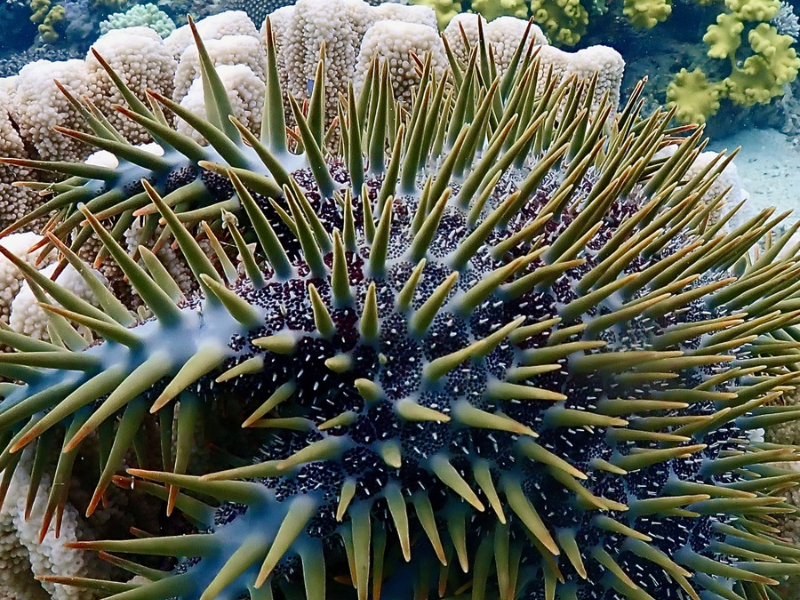
A crown-of-thorns starfish on Rainbow Reef in Fiji. Though native to the Indo-Pacific, these coral-eating starfish can have a devastating impact during population outbreaks, stripping up to 90% of a reef’s living coral tissue. Photo by Andy Wheatcroft
A Hands-On Role in Protecting Rainbow Reef
For travelers, understanding the challenge began with learning what to look for. Crown-of-thorns starfish can be difficult to spot, hiding beneath plate corals and in reef crevices during the day.
With Andy’s guidance, the group learned to recognize the starfish and identify signs of recent feeding, including patches of white coral skeleton left behind where the animals had consumed living coral tissue. As they explored the reef, snorkelers put that knowledge into practice, locating and documenting starfish across the monitoring area and recording their locations for Sau Bay’s trained divers.
“Having a small group in the water meant everyone could get involved. Travelers were actively scanning the reef, sharing sightings, and learning from the dive team. It was a wonderful example of how even a short experience can help people feel more connected to the places they visit and the work it takes to protect them,” Andy explains.

Fiji’s reefs reward a slow float. From the surface, snorkelers can take in a whole coral community at once. Photo by Roger Harris.
By the end of two snorkel sessions, the group had documented just under 100 starfish, helping identify areas of concentration and inform future monitoring and removal dives.
Sau Bay’s divers use a targeted vinegar injection to treat the starfish, a simple, low-cost method used in crown-of-thorns control efforts around the world, from small-scale conservation initiatives to large government-led projects. The treatment causes the starfish to die within approximately 24 hours while minimizing impacts on surrounding marine life and avoiding the risks of manual handling, which can be dangerous due to the animals’ long, venomous spines.
How Your Trip Helps Fund Ocean Conservation
Oceanic Society directs a portion of every trip booking to our Expedition Impact Program, helping to fund local, community-driven conservation projects like Sau Bay’s before travelers even arrive.
Every traveler’s booking helps fund the conservation work, while their participation in the field gives them a firsthand opportunity to contribute to it. It’s a direct connection between exploring a destination and supporting the people working to protect it.
“Travelers increasingly want to be certain their trips deliver positive benefits to the places and communities they visit. We believe travel can have a meaningful role in conservation. When properly structured, it can allow people a more insightful understanding of the places they’re exploring, provide support to the local organizations working to protect them, and sometimes even join that work firsthand. I think that the purposeful inclusion of these types of opportunities makes travel truly meaningful and rewarding,” says Wayne Sentman, Vice President of Conservation Travel at Oceanic Society.
Andy also underscores that protecting Fiji’s reefs is about more than preserving marine biodiversity. Healthy reefs are essential to the well-being of coastal communities, supporting local fisheries and food security while serving as a cornerstone of Fiji’s tourism economy, which provides livelihoods for people across the islands.

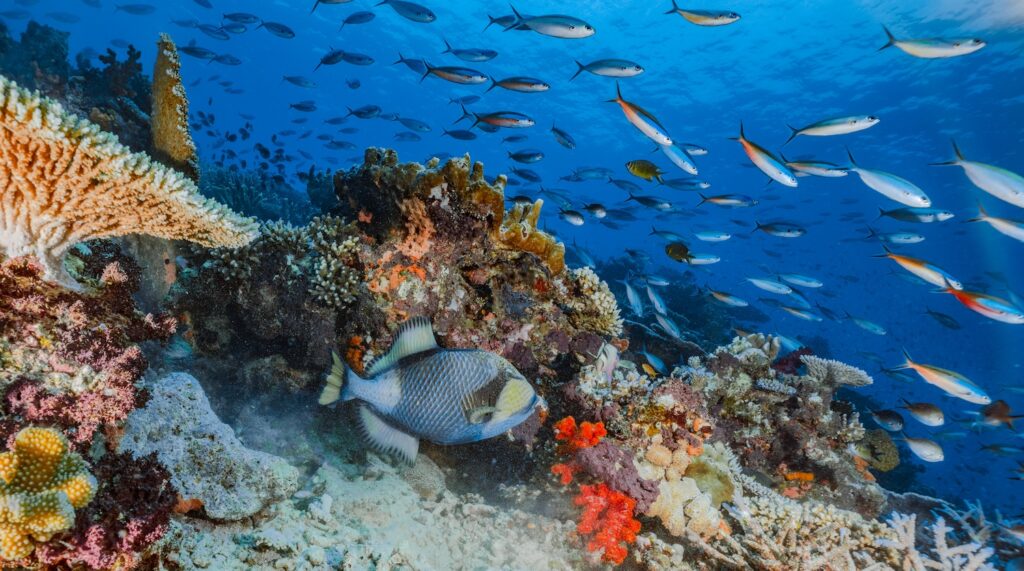
Fiji is home to spectacular reefs. © Jayne Jenkins / Coral Reef Image Bank
Snorkel and Protect Fiji’s Rainbow Reef
Crown-of-thorns monitoring is just one part of this 11-day expedition. Travelers also have the opportunity to explore Fiji’s vibrant coral reefs, where they’ll encounter a variety of colorful reef fish and snorkel with manta rays at Rabi Passage. On land, they can enjoy a variety of hikes, spend time with students at Nawi Village School, and experience Fijian culture through kava ceremonies, traditional meals, hands-on workshops, and song.
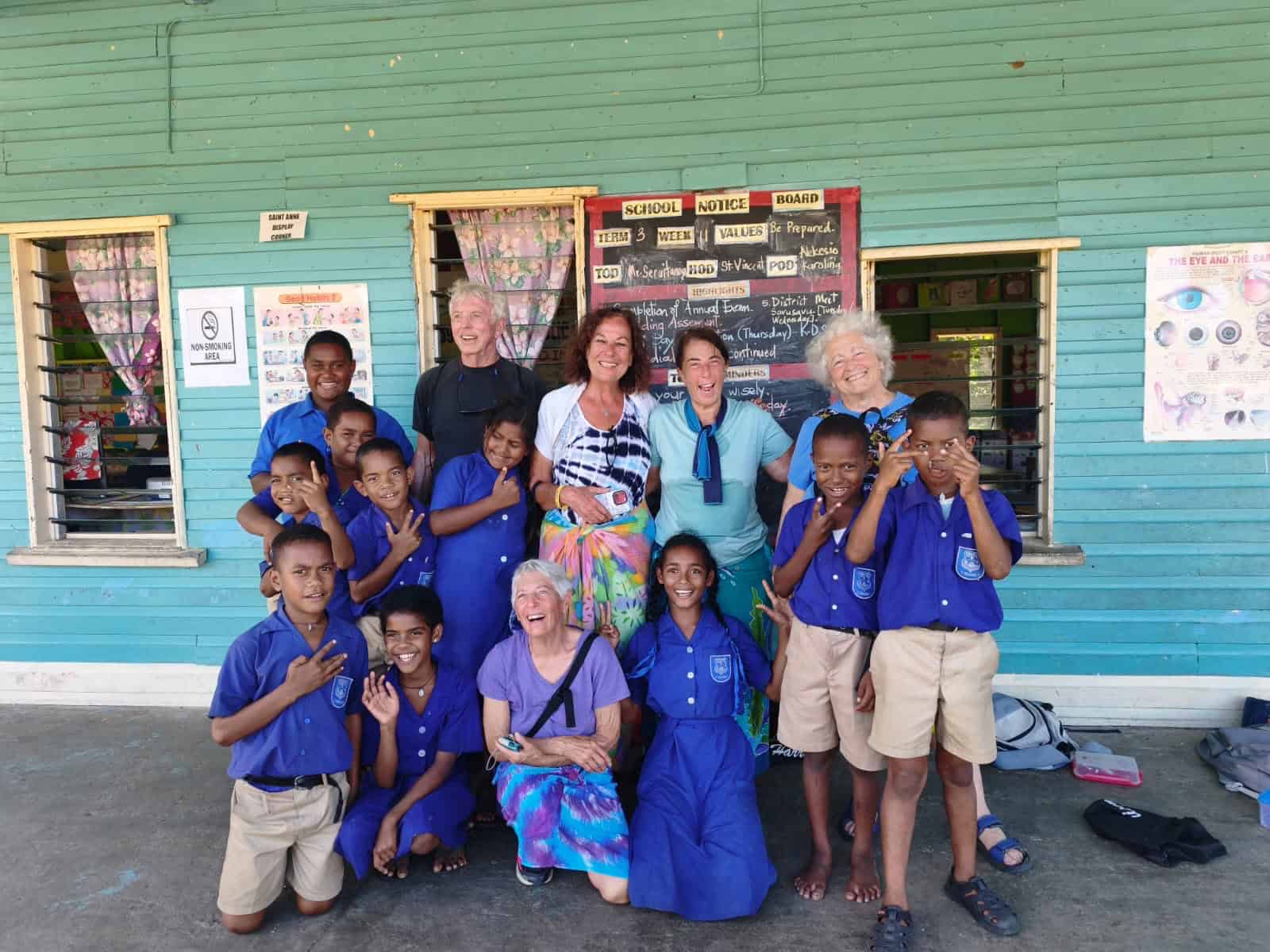
Travelers spend time with students at Nawi Village School, sharing stories and connecting with the local community during their Fiji expedition. Photo by Andy Wheatcroft.
Led by experienced and passionate naturalists and grounded in partnerships with local conservation teams, the expedition offers a deeper way to experience Fiji’s remarkable marine environments while learning about the challenges and solutions shaping their future.
Explore upcoming departures and help protect Fiji’s coral reefs.