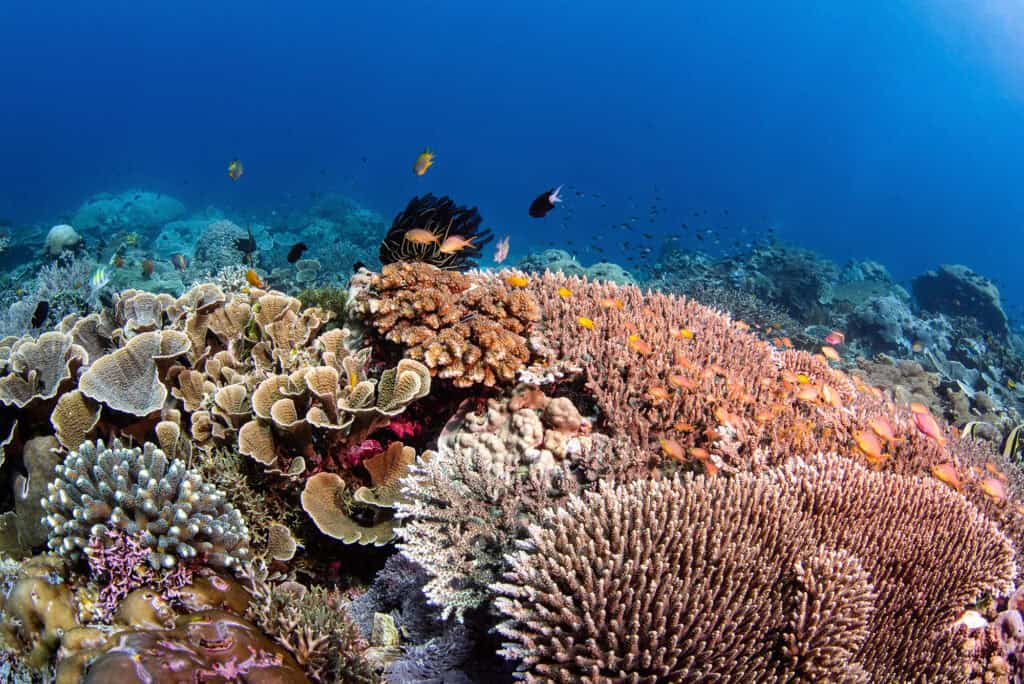
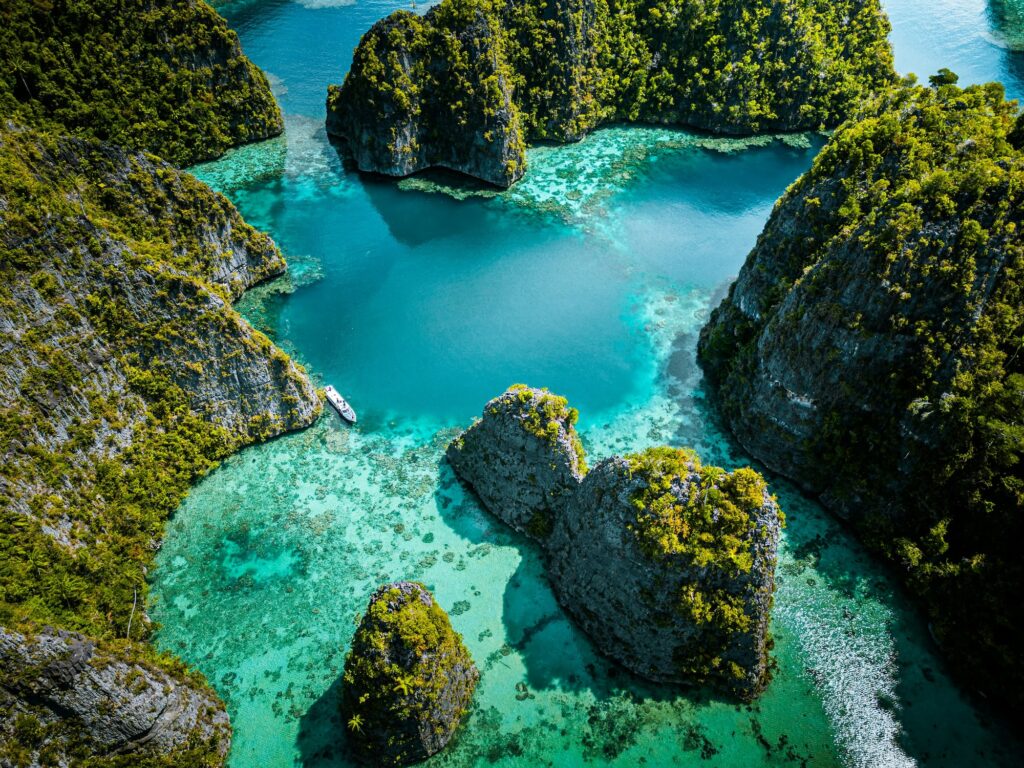
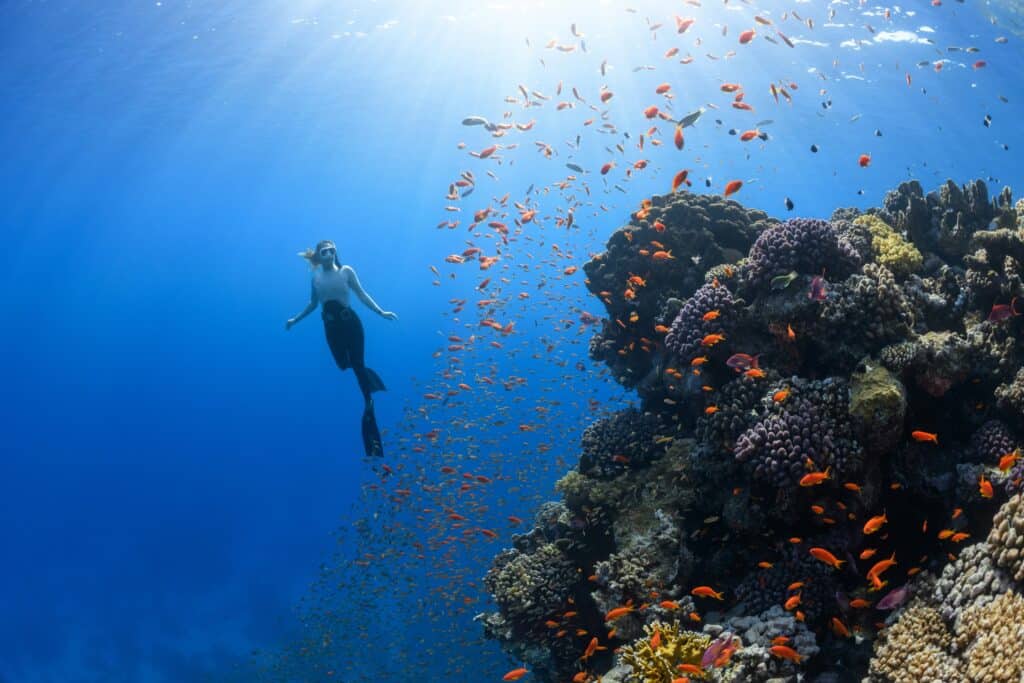
Hidden in the heart of Indonesia’s Coral Triangle, Halmahera shares many of the same extraordinary ecosystems that make nearby Raja Ampat famous, from colorful coral gardens and thriving reef fish to manta rays, turtles, and other pelagic wildlife. But its remote location and limited tourism infrastructure mean that much of the coastline remains quiet and unexplored. For travelers drawn to Raja Ampat but looking for a more remote, intimate experience, Halmahera offers a compelling addition.
This guide covers the best places to snorkel and encounter marine life across Halmahera and the surrounding islands, along with when to go, how to get there, and what to know before planning your trip.
In This Halmahera Guide
Jump to any section below, or read straight through for the full guide.
Where is Halmahera?
Halmahera is the largest island in Indonesia’s North Maluku province, part of the Moluccas, or “Spice Islands,” in eastern Indonesia. Located in the Moluccas Sea, it sits between North Sulawesi to the west and Raja Ampat to the east, while Bali lies much farther west across the Indonesian archipelago. This remote location places Halmahera in the heart of the Coral Triangle, within the same extraordinary marine region that makes Raja Ampat one of the world’s most celebrated snorkeling and diving destinations.
The island’s distinctive shape, with four long peninsulas extending from a mountainous, volcanic center, creates a remarkably long and varied coastline. Straits, sheltered bays, and fringing reefs are tucked into its many curves, creating a wealth of marine habitats that remain relatively unexplored.
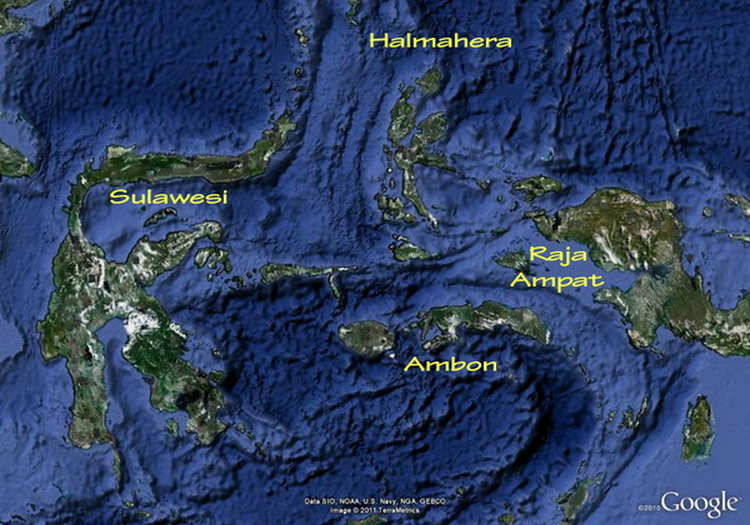
Halmahera’s regions each offer something distinct:
- Southwest Halmahera, centered on the Patintie Strait between Halmahera and the Bacan Islands, holds the region’s best-documented snorkeling: shallow, current-fed coral plateaus around Bacan and a scattering of smaller islands, home to Kusu Island Resort and the area’s best-known reefs.
- Central Halmahera, along Weda Bay, is home to some of Indonesia’s most distinctive hard coral reefs and dramatic underwater coral walls, an area still largely undocumented outside of the occasional liveaboard passing through.
- North Halmahera, around Loloda, Tanjung Bongo, and Tobelo, combines volcanic black-sand dive sites with reef shark encounters and remnants of World War II history beneath the surface.
- Ternate and Morotai, just off Halmahera’s western and northern coasts, serve as the region’s cultural and historical gateways: Ternate as the seat of the old clove-trading sultanates that gave the “Spice Islands” their name, and Morotai as a former World War II Allied airbase turned nature preserve.
- The Halmahera Sea, to the south, is the transition zone between Halmahera and the Central Maluku islands of Buru and Ambon, passing remote stops like Pisang Island, the Lawin island group, and Gomumu on the south side of Obi Island, waters that remain almost entirely unexplored by snorkelers.
Best Snorkeling Sites in Halmahera
Halmahera’s reefs are particularly appealing to snorkelers because many fringing reefs begin in shallow water close to shore. Across the region, coral gardens, reef walls, channels, and offshore reefs create a surprising variety of underwater environments, often with little distance between the shore and the reef. The remoteness of the region also means many sites see few visitors, giving travelers the chance to experience thriving reefs and marine wildlife without the crowds found at better-known destinations.

The Patintie Strait & Bacan Islands
The Patintie Strait, the narrow channel running between southwest Halmahera and the Bacan Islands, holds the region’s most consistently excellent snorkeling. Strong tidal currents flush the strait with nutrient-rich water, feeding shallow coral plateaus that start right at the surface and slope gently outward before dropping into walls further from shore. Reefs here run predominantly hard coral, with sizeable sea fans, sponges, and colorful soft corals mixed throughout, and at extreme low tides around the full or new moon, sections of reef can emerge almost entirely above the waterline.
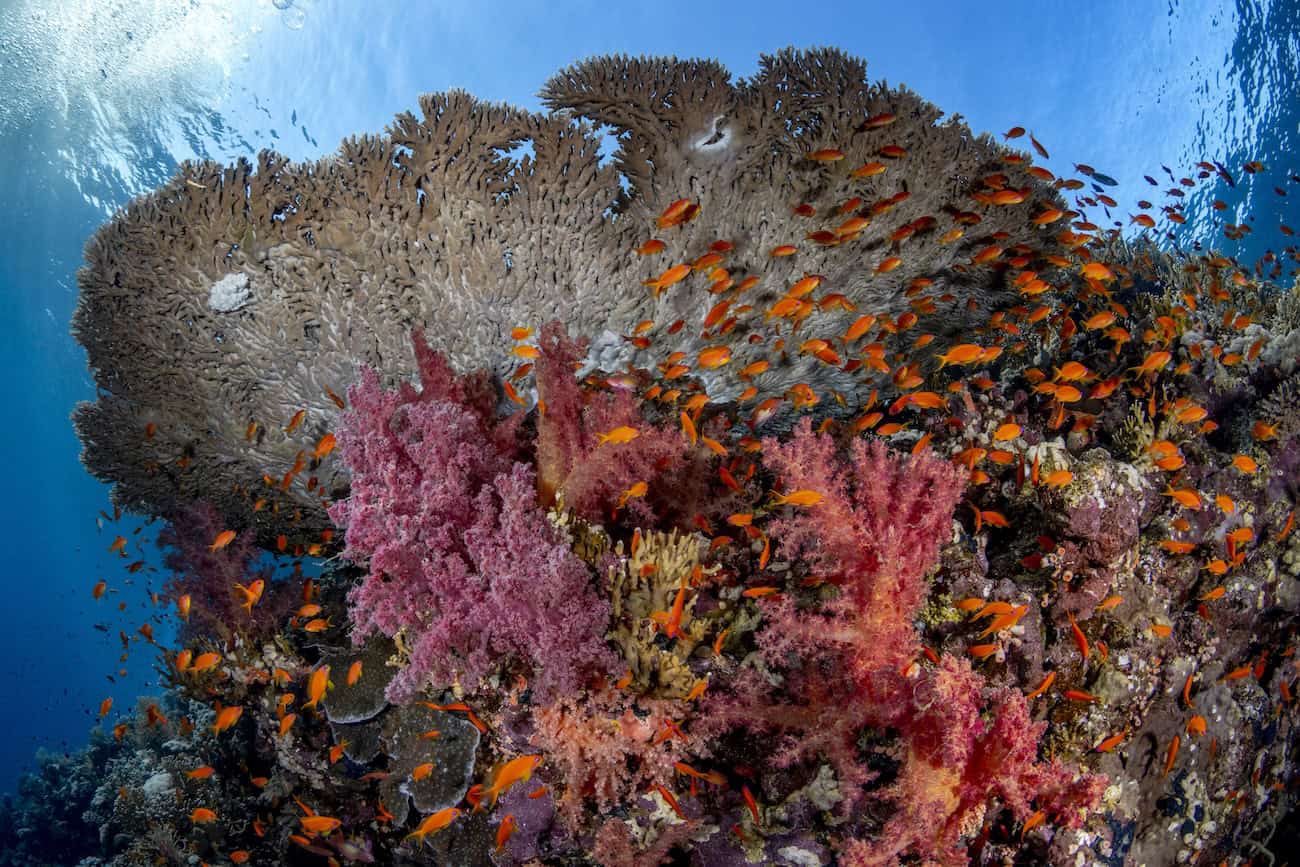
Credit: Renata Romeo / Ocean Image Bank
Kusu Island & House Reef
Kusu Island, just off Bacan, is home to Halmahera’s best-known dive and snorkel resort and one of the region’s most reliable house reefs, a fringing plateau that wraps the island and offers easy, current-sheltered snorkeling right off the pier.
It also serves as the base for exploring the surrounding channel, including a reef locally dubbed “Montse’s Garden,” among the most vividly colored coral gardens documented in the area to date.
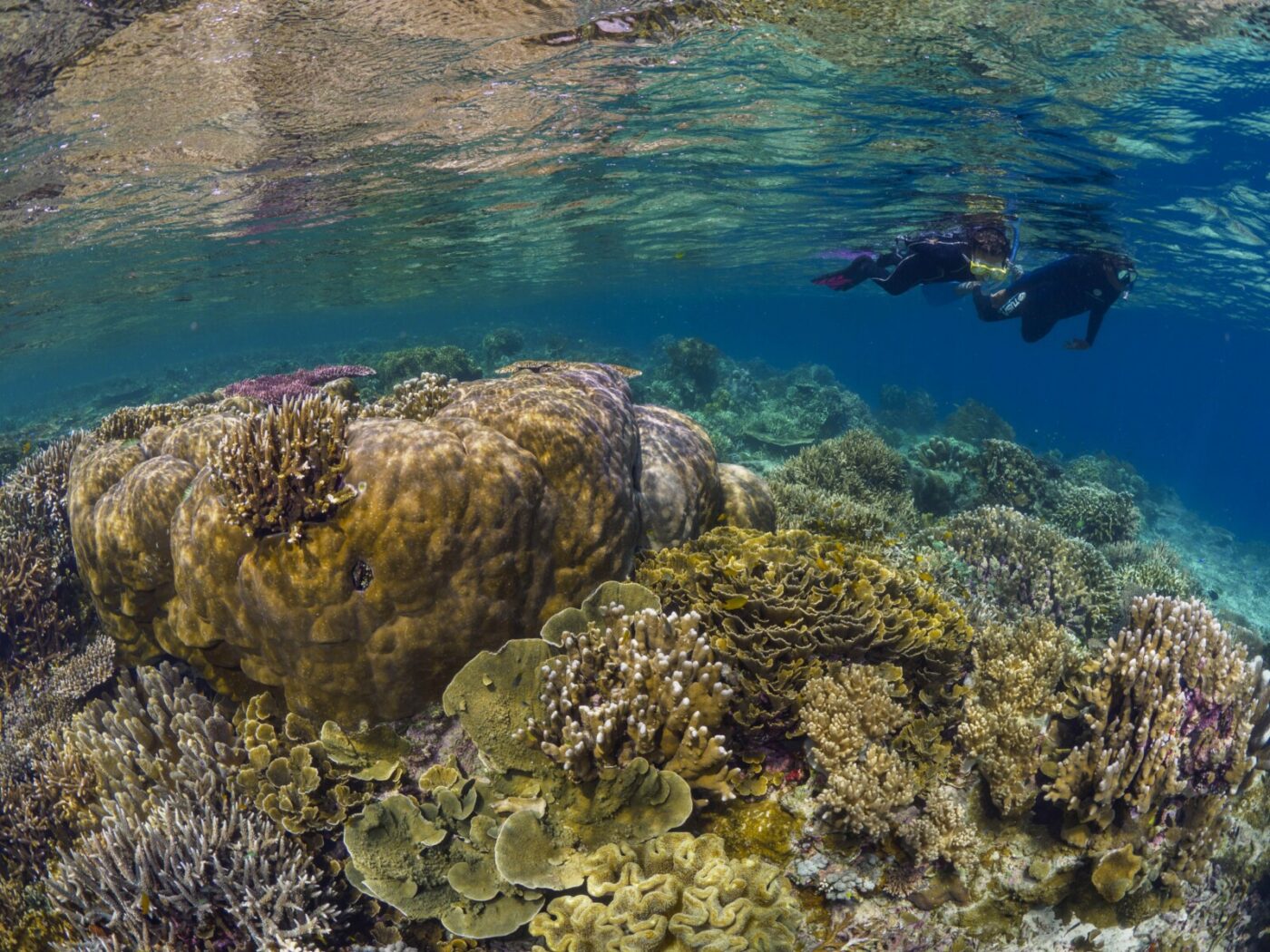
Credit: Kusu Island Resort
Manta Point & Pulau Siko
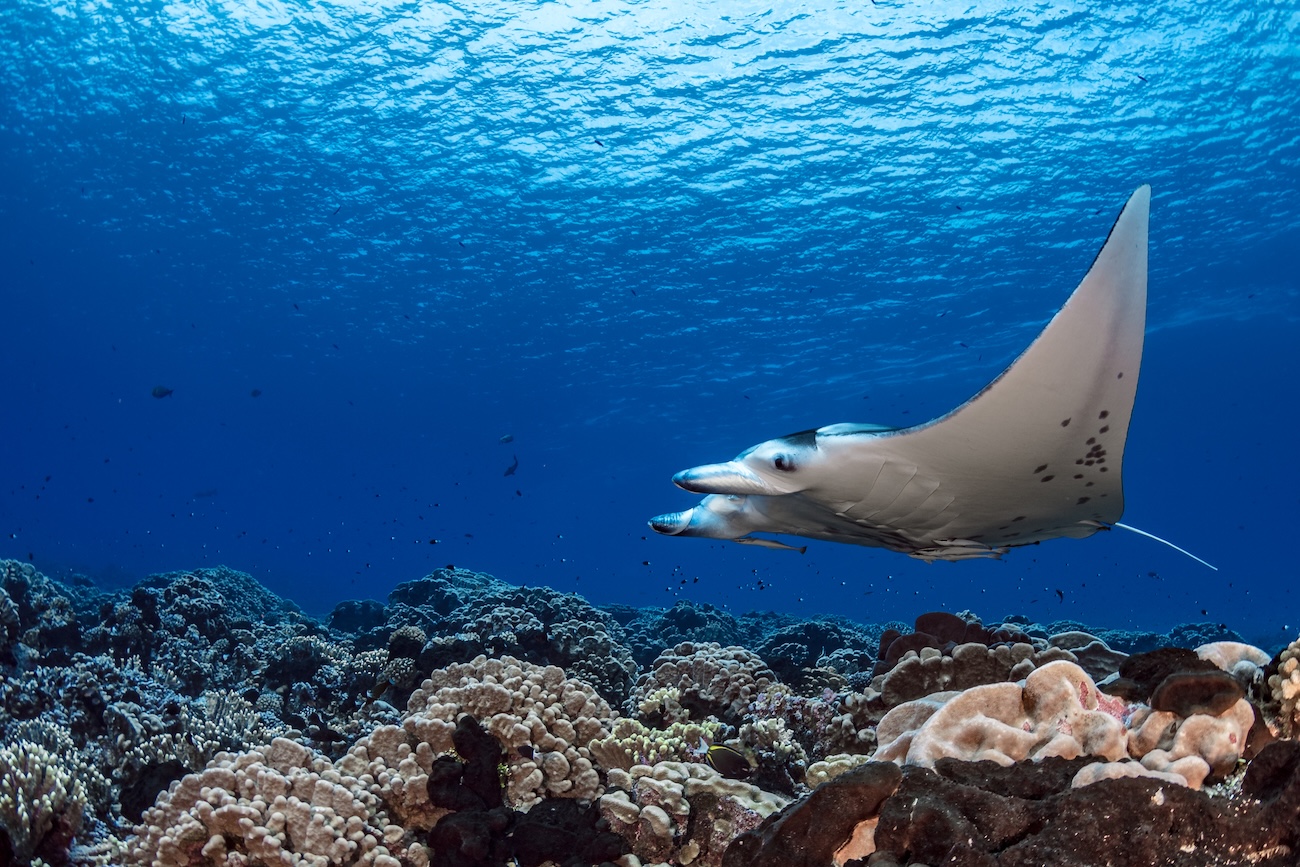
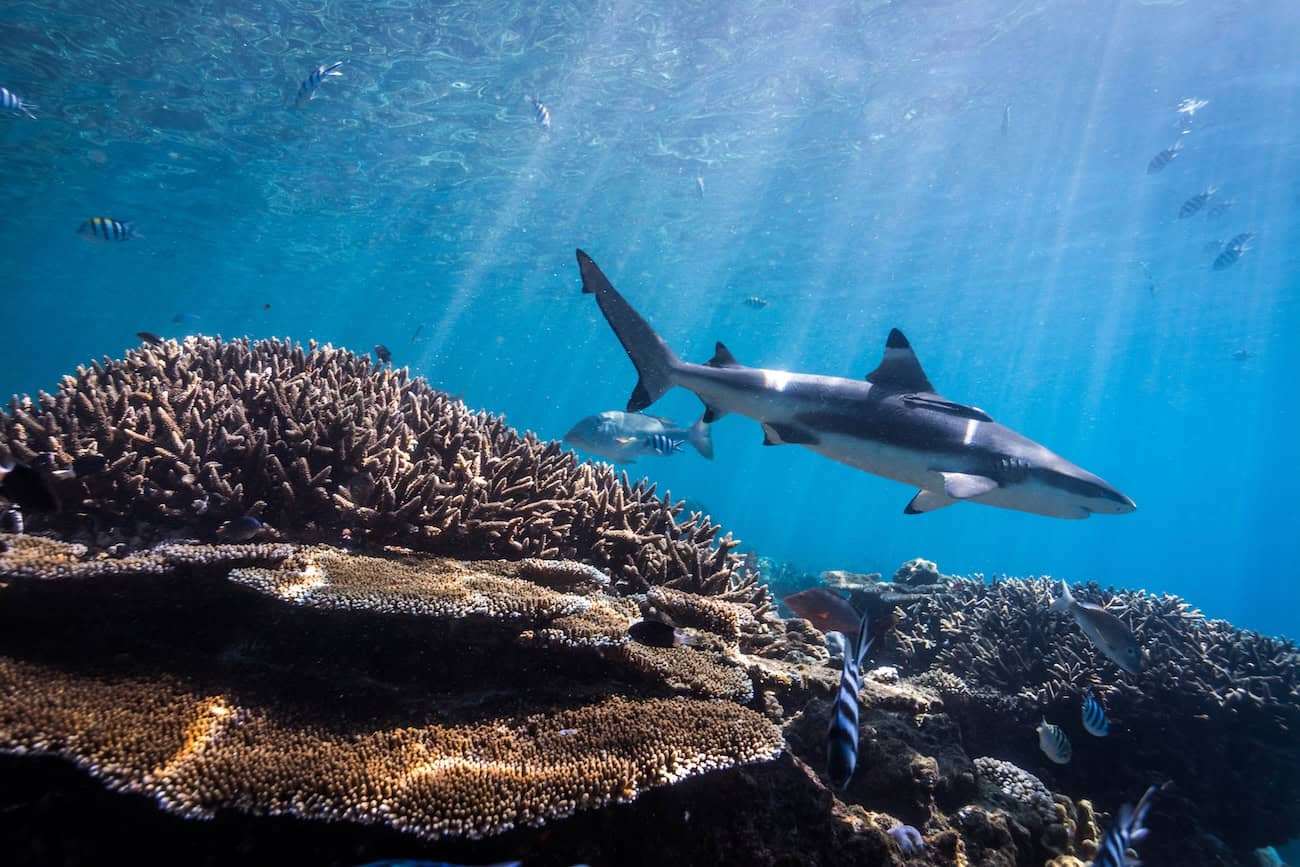
Along Halmahera’s southern reefs near Pulau Siko, a shallow manta cleaning station offers some of the region’s most reliable large-animal encounters, alongside black-tip reef sharks patrolling the surrounding hard coral gardens. It’s one of the few spots in Halmahera where snorkelers can count on seeing something larger than reef fish on a near-daily basis.
Credit: Hannes Klostermann / Ocean Image Bank
Weda Bay
Weda Bay, in Central Halmahera, is home to some of Indonesia’s most striking and least-documented coral reef systems. Its remoteness means visibility into what’s actually down there is still limited, part guidebook, part genuine frontier.
North Halmahera: Loloda, Tanjung Bongo & Tobelo
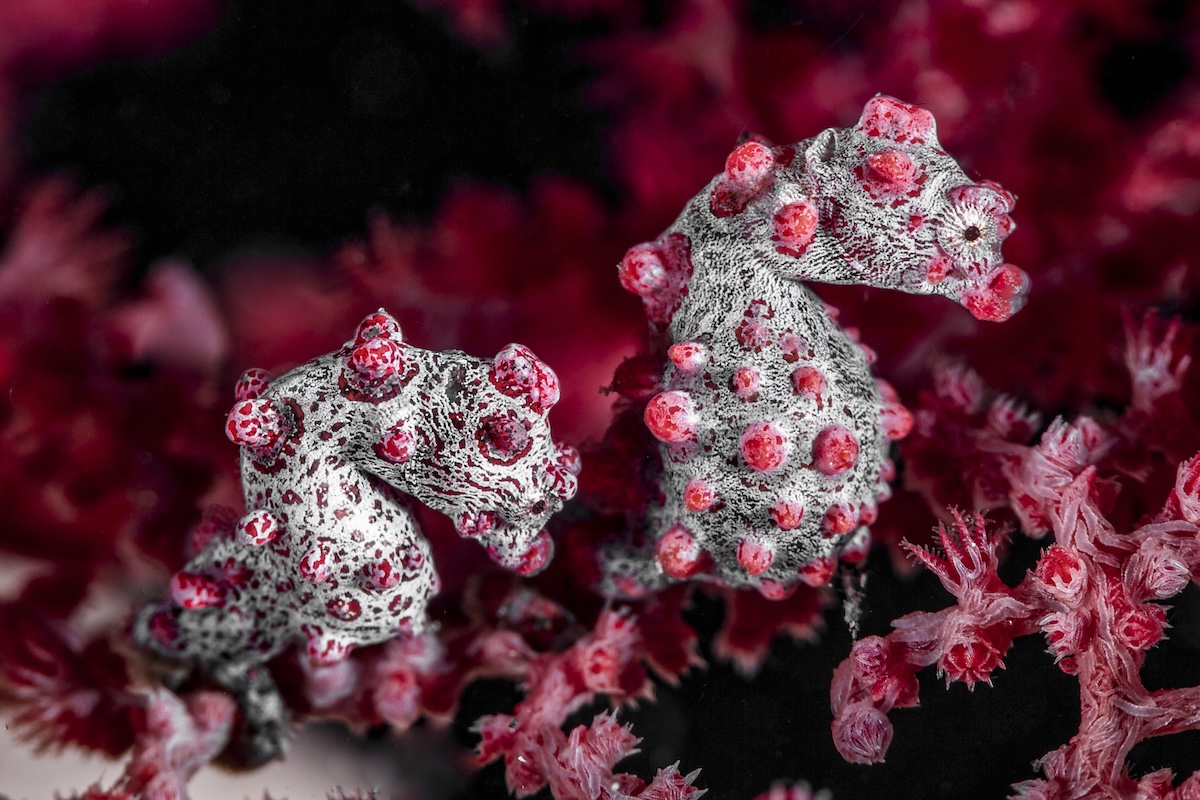
North Halmahera’s dive and snorkel sites around Loloda, Tanjung Bongo, and Tobelo pair vibrant coral reefs with an unusual mix of marine life. Spot reef sharks and sea turtles alongside a strong showing of macro critters like nudibranchs and pygmy seahorses. The region’s volcanic history has also produced striking black-sand sites, along with several World War II-era wrecks resting just offshore.
Credit: David P Robinson / Ocean Image Bank
Goraici Islands/ Pulau Lelei
East of Bacan, the Goraici Islands are known among divers for schooling reef fish and massive bait balls, a sign of the same nutrient-rich currents that make the Patintie Strait so productive, just further from the well-trodden path. The villagers on Palau Lelei are always welcoming and excited to share their way of life with visitors, from harvesting nutmeg and other traditional crops to sharing stories, traditions, and everyday life on the island.

Credit: Pei Lun Lee

Credit: Tom Vierus / Ocean Image Bank
Ternate & Jiko Malamo
Ternate, seat of the old clove and nutmeg-trading sultanates, holds the Sultan’s Palace and centuries of Spice Islands history, the very trade that first drew European powers to this part of Indonesia. Morotai, once a major Allied airbase during World War II, pairs untouched beaches with wartime history and is increasingly recognized for its own nature and diving potential.
Jiko Malamo is a local favorite for snorkeling, with clear water, colorful coral reefs, and schools of scadfish. The sheltered bay makes for easy, relaxed snorkeling, with plenty to explore beneath the surface, including a quirky underwater school bus and motorcycles for new reefs that add a fun element to the experience.
Marine Life & Wildlife in Halmahera
Halmahera’s proximity to Raja Ampat means it shares much of the region’s extraordinary biodiversity, with dense concentrations of small reef fish, colorful coral communities, and a remarkable variety of marine life. And because so much of Halmahera remains remote and understudied, there is a genuine possibility that some of what you’re seeing hasn’t yet been catalogued. Here’s a breakdown of the species that regularly turn up.
Sharks & Rays
- Black tip reef sharks — common around Manta Point and Pulau Siko’s shallow cleaning stations
- White tip reef sharks — patrol the hard coral gardens near Joronga and Pisang islands
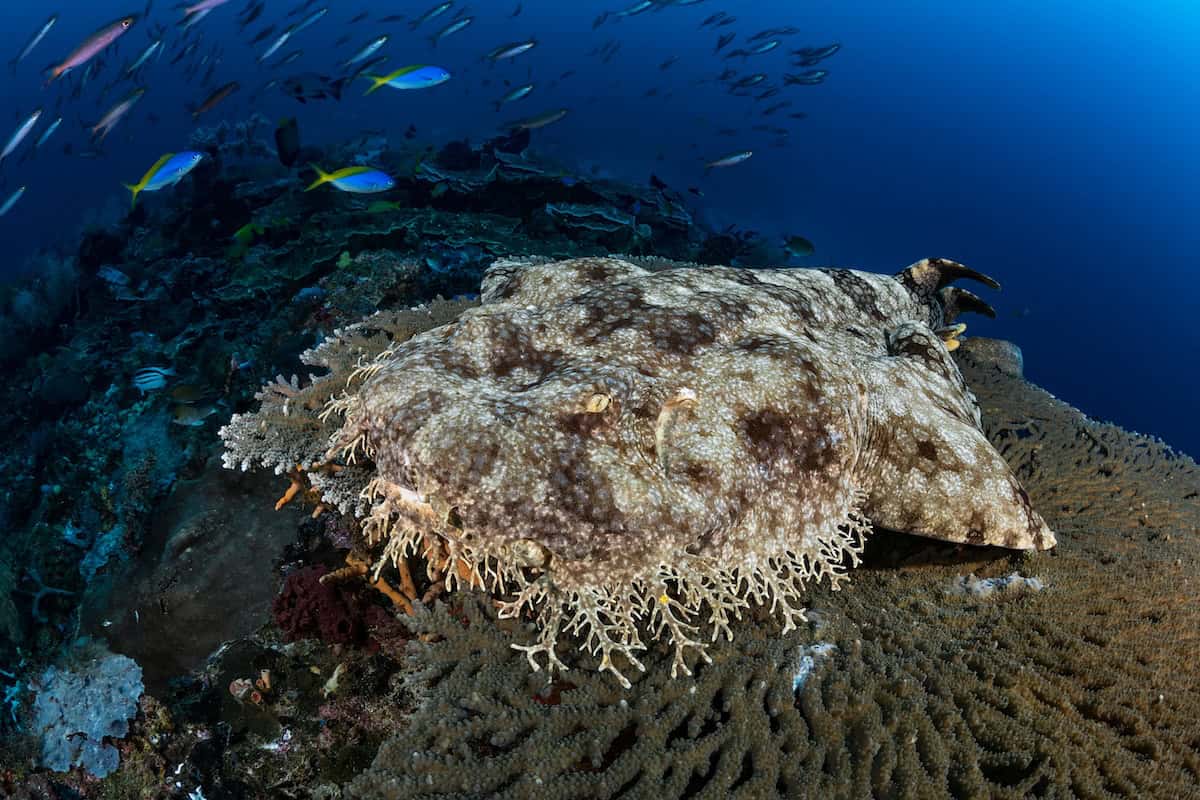
- Walking sharks — small, bottom-walking epaulette sharks best spotted on a night snorkel; a genuine Halmahera signature sighting
- Manta rays — regular at Pulau Siko’s cleaning station, and occasionally seen feeding in the lagoon shallows around the Goraici Islands
- Eagle rays — spotted gliding over the reefs near Pisang Island
Credit: Fabrice Dudenhofer / Ocean Image Bank
Turtles & Reptiles
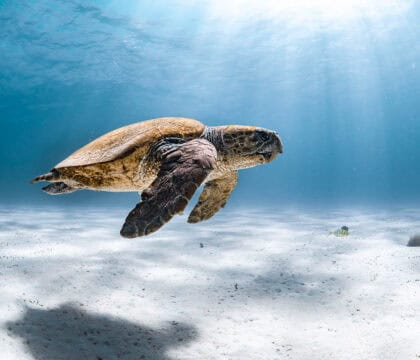
- Green sea turtles — frequently seen resting on reef flats and cruising over coral gardens
- Hawksbill turtles — sighted alongside greens on many of the same shallow reefs
- Banded sea kraits — a striking, if startling, find for snorkelers exploring reef edges and rocky shorelines
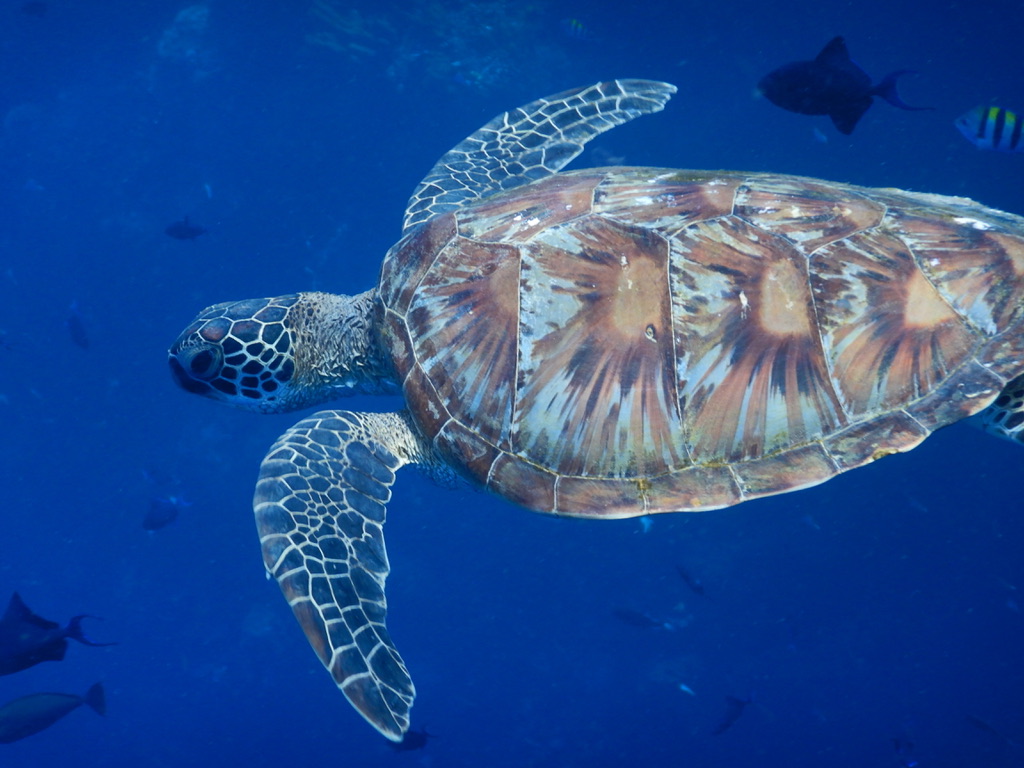
Credit: Pei Lun Lee
Reef Fish
- Bumphead parrotfish, batfish, and sweetlips — larger reef fish that tend to hang a little deeper and shy away from snorkelers, but are frequently visible from the surface
- Chromis, basslets, and anthias — form dense, colorful clouds around large coral heads, part of what makes Halmahera’s reefs feel so alive
- Butterflyfish and Western clownfish — common sightings around anemones and coral bommies
- Yellow boxfish — juveniles are a favorite macro-adjacent find for photographers
Macro Life & Critters
- Nudibranchs — abundant and highly varied across nearly every reef in the region
- Pipefish — often spotted in pairs resting on coral heads
- Crocodilefish — masters of camouflage against sandy and rubble bottoms
- Reef octopus and cuttlefish — regular finds during both day and muck snorkels
- Moray eels and cleaner shrimp — commonly seen together at cleaning stations tucked into the reef
- Scorpionfish — another camouflage specialist, easy to miss until pointed out by a guide
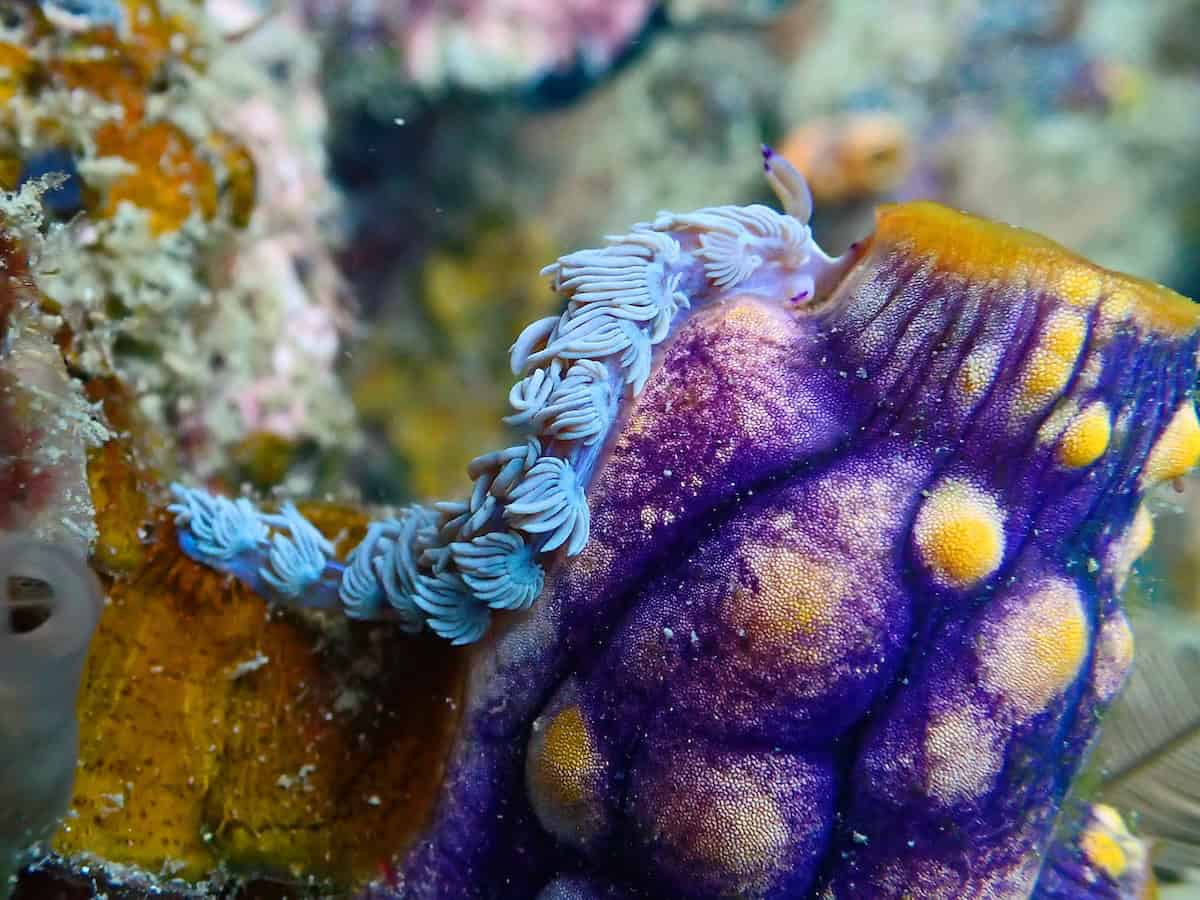
Credit: Eric Ramos
Village & Muck Snorkel Finds
Muck snorkels near shoreline villages turn up their own distinct cast: fire urchins, razorfish, squid eggs laid on coral, and the occasional surprise nudibranch or eel tucked into the sand, a very different but equally rewarding style of snorkeling compared to the open reef sites.
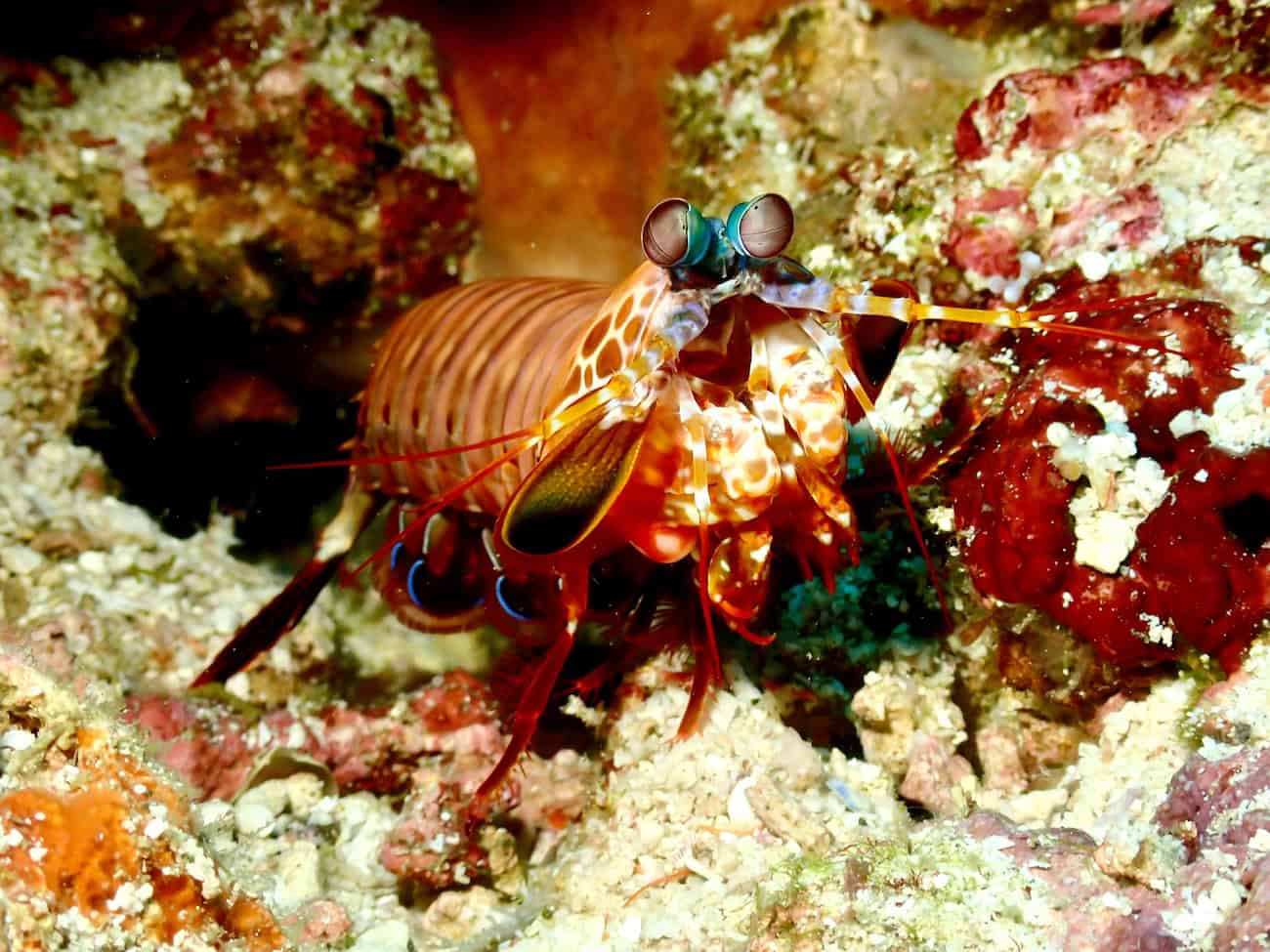
Credit: Claus Giering
Best Time to Visit Halmahera
The best time to visit Halmahera for snorkeling is generally April through June and October through November, when calmer surface conditions make it easier for liveaboards to reach the region’s more remote reefs. Halmahera sits close to the equator and experiences tropical rain year-round, but storms often pass quickly, leaving clear skies and calm water in their wake.
“July and August can bring more wind and chop, while December through February tends to be wetter and less predictable.” — Pei, Conservation Travel Manager
Air temperatures average around 85°F (29°C) during the day and 78°F (26°C) at night, with high humidity throughout the year. Water temperatures stay remarkably consistent regardless of season, generally 80–82°F (27–28°C), making for comfortable snorkeling with minimal exposure protection.
How to Get to Halmahera
Halmahera is one of the more remote destinations in eastern Indonesia, and reaching its best snorkeling areas typically requires combining domestic flights, local boat transfers, and, in many cases, a liveaboard expedition. Unlike more established destinations such as Bali, North Sulawesi, or Raja Ampat, Halmahera has relatively limited tourism infrastructure, with few resorts and no major tourist hub on the island itself.
For most travelers, the easiest way to experience Halmahera is as part of a multi-day liveaboard expedition connecting the region with other destinations in the Coral Triangle. Routes may travel between Raja Ampat and North Sulawesi, stopping at remote reefs and islands along the Halmahera coast.
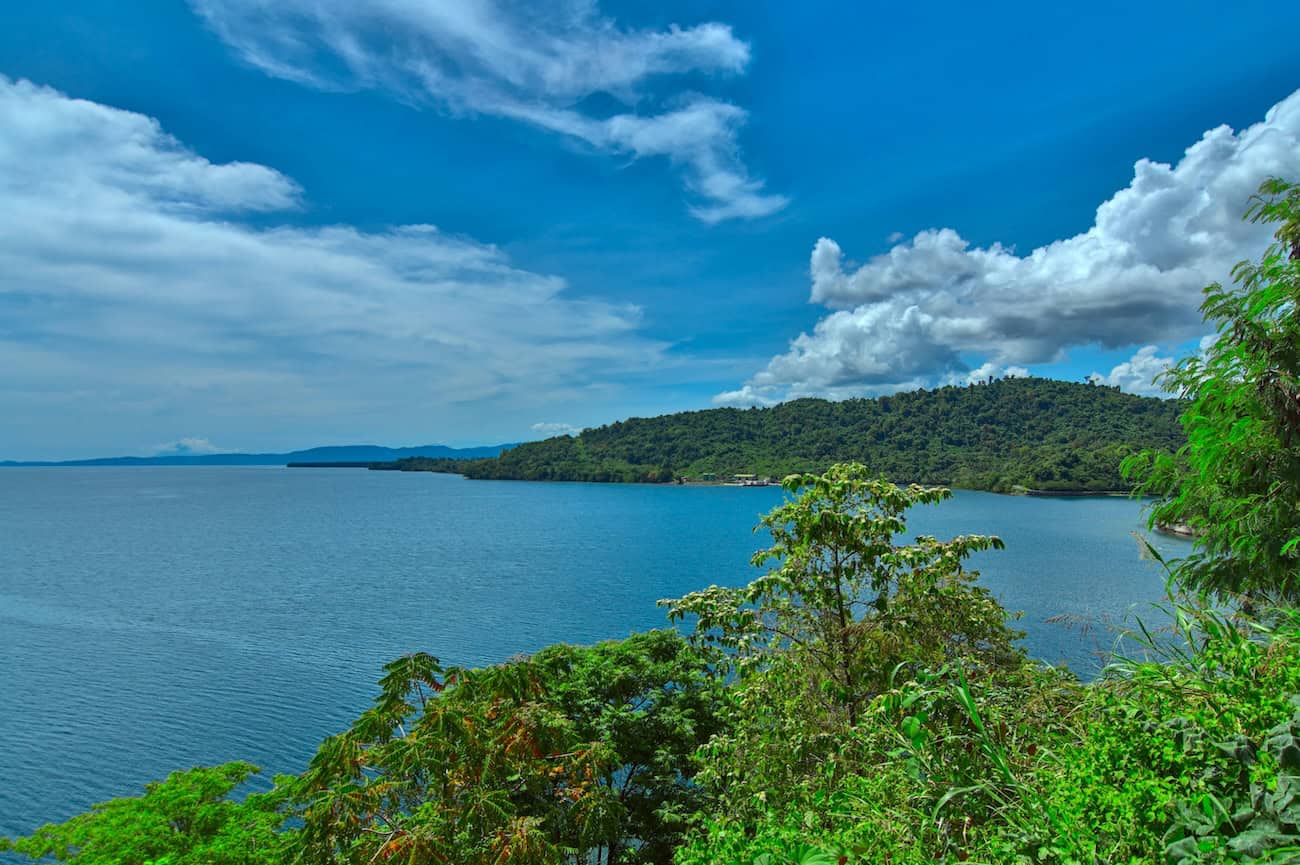
Getting to Halmahera by Air
Travelers from the United States will generally first fly into a major Indonesian gateway such as Jakarta or Bali before connecting onward to eastern Indonesia. Travelers from Australia may have additional routing options through Bali or other major Indonesian airports.
From there, travelers typically connect to a regional airport in North Maluku or nearby eastern Indonesia before continuing to Halmahera by local flight, ferry, or boat, depending on the destination and itinerary. Because domestic connections in this part of Indonesia can be limited and schedules may change, it’s worth building some flexibility into your itinerary, particularly when connecting to a liveaboard departure.
Planning your flights: Oceanic Society helps arrange domestic flights to and from Jakarta as part of your trip planning, making it easier to coordinate international connections with your liveaboard departure and return.
Traveling Halmahera by Liveaboard
For snorkeling-focused travelers, a liveaboard is often the most practical and rewarding way to explore Halmahera. Rather than staying in one coastal location, an expedition allows you to move between reefs, islands, and remote stretches of coastline that would be difficult to reach independently.
A liveaboard expedition through Halmahera offers:
- Access to remote reefs and islands that receive very few visitors each year
- Multiple snorkeling sites throughout the trip, rather than being limited to the reefs accessible from one resort
- A chance to connect destinations across the Coral Triangle, with some itineraries linking Raja Ampat, Halmahera, and Sulawesi
- Small-group exploration led by experienced naturalists and crew, with opportunities to learn about the region’s marine and terrestrial wildlife
- An expedition-style experience that combines comfortable onboard accommodations, meals, snorkeling equipment, and daily excursions
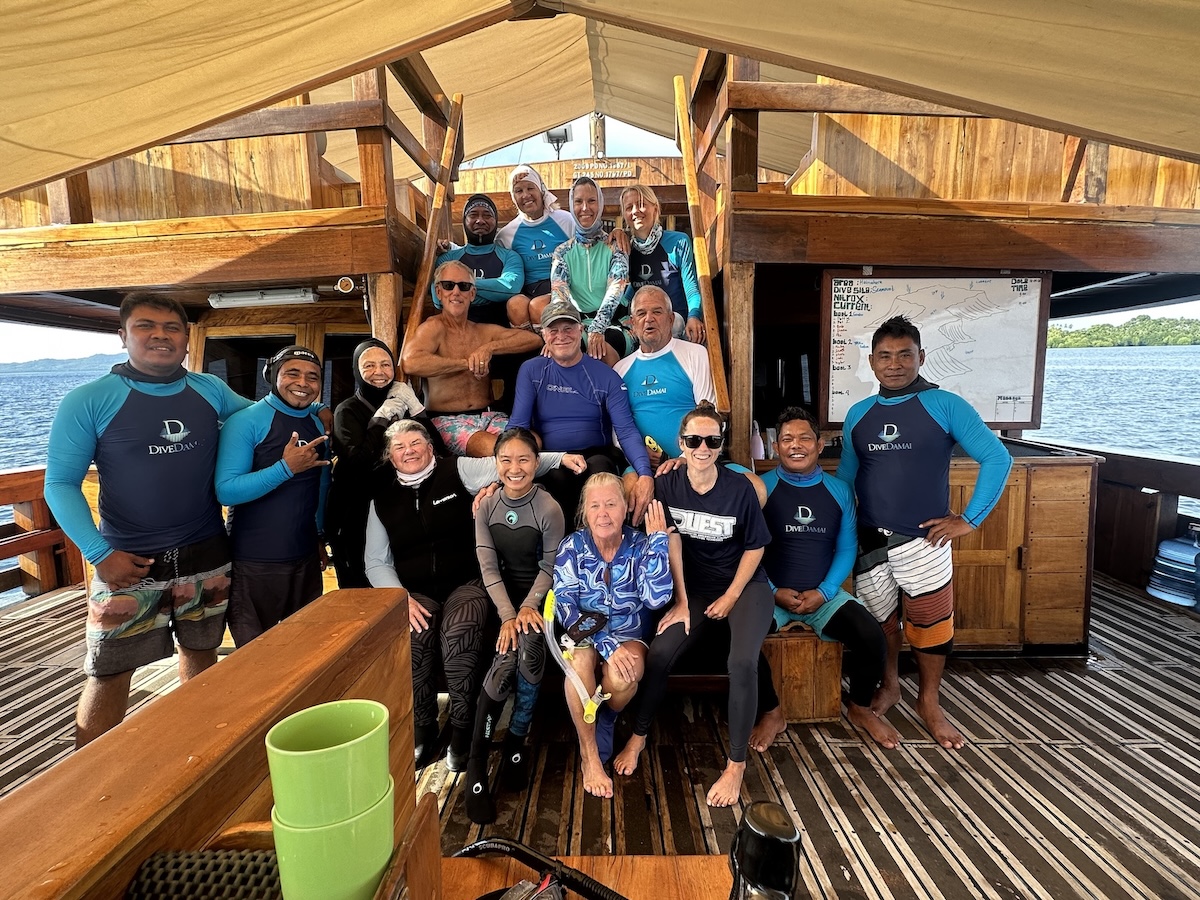
Halmahera Liveaboard Snorkeling Trips
For travelers drawn to Raja Ampat but curious about what lies just beyond it, Halmahera offers a rare, lightly visited middle chapter of the Coral Triangle.